What if a single photograph could topple a reputation, ignite a revolution, or reveal a truth that powerful people spent decades trying to bury? The images in this collection are not just faded memories; they are silent witnesses to scandals, cultural shifts, and iconic moments that history has desperately tried to erase. From daring fashion statements that defied norms to behind-the-scenes glimpses that were never meant to see the light of day, each frame holds a story that will make you question everything you thought you knew about the past.
These are the photos that captured the bold, the forbidden, and the unforgettable. They are windows into a world where rebellion was captured in a flash, and where the click of a shutter could change everything. Prepare to uncover the scandalous secrets and the daring moments that defined an era—and that some would prefer remained hidden forever.
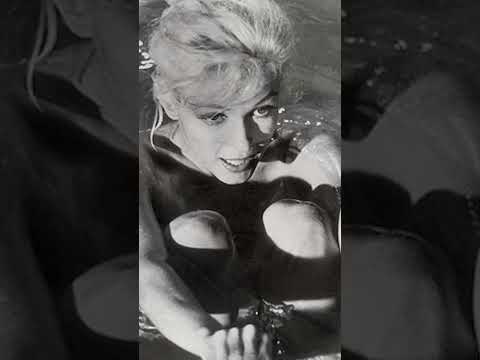
In the mid-20th century, a young woman named Evelyn Carter stood at the center of a cultural storm. She was a fashion designer whose daring creations—sheer fabrics, bold cuts, and unapologetic glamour—were both celebrated and condemned. Her runway shows were not just fashion events; they were acts of defiance. And one photograph, taken backstage at her 1968 Paris show, would become the most scandalous image of the decade.
The photo captured Evelyn adjusting a model’s dress, her own outfit a masterstroke of provocation: a transparent blouse that left little to the imagination. The image was leaked to the press, and within days, it was everywhere. Critics called it obscene; supporters hailed it as a symbol of liberation. But what no one knew was that the photo was never meant to be public—it was stolen from a private collection.
Evelyn’s story is just one of many in this collection. There’s the 1930s Hollywood starlet whose secret romance with a female director was captured in a stolen kiss, a photo that studio executives paid a fortune to destroy. Then there’s the 1950s jazz club where a young Black musician was photographed kissing a white woman, an image so explosive that it was used as evidence in a trial and then mysteriously vanished from the archives.
Each photo in this collection is a puzzle piece of a larger narrative—a narrative that challenges the sanitized version of history we’ve been taught. These images remind us that the past was not black and white, but a riot of color, passion, and controversy.
As we delve into these scandalous vintage photos, you’ll discover the stories behind the frames: the risks taken, the reputations shattered, and the truths that refused to stay buried. From the glamorous to the gritty, these are the images that history tried to erase—but that we are about to bring back into the light.
But the Evelyn Carter photograph was only the beginning. In the archives of a small New York library, a curator named Marcus Webb stumbled upon a box labeled simply “Do Not Open.” Inside, he found a series of negatives that had been sealed away for over forty years—each one more explosive than the last.
The first negative showed a 1962 political fundraiser that was supposed to have been a quiet, respectable affair. But in the corner of the frame, two of the most powerful men in Washington were caught in a heated, whispered exchange—one that witnesses later swore never happened. The photo had been taken by a young photographer who died under mysterious circumstances just weeks later.
Marcus carefully lifted the next negative to the light. His hands trembled.
It was a 1955 beach party on the French Riviera, and there, laughing in the sun, was a famous actress everyone believed had been in rehab that summer. Beside her, arm draped around her shoulder, was a man the world thought was her bitterest rival. The image suggested a secret friendship—or perhaps something far more complicated—that both had taken to their graves.
“These aren’t just photos,” Marcus whispered to himself. “They’re time bombs.” He realized that whoever had sealed this box had done so not to protect the subjects, but to protect the stories from ever seeing daylight.
And then he found the most disturbing frame of all. It was a simple street scene from 1948—a crowded sidewalk, a newsstand, a parked car. Nothing scandalous at first glance. But when Marcus looked closer, he noticed a figure in the background, half-hidden in shadow, staring directly at the camera. The face was unmistakable. It was a man who, according to every history book, had been dead for three years.
The curator sat back in his chair, his heart pounding. The box had been hidden away for decades, but now the past was knocking on his door—and it was not about to stay quiet.
Marcus spent the next three nights in the library’s basement, a single lamp burning above a light table as he examined each negative with a magnifying loupe. The man in the 1948 street scene appeared in two more frames—always in the background, always watching. In one, he stood across from a bank that had been robbed the same afternoon. In another, he was slipping into a black sedan outside a hotel where a senator had been found dead the following morning.
“This isn’t a coincidence,” Marcus muttered, cross-referencing dates in old newspaper microfilms. “This man was there. Every time. Before it happened.” But the face belonged to Arthur Vance, a mid-level government clerk whose obituary—complete with a funeral photograph—had run in 1945.
He photographed the negatives with his phone and sent them to an old friend, a retired forensic analyst named Dolores Kim. Her reply came within the hour: “Where did you get these? Call me. Now.”
Dolores arrived at the library the next morning with a leather satchel and a look Marcus had never seen on her face before—fear. She spread the printed images across the table and tapped the figure in the shadows. “That’s not Arthur Vance,” she said quietly. “Or rather, it is. But the man in these photos is his twin brother, Edward. And Edward Vance wasn’t a clerk. He was a fixer.”
According to Dolores, Edward Vance had worked for a shadow network that operated between government and organized crime throughout the 1940s and 50s. He arranged accidents, silenced witnesses, and made problems disappear. When he supposedly died, the network simply gave him a new identity and a quieter role. “He was the ghost,” she said. “The one they sent when a story needed to end before it began.”
Marcus stared at the negatives. If Edward Vance was the man in these photos, then the box wasn’t just a collection of scandals—it was a ledger. A record of crimes that had been carefully erased from history, kept by someone who wanted the truth preserved.
But the question that chilled him most was the one he couldn’t answer: who had sealed the box, and why had they left it here—in a public library, waiting to be found?
He turned back to the box and noticed something he’d missed before. Tucked beneath the false bottom, folded into a square no larger than a matchbook, was a slip of paper with a single typed line: “If you are reading this, they already know.”
Marcus felt the blood drain from his face. He looked up at the basement windows—black, silent, watching. “They already know,” he repeated, his voice barely a whisper. Dolores was already on her feet, stuffing the prints back into her satchel with shaking hands.
“We need to leave. Now,” she said. “If Edward Vance was a fixer, then whoever sealed this box was either protecting these secrets or preparing to expose them. Either way, we’re standing in the middle of a minefield.”
They agreed to split the negatives and meet at a safe location the following evening. Marcus took the box to his apartment, hiding it behind a loose panel in his closet. He barely slept, listening for footsteps in the hallway.
The next morning, Marcus arrived at the library to find the basement door ajar. The light table was still there, but the box’s false bottom—the one he’d left on the counter—was gone. In its place was a single fresh photograph. It showed Marcus and Dolores from the night before, huddled over the negatives. On the back, in neat handwriting: “You have 48 hours.”
Marcus called Dolores immediately. Her phone went straight to voicemail. He tried again. Nothing. Panic clawed at his chest as he rushed to her apartment, only to find the door unlocked and her satchel sitting open on the kitchen table. The negatives were gone. So was she.
On the table, pinned under a coffee mug, was a note in Dolores’s handwriting: “Don’t look for me. Finish what we started. The truth is the only weapon they fear.”
Marcus returned to the library and made a decision. He scanned every negative he had left, uploaded them to a secure server, and sent the link to three journalists he trusted—along with a detailed account of everything he’d discovered. Then he sat back and waited.
Within hours, the story exploded. The Evelyn Carter photo resurfaced alongside the political fundraiser image and the French Riviera beach party. Historians, archivists, and ordinary readers demanded answers. Edward Vance’s name appeared in headlines for the first time in seventy years. The network he’d served scrambled to deny everything, but the photos were undeniable.
Dolores resurfaced three days later, unharmed, at a friend’s cabin in Vermont. She’d gone into hiding after spotting a car following her home. “They wanted to scare us,” she told Marcus over the phone. “But they underestimated how loud the truth can be once it’s out of the box.”
The box itself now sits in a museum archive, catalogued and protected. But Marcus often wonders about the person who sealed it decades ago—the one who left it in a public library, waiting for someone curious enough to open it. Were they a whistleblower? A guilty accomplice? Or simply someone who believed that history, no matter how scandalous, deserves to be remembered?
Some questions, he’s learned, may never have answers. But the photos remain—silent witnesses, time bombs, and reminders that the past is never truly buried.
What would you do if you found a box labeled “Do Not Open”—and discovered the truth inside could change everything?
Report this article
Select a reason for reporting:






