The morning of June 6, 1944, dawned cold and gray over the English Channel. Thousands of men crammed into landing craft, their stomachs churning with seasickness and fear. They were about to assault Omaha Beach, the most heavily defended stretch of coastline in Hitler’s Atlantic Wall. Within minutes of hitting the shore, the meticulously planned invasion began to unravel. Units were scattered, support failed, and entire companies were cut down before they even reached the sand. Yet by nightfall, the beach was in American hands. This is the story of how that happened—not through one decisive moment, but through countless acts of improvisation and courage across a four-mile stretch of hell.
To understand Omaha, we must first grasp the terrain. Four-mile-long beach, overlooked by bluffs that offered the Germans perfect vantage points for enfilading fire. Natural gullies, known as draws, provided the only exits from the beach. The most critical was the D1 draw near Vierville-sur-Mer, guarding the approach to the village and beyond. The Germans had turned this area into a fortress, with concrete bunkers, machine gun nests, and artillery pieces zeroed in on the beach. The 29th Infantry Division, untested in combat, was tasked with taking this sector. Among them were the Bedford Boys, young men from a small Virginia town, whose fate would become a symbol of the day’s sacrifice.
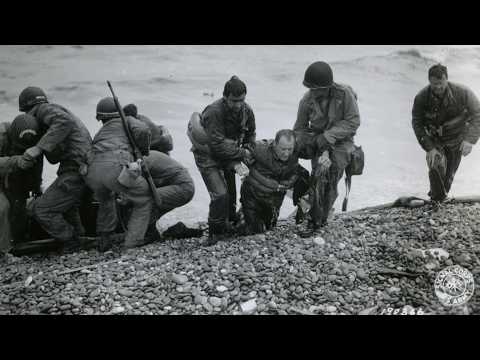
As the first wave approached, the naval bombardment lifted, but its effect was negligible. Bombers, fearing to hit their own men, delayed their drops, and most bombs fell inland. The Germans, largely unscathed, emerged from their bunkers to man their guns. The first landing craft grounded on sandbars hundreds of yards from shore. Men, weighed down with equipment, struggled through neck-deep water under a hail of machine gun and artillery fire. Company A, landing at Dog Green, was virtually annihilated within minutes. “Within just 15 minutes of landing, the unit had practically ceased to exist,” one survivor recalled. The situation was desperate.
But then, a turning point. Brigadier General Norman Cota, assistant commander of the 29th Division, came ashore. Seeing men pinned down at the seawall, he walked calmly up and down the beach, ignoring the bullets, and rallied them. “Gentlemen, we’re being killed on the beaches. Let us go inland and be killed,” he said. His example inspired others to move. Cota then led a group through a gap in the barbed wire, up a small draw, and onto the bluffs. “Rangers lead the way!” he famously ordered, and they did. By noon, Vierville was in American hands, and the draw was open.
Meanwhile, to the east, the 1st Infantry Division was fighting its own battle. At Easy Red sector, Lieutenant John Spalding and his section from E Company, 16th Infantry, landed unscathed—ironically because the rest of their company had been decimated at WN 62, drawing the Germans’ fire. Spalding’s men scaled the bluffs and silenced a machine gun nest, opening a path inland. Their actions, though costly, helped crack the Atlantic Wall.
At the eastern end, on Fox Green, Company L of the 16th Infantry faced similar chaos. Landing 700 yards off course, they came under fire from WN 60. Lieutenant Jimmy Monteith, realizing the need for armor support, raced across the beach to direct two Sherman tanks. The tanks knocked out the German guns, and the infantry began the slow, deadly climb up the bluffs. The fighting was fierce, often devolving into small-unit skirmishes. By late morning, the Americans had gained the heights, and WN 60 fell.
As the day wore on, more troops and vehicles poured ashore. The beach, though still under fire, was secure. The cost had been staggering: over 2,000 American casualties at Omaha alone. But the breakthrough had been achieved. The men who fought there—the Bedford Boys, the Rangers, the Big Red One—had done the impossible. They had cracked Hitler’s Atlantic Wall and opened the way to liberate Europe.
Yet the story of Omaha Beach is not just one of victory, but of individual courage and sacrifice. Men like Spalding and Monteith, who survived the day only to face personal tragedies later. Their legacy lives on in the peaceful cemeteries overlooking the beach, where row upon row of white crosses stand as a testament to their sacrifice. This is the story of Omaha Beach—a story of chaos, courage, and the triumph of the human spirit against overwhelming odds.
But the story of Omaha Beach does not end with the fall of the bluffs. For the men who survived the first hours, the day was only beginning. Beyond the crest lay a patchwork of hedgerows, sunken lanes, and fortified farmhouses—terrain that would soon earn its own grim reputation. The Germans had not expected the Americans to reach the heights so quickly, but they had prepared for the possibility. Inland batteries, still intact despite the naval bombardment, began to register their fire on the newly won positions. Men who had clawed their way up the bluffs now found themselves digging in under a new storm of shells.
At Vierville, General Cota pushed his small group toward the village itself. The streets were empty, the houses silent. Every window could hide a sniper; every doorway, a machine gun. Cota, still twirling his pistol, ordered the men to clear the buildings one by one. It was slow, nerve-wracking work. In one courtyard, a German soldier sprang from a cellar with his hands up, shouting “Kamerad!” In another, a grenade rolled down a staircase and wounded two men before it could be returned. By mid-afternoon, Vierville was declared secure, but the crack of rifles still echoed from the surrounding hedgerows.
Back on the beach, the scene was one of controlled chaos. Landing craft continued to disgorge troops and vehicles, but the tide had come in, shrinking the usable shoreline to a narrow strip. Wrecked tanks and burning trucks littered the sand. Engineers worked frantically to clear the remaining obstacles, while medics moved among the wounded, their white armbands stained red. Every few minutes, a mortar shell would land, sending men diving for cover. The beach was still a killing zone, and it would remain so until nightfall.
It was in this environment that Richard Taylor, the combat cameraman, continued his work. His footage from the eastern end of Omaha—the only combat film shot on the beach that day—would become some of the most iconic images of the Second World War. But Taylor was not a passive observer. Wounded in the arm, he kept filming until he could no longer hold the camera. His commander, Lieutenant Grosfeld, took over, capturing the men huddled beneath the cliffs, the medics carrying stretchers through the surf, and the relentless advance of reinforcements.
One of those reinforcements was the 5th Ranger Battalion, which had landed at Dog White and fought its way inland. By late afternoon, they had linked up with elements of the 29th Division and were pushing toward the coastal town of Grandcamp-Maisy. The Germans, now fully aware that Omaha had fallen, began to withdraw toward the west, hoping to establish a new defensive line. But the Americans were not about to let them escape. Small units, often no larger than a squad, pursued the retreating enemy through fields and orchards, engaging in firefights that were as vicious as they were brief.
As evening approached, the sounds of battle began to fade. The beach, once a scene of unimaginable carnage, was now a staging area. Thousands of men, vehicles, and supplies were moving inland. The Atlantic Wall, at least at Omaha, had been breached. But the cost was evident everywhere. The dead lay where they had fallen, their bodies covered with blankets or ponchos. The wounded filled the makeshift aid stations, where doctors worked by flashlight as the generators flickered. And offshore, the vast armada that had delivered them began to disperse, its mission accomplished.
For the men who had survived, there was little time to reflect. The Normandy campaign was just beginning. Ahead lay the hedgerows of the Bocage, the brutal fighting around Caen, and the eventual breakout that would lead to Paris. Many of the soldiers who had scaled the bluffs of Omaha would not live to see the end of the war. But on the evening of June 6, 1944, they had done something extraordinary. They had turned the tide.
As darkness fell, General Cota stood near the Vierville draw, watching the endless stream of men and machines moving inland. He turned to an aide and said quietly, “We’ve got a toehold. Now we need to make it a foothold.” It was a simple statement, but it captured the essence of the day. Omaha Beach had been taken, but the battle for Europe was far from over. The men who had fought there—the Bedford Boys, the Rangers, the Big Red One—had written a chapter in history that would never be forgotten. And yet, as the stars came out over the Normandy coast, the story was only just beginning.
By midnight, the beach was quiet—or as quiet as a place can be when thousands of men are digging in, when the wounded are groaning in aid stations, and when the dead are being counted. The first reports reaching Admiral Hall’s headquarters were fragmentary, contradictory, and grim. Omaha, some believed, might still be a failure. But as the hours passed, it became clear that the Americans were not going back into the sea.
The Bedford Boys’ story would not be fully told for weeks. Back in Virginia, telegrams began arriving at the homes of Company A. Ray and Roy Stevens, the twins who had agreed to shake hands on the beach, never got that chance. Roy was killed in the first minutes of the landing; Ray survived, only to learn that his brother was gone. Of the 31 men from Bedford, 19 never came home—a loss proportionally greater than any other American community on D-Day.
But for every story of loss, there was one of survival. Lieutenant Spalding, who had scaled the bluffs at Easy Red, would go on to fight through the hedgerows and into Germany. Sergeant Colson, who had silenced the pillbox with his BAR, was awarded the Distinguished Service Cross. General Cota, the man who had walked calmly through the fire, would receive the Distinguished Service Cross as well—and his words, “Rangers lead the way,” would echo through generations of soldiers.
As dawn broke on June 7, the men on Omaha Beach looked inland. The fields of Normandy stretched before them, green and quiet. The Atlantic Wall, at least here, was broken. But the war was far from over—and the men who had survived the longest day knew that the hardest fighting was yet to come.
Today, the beach is peaceful. Children play in the surf where tanks once burned. Tourists walk the bluffs where machine guns once raked the sand. And in the cemeteries overlooking the sea, row upon row of white crosses stand in silent testimony. The story of Omaha Beach is not just a story of victory. It is a story of what ordinary men can do when everything goes wrong—and they refuse to give up.
So here is the question: If you had been on that beach on June 6, 1944, facing the impossible—would you have moved forward? Would you have climbed the bluffs? Or would you have stayed behind the seawall and waited for a miracle? Share your thoughts in the comments below.
Report this article
Select a reason for reporting:






