You think you know where Sydney’s wealth lives? Think again. It’s 2026, and the real fortunes aren’t lounging on Bondi Beach—they’re tucked behind gates in suburbs most tourists never notice. One suburb’s median house value has soared past $17 million, and waterfront estates are trading for over $100 million. This is the Sydney the billionaires don’t want you to see.
Welcome to a journey through the ten most exclusive postcodes in Australia’s most expensive city. From sleepy coastal hideaways to vertical penthouses in the sky, we’re peeling back the curtain on where the ultra-rich actually park their money—and their private helicopters.
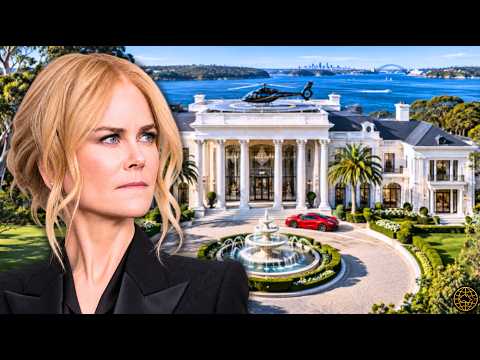
Take Palm Beach, ranked tenth. It looks like a quiet holiday retreat at the northern tip of Sydney’s beaches, but the property market tells a different story. In 2020, developers Gary and Susan Rothwell bought their fourth holiday home, bringing their total land holdings to nearly 9,000 square meters. Four properties, one family, an empire of private space. One of their homes even featured in the Australian film ‘Palm Beach.’ When your holiday house doubles as a movie set, you know you’ve made it.
The census data is even more revealing. Just over 1,600 residents were counted in 2021, yet 415 private dwellings sat empty on census night—a staggering 38.5% vacancy rate compared to 9.4% across New South Wales. This isn’t a ghost town; it’s a playground for the wealthy who visit when the mood strikes.
Moving south, Manly offers a different flavor of wealth. The Circular Quay ferry deposits crowds at the beach, but around the headland, billionaires are buying waterfront properties from other billionaires. In December 2025, software entrepreneur Christian Beck and his wife Rachel paid $17.5 million for a harbor-view home. Then they bought the one next door for $19 million. A cool $36.5 million for two adjacent waterfront properties. The seller? Sam Arnot, a former car mechanic who turned Iris Capital into a hospitality and property juggernaut. He reportedly didn’t use his Little Manly holiday home much, so he sold it to his neighbor. For some, an unused holiday house is a problem. Here, we’re talking about a $19 million deal.
Manly’s wealth is easy to miss because it’s not a gated enclave. Ferries run, the beach stays public, and cafes buzz. Yet the homes overlooking Little Manly Cove and the slopes around Ferry Power sit in another price bracket entirely. In 2024, a newly built home on Power Street sold for about $34 million, a local record. It had a pool above the waves and panoramic ocean views. But the property sat on leased land owned by the Catholic Church. Even at that price, the buyer didn’t own the land beneath the house. Did you know the story behind Manly’s multi-million-dollar waterfront? Or did that surprise you?
Next up, Tamarama. A property here sold for $50,000 per square meter of land, and the beach it overlooks is barely 80 meters long. Welcome to Tamarama, where the coastline is small and the numbers are enormous. This tiny suburb just south of Bondi Beach is wedged between rocky headlands and the Pacific. The coastal walk from Bondi to Bronte passes beneath the homes perched on the slopes. Tamarama even has a nickname: ‘Glamarama,’ thanks to its reputation as a destination for stylish beachgoers and celebrities. But the exclusive part isn’t the sand—anyone can walk on it. The hard part is finding a house above it.
In 2021, fewer than 1,500 people lived here. By late 2025, the estimated median house value hit around $6.4 million, and only 16 homes sold in the previous twelve months. Not many opportunities to buy on this stretch of coast. Consider a duplex on Gaerloch Street: 400 square meters, $20 million. Across the road stood ‘Lang Syne,’ a century-old bungalow bought by advertising executive David Droga for $45 million in 2023. Less than a year later, it was demolished. The land and its oceanfront position were worth more to the buyer than the building itself. The replacement design sparked a planning battle over what could be built on the headland. Droga eventually won a legal dispute with the local council.
Tamarama has seen battles over beach access before. Over a century ago, Wonderland amusement park fenced off the beach with barbed wire. Locals arrived with bolt cutters. Police were called. The dispute reached the New South Wales parliament, which declared the beach public land. Think about that for a moment. The coastline people once fought to access is now surrounded by properties valued in the tens of millions. The sand belongs to everyone. The views from the clifftops are another matter entirely.
And the competition for those views is moving inland, where a luxury apartment sold before it was even built. Welcome to Double Bay, ranked seventh. At one point, up to 60% of its shops sat empty. Today, an apartment here can sell for $50 million before completion. Just 4 kilometers east of Sydney’s CBD, this harborside neighborhood feels more like an outrageously expensive European village than a billionaires’ compound. Sidewalk cafes, luxury boutiques, and Art Deco apartment buildings line streets where coffee culture dates back to the 1950s. Ferries come and go beside Steyne Park. A few streets inland, the shopfronts cater to a completely different budget.
Unlike the hidden estates behind gates, Double Bay’s wealth sits right on the promenade. Window shopping is free. Buying anything is another matter. But the neighborhood wasn’t always this polished. After decades as a prestige retail district, Double Bay lost customers to larger shopping centers. Shops closed. Its luxury hotel shut in 2009, reopening as an InterContinental in 2014, helping revive the village alongside restaurants and boutiques. Now the area is changing again. In the 2021 census, Double Bay had just over 4,700 residents. More than three-quarters of occupied private dwellings were flats or units. That’s the shift. In Sydney, extreme wealth often means a mansion and a private driveway. Double Bay offers a luxury entrance within walking distance of everything.
In 2026, a buyer agreed to pay around $50 million for a penthouse before completion—roughly 550 square meters, two terraces, and six car spaces. For a neighborhood designed for strolling to the shops, that’s a massive garage. The InterContinental site also won approval for redevelopment including shops, hotel rooms, and 29 residences. The hotel that helped revive Double Bay may give way to another version of luxury.
Ranked sixth, Mosman. Homes worth $1.6 billion sold here in just 12 months—more than any other Australian suburb. And no, this isn’t a forest of skyscrapers. Eight kilometers northeast of the CBD, Mosman rises from Balmoral Beach to reveal federation homes, tree-lined streets, and boutique shops on Military Road. The Harbor Headlands, coastal fortifications, and Taronga Zoo complete the picture. The area feels old-money and comfortable, almost resistant to change entirely. The 2021 census counted just over 28,000 residents. By late 2025, the median house value exceeded $6 million. 229 house sales were recorded in the year to September 2025. Yet Mosman’s turnover rate was below the national average. People don’t move here constantly. Homes are expensive enough to make ordinary turnover seem extraordinary.
Residents have always protected what they pay for. Mosman contains around 500 heritage-listed sites, plus 13 heritage conservation areas. Federation verandas and historic streetscapes are part of its appeal. Locals resisted apartment sprawl decades ago, and height restrictions followed. You might afford to live here. That doesn’t mean you can redesign the suburb. Even cafes can become valuable real estate assets. Robin Khuda, billionaire founder of data center company AirTrunk, held meetings at the Nish Cafe on Military Road with executives involved in acquiring his company. The AirTrunk deal was valued at around $24 billion in 2024. Then in late 2025, Khuda bought the building that houses the cafe. Most people keep a souvenir from an important meeting. He bought the entire address. That tells you plenty about Mosman. An ordinary-looking village corner considered a center of exceptional wealth.
The next suburb has no connection to old rooftops. It built its fortune on Sydney’s former shipping docks. Ranked fifth, Barangaroo. In 2021, Barangaroo had only 220 residents. Four years later, a home here sold for $141.55 million. Not a typo, and not an ordinary mansion. Barangaroo sits on the western waterfront of Sydney’s CBD, where container cranes and closed wharves once lined the shore. When the port closed, Sydney built a new neighborhood almost from scratch. Glass office towers, waterfront restaurants, a luxury hotel, and residential skyscrapers designed to catch the light above Sydney Harbor. At street level, walkways and gardens reopened parts of the coastline that had been closed to the public for generations.
The land is Gadigal country, and the suburb takes its name from Barangaroo, a powerful Cammeraygal woman. During the Great Depression, nearby Hickson Road was known as ‘The Hungry Mile,’ where men walked between wharves hoping for a day’s work. Now, some of Australia’s most expensive apartments overlook that same waterfront. The most extraordinary construction wasn’t a tower—workers rebuilt the old headland using over 10,000 sandstone blocks and planted around 75,000 native plants. The new skyline rises beside a coastline rebuilt from the past.
Those 220 residents were counted before the biggest residential towers opened. This suburb grows vertically, not horizontally. And so do the prices. In Renzo Piano’s One Sydney Harbour, a buyer agreed in 2019 to purchase the top three floors before completion. The deal settled in 2025 at that extraordinary figure—over 1,600 square meters, nine bedrooms, a rooftop pool, spa, gym, and an 8-meter-high lobby ceiling. Apparently, the standard apartment ceiling wasn’t enough. But don’t confuse this record with the typical home. In early 2025, the median unit price in Barangaroo was around $4.675 million. That’s the new definition of Barangaroo as a trophy address. No sprawling garden, no winding driveway—just a stunning slice of the city skyline.
Next, the most expensive thing in the harbor isn’t height—it’s the shoreline itself. Ranked fourth, Rose Bay. Sydney’s first international airport didn’t need a runway. It used the harbor. In 1938, flying boats took off from Rose Bay bound for Britain. The journey took about 10 days, and economy class wasn’t exactly the point. The planes have changed. The desire for luxury hasn’t.
Just east of the CBD, Rose Bay combines a public beach, a marina, and a seaplane terminal beneath some of the city’s most expensive homes. Watch the planes touch the water, then look up. Property values climb much faster. Unlike Barangaroo’s glass towers, this is a genuine residential suburb. Around 10,000 people lived here in the 2021 census. Alongside luxury waterfront properties, there are old villas, low-rise apartments, shops, and family streets still beating with the rhythm of daily life. The Royal Sydney Golf Club features an 18-hole championship course and 18 tennis courts. The social club seems to need an alternative sport, but the coastline divides Rose Bay into two property worlds.
Only 62 houses sold in the 12 months to September 2025. The median house value hit around $6.7 million. A huge number by almost any measure. Then came a deal that made that median look modest. In December 2025, German shoe heir Alex Birkenstock and his wife Vanessa paid $83.5 million for a home overlooking Rose Bay. Over 1,000 square meters of land, five bedrooms, a cinema, a pool, and unobstructed views of the Harbour Bridge. No adjoining neighbors on either side. That last detail might explain the price better than any designer bathroom. Everyone can enjoy the bay, but having your own completely private harbor view is different. The wealthy don’t buy water—they buy the address that puts it beneath their feet.
Next, we head to the hills where the most expensive property is sometimes the one next door. Ranked third, Bellevue Hill. One estate here covers about 11,000 square meters. It took generations and nine neighboring purchases to make it that size. Welcome to Bellevue Hill, where the most impressive part of the mansion might be the land you can’t see from the street. This hill sits between Sydney Harbor and the eastern beaches. Forget the waterfront scene. Here, wealth hides behind hedges, long driveways, and old Federation-era homes. Some of the finest residences date back to the early 20th century, when this part of Sydney was subdivided into large private estates. And there’s a very good reason people hold on to them.
In late 2025, the median house value was around $11.6 million. Only 72 homes sold in the past twelve months. For buyers seeking a large garden, new land isn’t readily available. Take ‘Canton’ as an example, the historic Baker family estate. Sir Frank Packer bought the original property in 1935 for £7,500. Over subsequent generations, the family acquired nine additional properties around it. The result is a Federation mansion, tennis court, swimming pool, and gardens spanning more than a hectare. You don’t build something like this in a weekend—or apparently in one generation. And that instinct for land assembly hasn’t disappeared. In 2025, Gretel Packer paid $59 million for the property next door to her Bellevue Hill home. The purchase included an old house, a pool, and a vacant block, covering about 2,600 square meters combined. No announcement was made about what she’ll do with the land. But that’s the essence of Bellevue Hill real estate. Owning the neighboring land gives you options money alone can’t provide once someone else buys it.
Away from the mega-estates, the suburb still contains apartments, schools, and ordinary residential streets. In the 2021 census, more than 10,000 people lived here, but its reputation rests on an extraordinarily expensive idea. In a crowded global city, absolute luxury might simply be space. If you’re enjoying this look at Sydney’s wealth, hit like and subscribe to Aussie Fortunes. It helps us keep uncovering the stories behind these remarkable places.
Ranked second, Vaucluse. In Vaucluse, approved plans for a private residence include a car turntable in the basement—not a showroom, but someone’s home. Vaucluse occupies a large part of the South Head peninsula, with the harbor on one side and the Pacific on the other. Its streets wind between mature gardens, old stone houses, and contemporary Mediterranean-style villas. At Nielsen Park, families can still swim at the public Shark Beach, reopened in 2024. A public beach beside private wealth—that’s Vaucluse in a nutshell.
This suburb was built on a highly unusual property story. In 1827, the Wentworth family acquired land that became an estate exceeding 200 hectares, covering most of what is now Vaucluse. Over time, that land was subdivided. The original mansion still stands as a historic home surrounded by gardens. Nearly two centuries later, some owners are doing the exact opposite. They’re buying the pieces and reassembling them. By late 2025, the estimated median house value was just under $10 million. 109 homes sold in the previous twelve months. Then came a new generation of buyers with a completely different source of funds.
Daniel Contos and Georgia Moore founded online fashion label White Fox. They reportedly spent an estimated $150 million acquiring five properties in Vaucluse. The adjoining lots form a site of about 4,000 square meters. Their Mediterranean-inspired project includes plans for a tennis court, outdoor cinema, pool, and wellness rooms. The second residence is where the basement car turntable appears. Construction is underway. But the estate isn’t finished yet. Another Vaucluse home changed hands in 2025 after remaining in the same family for 66 years. The price was around $56 million. This is the extraordinary tension we’re witnessing here. Old estates become heritage sites. Long-held homes change hands, and fortunes made online reshape land with roots in Sydney’s colonial era. If the idea of a car turntable inside a house surprised you, hit like and subscribe to Aussie Fortunes. It’s precisely these unexpected stories that make Sydney’s wealth worth exploring.
Ranked first, Point Piper—Australia’s most expensive suburb for houses that still has a public beach. You just have to find the narrow path to Lady Martin Beach between the waterfront estates. No grand entrance, no private invitation—just a strip of sand that the surrounding mansion owners can’t keep for themselves. Welcome to Point Piper. This small peninsula in Sydney Harbor enjoys some of the most sought-after water views in the country. Along Wolseley Road, the harbor stretches toward the Opera House and the Harbour Bridge. Behind the walls and mature gardens lie historic mansions, private jetties, and homes built for people who value some isolation from the rest of Sydney.
The suburb is smaller than its reputation suggests. In the 2021 census, only 1,334 people lived here, many in apartments rather than mansions. But the housing market tells a different story. In the twelve months to September 2025, only four homes sold. Four. Yet the estimated median house value exceeded $17 million—the highest in the country. With so few transactions, that median is an estimate to treat with caution. The scarcity is unmistakable. And when one of those grand estates does sell, the numbers far exceed Australian norms.
In 2018, Mike Cannon-Brookes, co-founder of Australian software company Atlassian, bought ‘Fairwater’ for around $100 million. The waterfront estate had belonged to the Fairfax media family for over a century. Later, his Atlassian partner Scott Farquhar paid $130 million for ‘Uig Lodge,’ a mansion designed in the style of a Scottish castle. Consider that shift. Press fortunes owned some of Sydney’s most beautiful waterfront land for generations. Then software fortunes started buying their signature addresses. But Point Piper isn’t just a billionaire trophy case. The appeal here is tangible: a narrow strip on the harbor, almost no vacant land, extraordinary views, and neighbors who might hold their properties for decades. There’s even a public lookout at Duff Reserve where anyone who climbs the stairs can gaze over the same harbor. You can enjoy the view for free. Owning the land beneath that view is something else entirely.
And if Point Piper has shown you a side of Sydney you’ve never seen, don’t forget to like the video and subscribe to Aussie Fortunes. We love uncovering the stories that explain why certain places become extraordinary. Here’s the funny thing about Sydney’s wealth. Anyone can admire the harbor, but owning the best part of it is a completely different story. Which place surprised you the most? Tell us in the comments and thanks for watching.
Report this article
Select a reason for reporting:






