They called them Ma rung—the jungle phantoms. Not Americans, with their roaring helicopters and telltale scent of insect repellent. Not Australian infantry, who could be tracked and avoided. No, the enemy that haunted the nightmares of female Viet Cong fighters was something else entirely: a ghost in the green, a predator who watched for days before striking without a sound.
In the darkness of a jungle trail, 19-year-old Nuan Thai Den learned the true meaning of fear. One moment her point man was there; the next, he simply vanished. Then the jungle erupted—and just as suddenly fell silent. No trace of the attackers. No casings, no footprints, no blood. Only the dead, and the terrifying certainty that someone had been watching her column for hours, unseen.
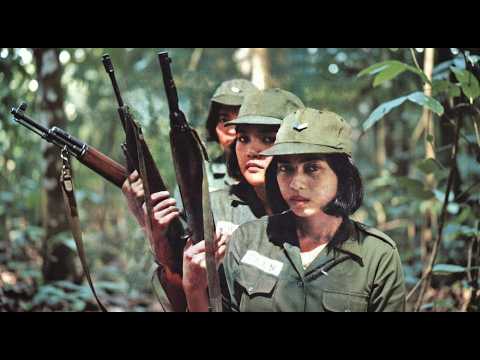
That morning in July 1968 would haunt Den for the rest of her life. Decades later, she would still wake in terror, convinced that invisible eyes were upon her. “We were not afraid of the American GIs,” she said in a 2015 interview, her voice trembling. “We hated the Australian SAS because they made our comrades disappear.”
This is the story of why 138,000 women who served in the Viet Cong—women who had survived B-52 bombings, fought American Marines in close combat, and proven their courage in countless firefights—learned to fear an enemy they almost never saw, rarely survived encountering, and couldn’t defend against no matter how experienced they became.
To understand that fear, you must first understand who these women were. Between 1965 and 1973, approximately 138,000 women served in the North Vietnamese Army and Viet Cong forces. Some volunteered; most were drafted. They carried supplies through impossible terrain, operated anti-aircraft guns, gathered intelligence in Saigon, and fought as combat soldiers when units were decimated.
They adapted to the patterns of war. American forces were predictable: they relied on overwhelming firepower, air mobility, and search-and-destroy operations. Viet Cong fighters learned to engage briefly, inflict casualties, and vanish before the helicopters arrived. “We learned Americans were predictable,” explained a former VC platoon leader. “They wanted to use their helicopters and radios and artillery. So we’d shoot at them to make them call all that in, then we’d be gone before it arrived.”
Australian infantry were harder to avoid—they moved more quietly, used tracker teams, and patrolled longer without resupply. But they could still be detected. Scouts could spot their ambush positions, report their movements, and predict their patrol patterns. “Australians were harder to avoid than Americans,” admitted a former VC squad leader. “But we could still hear them, still see them coming.”
Then came the Australian SAS. They operated in five-man patrols, inserted by helicopter into remote areas, and disappeared for up to three weeks. They moved less than a kilometer a day, stopping every few hundred meters to listen and observe for twenty or thirty minutes. They avoided trails, wrapped metal equipment in tape, mixed mud into their uniforms to kill any shine. They didn’t smoke, didn’t cook, didn’t speak above whispers for weeks.
They established observation posts so well camouflaged that you could walk within meters without seeing them. And when they struck, it was with maximum violence for minimum time—claymore mines and automatic weapons fire from concealed positions, followed by immediate withdrawal. The shooting would start and end so fast you didn’t have time to react.
“The shooting would start and end so fast you didn’t have time to react,” recalled Fam Thailand, who survived an SAS ambush in 1969. “People falling, explosions, bullets everywhere, then silence. It was over before you could even point your weapon.”
Between 1966 and 1971, the Australian SAS conducted nearly 1,200 patrols in Phuoc Tuy Province. According to official records, these patrols resulted in over 600 enemy killed confirmed, with hundreds more probable. SAS casualties during this period: one killed in action, one died of wounds, three accidental deaths, one missing in action. This produced a kill ratio unprecedented in the entire war.
But statistics don’t capture the fear. The fear came from specific tactical realities that made the SAS uniquely dangerous. First was the complete inability to detect them before they attacked. Every Viet Cong unit had scouts who moved ahead of columns, checking for enemy ambushes. These scouts knew what to look for: broken vegetation, footprints, disturbed soil, equipment marks on trees. American and Australian infantry left these signs. SAS patrols didn’t.
“Our scouts were experienced,” said Le Van Tham, a former transportation group commander. “They could spot American ambush positions from 100 meters. They could find where Australian patrols had stopped to rest. But they never saw Ma rung until the shooting started.”
Second was the time factor. SAS patrols often observed enemy movements for days before acting. They’d learn patterns—which times of day were busiest, which trails were used most frequently, where security was lax—then strike at the perfect moment. “They knew our routines better than we did,” Den recalled. “We’d move supplies at night thinking we were safe. But they’d been watching for days, knew exactly when we’d come, had already positioned themselves perfectly.”
Third was the precision and speed of their attacks. SAS ambushes typically lasted 60 to 90 seconds. Maximum violence for minimum time, then immediate withdrawal while Viet Cong forces were still in shock and disarray. Fourth, and perhaps most psychologically devastating, was the certainty that if you encountered the SAS, some of your unit was already dead before you knew they were there.
Captured Viet Cong documents from 1967 and 1968 reveal that enemy leadership understood they were facing different types of enemies requiring different responses. For American forces, the documents detailed extensive tactical guidance: how to engage American patrols, how to avoid American sweeps, how to counter American fire bases. For Australian infantry, guidance was more cautious but still assumed they could be detected, tracked, and avoided or fought when necessary.
For the Australian SAS, the guidance was completely different. A captured document from 1968 contained instructions that revealed the psychological impact the SAS had on enemy forces. “Special enemy forces operate in small groups with silent movement and invisible positions. If encountered, assume you are already under observation. Assume your strength and positions are known. Assume ambush has been prepared. If possible, avoid all contact and withdraw to alternate positions.”
The document didn’t provide tactical guidance for defeating SAS patrols. It provided guidance for surviving encounters and avoiding them entirely. This acknowledgment that Viet Cong forces had no effective counter to SAS tactics revealed how completely the SAS had achieved tactical dominance.
“We had ways to fight Americans,” said Tran Duc, a former intelligence officer. “We had ways to fight Australian infantry. But Ma rung, our orders were: if you think they’re in your area, change your plans. Use different trails. Move at different times. Assume they’re watching even if you can’t see them.”
This assumption of constant observation created a psychological burden that affected operations across entire regions. Every trail became suspect. Every jungle clearing could conceal watchers. Every supply movement risked walking into an ambush that had been prepared days in advance. The SAS didn’t need to patrol constantly or engage frequently. Their reputation and the uncertainty they created did the work. Enemy units operated under perpetual stress, never knowing if five silent professionals were observing them at that exact moment, learning their patterns, preparing an ambush.
For female Viet Cong fighters, this psychological warfare was particularly devastating. They were operating in an already discriminatory environment where their competence was constantly questioned by male commanders and where mistakes could result in assault or execution, not just combat casualties. The pressure to perform perfectly while under constant observation by an invisible enemy created stress that male fighters didn’t fully experience.
After the ambush that killed five members of her supply column, Den was interrogated by her commander. Not debriefed—interrogated. “He wanted to know if I’d been careless,” Den recalled. “If I’d made mistakes, if I’d failed to follow procedures. He was looking for someone to blame because five people were dead and supplies were lost.”
Den explained that she’d followed all procedures. Scouts had checked the trail. The route had been used safely for months. Security was maintained. There were no signs of enemy presence. Her commander didn’t believe her. He said they must have been loud or lazy or made mistakes that alerted the enemy. He accused her of lying to cover her incompetence. It was only after other supply columns reported similar ambushes—with no prior warning and no trace of enemy afterwards—that commanders acknowledged they were facing an enemy different from Americans or Australian infantry.
By then the psychological damage was done. “Every time I led a column after that, I was terrified,” Den said. “Not just of being killed, of being blamed if we were ambushed. Of being accused of incompetence if we encountered Ma rung and survived, but others died. The fear of the invisible enemy mixed with fear of my own commanders blaming me for things I couldn’t control.”
Other female fighters described similar experiences. Le Thi Mai, an anti-aircraft gunner, said that when her unit was attacked by Australian infantry during a sweep operation, her commanders praised her for fighting back effectively. But when another unit was hit by what was suspected to be an SAS ambush, the female squad leader who survived was demoted for failing to maintain proper security—despite no evidence she’d done anything wrong.
“If a man commanded a unit that was ambushed by Ma rung, it was bad luck or clever enemy tactics,” Mai explained. “If a woman commanded that unit, it was incompetence. We were held to different standards and blamed for things no one could have prevented.”
This gender discrimination added an additional layer of stress to an already terrifying tactical situation. Female fighters had to be perfect in ways male fighters didn’t because they were constantly proving they belonged in combat roles. Encountering an enemy that made perfection irrelevant—that could kill you despite flawless execution of procedures—created a special kind of fear.
Phan Thi Lan survived an SAS ambush in 1969 while leading a reconnaissance patrol. “We were checking a trail for our battalion to use,” Lan recalled. “I had five soldiers with me. We moved slowly, carefully, checking everything. Then three of my soldiers were dead before I heard the first shot. The other two ran. I lay in elephant grass for two hours, not moving, terrified that if I moved, they’d kill me, too.”
When she finally crawled back to her lines, her commander asked why she survived when her soldiers died. “Like I’d abandoned them, like I was a coward,” Lan said. “The implication was clear. A male leader might have fought back. A female leader survived by hiding. The fact that fighting back against an SAS ambush was suicide didn’t matter. The gender assumptions did.”
After that, Lan was never given command again. “Not because I did anything wrong,” she said. “Because I’d encountered Ma rung and survived, and that made me suspect—made them question if I was really a soldier or just a girl who got lucky.”
The SAS probably never knew the secondary impact their operations had. They were conducting reconnaissance patrols and ambushes according to their training and doctrine. They didn’t know that their tactical effectiveness was creating internal conflicts in enemy units where female fighters were being blamed for failing to counter tactics that male fighters also couldn’t counter.
The women who fought for the Viet Cong were not easily frightened. They’d survived B-52 strikes that turned jungle into moonscape. They’d endured artillery barrages and fought American Marines in close combat. But the Australian SAS represented something different—an enemy that removed all agency from the fight.
“With Americans, I had choices,” Den explained. “I could avoid areas where they operated. I could watch for helicopters. I could prepare defensive positions. With Ma rung, no choices. I didn’t know where they were. Didn’t know when I might encounter them. Didn’t know how to defend against them. I was helpless in ways I never felt against Americans, even with all their firepower.”
This helplessness—the loss of control and agency—was more psychologically devastating than the physical danger. Former VC fighters described the progression of fear as they gained experience. New fighters feared everything. After a few months, they learned to manage fear of bombing and artillery through preparation and camouflage. After a year, they learned to manage fear of American patrols through scout networks and tactical awareness. But fear of the SAS never diminished with experience. If anything, it increased.
“The more experience you gained, the more you understood how good they were,” said Nguyen Van Duc. “New soldiers didn’t really understand the danger because they didn’t understand what was normal versus what Ma rung could do. Experienced soldiers had seen enough to know that Ma rung were operating on a completely different level than anything else we faced.”
Tran Thi Thu, the intelligence operative, described the fear in stark terms. “American bombing might kill you. Australian infantry might find and fight you. But Ma rung were hunting you personally. They’d watch you for days, learn your habits, wait for the perfect moment. It wasn’t combat—it was being prey.”
This distinction between combat, where both sides fight, and predation, where one side hunts and the other is prey, captures why the psychological impact was so profound. The SAS had achieved a level of tactical dominance where Viet Cong forces, including experienced fighters who’d survived years of war, felt hunted rather than engaged in mutual combat.
The testimony of female Viet Cong fighters about the Australian SAS reveals patterns that official military histories miss. First, the testimony is remarkably consistent across different women interviewed in different years by different researchers. They use similar language: disappear, ghosts, invisible, hunting. They describe similar tactical realities: no warning before ambushes, no trace afterward, no effective counter tactics. This consistency across independent sources suggests the accounts are honest reflections of experience rather than coordinated propaganda.
Second, the women’s testimony often includes details that wouldn’t appear in propaganda—admissions of fear, descriptions of internal conflicts with male commanders, acknowledgments of tactical inferiority. Propaganda typically emphasizes heroism, resistance, and ultimate victory. These accounts emphasize terror, helplessness, and respect for enemy capabilities.
Third, the testimony reveals psychological impacts that lasted decades after the war ended. Nuan Thai Den’s 2015 interview was conducted 50 years after she joined the Viet Cong and 40 years after the war ended. She was a grandmother living in a reunified Vietnam, where discussing the war was politically sensitive. Yet when asked about her wartime experiences, the fear in her voice when discussing the SAS was immediate and visceral.
“I still have nightmares,” Den admitted. “Not about the bombing, not about the firefights—about walking on a trail and feeling like someone is watching me, but not knowing where they are. I wake up terrified that I’m being observed and don’t know it. Fifty years later, and Ma rung still haunt me.”
This long-term psychological impact suggests the experience of encountering the SAS created trauma different from other combat experiences. The uncertainty, the helplessness, the realization that skilled, patient enemies could observe and kill you without you ever knowing they were there created fear that persisted long after other wartime fears had faded.
Post-war studies of PTSD in Vietnamese veterans have found that certain types of combat exposure created more lasting psychological damage than others. Captivity and torture created severe PTSD. Witnessing civilian casualties created moral injury. But encountering invisible enemies who killed comrades without warning created a specific type of hypervigilance and paranoia that persisted for decades. Female Viet Cong fighters who encountered or survived SAS operations showed these symptoms at higher rates than fighters who faced equivalent danger from artillery or conventional combat.
The reason appears to be that conventional combat, however dangerous, allowed fighters to feel they had some control through their skill and decisions. SAS operations removed that sense of control completely.
The fourth pattern in female fighter testimony is respect for SAS tactical skill, even when discussing how devastating it was to face them. “They were the best,” said Le Thi Mai simply. “Better than anyone else we fought. If I’d known soldiers like that existed, I might not have joined the war. But I respect their skill, even though I feared them.”
This respect from enemy combatants is perhaps the most credible testament to SAS effectiveness. These women had nothing to gain politically or personally from praising Australian special forces. They were describing an enemy that had terrified them and killed their friends. Yet they consistently described the SAS as operating on a different level than other Allied forces—with skills and tactics they couldn’t counter, even after years of experience.
Former American military historians who have interviewed Vietnamese veterans note that VC and NVA soldiers describe American forces with a mix of resentment for the overwhelming firepower, frustration at not being able to fight on equal terms, and sometimes contempt for relying on technology over skill. They describe Australian infantry with respect for professionalism, but confidence they could fight them successfully. They describe the SAS with fear and respect that acknowledges complete tactical inferiority.
The statistical record of SAS operations in Vietnam supports the female fighters’ testimony about their effectiveness. Between 1966 and 1971, the Australian SAS conducted 1,200 patrols documented in official records. These patrols operated in Phuoc Tuy Province primarily, but also conducted missions in surrounding provinces and across the border in Cambodia. The kill ratio achieved during these operations was 600 enemy confirmed killed to one SAS soldier killed in action—Sergeant Bill Mott, killed by friendly artillery in 1969. One died of wounds, Signalman Eric Robinson, wounded in contact and died during evacuation. Three accidental deaths and one missing: Lieutenant Peter Schumann, missing in action 1970. This produces a ratio of approximately 100:1 in direct combat—unprecedented for sustained small-unit operations.
More significant than the ratio is the pattern. SAS patrols made contact on their terms, at times of their choosing, against enemies who usually didn’t know they were under observation until the shooting started. Captured Viet Cong after-action reports describe SAS contacts from the enemy perspective. The pattern is consistent: VC units moving along trails or occupying positions were engaged suddenly by heavy fire from concealed positions, suffered significant casualties in 60 to 90 seconds, then the attacking force withdrew before VC reinforcements could arrive or effective return fire could be organized.
Intelligence analysis of these reports found that VC forces almost never successfully counter-ambushed SAS patrols, rarely wounded SAS soldiers during contacts—most SAS casualties came from mines or accidents, not firefights—and never successfully pursued SAS patrols after contact because the Australians withdrew without leaving clear trails to follow.
The psychological impact was documented in captured enemy orders and guidance documents. Multiple documents from 1967–1969 instructed VC units operating in Phuoc Tuy to avoid contact with special enemy reconnaissance forces if possible, to assume they were under observation in areas where SAS were thought to operate, and to change routes and schedules frequently to avoid establishing patterns that could be exploited. This is noteworthy because captured VC documents from the same period contain confident tactical guidance for engaging American and Australian infantry units. The enemy believed they could fight other Allied forces successfully, but acknowledged they couldn’t effectively counter SAS tactics.
From the Vietnamese civilian perspective, the SAS also generated fear distinct from other forces. Post-war interviews with civilians who lived in Phuoc Tuy Province during the war reveal that villagers knew when American or Australian infantry units were operating nearby. They’d see helicopter insertions, hear patrols moving through jungle, encounter soldiers in villages. But civilians consistently report they never knew when SAS patrols were operating in their areas.
“Sometimes after the war, we’d hear that Ma rung had been operating near our village for weeks,” explained a former village chief. “We never knew—never saw them, never heard them. They were living in the jungle near us, and we had no idea.”
This invisibility to civilians, combined with their effectiveness against VC forces, meant that Vietnamese non-combatants couldn’t provide intelligence to VC units about SAS locations or movements—in areas where VC relied heavily on civilian intelligence networks to track Allied forces. The SAS operated in an intelligence vacuum where even friendly civilians couldn’t provide warning of their presence.
The long-term impact of facing the Australian SAS shaped how female Vietnamese veterans processed their wartime experiences decades later. In a 2010 oral history project interviewing female veterans, researchers found that women who’d fought in areas where SAS operated described their war experiences differently than women who’d fought in other regions. Women who fought in northern areas against American bombing campaigns described the war in terms of survival and endurance—surviving the bombs, enduring the hardship, maintaining morale despite losses. Women who fought in urban areas described the war in terms of risk and espionage—gathering intelligence while maintaining cover, taking calculated risks in hostile environments. Women who fought in the Central Highlands described the war in terms of combat and tactics—attacking American positions, defending against sweeps, tactical victories and defeats.
But women who fought in Phuoc Tuy Province, where Australian Task Force and particularly SAS operated, described the war differently. They described it in terms of fear and helplessness—being watched without knowing it, friends disappearing without explanation, an enemy they couldn’t see, couldn’t fight, couldn’t escape.
“I never felt like a soldier in Phuoc Tuy,” said one female veteran who requested anonymity. “I felt like an animal being hunted. Ma rung took away everything that made me feel like I was fighting. I was just trying to survive each day, not knowing if they were watching me at that moment.”
This is the legacy of the Australian SAS in Vietnam—not just the bodies they left behind, but the fear they instilled in an enemy who had faced so much already. It is a story of tactical brilliance and psychological warfare, told from the perspective of those who lived in terror of the jungle phantoms.
For the women of the Viet Cong, the war ended in 1975, but the jungle never truly fell silent. Decades later, in the quiet of a Hanoi apartment, Nuan Thai Den still flinched at the rustle of leaves outside her window. “The bombs I could hear coming,” she said. “But Ma rung—they were already there, watching, waiting. That silence never leaves you.”
Her testimony, and those of dozens of other female veterans, forces us to rethink what battlefield courage looks like. These women weren’t cowards. They were soldiers who met an enemy that broke every rule they knew—and survived to tell the tale.
The Australian SAS never sought to be feared. They simply trained to be invisible, patient, and lethal. Yet in doing so, they created a legend that outlasted the war itself—a shadow in the jungle that still haunts the memories of those who once walked those trails.
So here is the question that lingers long after the last shot was fired: If you knew an invisible enemy was watching you right now, would you keep walking—or would you change your path forever? Tell us what you think in the comments below.
Report this article
Select a reason for reporting:






