On January 27th, 1994, the news wires lit up with a single, stark sentence: Claude Akins was dead. Stomach cancer. He was 67. The name might not have instantly sparked a face, but the roles—Sheriff Lobo, Sonny Pruitt, a hundred hard-eyed villains and weary soldiers—those were burned into the memory of anyone who had turned on a television or sat in a movie theater over the previous four decades. Yet even as the obituaries rolled out, a quieter, stranger truth remained buried. The man who had spent his life in front of cameras had somehow kept the most important part of himself entirely off-screen.
For years, Hollywood knew him as a workhorse. A character actor. A guy who showed up, hit his mark, and never complained. But behind the closed doors of his home in Altadena, another story was unfolding—one that would only come to light after his death, and that would leave even his closest colleagues stunned.
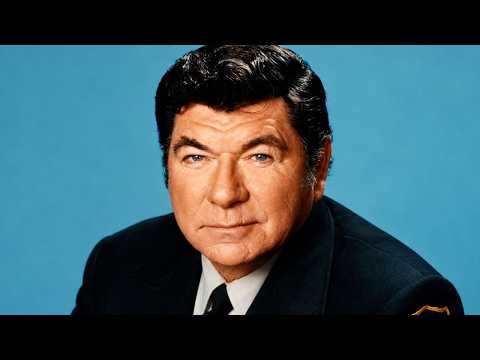
Claude Akins was born in 1926 in Nelson, Georgia, but he grew up in Bedford, Indiana—a town of twelve thousand where the biggest dream was simply to be somebody. “When you’re from a town of only 12,000, you want to be somebody or something, but you don’t know where to go or how,” he once recalled. That restless hunger sent him to the Army Signal Corps during World War II, then to Northwestern University, then to the Broadway stage. By 1953, he was in Hollywood, standing opposite Burt Lancaster in From Here to Eternity, terrified and thrilled in equal measure.
But the industry had a box ready for him. With his square jaw, towering frame, and gravel-pit voice, Claude was never going to be the romantic lead. He was the sheriff. The sergeant. The heavy. He joked bitterly that if he’d looked like Robert Redford, he’d have been the hero—but with a face like his, he was destined to play the bad guy. And so he did, again and again, in nearly a hundred films and more than 180 television episodes.
What no one knew—what no one even suspected—was that Claude Akins had been living a double life almost from the very beginning. Not the kind involving secret mistresses or hidden debts. Something far more radical in the hothouse of Hollywood: a life of almost monastic privacy and discipline, anchored by a marriage that lasted over forty years and a family he shielded from the spotlight with fierce, deliberate silence.
While his contemporaries chased headlines and tabloid fame, Claude went home. Every night. To his wife Teresa, a nurse he’d married in 1952 when he was still a nobody, and to their three children. No affairs. No scandals. No public unravelling. In an era when movie stars were expected to burn bright and messy, Claude Akins simply… worked. And then disappeared.
His son later described him as “the epitome of blue-collar workers”—a man who treated acting as a job, not a identity. He arrived on time. He knew his lines. He never looked down on a small role. And when the day was done, he walked away from the cameras and back into a life so ordinary it was almost revolutionary.
But even that wasn’t the whole story. The real secret—the one that would only surface in the months after his death—wasn’t about what Claude Akins did behind closed doors. It was about what he had quietly carried with him for decades, a burden he never let the public see, and a decision he made in his final years that would change how we understand his entire legacy.
The secret had nothing to do with scandal. It was something far quieter, and in some ways far more surprising: Claude Akins had been quietly giving his money away for years. Not to publicity-friendly charities with his name on a plaque, but to people he had never met—struggling actors, crew members down on their luck, and a small scholarship fund back in Bedford, Indiana that he insisted remain anonymous for as long as he lived.
His family only learned the full extent of it after the funeral. Teresa found ledgers, letters, and cancelled checks tucked into a drawer he had never mentioned. Some of the recipients were names she recognized—young performers Claude had worked with on Movin’ On or Sheriff Lobo who had fallen on hard times. Others were complete strangers who had written him letters he had never shown anyone.
To his children, it made a strange kind of sense. Their father had always been the man who fixed things quietly. Who mowed the lawn himself. Who never once acted like a star. “He didn’t want to be thanked,” his son said later. “He just wanted to help.”
But the most striking revelation came from a letter Claude had written in the final months of his illness, addressed to no one in particular and found folded inside a well-worn copy of a play he had kept since his Northwestern days. In it, he admitted something he had never said publicly: he had never stopped feeling like the boy from Bedford who didn’t know where to go or how.
Fame, he wrote, had never cured that. Sheriff Lobo had made him recognizable, but it hadn’t made him whole. What had made him whole was the work itself—the simple, daily act of showing up, learning a character, and doing the job well. “I was never the star,” he wrote. “But I was never idle, either. And that, I think, is enough.”
Those words would echo through the tributes that followed. Colleagues who had worked with him decades earlier remembered not his roles, but his kindness—the way he calmed nervous young actors on set, the way he never complained about the cold or the mud or the long hours. One director recalled that Claude had once stayed late to help a prop man fix a broken wagon wheel, though no one had asked him to.
As the news of his death spread, something unusual happened. Fans who had spent years recognizing his face without knowing his name suddenly found themselves mourning him. Rio Bravo played on late-night television. Movin’ On reruns drew new viewers. And in Bedford, Indiana, the town he had never stopped calling home, flags flew at half-mast.
Yet even in death, Claude Akins kept his final secret close. The full story of his quiet generosity would not emerge for years, and when it did, it would come not from headlines but from the grateful letters of strangers—people whose lives had been touched by a man they had never met, a man whose face they might have recognized on a screen, but whose heart they had never known at all.
The letter might have ended there, folded back into the old play and forgotten, if not for a phone call that came to the Akins house three weeks after the funeral. A man named Harold Beckwith, a retired grip who had worked on Merrill’s Marauders in 1962, had read the obituary and felt compelled to reach out. He told Teresa a story she had never heard.
On the last day of shooting in the California desert, Beckwith had collapsed from heat exhaustion. The production had no money for extra medical staff, and the studio wanted to keep filming. Claude Akins had walked off set, driven the man to a hospital in his own car, and paid the bill out of his own pocket. He had made Beckwith promise never to tell anyone.
Teresa sat in silence as the voice on the other end of the line cracked with emotion. “He said if I thanked him, he’d never speak to me again,” Beckwith recalled. “So I never did. For thirty-two years, I never did.”
That was the first call. It would not be the last.
Over the following months, a slow trickle of letters and phone calls reached the family. A young actress from a 1979 episode of Sheriff Lobo wrote that Claude had quietly covered her rent for six months after her husband left her. A stuntman from The Devil’s Brigade remembered Claude slipping him an envelope after a bad fall, saying only, “Get your back looked at. Don’t be stupid about it.” A stagehand from Chicago sent a photograph of his daughter’s college graduation, with a note explaining that the Claude Akins Scholarship Fund had paid for four years of tuition.
None of it had ever appeared in a press release. None of it had been leaked to the columns. Claude had simply done these things, one at a time, in the margins of a career that everyone thought they understood.
But the most surprising call came from a man named David Reyes, a former studio accountant who had worked at Revue Studios in the early 1960s. Reyes had kept a secret of his own for over thirty years, and with Claude gone, he felt the weight of it pressing down on him.
In 1963, during the filming of The Killers, Claude had discovered that a young production assistant was being systematically underpaid and threatened with dismissal if he complained. The assistant was David Reyes. Claude had gone to the producer and threatened to walk off the picture unless the matter was corrected. The producer relented. Reyes kept his job, finished his career, and never forgot.
“He didn’t do it for credit,” Reyes told Teresa. “He did it because it was right. And then he told me to forget it ever happened.”
What emerged from these stories was not the portrait of a saint. Claude Akins could be gruff, impatient, and stubborn. He hated pretension and had no patience for actors who complained about the craft. But beneath the tough exterior was a man who had never forgotten what it felt like to be small, to be overlooked, to be the boy from Bedford who wanted to be somebody but didn’t know how.
He had become somebody. And then he had spent the rest of his life making sure that other people got the same chance.
By the spring of 1994, the trickle of letters had become a small flood, and Teresa Akins finally made a decision. She gathered the ledgers, the notes, and the worn copy of the play into a single box and donated them to the Bedford public library, with one condition: no plaques, no ceremony, no announcement.
The librarian, a woman named Ruth Calloway, honored the request for nearly a decade. But in 2003, when the Claude Akins Memorial Golf Classic raised its largest sum yet, she quietly placed the box in a glass case near the reading room, labeled only with a single line from his letter: “I was never the star. But I was never idle, either.”
Visitors who stopped to read the letters often walked away shaking their heads, surprised that a man they knew only as Sheriff Lobo had lived such a hidden life. Schoolchildren on field trips learned his name for the first time—not as an actor, but as the man who had paid for their textbooks.
And in Altadena, Teresa kept the house exactly as it was. The lawn stayed mowed. The porch light stayed on. She told her children that their father had left them something better than fame: a reason to show up every day, and the quiet knowledge that no kindness is ever wasted.
So when the reruns play late at night and that familiar, square-jawed face fills the screen, it is worth asking: how many of the people he helped are still out there, still carrying his secret—and who among us would ever have guessed?
Report this article
Select a reason for reporting:






