The photograph is cracked and faded, but the scene it holds is alive with the chaos of a city under siege. It’s 1915, and beneath the streets of New York, a subway fire rages, sending plumes of smoke billowing into the sky above Broadway and West 55th Street. Crowds gather, their faces a mix of fear and fascination, as the modern world collides with disaster. This is just one of the thousands of moments frozen in time, waiting to be rediscovered.
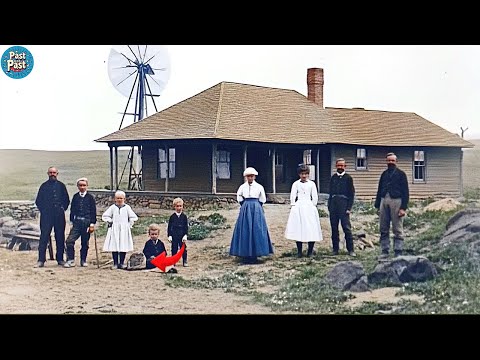
These rare vintage photos are more than just images; they are windows into the soul of a nation forging its identity. From the bustling streets of New Orleans in 1890, where horse-drawn carriages roll past grand mansions, to the windswept plains of Nebraska in 1886, where a pioneer family pauses for a portrait, each frame tells a story of ambition, struggle, and resilience.
In the late 19th and early 20th centuries, America was a land of stark contrasts. In the cities, the Industrial Revolution was in full swing. Young newsboys hustled through downtown St. Louis, shouting headlines on busy Saturdays, their voices competing with the clatter of streetcars and the rumble of wagons. In 1908, a fierce snowstorm blanketed New York City, and workers cleared streets by hand, their breath visible in the frigid air as horse-drawn carts struggled through the drifts.
But beyond the urban sprawl, the Wild West was still wild. In 1881, Pine Street in Abilene, Texas, was a dusty thoroughfare lined with saloons and general stores, where cowboys and lawmen rubbed shoulders. A year later, a 20-mule team hauled borax wagons across Death Valley’s scorching 165-mile route, a testament to the grit of those who dared to tame the desert.
The photos also capture the harsh realities of life. In 1911, young breaker boys labored in the coal mines of Nanticoke, Pennsylvania, their faces smudged with coal dust, their childhoods stolen by the demands of industry. In 1913, young women worked long hours in a Kansas cotton mill, their hands raw and their spirits tested. And in 1910, a grieving widow and her children stood solemnly in West Virginia after a miner’s funeral, their faces etched with sorrow.
Yet, amidst the hardship, there was also hope. In 1925, an immigrant family waited at Ellis Island, their eyes fixed on the distant skyline of New York, dreaming of a new beginning. In 1900, a brave woman collected Christmas donations for the Salvation Army in snowy New York, her bell ringing out over the hushed streets. And in 1906, San Franciscans watched helplessly as fire consumed their city after a devastating earthquake, but they would rebuild, stronger than before.
These images, collected from archives across the country, offer a glimpse into a world that is both foreign and familiar. They remind us that the past is not so distant, and that the stories of those who came before us are woven into the fabric of our nation.
As we look back, we see the bold, untamed spirit that shaped America—a spirit that still echoes in the streets of our cities and the vast open spaces of the West.
Some of the most striking photographs capture the quiet dignity of communities often overlooked. In 1899, Courtney’s canvas store and post office served Klondike prospectors in Sheep Camp, Alaska—a fragile outpost clinging to the edge of the wilderness, where letters from home were as precious as gold.
In 1862, at Smith Plantation in South Carolina, freed African Americans gathered to hand-separate cotton before it reached the gin. Their faces, weary but resolute, speak of a transition from bondage to an uncertain freedom. That same year, President Lincoln stood tall in his top hat at Antietam, visiting General McClellan and his staff—a moment of leadership in the midst of the nation’s bloodiest conflict.
And in 1864, a Black Union soldier stood before a former slave auction house in Atlanta—a striking symbol of change, of a world turned upside down. The photograph is haunting: the very ground where human beings were once sold now bore witness to their march toward liberation.
The West, too, had its own cast of characters. In 1887, the Texas Rangers posed outside a Culla grocery store, their badges gleaming, their eyes wary—icons of law in a land where justice was often swift and personal. In Dodge City, Kansas, a drugstore stood as a rare beacon of civility, its shelves stocked with remedies and tobacco, frequented by cowboys and shopkeepers alike.
In 1877, Main Street in Deadwood, South Dakota, was a muddy ribbon of opportunity and danger. Gamblers, miners, and outlaws mingled in its saloons, while respectable women hung laundry in the dusty yards behind. By 1889, overland stagecoaches crossed a bridge into Deadwood, townsmen waving in frontier camaraderie—a scene of connection in an isolated land.
But not all frontiers were tamed without cost. In 1870s Vancouver Barracks, soldiers stood watch during the Northwest tribal conflicts, their presence a reminder of the violent displacement that accompanied westward expansion. And in 1890, the Wounded Knee massacre would soon stain the snow—though that photograph, too terrible to print, remains etched in memory.
Yet the human spirit endured. In 1900, a horse-drawn school wagon carried eager students to class near Lexington, Kentucky, their faces bright with anticipation. In 1885, a proud Nebraska family posed by their sod house and windmill, embodying frontier resilience—their home built from the very earth beneath their feet.
In 1922, friends showed off trendy swimsuits along the Potomac River, blending fashion with summer fun, a carefree moment in a decade of change. And in 1909, Coca-Cola delivery men in Knoxville posed with one of the brand’s first Ford trucks—a sign that the old ways were giving way to the new.
The photographs keep coming, each one a thread in the vast tapestry of American history. From the gold miners of South Dakota’s Black Hills to the lumberjacks dwarfed by giant sequoias in Humboldt County, from the bustling markets of West Street in a 1920 blizzard to the quiet winter moment of Raymond Skyler and his children in snowy Worcester—these are the faces of a nation in motion.
But perhaps the most powerful images are those that show the collision of old and new. In 1906, brave pioneers rode a log train over a rickety bridge in Oregon’s Cascade Mountains—a scene of daring and progress, where the ancient forest met the iron horse. That same year, Washington Street in Boston bustled with carriages, street cars, and shoppers, the city’s lively core pulsing with energy.
In 1918, a Texas family posed solemnly outside their home, their still faces shaped by long camera exposures—a reminder that photography itself was once a slow, deliberate art, requiring patience and stillness. And in 1905, stylish bathers relaxed in the sunshine of Palm Beach, savoring Florida’s coastal charm, a glimpse of leisure in an era of hard work.
These photographs, collected from archives across the country, are more than just historical records—they are invitations to step into the past. They remind us that the people who built this nation were not so different from us: they loved, they struggled, they hoped, and they dreamed.
As we look at the faces of newsboys, miners, pioneers, and immigrants, we see the reflection of our own humanity. The old United States was a land of vast contrasts—of wealth and poverty, of opportunity and oppression, of progress and tradition. And these rare vintage photos capture it all, frozen in silver and glass, waiting to be rediscovered by each new generation.
In the end, these images are a testament to the enduring spirit of America—a spirit that continues to shape our nation today. They remind us that the past is never truly gone; it lives on in the stories we tell and the memories we preserve.
And so the album closes, but the journey does not. Each photograph is a door left slightly ajar, inviting us to push it open and step into a world that was loud with wagon wheels, thick with coal smoke, and bright with the promise of a new start. From the crowded docks of Ellis Island to the sunbaked streets of Tombstone, these frozen moments remind us that America was never one story, but millions—layered, contradictory, and endlessly compelling.
They show us a nation that built itself in fits and starts, often at great cost. The breaker boys, the grieving widow, the pioneer family gripping a rifle—their faces ask us not for pity, but for remembrance. They were here. They mattered. They helped build this strange, sprawling, beautiful country.
And now the photographs rest in archives and attics, waiting for the next curious pair of eyes. They don’t demand attention. They simply exist—patient, silent, and powerful beyond measure.
So the next time you see an old photo at a flea market or in a dusty family album, don’t walk past it. Look closely. That blurry figure in the background might be a newsboy shouting headlines in 1900 St. Louis. That stern-faced woman might have collected Christmas donations in a New York blizzard. Their world is gone, but not forgotten.
What story will you discover when you look at the past through new eyes—and what will you leave behind for those who come after?
Report this article
Select a reason for reporting:






