The white flag was supposed to mean surrender. In the blazing desert of Tobruk, it meant a bullet to the head.
German snipers hid behind fake white flags, waiting for Australian soldiers to stand and accept the surrender. One by one, the Australians fell—over ten men killed every day. The rules of war demanded they honor the flag. The rules were killing them.
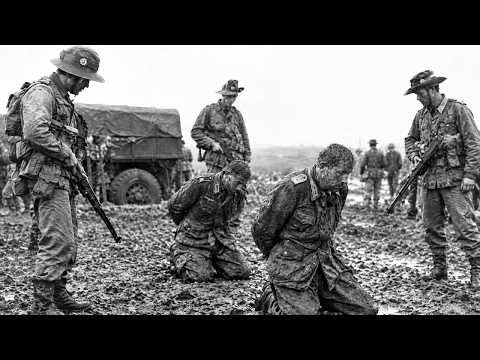
Trapped inside the besieged city, 14,000 Australian soldiers faced a ruthless enemy led by General Rommel. They were not professional soldiers—they were shopkeepers, farmers, and teachers who had never held a rifle before the war. And they were dying because they followed the rules.
The British commanders in Cairo ordered them to keep obeying the Geneva Convention. “The rules must be followed, no matter what the enemy does,” they said. But the men in the trenches knew the truth: the rules had become a death sentence.
Then a small group of Australians noticed something. The white flags never moved like a real man surrendering. They stayed perfectly still, tied to a stick. And there was never a body standing behind them. The sniper was hiding thirty to fifty yards behind the flag.
That simple observation changed everything. The Australians built periscopes from shaving mirrors and food tins, spotted the hidden nests, and answered with Bren guns. They stopped walking into the trap.
When British officers demanded they return to the old rules, one Australian commander—General Leslie Morshead—refused. He told them he would never force his men to walk into a deadly trap to satisfy a piece of paper the enemy had already torn up.
What happened next would change the course of the desert war—and rewrite the laws of war forever.
The new tactic spread through the trenches like wildfire. Men scribbled the lesson into pocket notebooks and passed them hand to hand under the scorching sun. Never trust a flag. Always check the ground behind it. Let the heavy guns answer.
The Germans soon realized their favorite trick had stopped working. So they made it crueler. They began placing real wounded soldiers in the open, white cloths tied to short sticks, with snipers buried in deep pits directly behind the injured men. It was a sickening choice for the Australians—watching through their mirror periscopes as a wounded man begged for water, knowing a rifle barrel was aimed at anyone who stepped forward.
But the Australians held firm. They learned to walk their fire precisely around the wounded, striking the hidden snipers behind them. They had become hunters of hunters.
Nearby Allied units that refused to adapt paid a terrible price. British formations still walking out to accept surrender suffered three times the casualties during those same weeks. The contrast was impossible to ignore.
General Morshead wrote in his official war diary words his men would remember for the rest of their lives. He wrote that the enemy had chosen to make the white flag a weapon, so the Australians chose to treat it as one. That clear statement gave his soldiers full permission to protect each other before worrying about outdated paper rules.
Every morning brought a new test of courage along the outer wire. The desert at dawn was already hot, the temperature climbing past a hundred degrees. The bright morning sun made the dry ground look like white glass. Then, without warning, the sharp crack of a German rifle would tear past a soldier’s ear, a sound like ripping cloth.
Two hundred yards across the open sand, a piece of white cloth fluttered on a steel bayonet stuck in the red earth. No human body stood behind it. The air smelled of burnt powder, sweat, and the bitter sting of fresh blood on the rocks. Dry desert wind pushed fine yellow dust into every mouth, making teeth feel like rough sandpaper.
A young soldier crouched low, his knuckles pale as he gripped his rifle. His mate beside him reached out, touched his shoulder, and whispered low and steady: “Don’t look at the flag. Look behind it.”
That simple lesson created an unexpected benefit across the entire front line. Because the Australians had become experts at looking past obvious tricks, they began applying the same sharp vision to the rest of the battlefield. When the enemy set up fake wooden tanks to distract them, the Australians searched the nearby rocks and spotted the real anti-tank guns. When the Germans built dummy observation towers, the Australians looked in the low bushes three hundred yards away and found the real observers. This habit of questioning what sat directly in front of them saved countless lives in every kind of battle.
The brutal fight for Tobruk dragged on far longer than anyone expected. The siege lasted 241 days, from April through December 1941. The Ninth Australian Division stayed trapped in its trenches, surrounded on every side by enemy tanks and heavy artillery. Yet despite hunger, blistering heat, and constant deception, the defenders never broke.
Over those long months, the garrison inflicted more than 5,000 casualties on the enemy while suffering about 3,000 of their own. It was a stunning victory against a far larger and stronger army. Ordinary citizen soldiers had outsmarted the best of the German forces, turning a deadly trap into a textbook lesson in desert survival.
When the long siege finally ended in late 1941, the Australians could not go straight home. The war across the desert still raged. And the lessons they had learned in the dusty trenches traveled with them wherever they marched. In late 1942, the Ninth Australian Division was called to fight in another massive struggle called the Battle of El Alamein. Once again, they faced the same enemy across vast stretches of burning sand and jagged rock.
The German forces tried their old tricks again, hoping the defenders had forgotten what happened months before. But the Australian soldiers had learned the lesson well. Resisting fake surrender flags had become second nature to every man carrying a rifle. When a piece of white cloth appeared over a distant sand dune, no Australian soldier rushed into the open. They searched instantly for the sniper hiding forty yards behind it. Because of their knowledge of this trick, the soldiers saved hundreds of their comrades from falling into deadly traps during the fierce breakthrough battles.
Soon this clever counter-tactic, invented by ordinary soldiers at Tobruk, spread far beyond the Australian division. By 1943, senior Allied commanders across the Mediterranean quietly changed their official instruction manuals. The new small booklets taught every Allied soldier how to verify a surrender safely from behind cover before stepping into the open. The old rule of blind advance was replaced with careful steps designed to protect human lives.
Years later, in 1949, leaders from around the world gathered in Switzerland to update the famous Geneva Conventions. They wrote strict new international laws governing how wars could be fought. And in those new agreements, they created a special rule against a trick called “perfidy.” Perfidy means using a white flag, a medical cross, or a false surrender to deceive the enemy and cause harm. The world’s leaders agreed that using a symbol of peace to kill someone was an official war crime.
This major change in world history happened largely because of the cruel deception that took place in the hot sands of North Africa. When the war finally ended, the brave men who survived Tobruk sailed home across the ocean to Australia. For many decades, they lived quiet lives without grand parades or public fame.
The shopkeepers returned to their wooden counters in Queensland. The farmers’ sons went back to grazing sheep and growing wheat in New South Wales. Most of these old soldiers never spoke to their families about the hard choices they had been forced to make during the siege. They kept the memories of dust, blood, and fake flags buried deep in their hearts.
Their bold commander, General Leslie Morshead, was knighted by the British King and became “Sir Leslie.” Yet outside Australia, his name was largely forgotten in the history books. He never sought glory for himself, preferring to let the quiet courage of his men speak for itself.
The story of the fake surrender flags teaches us a deep truth about how real problem-solving works. In times of extreme danger, the most brilliant solutions rarely come from high-ranking officers sitting in comfortable rooms far from the battlefield. Instead, they come from ordinary people who simply refuse to die for rules that no longer make sense.
When the enemy tears up the rulebook and turns a symbol of peace into a deadly trap, clinging to old habits is foolish and dangerous. True survival demands quick thinking, a willingness to question what your eyes see, and the ability to adapt to changing circumstances. Flexibility and intelligence will always beat rigid rules when those rules are being used as weapons against the innocent.
This historical lesson remains just as important in our modern world today. On battlefields around the globe, soldiers still face unfair and dangerous tricks. In crowded cities and quiet villages, enemies continue to hide behind protected symbols to launch surprise attacks. Some disguise themselves in ordinary civilian clothes. Others hide weapons inside medical vehicles, or raise their hands in peace before pulling a trigger.
The painful choice the Australian soldiers faced in the desert in 1941 is the same struggle facing peacekeepers and soldiers on today’s battlefields. When an opponent refuses to follow the rules of justice, staying safe while trying to do the right thing becomes the hardest challenge of all.
In the end, the story of the “Rats of Tobruk” leaves us with a powerful idea about human nature and justice. Civilized nations created the white flag to stop the bleeding and save human lives. When the enemy chose to turn that sacred symbol into an instrument of killing, the Australian soldiers in the trenches made a brave moral decision. They did not abandon their humanity, and they did not stop caring about right and wrong.
Instead, they chose to protect the lives of their comrades first, confident that the future would understand why they had to act that way. They proved that following an old rule should never become a guarantee of your own destruction.
The great question this historical moment leaves behind is both troubling and timeless. When the world’s rules are twisted into a deadly trap, at what point does blind obedience become responsible for your own defeat?
But the men who survived Tobruk carried more than lessons home. They carried silence. And that silence, held for decades, would one day be broken by a single dusty notebook found in an old wooden chest.
It was a small thing, no bigger than a man’s palm, its cover softened by years of heat and sweat. Inside, in faded pencil, a young farmer from New South Wales had written the rule that kept him alive: “Look behind the flag.”
His granddaughter found it while cleaning out the family farmhouse in 1998. She had never heard the story. She had never known her grandfather was one of the Rats of Tobruk. That little notebook would send her across the ocean, searching for the men who had stood beside him in the sand—and for the truth of what they had done.
She traced the names in the notebook—men from Queensland, from New South Wales—and wrote letters that crossed oceans. One by one, the replies came back, written in shaky hands: “Your grandfather saved my life at Tobruk.”
An old farmer in Wagga Wagga remembered the mirror periscopes and the Bren guns. “We weren’t heroes,” he wrote. “We just refused to die for a lie.” She began to understand the silence she had grown up with.
In 1999, she stood at a small memorial in Tobruk, the desert wind stinging her eyes. She read her grandfather’s rule aloud to the empty sand: “Look behind the flag.” Somewhere, she felt, a young farmer nodded.
So here is the question that still waits in the dust for every one of us: when a symbol of peace is turned into a weapon, will you keep walking toward it—or will you finally look behind the flag?
Report this article
Select a reason for reporting:






