They were the faces that defined an era—matinee idols, comedic geniuses, and Shakespearean legends whose names lit up marquees. But behind the glittering façade of Golden Age Hollywood, many of these beloved actors harbored a secret that could have destroyed their careers: their true sexuality. In an industry where image was everything and morality clauses ruled, being gay meant living a double life, often filled with fear, discretion, and heartbreak.
From Ernest Thesiger’s campy brilliance to Rock Hudson’s tragic revelation, the stories of these men are as compelling as the characters they brought to life. Some found solace in closeted relationships, others faced scandal and blackmail, and all navigated a world that demanded they hide who they truly were. Their legacies endure not just in their films, but in the quiet courage they showed by simply being themselves—even if only behind closed doors.
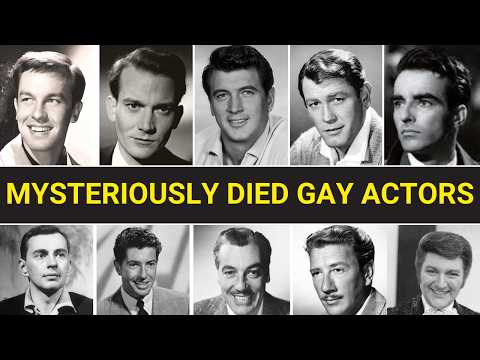
Take Ernest Thesiger, the British actor who stole scenes in Bride of Frankenstein with his unforgettable portrayal of Dr. Pretorius. Born in 1879, Thesiger was a fixture in London’s theater scene and a well-known figure in gay circles, though he remained fiercely private about his personal life. He lived to 82, passing away from natural causes in 1961, leaving behind a legacy of unforgettable, campy performances that hinted at his true self.
Then there was Edward Everett Horton, the nervous, befuddled comic relief in countless 1930s comedies like The Front Page and Here Comes Mr. Jordan. Off-screen, Horton was a staple of New York’s gay social scene, hosting lavish parties and living openly within his circle. He died in 1956 at 70, his death attributed to natural causes, but his vibrant personality and sharp wit left an indelible mark on Hollywood.
Monty Woolley, the sharp-tongued star of The Man Who Came to Dinner, was another whose wit and charm masked a private life. His close friendships with men like Cole Porter were well-documented, and he moved easily through the gay social circles of New York. Woolley passed away from pneumonia in 1963 at 75, his legacy as a brilliant raconteur and actor enduring.
Clifton Webb, known for his elegant and often arrogant characters like Mr. Belvedere, had a deeply close relationship with his mother, with whom he lived for most of his life. Their bond was so intense that it fueled speculation about his sexuality, and Webb was indeed part of the LGBTQ+ community. He suffered a heart attack in 1966 at 77, leaving behind a string of sophisticated performances that defined an era of Hollywood sophistication.
Ivor Novello, the Welsh musical genius and actor, captivated audiences with his romantic ballads and stage presence. His long-term relationship with actor Bobby Andrews was an open secret in London’s theater world. Novello died from a heart attack in 1951 at just 58, but his music and films, like The Lodger, continue to enchant.
Perhaps the most tragic story is that of Ramon Novarro, the silent film heartthrob of Ben-Hur. Born in Mexico, Novarro’s career was built on his smoldering good looks, but his private life was fraught with hidden relationships. In 1968, at 69, he was brutally murdered by two men who believed he was wealthy, a shocking end to a once-glittering star.
These are just a few of the many Golden Age actors who lived in the shadows, their true selves hidden from a judgmental public. Their stories remind us that behind the glamour, there were real people grappling with identity, love, and acceptance in a world that wasn’t ready.
Charles Laughton, the legendary star of The Hunchback of Notre Dame and Witness for the Prosecution, was another whose bold performances masked a deeply private life. Married to actress Elsa Lanchester, Laughton was nonetheless known to be part of Hollywood’s gay social circles, though he never spoke of it publicly. He passed away in 1962 at 63 from natural causes, his towering talent undimmed by the secrets he kept.
Noel Coward, the epitome of English sophistication, dazzled audiences with his wit and his pen. A polymath who wrote, acted, and composed, Coward’s works like Private Lives defined an era. Though flamboyant in style, he was discreet about his sexuality—a discretion that did not diminish his influence. He died in 1973 at 73 from natural causes, a pioneer of 20th-century entertainment to the very end.
Sir John Gielgud, one of the finest Shakespearean actors of the 20th century, was openly gay—a rarity for his time—though he kept his personal life largely private. In 1953, he was arrested in a public scandal that shook his career, yet he endured and continued to command the stage. He passed away in 2000 at 96, his legacy as complex as it was brilliant.
Richard Haydn, beloved for his nasal delivery and pompous manner in films like The Sound of Music and Harvey, was a quiet member of Hollywood’s discreet gay community. He never publicly addressed his sexuality, but his comedic brilliance spoke for itself. Haydn died from a heart attack in 1985 at 79, leaving behind a gallery of unforgettable character roles.
Cesar Romero, the suave Joker of the 1960s Batman series, was adored by fans for his charm and versatility. His private life reflected a closeness to the LGBTQ+ community that he kept under wraps, even as he played romantic leads on screen. Romero passed away in 1994 at 86 from cancer, remembered as a pioneer who broke Hollywood’s conventions in more ways than one.
Billy De Wolfe, a Broadway and TV favorite, brought campy charm to every role he played. A regular in 1940s and 50s films, he often portrayed flamboyant characters and lived a private yet open gay lifestyle within his circle. He died in 1974 at 66 from heart failure, his unique comedic style still resonating with audiences today.
Maurice Evans, the esteemed British actor known for his Shakespearean roles and later TV work on Bewitched, maintained a privacy that belied his ties to the gay community. Respected on both sides of the Atlantic, he passed away in 1989 at 80 from heart failure, his contributions to theater and television enduring.
Michael Redgrave, a leading figure in post-war British theater and father to a dynasty of actors, was believed to be part of the LGBTQ+ community, though his sexuality was never a subject of public discourse. His powerful performances in drama and comedy earned him a lasting place in theatrical history. He died in 1985 at 76, leaving a family legacy that continues to shape the stage and screen.
Robert Helpmann, the world-renowned dancer and choreographer, made his name at Sadler’s Wells Ballet and later as director of the Australian Ballet. Celebrated for his contributions to dance and theater, he was also a figure within the gay community, though he kept his personal life private. Helpmann passed away in 1986 at 77 from cancer, his immense influence on the world of dance and theater still felt today.
Hayden Rorke, beloved as Dr. Bellows on I Dream of Jeannie, was a longtime member of the gay community, his personal life kept discreet even as his comedic timing delighted millions. He passed away in 1987 at 77 from cancer, leaving behind a legacy of laughter.
Henry Brandon, the German-born character actor famous for villainous roles like Dr. Fu Manchu, was part of Hollywood’s discreet gay community. He died from natural causes in 1990 at 77, his menacing screen presence unforgettable.
Jean Marais, the French icon of Cocteau’s Beauty and the Beast, lived privately but proudly as a member of the LGBTQ+ community. He passed away from cancer in 1978 at 64, a significant figure in the arts whose talent extended beyond acting into painting and sculpture.
And then there was Rock Hudson, the ultimate heartthrob whose hidden homosexuality shocked the world when he became the first major public figure to announce he had AIDS. He died from complications of the disease in 1985 at 59, his tragic end bringing global attention to a crisis that would change history.
These men lived in the shadows, their true selves hidden from a judgmental public. Their stories remind us that behind the glamour, there were real people grappling with identity, love, and acceptance in a world that wasn’t ready. Which of these stories moved you the most, and why?
Report this article
Select a reason for reporting:






