In the brutal skies over Europe, American pilots faced a terrifying reality: their primary fighter, the P-47 Thunderbolt, was nearly useless in a climb. German pilots didn’t need to outshoot or outmaneuver it. They simply pulled back on the stick, climbed, and watched the Thunderbolt fall away below. It worked every single time, and the Luftwaffe built it into standard doctrine. American pilots, frustrated and vulnerable, called their own aircraft a “bathtub.” Ace Blakeslee said it publicly: “This thing cannot climb.” And he was right.
But the weakness wasn’t in the airframe or the engine. It was in the propeller blades—blades so narrow engineers privately called them “toothpicks.” Meanwhile, hidden inside a Connecticut laboratory, a researcher had already figured out how to add 800 horsepower to a combat engine using nothing but water and methanol. Two solutions, neither requiring a new aircraft, just the right people working quietly, refusing to accept the limitation as permanent.
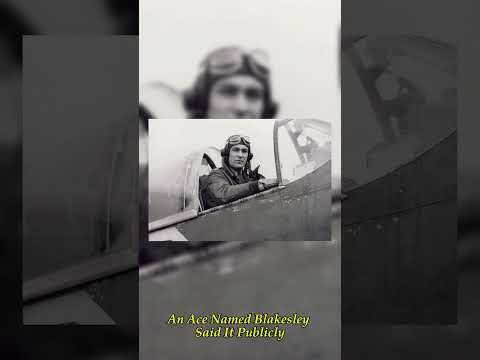
The P-47’s story began with immense promise. Designed around the powerful Pratt & Whitney R-2800 Double Wasp engine, it was the heaviest, most expensive fighter ever built. Its eight .50-caliber machine guns could shred enemy aircraft, and its rugged construction could absorb punishment that would destroy lesser planes. Yet for its first 18 months of combat, the Thunderbolt was a sitting duck in vertical fights. German pilots exploited its sluggish climb with impunity, and American losses mounted.
In the corridors of power, pressure grew to replace the P-47 with the lighter, more agile P-51 Mustang. But a handful of engineers and pilots saw the Thunderbolt’s potential. They knew the airframe could handle more power, and the engine was far from maxed out. The problem was the propeller—a narrow, inefficient design that wasted the engine’s muscle. If they could fix the propeller and boost the engine, the P-47 could become a climber.
In a quiet Connecticut lab, a researcher named Dr. Sanford Moss had been experimenting with water injection. By injecting a mixture of water and methanol into the engine’s intake, he could cool the charge and allow higher manifold pressure without detonation. The result: a massive increase in horsepower, up to 800 additional horses, available for short bursts. It was a game-changer, but it required a new propeller to fully exploit the extra power.
Across the Atlantic, in England, engineers at the Royal Aircraft Establishment were developing a wide-chord propeller that could absorb the increased horsepower. The two solutions—water injection and the new propeller—were perfect complements. Together, they could transform the Thunderbolt from a sluggish heavyweight into a lethal climber. But integrating them into a combat-ready fighter would take time, and the clock was ticking.
By early 1944, the modifications were ready for testing. The first P-47s equipped with water injection and the new propeller were rushed to England. Pilots were skeptical—they had been burned by promises before. But when they opened the throttle and engaged the water injection, the difference was staggering. The Thunderbolt now climbed with the best of them, and its speed in level flight increased dramatically.
On March 6, 1944, over Berlin, the transformation was proven. German veterans radioed back reports their commanders refused to believe: “The American’s heavy fighter now climbs.” The P-47, once a liability, had become a predator. But this was only the beginning of the story…
The men who flew the modified Thunderbolts didn’t celebrate immediately. They had learned to distrust good news. A single test flight could be a fluke, a freak airframe, a mechanic’s lucky tune. It took a second sortie, then a third, before the pilots began to believe their own instruments. The climb rate held. The manifold pressure stayed steady even at altitude. The toothpick blades were gone, replaced by broad paddles that bit into the thin air and refused to let go.
Word traveled through the fighter groups faster than any official report. Crew chiefs started asking pointed questions about the new propellers. Line mechanics traded rumors about the water-methanol tanks tucked behind the cockpit. Nobody called the Thunderbolt a bathtub anymore—at least not where a pilot could hear it.
The Luftwaffe, however, was slower to adapt. Its pilots had spent two years treating the P-47 as a harmless opponent in the vertical. That habit was now lethal. German wing commanders dismissed the first radio reports from Berlin as panic or misidentification. One veteran later admitted he assumed his own men had confused the Thunderbolt with a Mustang. They hadn’t.
What the German pilots were actually encountering was something their intelligence files didn’t contain. The water-methanol injection system, when engaged, dumped a cooling mist into the supercharger intake. That mist suppressed detonation and let the R-2800 run at pressures it was never supposed to survive. For roughly five minutes, a P-47 could produce power that bordered on the absurd. Five minutes was more than enough.
The pilots learned to use it like a trump card. They would let a German fighter commit to a climb, wait for the moment the enemy expected them to fall away, and then open the throttle and engage the injection. The Thunderbolt didn’t just follow—it closed. The shock in a Luftwaffe pilot’s voice, heard later on intercepted radios, became a kind of music to American ground crews.
But the transformation wasn’t only about horsepower. The wide-chord propeller changed the aircraft’s entire character. It accelerated harder, held energy better, and—most critically—allowed the Thunderbolt to hang on its propeller at the top of a climb instead of stalling out. Engineers who had spent years watching their fighter get outclimbed now watched it dictate the fight.
Still, the men in Connecticut and England knew they had solved only half the problem. The modifications worked, but they were improvised, rushed into combat before every kink had been ironed out. Water-methanol tanks leaked. Propeller hubs showed stress cracks. And the Luftwaffe, once it accepted the truth, would not stay surprised for long.
What happened next over the skies of Germany would decide whether the Thunderbolt’s second act was a brief anomaly or a permanent shift in the air war. The answer would come not in a laboratory, but in the thinning air above the Reich, where German pilots were already being ordered to find out exactly what the Americans had done—and whether it could be stopped.
The first German unit to formally respond was Jagdgeschwader 26, pulled back from the Channel coast and given a single instruction: bounce a Thunderbolt, force it into a climb, and see what happens. The pilots who received that order treated it as routine. They had done it a hundred times before. The flight that went up on March 15 expected to be home for lunch.
What they found instead was a fight that inverted every rule they had learned. The Thunderbolt they cornered near the Dutch border didn’t wallow. It didn’t sag. When the German element leader pulled up to disengage, the American followed him into the vertical and stayed there, hanging on its propeller with the wide blades biting hard. The German’s wingman shouted a warning that made no sense: the P-47 was gaining.
The engagement lasted under four minutes. Two German fighters went down. The survivor landed at a forward strip and was debriefed before he had even climbed out of his cockpit, still shaking. His report used a phrase that would be copied into intelligence summaries across the Reich: “The heavy one climbs like a fighter half its weight.” For the first time, the Luftwaffe’s leadership began to suspect that Berlin had not been a fluke.
Back in Connecticut, the men who had built the solution were already thinking about the next problem. Water injection was a short burst—five minutes of miracle, then nothing. The tanks ran dry, and when they did, the Thunderbolt reverted to the bathtub. Pilots learned to hoard their injection like ammunition, engaging it only when the fight had already turned. But hoarding meant flying most of a sortie with the old weakness still lurking under the cowling.
The engineers wanted a permanent fix. They began experimenting with larger tanks, then with revised supercharger gearing that let the engine breathe at altitude without relying on the injection at all. Each change was small. Together, they pointed toward a Thunderbolt that would not need a trump card to win. But testing took weeks, and the air war over Germany was not pausing for anyone.
Meanwhile, the pilots in England had developed their own tactics around the new capability. They stopped reacting to German climbs and started provoking them. A flight of Thunderbolts would deliberately fly high and slow, inviting an attack from below, then convert the enemy’s own climb into a trap. The Germans, trained for two years to expect the P-47 to fall away, kept taking the bait.
It was during one of these sweeps, in late March, that an American major named Schilling radioed a report that would reach the desks of planners in Washington. His flight had been jumped by a full Staffel, outnumbered three to one. They had not lost a single aircraft. They had shot down four. Schilling’s summary was blunt: the Thunderbolt was no longer the plane the Luftwaffe thought it knew.
But the Germans were adapting faster than anyone expected. A captured pilot, interrogated in England, revealed that new standing orders had already gone out. German fighters were to avoid the vertical against P-47s entirely—dive away, extend, and refuse the fight. The Luftwaffe had given up trying to outclimb the Thunderbolt. It was now trying to avoid the climb altogether.
That shift changed the war in a way no horsepower figure could capture. A fighter that could not be outclimbed and would not be engaged was a fighter that dominated the airspace simply by being there. The P-47 had become a threat not because of what it did, but because of what the enemy now refused to do. And the men in Connecticut, reading the intelligence summaries, understood that the next phase of the fight would not be won with propellers or water tanks alone.
The men in Connecticut understood the truth before anyone in Washington did. The Luftwaffe’s new orders to dive away and refuse the fight were a confession. The enemy had stopped trying to beat the Thunderbolt and started trying to survive it. That was not a tactical adjustment. That was an admission of defeat in the vertical, and the engineers knew exactly what it meant.
By the spring of 1944, the revised supercharger gearing was ready. The larger water-methanol tanks followed. The Thunderbolt no longer needed a five-minute miracle to win a fight—it could climb from the moment it left the runway. Pilots who had once hoarded their injection like ammunition now had power to spare at any altitude.
The Luftwaffe never recovered the initiative. German pilots who had once climbed with impunity now found themselves cornered by a fighter that could follow them anywhere. The bathtub had become the hunter, and the hunters had become the hunted. The P-47 that had been nearly useless for eighteen months was now the aircraft no German pilot wanted to see above him.
The lesson outlived the war. A weapon dismissed as a failure had been redeemed not by replacing it, but by understanding it. Two quiet fixes—a wider blade and a mist of water—had turned a liability into a legend. The engineers who refused to accept the limitation as permanent had won a battle no pilot could fight alone.
So here is the question worth asking: how many ‘failures’ in history were never truly broken—only waiting for the right person to refuse the verdict? What limitation in your own life have you accepted as permanent, when the fix might already be hidden in a quiet laboratory somewhere? Tell us in the comments.
Report this article
Select a reason for reporting:






