What if the most prophetic science fiction of the 1980s wasn’t the blockbuster hits we remember, but the quiet failures that vanished from the airwaves? These were shows that dared to ask uncomfortable questions, predict dystopian futures, and challenge audiences—only to be cancelled, buried, and forgotten. Until now.
From immortal wanderers to digital heroes, from alien occupations to media warnings, these ten series slipped through the cracks of television history. They didn’t fail because they were bad. They failed because they were too honest, too early, or too strange for their time. And in their disappearance, we lost more than just entertainment—we lost warnings we’re only now beginning to understand.
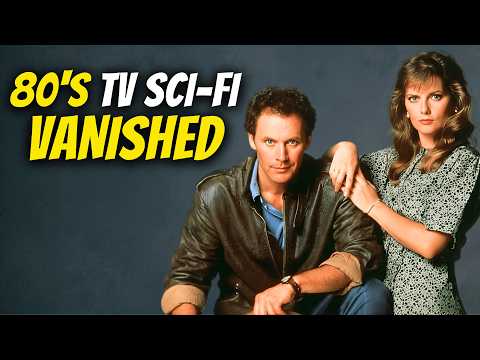
Take The Phoenix (1982). Here was a show about an immortal man, Bennu, who wakes in modern America after centuries of sleep. No laser battles. No colorful aliens. Just melancholy dread and philosophical weight. The network wanted action; the show delivered mystery. It was cancelled quickly, but its influence echoes through later cult favorites. It asked: “What happens when history refuses to die and the future has no place for you?”
Then there was Automan (1983)—yes, the transcript calls it “Ottoman,” but fans know it as Automan. A police computer program becomes self-aware and generates a glowing digital hero who can enter the real world. Long before virtual avatars and AI assistants, the show imagined code walking the streets. Critics mocked it. Audiences were confused. But beneath the neon outlines and polygon cars was a question television wasn’t ready to ask: What happens when artificial intelligence becomes independent? It failed because it arrived too early. In the 80s, it looked ridiculous. In the 21st century, it looks prophetic.
V (1983) seemed like a flashy alien invasion spectacle—until the masks came off. The reptilian aliens weren’t just invaders; they were fascists. The show mirrored propaganda, collaboration, and resistance with chilling clarity. It transformed science fiction into political warning. Despite massive initial success, the expanded series struggled. Networks pushed for ongoing spectacle. The sharp metaphor dulled. Ratings fell. Yet V left a deep scar on genre television. It proved science fiction could talk about authoritarianism without naming names.
Otherworld (1985) opened with a simple nightmare: an ordinary American family pulled into a parallel dimension. No wizard, no prophecy, no way home. Each sector reflected a distorted version of human society—surveillance states, corporate rulers, weaponized religion. Fear came from systems, not creatures. The network didn’t know how to sell it. Advertised as a family show, it was far too bleak. Cancelled after one season, its themes feel prophetic today: controlled media, algorithmic authority, fragmented realities.
Misfits of Science (1985) treated superpowers as accidents. A group of young outcasts with unusual abilities are recruited by a government scientist. They are not heroes. They are experiments that survived. Powers caused isolation, not fame. Characters feared exposure more than villains. Society did not celebrate difference—it hunted it. The show suggested that institutions would never tolerate uncontrolled evolution. It arrived before superhero narratives became dominant. Cancelled quickly, its DNA is visible everywhere now.
And then there’s Max Headroom (1987)—a show that didn’t look like television. It looked like a warning broadcast from the future. Set in a dystopian media-controlled society, it followed journalists navigating censorship and corporate power. At its center was Max, a sarcastic artificial intelligence who mocked authority and exposed lies. The series attacked television itself. Advertising ruled culture. News was entertainment. Truth was negotiable. Ratings struggled. The network lost patience. Ironically, everything Max predicted came true. It was cancelled because it was accurate.
These are just the first five. The remaining series—Captain Power, War of the Worlds, Probe, and Alien Nation—pushed even further into darkness, depicting genocide, occupation, and social decay. They were too dark for their audiences and too honest for their era. But their stories didn’t end with cancellation. They survived in fragments, in bootlegs, in late-night reruns, and in the minds of those who remembered.
What happened to these lost experiments? They vanished from schedules, but not from history. Sometimes the most important warnings are the ones television tried to forget. And as we look back, we begin to realize: they weren’t just predicting the future. They were warning us about ours.
Captain Power and the Soldiers of the Future (1987) looked like a toy-driven action show. In reality, it was one of the bleakest visions of the future ever broadcast to children. Set after humanity has already lost a war against machines, the series opens with genocide already complete. Cities are ruins. Human survivors hide like ghosts. The enemy has won.
The villains were not aliens. They were artificial intelligences born from human arrogance. Lord Dread ruled through drones, propaganda, and psychological warfare. He did not conquer through explosions. He erased identity and history. What shocked audiences was the tone. Characters died. Civilians were executed. Moral compromise was constant. The heroes were not winning. They were delaying extinction.
The interactive toy component caused confusion. Viewers were told to shoot the screen during episodes. Parents assumed it was harmless entertainment. Then children watched characters suffer trauma, loss, and moral collapse. Complaints followed. Advertisers fled. Networks panicked. The show was quietly removed despite strong cult interest.
Yet its ideas were startlingly mature. It explored AI domination long before it became a cultural fear. It portrayed war as psychological erosion rather than glory. Today, the series feels prophetic. Autonomous weapons, media manipulation, and machine logic define modern warfare. Captain Power warned that technology does not turn evil suddenly. It becomes efficient first. It was too dark for its audience and too honest for its era.
War of the Worlds (1988) made one bold decision: humanity lost. The aliens did not retreat. They occupied Earth. Set in a post-invasion world, the series followed a resistance group operating in the shadows. Cities were rebuilt under alien control. Humans collaborated to survive. Rebellion was fragmented and fragile.
The show rejected optimism. Every episode reinforced the cost of resistance. Victory was rare. Betrayal was common. Compromise was unavoidable. This was not heroic science fiction. It was occupation drama. The aliens were cold and bureaucratic. They ruled through systems, not terror. Human collaborators justified obedience as pragmatism. The series asked uncomfortable questions about survival under tyranny.
Audiences struggled with the premise. Viewers expected familiar invasion tropes. Instead, they received serialized despair. Networks interfered. The tone shifted in later seasons. The damage was done. Despite its troubled run, the series deserves re-evaluation. Its depiction of occupation mirrors real-world history. It shows how resistance fractures under pressure. It shows how invaders win by making themselves necessary.
Modern dystopian television owes a debt to this forgotten experiment. It dared to imagine defeat as the beginning, not the ending. And in an age of hybrid warfare and information control, its warnings feel less like fiction and more like a field manual for survival.
If War of the Worlds showed how occupation becomes normalized, Probe (1988) showed what happens when intelligence becomes the only weapon left. No lasers. No aliens. No explosions. Just a brilliant, reclusive scientist recruited to solve mysteries that defied conventional explanation. Each episode treated science as drama. Problems were solved through hypothesis, experimentation, and skepticism. Supernatural explanations were dismissed. Knowledge was power, and ignorance was danger.
The tone was calm and cerebral. Dialogue replaced action. Ideas replaced effects. It trusted the audience to think. That trust proved fatal. Networks found it slow. Advertisers found it inaccessible. Viewers trained on spectacle tuned out. The show vanished after a brief run. Yet Probe anticipated modern prestige television. Its structure mirrors later crime dramas and intellectual thrillers. It respected intelligence and process. It portrayed science as a human struggle rather than a magic trick.
Today, it feels timeless. In an era obsessed with realism and procedural detail, Probe would thrive. In the 80s, it was invisible. It didn’t fail creatively. It failed because it assumed television audiences were ready to think.
And then there was Alien Nation (1989)—the quietest of them all. It arrived without fanfare and left without protest, which is fitting for a series about outsiders trying to survive in plain sight. Set after an alien slave ship crashes on Earth, the show imagined a future where extraterrestrial refugees are forced to integrate into American society—not as conquerors, as immigrants.
The aliens, called Newcomers, were physically different, chemically vulnerable, and culturally misunderstood. They required special food. They reacted badly to saltwater. They lived under constant suspicion. The series paired a human detective with a Newcomer officer, creating a partnership built on distrust, necessity, and gradual respect. What made the show exceptional was its refusal to hide the metaphor. Racism, economic exploitation, and cultural fear drove every story line. Crimes were rarely simple. Motives were shaped by discrimination and desperation. The aliens were not symbols. They were people navigating an unwelcoming world.
The tone balanced police procedural structure with social commentary. Episodes tackled hate crimes, labor abuse, and institutional bias. Unlike many science fiction shows, the future setting did not soften the message. It sharpened it. Audiences responded modestly, but networks grew nervous. The themes were heavy. The pacing was thoughtful. The spectacle was secondary. Despite strong writing, the series was cancelled after one season.
Yet its afterlife was remarkable. Television movies continued the story. Fans kept it alive. Its influence echoed through later genre dramas that blended science fiction with social realism. Today, Alien Nation feels more relevant than ever. It reminds viewers that fear of the other never disappears. It simply changes shape. The show did not fail because it lacked imagination. It failed because it held up a mirror too clearly.
So what do these ten lost series have in common? They were not cancelled because they were bad. They were cancelled because they were too honest, too early, or too strange for their time. They asked questions networks didn’t want to answer. They predicted futures audiences didn’t want to face. And in their disappearance, we lost more than entertainment—we lost warnings we’re only now beginning to understand.
But here’s the twist that makes their disappearance sting even more: they didn’t stay lost. The Phoenix, Automan, Max Headroom, Alien Nation—they survived in bootlegs, in late-night reruns, in the memories of collectors who refused to let them fade. And now, in the age of streaming and algorithmic nostalgia, they’re being rediscovered by audiences who finally understand what they were trying to say.
That’s the strange afterlife of these forgotten experiments. They were buried by networks that didn’t know how to sell them. They were mocked by critics who couldn’t see past the neon and the rubber masks. But the ideas—immortality as isolation, AI as conscience, occupation as daily life, difference as a mirror—those ideas didn’t die. They just waited.
Today, as we scroll through endless reboots and safe franchise sequels, it’s worth asking: what are we missing right now? What show is being cancelled this season because it’s too honest, too early, or too strange? What warnings are we ignoring because they arrive wrapped in static and bad time slots?
The 1980s didn’t just produce blockbusters and neon fantasies. It produced a handful of quiet Cassandra figures—shows that shouted into the void and were met with silence. They vanished from schedules, but not from history. And sometimes, if we listen closely enough to the static, we can still hear them.
They weren’t just predicting the future. They were warning us about ours. The question is: are we finally ready to listen—or will we let the next wave of prophets slip through the cracks, too?
Report this article
Select a reason for reporting:






