In the history of warfare, some campaigns are remembered as glorious demonstrations of the profession of arms. But there are other chapters that arouse far less passion and enthusiasm—and one of them is the Allied campaign in Italy during the later years of World War II.
Between 1943 and 1945, the Allies fought an offensive that became one of the least remembered episodes of the conflict. It was successful, but success took time: 20 long months of fighting before Italy was fully in Allied hands. It was a campaign that saw some of the bloodiest exchanges of the whole war, often in the harshest conditions.
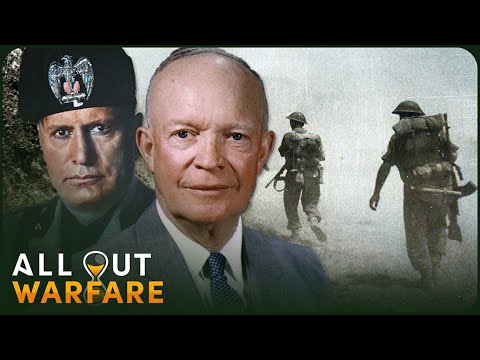
For the individual soldier, the weather and the landscape made Italy a miserable experience. For the Allied troops, there was also the suspicion of poor decision-making by some of their commanders. On crucial occasions, senior officers gave orders that can now be seen as dubious—if not worse.
The names of Italian battlefields like Anzio and Monte Cassino are not associated with brilliant Allied decision-making. The deployment of American bombers against the Cassino Monastery remains one of the most controversial operations of the Second World War. By the time the campaign neared its end, many exhausted Allied troops wondered if the whole enterprise had been little more than a sideshow to more dramatic events elsewhere.
But warfare is not always about dash and brilliance. Solid, slow-moving campaigns can deliver real strategic value. In the course of the battle for Italy, the Allies succeeded in tying down hundreds of thousands of German troops that could have fought elsewhere. And there were occasions when commanders of both sides revealed a military skill to match the bravery of the men under their command.
There is still much to be remembered about the battlefield of Italy. In January 1943, British Prime Minister Winston Churchill and US President Franklin D. Roosevelt met at Casablanca to discuss the progress of the war. They could reflect on the changing fortunes of the fight against the Axis powers.
In North Africa, the Allies were well on their way to driving the Germans and Italians out for good. The British First Army stood on a front line in Tunisia, waiting for the right moment to strike east against the ports of Tunis and Bizerte. At the same time, the Eighth Army of General Montgomery continued its pursuit of Rommel’s Panzer Army that began after El Alamein.
On the Eastern Front, the tide was also turning. By January 1943, at Stalingrad, the Soviet Union stood poised on the edge of victory in one of the bloodiest and most significant battles in history. Far away in the Pacific, the Japanese were preparing to withdraw from Guadalcanal after months of bitter jungle fighting. The age of unchecked Japanese expansion was over.
There was no doubt that on three separate fronts the tide of war was turning. The question that faced the Allied leadership was simple: where next to strike against Hitler and the Axis enemy?
As preparations continued for the Normandy Landings of 1944, it was decided that Allied forces would launch an additional strike against the home soil of Hitler’s greatest ally—the Italian dictator Benito Mussolini. When victory in North Africa was secured on May 13, 1943, preparations were already well advanced for an invasion of Sicily.
If the Allies could make a successful leap across from North Africa and capture the island, the door to the Italian mainland itself would be open. To lead the operation, the regional command appointed two heroes of the African fighting: Dwight Eisenhower and his British deputy, Harold Alexander.
They decided that the invasion of Sicily required the deployment of two Allied armies: the American Seventh Army of General George S. Patton and the legendary British Eighth Army—the Desert Rats—of Bernard Montgomery. The operation was given the code name Husky, and D-Day was set for the evening of July 9 and 10, 1943.
Eisenhower and Alexander knew that their invasion force was experienced and well equipped. Together the two Allied armies could muster a total of 180,000 men. But they also knew that the Sicily offensive would face stiff opposition.
The island was home to over 300,000 Italian troops. It was also the base for some 40,000 Germans, including the men of the elite Hermann Göring Panzer Division. There is no doubt that the Allied command was concerned about facing German troops like these. But when it came to their Italian colleagues, there was real doubt about their stomach for continuing the war.
The fighting in North Africa had done nothing for the reputation of the Italian fighting man in Western eyes. Mussolini’s forces were more famous for their mass surrenders than their effectiveness in combat. Patton and Montgomery could not know for sure what kind of response there would be as their men made ready for action.
But they did know that they had already pulled off one of the most imaginative deceptions of the Second World War. In May, the body of an Allied serviceman was found washed up on the Spanish coast. The dead man was carrying secret documents giving details of the next Allied assault—against the island of Sardinia, not Sicily.
Spain was supposedly neutral, but Franco’s sympathies with the Axis powers meant that the secret documents soon found their way to German eyes. The nature of the find meant that the information was believed by German intelligence. When the Allies attacked Sicily, the Germans believed that it was only a decoy offensive. They were soon proved wrong.
For the Allies, the invasion of Sicily represented the first attempt to engage the enemy on his home ground, and the officers in charge felt confident of success. But Operation Husky was not as straightforward as the Allied command would have liked—and the fighting that took place gave a hint of the type of campaign that lay ahead in Italy.
The Sicilian offensive was arranged as a joint operation, beginning with simultaneous amphibious and airborne landings to the south of the island. On the evening of July 9, Allied paratroop carriers and glider pullers took to the skies to drop a total of 4,000 men. But the result was a near disaster.
Poor navigation meant that 70 British gliders were forced to land in the sea, and 200 men were lost as a result. It was a worrying start to Operation Husky. The battle for Sicily began in earnest just minutes after the Allied landings, and as expected, it was German forces who resisted hardest. Many American paratroopers came under fire before they hit the ground.
But despite the problems with the airborne landings, the amphibious element of Operation Husky proved a success. Within 24 hours, the Americans and British established a tentative beachhead along 85 miles of Sicilian coastline. Six days into the operation, the Anglo-American landing force was securely established along the south Sicilian coast.
Back in Rome, the Italian leaders’ hold on power was beginning to slip away.
With the Sicilian landings achieved, the Allied task was now to advance north to secure the ports of Palermo and Messina and open the way to the Italian mainland. Montgomery’s Eighth Army were allocated to the sector at the east of the island, in the direction of Mount Etna. Patton’s Seventh were ordered to sweep around to the west before heading towards Messina along Sicily’s northern coast.
It was not an easy enterprise. On July 13, a detachment of British commanders found itself involved in a fierce battle for possession of the Ponte di Malati Bridge. It was clear that the Germans were not prepared to concede Sicily without a fight.
Montgomery’s troops met with especially strong German resistance south of Catania, and the British commander was forced to make a detour through the hilly terrain around Mount Etna. It was hot, sweaty and dusty. The absence of good roadways was a real hindrance, and thirsty foot soldiers were compelled to carry heavy loads of material as the enemy continued to resist.
German defenders adopted the tactics of vigorous defense followed by controlled withdrawal behind destroyed transport routes. It was a procedure that would also reveal itself on the larger battlefield of Italy. As a result, Montgomery’s men found progress difficult in late July and early August 1943.
By contrast, Patton’s Army found itself in easier terrain with lighter defenses. Many of the Italian troops surrendered without any sort of fight. At some of the original landing zones, Italian troops helped the Allies ashore. There was now no doubt that many ordinary Italians were disillusioned with their country’s alliance with Hitler.
Many American troops described the rapturous reception that they received from Sicily’s inhabitants. But it still took Patton some five and a half weeks to reach his objective of Messina—just two hours before his British colleagues arrived. The date was August 17.
Despite the weakness of Italian resistance, the conquest of Sicily was still a costly enterprise. Over 30,000 Allied men were killed, captured or wounded. But in the final advance on Messina, both Allied armies encountered little in the way of opposition.
As early as July 29, Field Marshal Kesselring ordered a strategic withdrawal of his forces, and some 100,000 men made it across to the Italian mainland—the majority of them German. The Wehrmacht was still keen to take up the fight. The same could not be said of their Italian allies.
Events in Sicily proved once again that many ordinary Italian soldiers did not share the pro-German sentiments of their political master. And Italian politics finally caught up with reality. In the course of the Allied offensive, for Mussolini, the loss of Sicily was one humiliation too many.
On July 25, in a palace coup, the old dictator was ousted and placed in detention. The 21-year reign of Il Duce was at an end. His replacement was Marshal Pietro Badoglio, who immediately began discussions with the Allies. A change of sides was now on the cards.
The fall of Mussolini was a massive boost for the Allied cause, and as September began, the Anglo-American forces in Sicily were preparing the next logical step forward: the conquest of Italy.
On September 3, 1943, Montgomery’s Eighth Army crossed the Straits of Messina and landed at Reggio—the toe of Italy. Six days later, the British airborne troops seized Taranto and Brindisi in Operation Slapstick, while Mark Clark’s Fifth Army stormed ashore at Salerno in Operation Avalanche.
The news of Italy’s surrender had been broadcast on September 8, and many Allied soldiers believed the fighting was nearly over. They were wrong. Within hours of the Salerno landings, German panzer divisions counterattacked with savage fury, nearly splitting the Fifth Army in two. For a time, Clark pondered withdrawal.
Only the might of Allied naval guns and relentless bombing held the German armor at bay. By September 14, Kesselring ordered his divisions north, and the beachhead was secure. Six days later, Clark’s men joined Montgomery’s at Potenza, and on October 1, Allied troops entered Naples.
But the price was steep: Fifth Army’s casualties at Salerno alone were some 12,000. And Mussolini, freed from captivity in a daring German commando raid, was installed as ruler of a new puppet state in the north. The real power in Italy, however, was now Albert Kesselring.
The German field marshal made a fateful decision: abandon southern Italy altogether and concentrate his forces behind a series of fortified lines across the peninsula’s mountainous spine. The most formidable of these was the Gustav Line, anchored by the ancient monastery of Monte Cassino.
Through the autumn of 1943, the Allies battered against these defenses. The British Eighth Army crossed the Sangro and fought a ferocious close-quarters battle for Ortona. In the west, the Fifth Army struggled to seize Monte Camino—a peak so shelled that it earned the nickname “Million Dollar Hill.”
By Christmas, the advance had ground to a halt in both sectors. Men of both sides spent a miserable holiday in the grim winter weather, and the battle for Italy became a bleak stalemate.
As 1944 dawned, the Allies conceived a bold new plan: a direct assault on the Gustav Line combined with an amphibious landing at Anzio, far behind German lines. If successful, the Germans would be caught in a vast pincer movement, and Rome would fall.
But the locations chosen would become two of the most notorious battlefields of the entire war.
On January 17, 1944, the Fifth Army attacked the Gustav Line, and the First Battle of Monte Cassino began. The British crossed the Garigliano in blizzard conditions, the Americans forced a bridgehead across the Rapido, and the French mountain troops made progress in the north. But no breakthrough was possible, and by February 11, the offensive was abandoned with heavy casualties.
The second prong of the pincer was also in trouble. On January 22, 36,000 men of the US VI Corps landed at Anzio virtually unopposed. But instead of driving inland immediately, General John Lucas hesitated, waiting until his beachhead was fully secure.
It was a fatal miscalculation. Kesselring rushed reinforcements from as far away as France and the Balkans. By January 30, when Lucas finally ordered a breakout, eight German divisions surrounded the beachhead. The opportunity was lost forever.
Churchill was furious. “I had hoped we were hurling a wildcat onto the shore,” he said, “but all we got was a beached whale.”
Worse was to come. On February 16, the German Fourteenth Army launched a full-scale counterattack against the Anzio perimeter. For the second time in the Italian campaign, an Allied beachhead was in real trouble. Only massive artillery fire—432 guns—combined with naval gunfire and bombing from the air saved the Allies from disaster.
The German attack was halted, but Lucas was sacked and replaced by General Lucien Truscott. The Allies were now trapped in a small pocket around the port, and the Germans could hold them there at leisure.
Meanwhile, at Monte Cassino, the Allies faced a terrible dilemma. The ancient monastery on the summit was suspected of being used for German artillery observation. On February 15, 229 American bombers dropped 453 tons of explosives on the monastery, reducing 14 centuries of history to rubble.
It was a disaster. The Germans had not been in the monastery—but after the bombing, elite paratroopers moved into the ruins and found themselves in a perfect defensive position.
The New Zealand Corps attacked the day after the bombing but failed to break through. A second massive bombing raid on March 15 dropped 1,250 tons of explosives on the town of Cassino, followed by 195,000 artillery shells in just two hours. The town ceased to exist—yet 100 German paratroopers survived the onslaught, and the advance was again halted.
By the end of March, the Fifth Army had sustained over 52,000 casualties since January. New thinking was required.
In April, the Allies reinforced and regrouped. The Polish II Corps—50,000 men under General Anders—joined the Eighth Army. The French Expeditionary Corps, with its experienced North African mountain troops, was deployed in the Aurunci Mountains sector.
On May 11, the great offensive began. The Poles attacked at Cassino, the British crossed the Garigliano, and the Americans advanced along the coast. But it was the French who made the decisive move. Within days, General Juin’s mountain troops had captured Monte Maio and the fearsome Monte Petrella, turning the German flank.
Kesselring ordered a withdrawal. On May 18, the Poles finally reached the ruins of Monte Cassino—the Germans had already departed. After four months of struggle and controversy, the monastery was at last in Allied hands.
On May 23, the men of VI Corps broke out of the Anzio beachhead. Two days later, they joined up with the rest of the Fifth Army. The German Tenth Army was in full retreat, and a massive victory was within the Allies’ grasp.
But Mark Clark had other ideas. Instead of trapping the Germans near Valmontone, he sent the bulk of his forces toward Rome—the Eternal City. On June 4, Clark entered Rome at the head of his Fifth Army, basking in the glory of its liberator.
But the victory was hollow. By going to Rome, Clark lost the chance to inflict a catastrophic defeat on the German forces in Italy. Kesselring was already organizing an effective retreat to a powerful new defensive line to the north. And two days after Clark’s triumphal entry, news of the D-Day landings swept across the world’s front pages. Italy was once again relegated to a sideshow.
The campaign was still far from over.
Through the summer of 1944, the Allies pursued the Germans north. But the Gothic Line—a formidable belt of fortifications stretching 200 miles across the Apennines—lay ahead. Hitler ordered its completion, and by August, it was ready: over 2,300 machine-gun positions, almost 500 mortar and anti-tank positions, and more than a thousand miles of barbed wire.
On August 25, the Eighth Army attacked along the Adriatic coast, while the Fifth Army struck on the other side of the peninsula. The fighting was bitter, and casualties were heavy. By September 20, the Eighth Army had broken through, with Canadian and Greek troops leading the way. The Fifth Army also breached the Gothic Line, but the advance toward Bologna ground to a halt in the autumn rains.
As winter set in, the battlefield once again became a scene from the First World War—mud, snow, and misery. Morale among the Allied soldiers plummeted. They knew their enormous efforts had gone largely unnoticed by a world that regarded Italy as little more than a sideshow.
In March 1945, Kesselring finally left Italy to become commander-in-chief in the West. He was replaced by General von Vietinghoff. And on April 1, the long pause came to an end.
The final offensive began with Commando assaults around Lake Comacchio, followed by a massive Eighth Army thrust toward the Argenta Gap. On April 21, Polish troops captured Bologna. The German defenders were pushed back toward the River Po.
On April 29, a German delegation met Field Marshal Alexander near Naples. An agreement was reached for a surrender to come into force on May 2. The day before that meeting, Mussolini was shot by Italian partisans, and his body was strung up in Milan. The day after the surrender, Hitler died by his own hand.
The campaign in Italy was over.
It had taken 20 long, hard months to make the journey from Reggio in the deep south to the plains of the Italian north. Along the way, the men of the 15th Army Group had dealt with some of the toughest fighting conditions endured by any Allied forces in the war: a fearsome landscape, harsh weather, a determined adversary, devastating enemy fire, and dubious decisions by their own commanders.
There was also the lingering question of whether the whole Italian campaign was just a sideshow. But the Allies did secure their victory. In the course of the fighting, they tied down vast numbers of German troops who could have been deployed elsewhere. This alone represented a huge contribution to the Allied cause.
And the men who came from all over the world to fight in Italy—Americans, British, Canadians, New Zealanders, Indians, Poles, French, Brazilians, and many others—endured their hardships with courage and resolve.
In modern times, there is a widespread belief that war can be prosecuted with minimal casualties and a devastating turn of speed. The story of the Italian campaign is a reminder that this is not always the case. Sometimes victory requires time, loss, and hardship.
But victory is victory—as the Allied soldiers who fought so hard in Italy were able to testify at the end of engagements on one of the most intriguing battlefields of the Second World War.
Was the Italian campaign a vital contribution to Allied victory, or a costly diversion that should have been avoided? Share your thoughts in the comments below.
Report this article
Select a reason for reporting:






