At 5:30 a.m., Foday Callay woke up, signed a handwritten execution order for six British hostages, and went back to sleep. The order was dated that morning, scheduled for 7:30. He believed he controlled the situation. He had not controlled it since September 1st. He simply did not know it.
Ninety-seven seconds. That is how long D Squadron 22 SAS took to end what sixteen days of negotiation could not. But that number is wrong. 97 seconds is only what the world saw. What it did not see is what happens when those 97 seconds fail. If they fail, there is no second attempt, no reset, only the sound of six rifles inside a concrete room, and the end of six British soldiers.
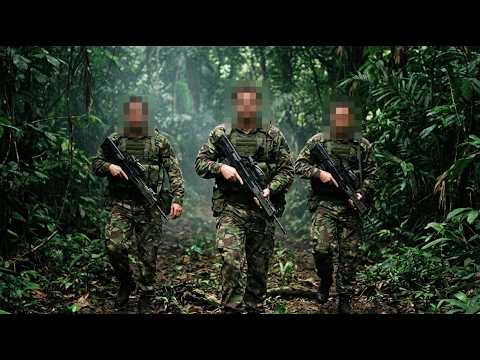
And that was scheduled to happen anyway. While diplomats were still talking, while the international community—still shaped by Mogadishu 1993 and the doctrine of restraint it had produced—was arguing against military action, there were already British soldiers inside the jungle. They had been there for 11 days watching, not moving, not speaking. If they are seen, the hostages die first, and then they do.
This story has two questions running simultaneously. What happened in those 97 seconds, and what made them inevitable—not possible? Inevitable. There is a third question underneath both. What does a man become when he spends 16 days sitting across from the person holding his soldiers in chains, knowing that if he fails to perform, they die slowly, and if someone else succeeds, they die instantly if it goes wrong?
Lieutenant Colonel Simon Fordham is that man. His story is not about success. It is about holding something together long enough for someone else to destroy it.
The 25th of August 2000. Eleven soldiers from the 1st Battalion of the Royal Irish Regiment drive into territory controlled by the West Side Boys, a rogue militia of 300 to 500 former Sierra Leone Army soldiers led by a 24-year-old self-proclaimed brigadier named Foday Callay. The Ministry of Defence intelligence assessment describes him in one word. Psychotic.
Within 30 minutes of entering the compound, all 11 soldiers are disarmed and chained. Their weapons are taken, their radios, their vehicles, and then control, which is the first thing that is taken.
Fordham is at the battalion base when the message arrives. He does not panic. Panic is a loss of control, and control is the only thing he still has. His men are not prisoners, they are assets, and assets do not stay valuable forever.
Fordham drives into West Side Boys territory. He sits across from Callay. He talks, he listens, he waits. He will later describe this in a 2009 interview with the National Army Museum as the most precise exercise in controlled performance he has ever undertaken. Not negotiation, but performance under observation. Callay is watching the timing of responses, the steadiness of voice, the hands. One signal of urgency would shift the balance in a direction from which there is no return.
On the 28th of August, five hostages are released in exchange for a satellite phone and medical supplies. Six remain. Handcuffed, fed once a day, several beaten. Callay has executed two of his own men during the hostage period for perceived disloyalty—not betrayal, but the perception of it, which means there is no logic left to negotiate with.
Fordham files his assessment. Callay is not moving toward resolution. He’s becoming comfortable inside it, settling in. The situation will not end, it will only collapse.
Britain makes a different decision, quietly. On the 1st of September 2000, D Squadron 22 SAS landed at Lungi Airport. Fordham is told only that they are there. The talking is no longer the solution. It is the delay.
Four observation teams move into position around the compound at Gberi Bana—four men each, from 100 to 300 metres from the perimeter—for 264 consecutive hours without moving. Temperature exceeding 35°C, humidity above 85%, mosquitoes carrying cerebral malaria. They cannot use machetes. Any sound carries in primary jungle silence. So they lie still, watching through thermal imaging equipment, managing across 72-hour shifts, enduring conditions that would end most tourist-trained soldiers in 48 hours—as though the conditions were simply the environment, not an obstacle.
They map every building, identify the hostage location, catalog every weapon—a DShK heavy machine gun, multiple general-purpose machine guns, RPG-7 launchers, approximately 600 individual small arms—track every routine until they find the gap. Between 0300 and 0500 hours, the compound changes structurally. Guards drift, patterns dissolve. A window invisible to anyone who has not watched for 264 hours from 200 metres inside the jungle. Gaps are not found, they are measured into existence.
Meanwhile, Fordham keeps talking, holding a door open, as he describes it in his National Army Museum interview, knowing it will be kicked in from the other side. What he does not know is the exact moment. What Callay does not know is that the door is no longer his.
The stillness settles in the hours before 5:30 in the morning. Not doubt—decision. They are not waiting for something to begin, they are waiting for something already finished to be delivered.
At 5:30 in the morning, three Chinooks lift from Lungi Airport. Sixty D Squadron operators are on board. One hundred and fifty paras are tasked with the secondary position across the Rokel Creek. Two Lynx helicopters are airborne, each with 50-calibre miniguns. Fordham is not on those aircraft. He waits and listens to the radio.
The casualty estimate is between five and 15 British dead. When the senior officer first sees the plan, he asks the question that becomes the unofficial title of every after-action briefing. Who approved this suicide mission?
Those men have spent 11 days in jungle undergrowth, earning the right to know that it is not.
616 hours. Rear ramp drops. First boots on Sierra Leone dirt at 0616 and 14 seconds. Twelve men, 14 seconds, 28 kilograms each, dead sprint. Moving not with speed alone, with the absence of doubt.
At 0616 and 45 seconds, a sentry opens fire. One round finding its mark at that distance changes everything. He fires 17. Everyone misses. Two operators engage from 35 metres, four rounds, sentry down.
Inside the hostage building, one Royal Irish soldier hears the shooting and understands immediately. Floor. All six throw themselves flat, chains and all.
0617 hours. Frame charges, detonation, two flashbangs, eight operators enter in pairs. Two guards standing, neither seeing, neither hearing, both down in under two seconds.
Dusk knocker, package secure, six, I repeat, six alive.
0617 and 40 seconds. 97 seconds.
Now, before the cost is counted, stop here. At 0700 hours, beside Callay’s bed, there was a handwritten execution order for the six hostages, dated that morning, scheduled for 7:30 in the morning. Callay woke up, dated and timed the deaths of six British soldiers, and went back to sleep.
While four-man patrols lay 200 metres from his bedroom, while the assault force was already airborne, while the distance from landing zone to hostage building had already been measured and rehearsed seven times until it required no conscious decision. 47 metres to the hostage building, 63 metres to Callay’s quarters, 31 metres to the heavy weapons position. All of it already done.
He wrote the order in the language of a man who believed he controlled his situation. He had not controlled it since the 1st of September. He simply did not know it.
Brad Tinnion was 26 years old. He knew the casualty estimate before he boarded at 5:30 a.m. He boarded anyway. During the clearance of Gberi Bana, a round struck him in the chest. The team medic applied immediate treatment under fire. Chest seal, intravenous fluids. He was evacuated by a Chinook to Lungi Airport. He did not survive. He was the only British fatality of Operation Barras. Twelve others were wounded.
The cost does not disappear because the mission worked. His name is inscribed on the SAS memorial at the regimental church of St. Martin in Hereford. It remains there today.
One hostage, still handcuffed, still on the floor he has occupied for 16 days, hears the team leader’s voice. Two words. About time.
Fordham visits the recovered hostages after extraction. He does not record what is said. Some things are not for the record. But he describes understanding for the first time since the 25th of August that the weight had lifted. He had kept the door open, and in that room with those six men—still marked by 16 days of captivity, but present and alive—he understood what the talking had been. Not the solution, the condition the solution required.
“I knew they were soldiers,” he says in the interview. That sentence requires no further explanation.
But the story does not end at the door of that room, and it does not end with the six men on the floor. It ends—or rather, it refuses to end—in the space between what was reported and what was actually done. Because Operation Barras was not the only thing happening in Sierra Leone that September, and the men who walked through that door were not the only ones who had been waiting.
Across the Rokel Creek, the secondary assault had gone in simultaneously. One hundred and fifty paratroopers against the West Side Boys’ main camp at Magbeni, where the militia’s heavy weapons and the bulk of its fighters were concentrated. The plan had called for the paras to hit hard and fast, to fix the enemy in place while D Squadron extracted the hostages, to prevent any reinforcement from crossing the creek and collapsing onto Gberi Bana.
It did not go to plan. It rarely does.
The paras came in by helicopter, low over the water, and the West Side Boys were waiting. Not waiting in the sense of prepared—waiting in the sense of awake, armed, and positioned. The first Chinook took heavy fire as it flared over the drop zone. Rounds punched through the fuselage. A para was hit before his boots touched the ground.
What followed was not the clean, rehearsed violence of the hostage rescue. It was a grinding, close-quarters fight through jungle and mud and half-collapsed buildings, the kind of fight where the enemy does not break and run but stands and trades, where the DShK opens up and the ground around you turns to splinters and spray, where the difference between a good day and a bad one is measured in seconds and angles and the willingness of the man next to you to keep moving forward.
The paras kept moving forward.
They cleared the camp building by building, position by position. The West Side Boys fought—some of them fought hard, the ones who had been soldiers before they became something else—but they were not D Squadron, and they were not the Parachute Regiment, and the gap between a militia and a professional army is not measured in weapons. It is measured in what happens when the shooting starts and the plan falls apart. It is measured in who reorganizes and who runs.
By the time the sun was fully up, Magbeni was taken. The heavy weapons were silent. The reinforcement that never came had never had the chance to come.
And on the other side of the creek, in the room where six men had lain flat on the floor with their chains, the shooting had stopped, and the silence that followed was a different kind of silence than the one that had preceded it. Not the silence of waiting. The silence of arrival.
Fordham would later say that the hardest part was not the sixteen days. The hardest part was the ninety-seven seconds, because during those ninety-seven seconds he had nothing to do but listen. No performance, no controlled voice, no steady hands. Just the radio, and the sounds of men he had sent into a place he could not follow, and the knowledge that if it went wrong there would be no second attempt, no reset, only the sound of six rifles in a concrete room.
It did not go wrong.
But the margin was thinner than anyone outside that jungle would ever fully understand. The execution order was dated for 7:30. The assault began at 6:16. The difference between those two times is seventy-four minutes. Seventy-four minutes between the world where six British soldiers lived and the world where they did not. Seventy-four minutes that existed only because four men had lain still in the undergrowth for 264 hours, because a lieutenant colonel had performed calm across a table for sixteen days, because sixty operators and one hundred and fifty paras had trained until the distance from landing zone to hostage building required no conscious decision.
The West Side Boys ceased to exist within a week. Callay was captured, tried, and imprisoned. The compound at Gberi Bana was abandoned, reclaimed by the jungle, and within a year there was nothing left to mark what had happened there except the memory of the men who had been inside it.
Brad Tinnion’s name remains on the memorial at Hereford. The other twelve wounded men recovered, most of them, and went back to their squadrons, and did not talk about it, because that is what they do. The six hostages went home. One of them, the one who had heard the team leader’s voice say about time, would later describe the moment the chains came off as the strangest feeling of his life—not freedom, not relief, but the sudden absence of a weight he had stopped noticing because it had become part of him.
Fordham returned to his battalion. He did not write a book. He did not give many interviews. In 2009, he sat down with the National Army Museum and spoke for the record, and when he was asked what he had learned, he said something that the interviewer did not fully understand at the time and would think about for years afterward.
“The talking was never about changing his mind. It was about keeping mine.”
Keeping his mind. Keeping the door open. Keeping the performance steady for sixteen days so that someone else could kick the door in and end it in ninety-seven seconds. That is the part that does not fit into the after-action reports, the part that does not appear in the citations or the memorials or the histories. The part where a man sits across from a psychotic warlord and holds his own fear still, holds his own urgency still, holds everything still, because the moment he stops performing is the moment the men in chains stop being assets and start being liabilities.
And the part where, on the morning of the 10th of September 2000, while the Chinooks lifted from Lungi and the operators sprinted across the dirt and the sentry fired seventeen rounds and missed, the performance finally ended—not because Fordham stopped, but because he no longer needed to. The door was open. The men were coming through it.
There is a photograph taken at Lungi Airport after the extraction. It shows the six released hostages, still in the clothes they had worn for sixteen days, still marked by the chains, standing in a loose group with the men who had freed them. Fordham is not in the photograph. He was already back at the battalion, already filing his report, already doing the next thing that needed to be done.
But if you look at the faces of the six men in that photograph, you can see something that is not quite joy and not quite relief. It is the face of a man who has been handed back his own life and is not yet sure what to do with it. It is the face of a man who has spent sixteen days learning that control is the first thing that is taken, and who has just been given it back by men who spent ninety-seven seconds proving that it could be.
Ninety-seven seconds. Two hundred and sixty-four hours. Sixteen days. One execution order dated for 7:30 in the morning. And a lieutenant colonel who kept talking, kept performing, kept the door open, knowing it would be kicked in from the other side.
That is what happened in Sierra Leone in September 2000. Not the version that fits into a briefing or a citation or a documentary. The version underneath, where the margin is measured in minutes and the cost is measured in a name on a memorial in Hereford, and the difference between success and catastrophe is a man sitting across a table, holding his hands steady, and waiting for someone else to destroy what he had spent sixteen days holding together.
The door was never Fordham’s to close. It belonged to the men who kicked it in, and to the one who did not come back. Brad Tinnion, 26, boarded a Chinook knowing the casualty estimate. He boarded anyway. His name remains at Hereford, and it will remain.
The six hostages went home. The West Side Boys vanished within a week. Callay’s execution order—dated 7:30, delivered at 6:17—is the most documented thirty-minute margin in British special forces history. Ninety-seven seconds, made possible by 264 hours of stillness.
Fordham never wrote a book. He sat for one interview, and left one sentence that says everything: “The talking was never about changing his mind. It was about keeping mine.”
What would you have done with those sixteen days—and would you have kept your hands steady?
Report this article
Select a reason for reporting:






