The sky over Japan, 1944. A B-29 Superfortress hums through the clouds, its crew scanning the horizon. Suddenly, a Japanese fighter appears—not firing, but aiming straight for the cockpit. This is no ordinary dogfight. It’s a suicide ramming attack, and the Americans are about to learn a deadly new tactic.
Declassified reports reveal a chilling strategy: Japanese pilots, often with minimal training, were ordered to strip their planes of guns and armor to increase speed and maneuverability. They would strike from the sun or clouds, preferably from the front where the B-29’s firepower was weakest. The goal: ram the pressurized crew compartments and bring down the bomber at any cost.
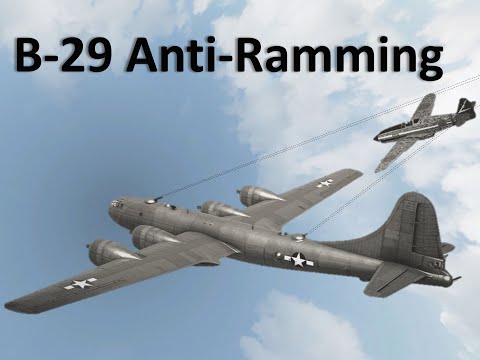
The Americans scrambled for countermeasures. Escort fighters proved most effective—losses dropped by 20-30% once P-51s could escort B-29s from Iwo Jima. Flying higher and faster helped, as did evasive maneuvers when possible. But perhaps the most ingenious fix was rearranging bomber formations to boost forward firepower. The standard 12-plane formation had only 21 guns covering the critical 12 o’clock high position; the new formation packed 30 guns there, creating a wall of bullets that made frontal attacks suicidal.
Yet the Japanese persisted. Seventeen ramming incidents were documented between 1944 and 1945. Eight attacks came from the front, six from behind, and one from below. The results were brutal: four B-29s destroyed, thirteen damaged, and 40 airmen killed. Japanese losses were also heavy—11 pilots died, and 16 fighters were lost. But the psychological impact was immense.
One incident stood out. In August 1944, a ramming fighter smashed into a B-29, which then collided with another B-29 in formation. The report credited the attacker with only one kill—but the debate rages on. Should a single ramming count for two? The crew of the second bomber never stood a chance.
As the war progressed, the Japanese ran out of experienced pilots. The once-elite aviators were replaced by hastily trained rookies who could barely handle their aircraft. By 1945, the tactic had become desperate and ineffective. But for the B-29 crews who faced these flying missiles, the threat was terrifyingly real.
The numbers told a grim story. By early 1945, Japanese pilot proficiency had collapsed. A graph from the 1947 Strategic Bombing Survey showed flight hours plummeting from hundreds per pilot at the war’s start to barely enough to take off and land. The ramming tactic demanded precision at 600 miles per hour—yet the men flying those planes were barely trained.
American analysts noted something chilling in the declassified documents. “At a closing speed of 600 mph, it takes only a slight wing movement for a B-29 to evade a would-be rammer,” one report stated bluntly. The problem wasn’t the tactic itself—it was that Japan no longer had the pilots to execute it.
Still, the psychological toll on B-29 crews was undeniable. Gunners scanned the sky constantly, fingers tense on their triggers. Every approaching fighter could be a killer, not just a threat to be driven off. The mere possibility of a ramming attack forced crews to burn precious fuel and energy on evasive maneuvers.
By the time Japan perfected the ramming procedure, its air force was a shadow of its former self. The Imperial Japanese Army and Navy both faced crippling shortages of experienced aviators. What had once been a precision strike had become a lottery of desperation.
The Americans adapted faster. Improved formations, better escorts, and relentless bombing of aircraft factories and oil refineries ground the Japanese air arm into dust. Destruction of the enemy air force—not defensive measures—proved the only absolute counter to ramming. It was the same lesson learned over Germany.
Yet the question lingered in the declassified files. In that August 1944 incident, one ramming fighter had brought down two B-29s. The report credited a single kill. Was that justice, or an accounting error written in wreckage and blood? The crews who survived knew the truth: one man’s sacrifice had killed twenty others.
The debate over that August 1944 incident never fully resolved. Some historians argue the second B-29 was lost to debris, not the rammer itself, and the report reflected that distinction. Others insist the attacker’s intent—and the chain of destruction he set off—deserved two kills. The paperwork said one. The gravestones said otherwise.
What the documents do make clear is how the Japanese command viewed these attacks. Ramming was never a casual decision. Pilots were carefully selected, often volunteers, and given final briefings that emphasized a single, perfect strike. There would be no second pass. One approach, one impact, one death—preferably taken together.
Yet the tactical manuals reveal a colder calculation. The Japanese knew their fighters couldn’t survive sustained combat with B-29 formations. A ramming attack, stripped of guns and armor, traded a certain loss of the aircraft for a chance at a bomber. It was less a weapon than an equation: one fighter for one Superfortress.
American intelligence officers studying captured documents noticed something else. The ramming doctrine explicitly warned against attacking from the rear, where the B-29’s tail guns could shred an approaching fighter. Instead, pilots were told to come from the front, slightly above, aiming for the cockpit. The instructions read like a sniper’s manual—except the bullet was a plane.
But the same documents betrayed a fatal flaw. The tactic assumed a skilled pilot could close at 600 mph and still adjust his aim. In practice, most attackers never got that chance. Gunners in the new forward-heavy formations spotted them early and filled the air with lead. Many rammers died before they ever reached their target.
By 1945, the Americans had another advantage: numbers. B-29s flew in massive streams, hundreds at a time, overwhelming Japanese defenses. A single ramming success meant little when a dozen more bombers passed overhead. The tactic could kill crews, but it could not stop the campaign.
Still, the survivors remembered. Veterans of the 20th Air Force spoke of the “green crosses”—Japanese fighters diving head-on, wings glinting, growing larger by the second. Some admitted they never got used to it. Every mission, every approach, the question hung in the air: is this one coming for us?
The declassified reports end with a sobering conclusion. Ramming was a weapon of the desperate, born from industrial weakness and pilot shortages. It achieved occasional, spectacular results—but never enough to change the outcome. Japan’s air force died not in a single battle, but in a thousand futile gestures.
Yet the story of the B-29 crews who faced those attacks is not just one of statistics. It is a story of men who flew into hostile skies knowing that any fighter might be a guided missile. And of young Japanese pilots who climbed into stripped-down planes, pointed them at the enemy, and never looked back.
The final assessment in the 1947 Strategic Bombing Survey was unambiguous. “The Japanese air force was relatively powerless by the time the ramming procedure was mastered.” The tactic had arrived too late, wielded by too few, against too many.
But for the men who flew those missions, the math never mattered. A gunner from the 20th Air Force recalled decades later: “You never forgot the ones who came straight at you. Even when you shot them down, you wondered—did he have a family? Did he volunteer?”
The war ended, the reports were filed away, and the green crosses faded into history. Yet the question remains: was the ramming tactic a noble sacrifice or a tragic waste of young lives? Tell us your thoughts in the comments below.
Report this article
Select a reason for reporting:






