In the shadowy mountains of Afghanistan, the Taliban placed a price on the heads of coalition special forces. Americans, British, Canadians—all had bounties. But one unit’s operators were valued at double the rate of any other. That unit was not American. It was Australian.
Roughly 300 operators from a quiet Perth suburb had become so devastating to Taliban networks that the insurgency was willing to pay a premium just to eliminate them. How did this small regiment become the most feared special operations force in Afghanistan?
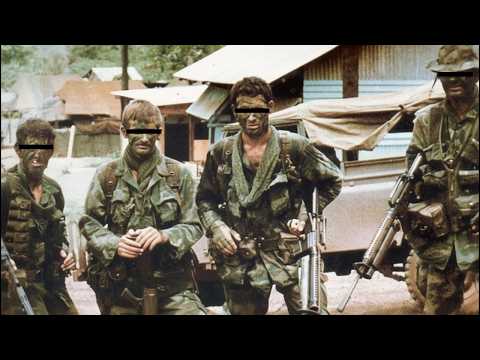
The story begins not in the deserts of Afghanistan, but in the jungles of Vietnam, decades earlier. In 1966, the Australian Special Air Service Regiment (SASR) deployed its first squadron to Phuoc Tuy province. Operating in small patrols of four to six men, they moved through dense jungle with a silence that made other special forces look clumsy.
They would sit in ambush for hours—sometimes days—waiting for Viet Cong patrols to walk into their kill zones. When contact came, they unleashed a volume of fire designed to convince the enemy they were fighting a much larger force. Then they vanished.
By 1971, the SASR had completed over 1,200 combat patrols. Their losses were staggeringly low: one killed in action, one died of wounds, three accidentally killed. Meanwhile, they had eliminated at least 492 enemy fighters, possibly as many as 598. The Viet Cong gave them a name that would follow the regiment forever: Marung—the phantoms of the jungle.
Three decades later, on September 11, 2001, hijacked aircraft struck the World Trade Center and the Pentagon. Within weeks, a US-led coalition formed to strike Al-Qaeda and the Taliban in Afghanistan. Australia was among the first nations to pledge support, and Canberra knew exactly which unit to send.
In October 2001, 1 Squadron of the SASR deployed under Operation Slipper. They staged through Kuwait, then moved into southern Afghanistan, helping US Marines establish Camp Rhino, the first coalition forward operating base. From there, they conducted long-range vehicle-mounted operations across hundreds of kilometers of open desert, pushing into the Helmand Valley near the Iranian border.
These were some of the first coalition boots on the ground in what would become America’s longest war. But the SASR’s defining moment of that first deployment came in March 2002 during Operation Anaconda.
US intelligence had identified up to 1,000 Al-Qaeda and Taliban fighters regrouping in the Shah-i-Kot Valley. Coalition planners assembled over 2,000 troops to crush them. The SASR’s role was reconnaissance. They infiltrated the valley 10 days before the main assault, hiding in freezing mountains above 3,000 meters, mapping enemy positions and reporting back.
When the operation kicked off on March 2, everything went sideways. Intelligence had underestimated enemy strength. Troops from the US 10th Mountain Division were dropped into the valley and immediately pinned down by withering fire from entrenched Al-Qaeda fighters on the ridgelines. A helicopter carrying US Army Rangers was shot down, leaving 24 Americans stranded and under assault from all sides.
That’s when two SASR operators on a mountain observation post above the valley became the lifeline. They provided sniper overwatch and began calling in precision air strikes directly onto the Al-Qaeda positions closing in on the downed Americans. For hours, these two Australians directed bomb after bomb onto the enemy advance, buying time for the Rangers to hold on.
By the time the dust settled, an estimated 300 Al-Qaeda fighters had been killed by the air strikes the SASR teams guided in. The American commander of the entire operation, Lieutenant General Frank Hagenbeck, did not mince words about the Australians afterward. He said they displayed the qualities that made them the elite of small unit infantry throughout the world, and that in his view, they would never ever be defeated.
All three SASR squadrons rotated through Afghanistan during 2001 and 2002 before the regiment was withdrawn in November. For three years, Australia’s presence in Afghanistan dwindled to almost nothing. But the Taliban was not finished. By 2005, the insurgency had regrouped and was gaining strength across the south.
In August of that year, the Australian government sent the special forces back in, this time to Uruzgan province—a rugged and isolated region that would become the center of Australia’s war for the next eight years. This is where the SASR built the reputation that would earn them that double bounty.
The Special Operations Task Group, known as TF66, operated out of Forward Operating Base Ripley near Tarin Kowt. Each rotation lasted about six months and typically included an SAS squadron, a commando company from the 2nd Commando Regiment, and support elements. They deployed day and night by vehicle, by helicopter, and on foot, striking Taliban networks across Uruzgan and into neighboring provinces like Kandahar and Zabul.
Their primary mission was counter-leadership operations—identifying and targeting the specific Taliban commanders running the insurgency. Western forces maintained kill lists of Taliban leaders, and SAS teams led by sergeants were assigned individual targets to track across the landscape of southern Afghanistan. It was a relentless, grinding hunt.
The Taliban noticed. They started calling the Australians green-eyed bearded devils, a reference to the eerie green glow emitted by the night vision goggles the SASR wore during their constant nighttime raids. The Australians owned the darkness in a way that terrified insurgent fighters who had grown accustomed to coalition forces operating primarily during daylight hours.
But this story does not end with battlefield glory. It ends with something much darker—a reckoning that would cast a long shadow over the regiment’s legacy. The hunt for the green-eyed devils was far from over, and the cost of that hunt would be measured in more than just enemy casualties.
On September 2, 2008, in the valleys near the village of Khaz Oruzgan, a combined Australian, American, and Afghan patrol walked into a nightmare. The day before, SASR snipers had killed eleven Taliban fighters in a successful ambush. But the Taliban had been watching too.
The next morning, two SASR patrols and a command element moved on foot under cover of darkness to set ambush positions. At 4:00 a.m., five Humvees crewed by US Special Forces from the 7th Special Forces Group and Afghan soldiers rolled into the Ana Kulay Valley. Two more SASR patrols joined the convoy, along with an explosive detection dog named Sarbi.
The ambush was set. SASR snipers, positioned in the foothills, waited for Taliban fighters to move into the open. The northern patrols engaged first, catching armed insurgents in the open. But then the extraction went wrong.
The vehicle convoy had to pull back through the same valley they had entered—there was no alternate route. Up to 200 Taliban fighters were waiting for them. Heavy machine gun fire and rocket-propelled grenades hit the convoy from multiple directions.
Sergeant Troy Simmons, commanding one of the SASR patrols, later described the fight to the Australian War Memorial. Of his five-man patrol, only one member was not wounded by the end. Simmons himself was shot in the leg by a ricochet, blasted by an RPG explosion, shot through the back of his hat, had his rifle destroyed by a bullet, and was shot through the hips. He still carries a Taliban round embedded in his pelvis today.
During the chaos, the Australians radioed Dutch Apache helicopter pilots overhead, begging for fire support. The Dutch refused to engage, staying above 5,000 meters for fear of drawing fire. One of the Australians on the ground reportedly told the Dutch pilots that if they were not going to fight, they might as well leave. And that is exactly what they did.
Eventually, American FA-18 Hornets arrived and made gun runs on the Taliban positions. The battle lasted nine hours. Nine Australians were wounded. One American was killed. Taliban casualties were estimated at eighty killed.
During the fighting, Trooper Mark Donaldson repeatedly exposed himself to enemy fire to protect wounded soldiers. He sprinted into the open under sustained gunfire to rescue an Afghan interpreter who had been left behind. For his actions that day, Donaldson was awarded the Victoria Cross for Australia—the country’s highest military honor, and the first time the award had been given in nearly four decades.
The explosive detection dog Sarbi, who had gone missing during the battle after an RPG blast broke her leash, was found alive fourteen months later by an American soldier who spotted her accompanying a local Afghan man. She was flown back to the Australian base at Tarin Kowt to a hero’s welcome.
But the SASR was not done yet. In the mountains east of Tarin Kowt, the Taliban still controlled significant territory. In May and June 2010, Australian special forces launched the Shah Wali Kot offensive—a series of raids designed to smash Taliban strongholds in the Shah Wali Kot district of Kandahar province.
The commandos fought through temperatures exceeding 50 degrees Celsius, clearing insurgent positions in village after village. One commando sniper, Sergeant Gary Robinson, described the fighting simply: “It was kill or be killed,” he said. “They were trying to kill him, so he had no remorse.”
On June 11, the Special Air Service Regiment attacked the village of Tizak to capture or kill a senior Taliban commander. What followed was eleven hours of close-quarters combat. Corporal Ben Roberts-Smith, already a decorated soldier, single-handedly neutralized two machine gun positions during the assault. For this action, he was awarded the Victoria Cross for Australia, making him the most decorated living Australian soldier at the time.
The Shah Wali Kot offensive effectively destroyed the Taliban’s presence in the area and earned both the Special Air Service Regiment and the 2nd Commando Regiment the first Australian Army battle honor since the end of the Vietnam War.
So what made the SASR so exceptionally effective that the Taliban valued their elimination above all other coalition forces? It came down to several factors working together. Their patrol structure of five to six operators meant they moved faster, quieter, and with more tactical flexibility than larger conventional units. Their selection process was brutally demanding, with very few candidates making it through. It was not about being the biggest or the fastest—the SASR selected for decision-making under stress, mental resilience, and the ability to operate independently for extended periods in hostile territory.
They also carried capabilities that conventional infantry simply did not have. Long-range sniper rifles that could engage targets beyond a kilometer. Night vision equipment that let them own the hours of darkness when Taliban fighters felt safest. Advanced communications gear that allowed small teams to call in devastating airstrikes from bombers flying thousands of feet overhead.
And perhaps most importantly, they had the training and temperament to hunt individual human targets with the patience and precision of a predator tracking wounded prey across open ground. For the Taliban leadership in Uruzgan, the SASR was not just another group of foreign soldiers. They were the ones kicking in compound doors at 3:00 in the morning and dragging commanders out of their beds. They were the ones sitting on ridgelines with sniper rifles, waiting for days to take a single shot. And they were the ones who kept coming back, rotation after rotation, for eight straight years.
But this story does not end with battlefield glory. It ends with something much darker—a reckoning that would test whether the legend of the phantoms of the jungle could survive the truth of what some of its members had done.
In November 2020, the Australian Defence Force released the Brereton report—the findings of a four-year inquiry into alleged war crimes committed by Australian special forces in Afghanistan between 2005 and 2016. The report found credible evidence that members of the SASR and the 2nd Commando Regiment had unlawfully killed 39 Afghan prisoners, farmers, and other civilians.
The inquiry described practices including “blooding,” where junior soldiers were allegedly pressured by senior operators to execute detainees as an initiation rite. Weapons and radios were reportedly planted on bodies to make the killings appear justified. General Angus Campbell, head of the Australian Defence Force, publicly apologized and announced that 2 Squadron of the SASR would be disbanded entirely due to what he called a distorted culture.
As of early 2026, only one former SASR trooper, Oliver Schulz, has been charged with a war crime, and his trial is not expected before 2027. The Australian government has allocated over $318 million to fund the ongoing investigations.
For the SASR veterans who served honorably across 23 rotations, the allegations have cast a long shadow. Many feel the actions of a few have overshadowed the sacrifice of the majority. 41 Australians died during the 20-year Afghan conflict, about half from the SAS and 2nd Commando Regiment. Four Victoria Crosses were awarded. Hundreds carry wounds, physical and psychological, that will never fully heal.
The Taliban may have feared the green-eyed bearded devils more than any other force in Afghanistan, but the deepest scars from this war were not left on the battlefield. They are still being uncovered today.
Was the SASR’s legendary effectiveness worth the moral cost that followed—and can a unit’s honor ever be separated from the crimes of its worst members? Share your thoughts below.
Report this article
Select a reason for reporting:






