Illinois has been reintroducing alligator gar, a species that disappeared from the state’s rivers half a century ago, with state biologists releasing tens of thousands of young fish into waterways since 2010. The program is part of a broader effort to restore a native top predator to the river system. The last wild alligator gar in Illinois was caught in 1966 in Alexander County, and the species was declared extirpated in 1994.
The alligator gar is the second largest freshwater fish in North America, behind the white sturgeon, and can exceed 2 meters in length and 100 kilograms in weight. The heaviest recorded specimen, taken from a Mississippi lake in 2011, weighed about 148 kilograms and was estimated to be 95 years old. The fish is armored with dense, diamond-shaped scales and can breathe air through a swim bladder, allowing it to survive in warm, low-oxygen water that other fish cannot tolerate. Its eggs are toxic to humans and most animals.
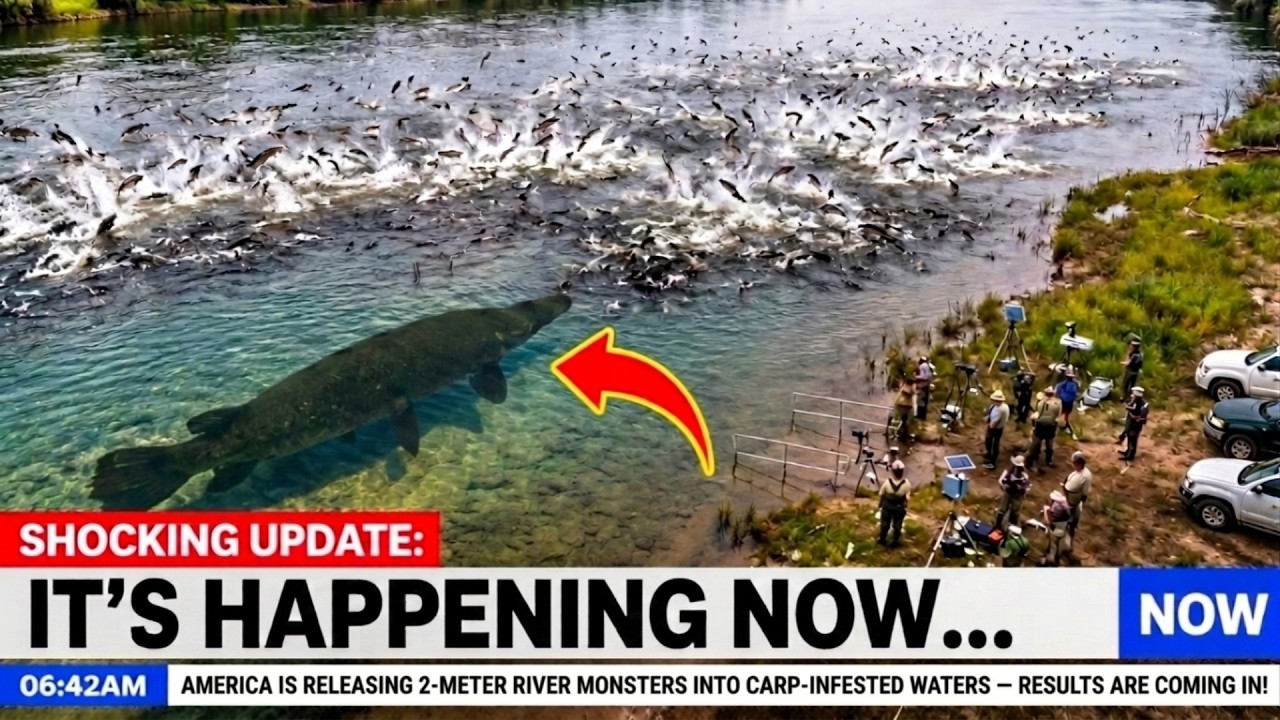
Research has shown that gar DNA has changed slowly over hundreds of millions of years, making it useful in medical studies as a bridge between human disease genes and zebrafish models. Texas Parks and Wildlife has reported no documented case of a gar attacking a person.
Historically, the species was heavily targeted across the southern and midwestern United States. Anglers believed gar competed with bass and crappie, and state agencies acted on those concerns for much of the 20th century. In the 1930s, Texas officials operated a boat designed to electrocute gar. Arkansas declared open war on the species in the 1940s. A 1953 Texas report described a chemical trial that killed all other fish within 36 hours, while the gar survived.
Later diet studies contradicted the original complaint. Researchers examining 138 alligator gar from a reservoir on the Texas-Oklahoma border found their primary food source was gizzard shad, a small baitfish. The gar also consumed buffalo and river carp sucker, both bottom feeders, and actively avoided catfish, largemouth bass, and white crappie.
The loss of the species was compounded by changes to the river itself. Beginning in the early 1900s, levees, locks, and dams altered the big rivers of the Midwest, and many backwater lakes and swamps were drained for agriculture. Alligator gar depend on specific flood conditions to spawn. The water must cover low ground with plants, reach roughly 60 centimeters to a meter deep, and remain in place for several days. Eggs hatch on plant stems within about two days, and larvae cling there for another two to four days. If the water drains too quickly, the entire year’s spawn is lost.
In Texas, where gar never disappeared, researchers found only five exceptional spawning years since the mid-1950s along the Trinity River. A 60-year-old gar taken from the Brazos River in 2017 hatched during the great floods of 1957. One good flood can sustain a population for decades.
Illinois historically had a smaller population than Louisiana but still had a real presence. A Field Museum curator noted in 1923 that they were common near St. Louis and appeared nearly every year in the Illinois River. A state survey in 1933 described them rolling at the surface near Chester. The largest Illinois fish on record exceeded 2.4 meters, and the heaviest weighed around 80 kilograms. The last confirmed capture was in 1966.
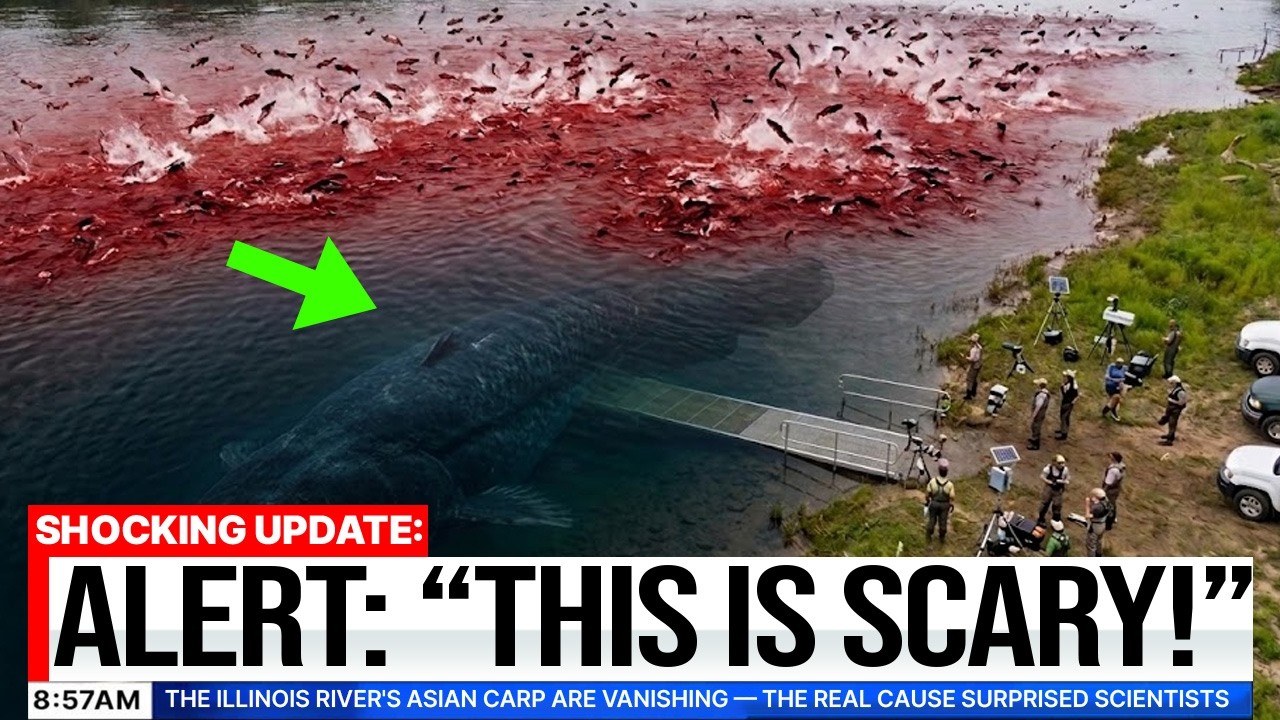
The timing of the gar’s disappearance coincided with the arrival of invasive carp. Silver and bighead carp were brought from Asia in the 1970s to clean algae from southern fish farm ponds. Floods spread them into the Mississippi River, and from there they moved north into tributaries, including the Illinois River. The carp feed on plankton and algae, which sit at the base of the food chain. After the carp moved in, gizzard shad in the Illinois River became thinner. Gizzard shad are the main food source for alligator gar.
Adult silver carp can grow past 9 kilograms, and at that size few native fish in the Illinois River can consume them. Before its disappearance, the alligator gar was one of the few species in these rivers with jaws large enough to prey on adult carp.
Since 2002, an electric barrier in the Chicago Sanitary and Ship Canal has been used to prevent carp from entering Lake Michigan, where Great Lakes fishing and boating industries are worth an estimated $20 billion. In May 2025, the Army Corps of Engineers began construction on a second line of defense at the Brandon Road Lock and Dam near Joliet, incorporating an electric barrier, underwater sound, a bubble curtain, and a flushing lock. The project is estimated to cost $1.15 billion across three phases.
Commercial fishers under contract with Illinois have removed more than 48,000 tons of invasive carp from the Illinois River over the past 25 years. In 2025 alone, two state removal programs pulled out more than 3,000 tons. The removals have had measurable effects. In the upper Illinois River, where contract fishing has operated since 2010, gizzard shad have regained weight. Results depend on continued effort, and large net hauls are only effective in cold water, as silver carp jump over nets in warm weather.
In 2022, a federally funded project renamed the fish copi, short for copious, in an effort to make it more appealing for consumption. Kevin Irons, assistant fisheries chief at the Illinois Department of Natural Resources, said the carp name carried such a negative reputation that people would not try it.
In 2016, the Illinois General Assembly passed a resolution recognizing the fully grown alligator gar as the state’s only native fish capable of eating adult invasive carp. The sequence of events was not planned. The last wild Illinois gar was caught in 1966, and the carp arrived in the lower Mississippi in the 1970s, moving north into a river system that had already lost its largest predator.
The restoration program began in 2010, with young gar shipped from the U.S. Fish and Wildlife Service’s John Allen National Hatchery in Tupelo, Mississippi. The hatchery collects breeding adults from the lower Mississippi River, spawns them, and distributes the young fish to 13 states across the gar’s former range.
Illinois initially stocked fish at around 15 centimeters, then raised them to roughly 30 centimeters before release, because smaller gar are vulnerable to largemouth bass. Between 2010 and 2025, the state stocked 21,665 alligator gar into 12 waters, including backwaters of the Illinois and Kaskaskia rivers, a power plant cooling lake near Pekin, and the Hennepin Hopper Lakes, the northernmost site in the program.
Release locations are not always publicized. Even in Texas, where the population remains strong, some anglers continue to view gar as trash fish, and the species had no bag limit in Texas until 2009. Illinois now limits anglers to one alligator gar per day and prohibits commercial harvest, because a species that takes about a decade to reach breeding age cannot absorb heavy losses.
The first result came in 2013, when an angler caught a stocked fish about 60 centimeters long, the first alligator gar taken in Illinois in nearly half a century. At a preserve along the Illinois River, researchers recaptured 17 stocked gar during a 2012 survey and found they were growing about 1.6 millimeters and 7 grams per day, mostly by eating gizzard shad. In 2017, an Illinois carp crew netted a gar about 1.15 meters long in the main Illinois River.
In August 2024, state biologists collected three gar from a lake’s intake canal that measured between 1.37 and 1.6 meters, with the heaviest at 27.5 kilograms. These fish are roughly 13 years old and remain short of full size, and reaching maximum length will take decades more.
The connection between gar and carp is limited by size. Dan Stevenson, then chief of fisheries at the Illinois Department of Natural Resources, said the stockings were never intended as a carp control measure. The state’s stated reasons are restoring a native species and creating a trophy fishery. Stevenson noted that a gar will eat carp up to around 32 centimeters, but a 9-kilogram carp is too large to pursue efficiently. Research from the Gulf Coast found that even gar between 1.4 and 2.1 meters long prefer prey in the 20-to-32-centimeter range.
There is some evidence that native predators help control young carp. A 2014 study of 1,472 native predators in the LaGrange reach of the Illinois River found them feeding heavily on baby carp when the young fish were abundant. An adult alligator gar extends the window in which carp are vulnerable, taking fish up to roughly 30 centimeters, which is above the range where crappie and white bass can catch them.
The gar also supports other species. The yellow sandshell, a freshwater mussel endangered in several states, depends on gar as a host for its larvae. In 2025, 81 young alligator gar were raised at a hatchery at a nuclear plant and released into the lower Cache River wetlands near Perks, a swamp of bald cypress trees in the same basin where the last wild Illinois gar was caught. That facility is a natural floodplain swamp, the type of habitat gar evolved to spawn in.
The question of whether the stocked gar will reproduce remains open. Alligator gar don’t spawn until around age 10, so the fish stocked in 2011 are now old enough. Whether the managed lake where most were released can provide the shallow, flooded spring vegetation they need is not yet known. Kentucky and Missouri are conducting similar monitoring through tagging and genetic testing, watching for wild-born offspring. That outcome would likely not appear until the 2030s.
Angler concerns about gar competing with bass have not been supported by Texas data. Texas Parks and Wildlife estimates that a lake holding 5,000 to 10,000 adult alligator gar can also support 100,000 to 500,000 bass or crappie, and several major bass fisheries, including Sam Rayburn, Toledo Bend, and Falcon, also carry healthy gar populations.
After 16 years, the program has produced gar over 1.5 meters, a confirmed capture in the main Illinois River, and a new population in the Cache River swamp, with reproduction still unconfirmed. On the carp side, the barrier system and commercial netting continue, with no projected completion. Whether the effort ultimately depends on infrastructure or on a self-sustaining native predator remains an open question.