February 24th, 1958. Flatbush Avenue, Brooklyn. The smoke inside the Lennox Social Club curled toward the ceiling like something alive, patient, and watching. Duke Ellington’s Mood Indigo drifted from the Victrola, but the music couldn’t soften the tension that had just walked through the door. Sixteen men. Not Harlem faces. Suits too new, shoes too shiny, movements too confident for a room where they should have felt unwelcome.
They didn’t draw guns. They didn’t need to. Three headed for the cash cage. Four covered the exits. The rest spread through the gaming floor like landlords inspecting property they already owned. At a green felt table, Ellsworth “Bumpy” Johnson watched it all unfold, his hand closing around Illinois Gordon’s wrist before his lieutenant could reach for his piece.
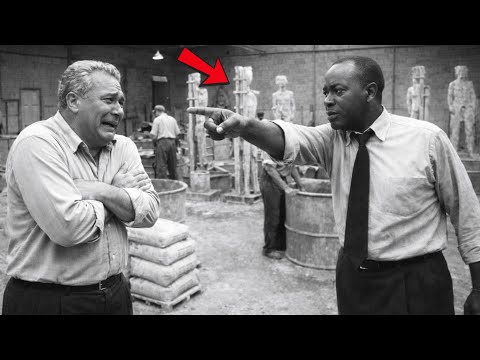
“Wait,” Bumpy said, his voice barely a whisper. “Watch. Remember.”
The man who approached their table set a leather satchel on the felt with deliberate care. When he opened it, the emptiness inside seemed purposeful—a container waiting to be filled. At the cash cage, bills were transferred into canvas bags with mechanical efficiency. Patrons were politely but firmly shown the door. The whole operation took less than twelve minutes.
“350,000,” the man said, his voice flat. “The satchel stays here. You fill it by Monday. We come back for it. After that, same time next month. Every month.”
Illinois Gordon’s breathing went shallow. His fingers twitched against his waistband, but Bumpy’s grip tightened until the bones ground together. The Italian leaned forward, close enough that Bumpy could smell the garlic on his breath. “You understand what I’m saying to you?”
Bumpy said nothing. His face remained as empty as a winter sky. He simply looked at the man—recording every detail, every scar, every inflection—until the silence stretched thin and the Italian shifted his weight.
“You got nothing to say? No tough talk? No threats?”
“I’m looking at you,” Bumpy said finally, his voice so quiet the man had to lean in. “I’m making sure I remember your face, the sound of your voice, the way you smell. Everything about you.”
The Italian laughed, but the sound carried a nervous edge. “Are you threatening me?”
“No. I’m just making sure I know who you are when I see you again.”
Something in Bumpy’s tone made the smile falter. The man stepped back, nodded to his companions, and the sixteen of them filtered out, leaving behind an empty satchel and a room full of witnesses who had just watched Harlem’s sovereignty get violated in public.
The moment the door closed, Gordon spun toward Bumpy, his voice a hiss. “We should have put bullets in every one of them. Right here. Right now. Sixteen bodies on the floor, and this problem ends tonight.”
“Sixteen bodies means sixteen funerals,” Bumpy said, still swirling his wine. “Sixteen funerals means police. Police means attention. Attention means the Commission gets involved. And suddenly we’re not fighting sixteen men—we’re fighting five families and every cop in New York.”
“So what? We just pay them? We bend over and let them take whatever they want?”
Bumpy set down his glass and looked at Gordon with patient eyes. “I didn’t say we pay them. I said we don’t shoot them in my club in front of fifty witnesses. There’s a difference between doing nothing and doing nothing right now.”
He called to the bartender, who had spent the entire raid polishing glasses while his eyes tracked every movement. “Marcus. You saw them all?”
“Every face. Every voice. I could pick them out of a lineup tomorrow or a year from now.”
“Good. Write down everything you remember. Names, accents, scars, jewelry—anything that makes them individuals instead of a crowd.”
By midnight, only Bumpy’s inner circle remained. “Count what they took,” he said finally. “Every dollar. I want to know exactly what this costs.”
Three days later, the envelope still sat unopened on his desk. Illinois Gordon paced near the window, his agitation filling the room like smoke from a grease fire. “They’re telling people you’re finished. That Bumpy Johnson got robbed in his own place and did nothing. That Harlem is Banano territory now and you’re just collecting rent for him.”
“Let them say it.”
“You know what happens when people think you’re weak! Every punk with a gun starts thinking maybe he could be the next king of Harlem. Every cop starts thinking maybe your envelope isn’t heavy enough anymore.”
Bumpy opened his desk drawer and removed a leather-bound notebook filled with names and addresses. He uncapped his fountain pen and turned to a fresh page. “You want to know what I’m thinking about? I’m thinking about those sixteen men. How confident they were walking into my place. How sure they were that nothing would happen to them.” He began writing, his handwriting precise. “I’m thinking about how that confidence is going to feel when it starts to crack. When they realize that walking into Harlem wasn’t a conquest—it was a mistake.”
Gordon stopped pacing. “What are you planning?”
“Something Banano will understand better than words.” Bumpy looked up. “He sent sixteen men to tell me I work for him now. I’m going to send those same sixteen men back to tell him something different.”
“You’re going to kill them?”
“No. Killing them would be quick. Expected. He probably has replacements ready, soldiers who’d be happy to avenge their deaths and escalate this into a war that burns down half the city.” He filled a page with notes. “I’m going to do something he cannot prepare for. Something that will make every man in his organization think twice before they set foot in Harlem again. Something that will end this without a war.”
“What could be worse than killing them?”
Bumpy closed the notebook and looked at Gordon with eyes that held no warmth. “Making them wish they were dead. Making them examples that people will talk about for the next fifty years. Making them proof of what happens when you disrespect Ellsworth Johnson in his own house.”
The fountain pen tapped against the leather cover—a slow rhythm, like a countdown. “Money can be recovered, Illinois. But honor, reputation, the fear that keeps order in these streets—that can only be rebuilt one lesson at a time. And the lesson has to be clear enough that nobody needs it repeated.”
He moved to the window. “Banano thinks he understands power because he controls territory and politicians. But power isn’t about what you own. It’s about what people believe you will do. And right now, Harlem needs to believe that touching what’s mine carries a price that no family name can pay.”
“When do we start?”
“We already started.” Bumpy turned from the window. “Marcus identified fourteen of the sixteen men. Two more and we have them all. Then we begin collecting them—quietly, carefully, one at a time—until we have the complete set.”
“And then what?”
Bumpy’s smile was thin and cold, like ice forming on a window. “Then we teach Joseph Banano that some debts are paid in ways money cannot measure. We teach him that walking into Harlem was easy. Walking out was the mistake.”
Joseph Banano sat in his study on a Sunday morning, reading reports from his captains. At fifty-three, he had survived by understanding that violence was a tool to be measured and deployed with precision—a surgeon’s scalpel, not a butcher’s cleaver. His captain, Salvatore Maranzano, stood near the fireplace, smoking a cigarette. The report from the Lennox Social Club raid sat between them: sixteen men deployed, $350,000 collected, zero resistance encountered. Mission accomplished.
“He said nothing?” Banano asked.
“According to Paulie, Johnson just sat there, took the envelope, watched them leave.” Maranzano tapped ash into a crystal tray. “No threats, no tough talk, nothing.”
“Smart man,” Banano set down the report. “He understands arithmetic. Sixteen men walk into his place and walk out again. That tells him everything he needs to know about how this ends if he chooses to be stupid.”
“You think he pays?”
“I think he counts his options and realizes he has none.” Banano sipped his espresso. “What can he do? Start a war with us? He has maybe fifty men who would die for him. We have five hundred. He controls ten blocks. We control three boroughs. The math is simple, even for a numbers runner.”
Maranzano crushed out his cigarette and immediately lit another. “Paulie said there was something off about the way Johnson looked at him. Said it made him uncomfortable.”
“Paulie gets uncomfortable when his mother looks at him.” Banano waved dismissively. “Johnson was memorizing faces—trying to seem tough while he figured out how to explain to his people why he’s going to roll over and pay us. And if he doesn’t pay, then we make an example. We burn down the Lennox with everyone inside. We break the knees of every dealer who works for him. We hang bodies from lampposts until Harlem understands that their neighborhood operates by our rules now. But it won’t come to that. Johnson didn’t survive this long by being suicidal.”
In Bumpy’s office, Marcus sat with a composition notebook open, filling pages with observations. “The one who did the talking—he had a scar,” Marcus said, his pen moving steadily. “Right here, under his left ear. Old scar, maybe from a knife. And his ring—the gold one on his right hand—had initials. P.C. or maybe P.G.”
Bumpy listened without interrupting. Illinois Gordon sat in the corner cleaning his revolver, the cylinder clicking as he rotated it.
“The three who went to the cash cage—they worked together before. You could see it in how they moved. No talking, no signals. They just knew where each one should be. The tall one kept touching his left side. Probably carries his piece in a shoulder holster. Probably checks it when he’s nervous.”
“You get names?”
“Two. The one at the door—someone called him Frankie. And one of the cage crew—they called him Bells.” Marcus flipped to a new page. “But I got better than names. I got faces. I got voices. I got the way they walk, the way they smell.” He closed the notebook. “You want me to find them, I can find them. You want me to follow them, I can tell you where they sleep, where they eat, where they take their girls on Friday nights. You want them isolated—I can tell you when and where they’re alone. All sixteen. Fourteen for certain. The other two kept to the back. Didn’t talk. Didn’t do anything memorable. But fourteen is enough to start with.”
Bumpy took the notebook and scanned Marcus’s neat handwriting—names, descriptions, habits, weaknesses. “You did good work. This is exactly what I need.”
“What are you planning?”
“I’m planning to send his sixteen men back to him in a condition that makes everyone understand what happens when you disrespect Harlem.”
Marcus stood to leave but paused at the door. “You know they’ll come back harder if you kill them. Banano won’t let that stand.”
“I know.” Bumpy’s smile was winter cold. “That’s why I’m not going to kill them.”
The envelope sat unopened for three more days. Bumpy didn’t call meetings, didn’t issue threats, didn’t send messages. He simply went about his business as if the raid had never happened—as if the money were already forgotten, as if Banano’s ultimatum was beneath his notice.
This silence made everyone uncomfortable. Gordon and the other lieutenants interpreted it as weakness. They pushed for action, for some response that would reassure the neighborhood, but Bumpy remained unmoved. Banano interpreted the silence as capitulation. He told his captains that Johnson was broken, that the Harlem operator was simply trying to save face. The Monday deadline came and went with no contact. Banano extended the deadline another week, magnanimous in what he perceived as victory.
But the old-timers who had seen Bumpy rise from street enforcer to neighborhood king—they recognized the quiet for what it was. They had seen this stillness that preceded violence the way barometric pressure drops before a hurricane. They began staying home at night, avoiding the clubs where trouble might find them.
In his office, Bumpy worked with focused intensity. Marcus’s notebook lay open beside him, each page marked with annotations. Phone calls were made to contacts in Brooklyn and the Bronx. Addresses accumulated. Schedules emerged. Patterns became visible.
Illinois Gordon found him there on the fourth night, hunched over street maps with pins marking locations across three boroughs. “You’re going to answer him eventually,” Gordon said, pouring himself bourbon. “The longer you wait, the worse it gets.”
“The longer I wait, the more comfortable he gets.” Bumpy stuck another pin into the map. “He thinks my silence means surrender. He thinks I’m paralyzed by fear. Good. Let him think that. Let him get fat on his own assumptions. And when the assumptions turn out to be wrong—” He looked up from his maps. “When he realizes I wasn’t surrendering, I was hunting—it’ll be too late for him to do anything except count his losses and pray I don’t decide to make them worse.”
He returned to his maps. “You know what Banano’s real mistake was? Not the extortion. Not the insult. His mistake was sending sixteen men instead of one.”
“How was that a mistake?”
“One man, I would have had to kill. Quick, clean, a message delivered and over with. But sixteen—” Bumpy’s smile was thin and terrible. “Sixteen men give me options. Sixteen men let me do something that will hurt Banano worse than any amount of killing. I’m going to take his soldiers and turn them into a lesson that every man in New York will remember for the rest of his life.”
“What kind of lesson?”
Bumpy moved to the window. “The kind that makes a man think twice before he crosses a line. The kind that lives in nightmares and gets whispered about in basements. The kind that proves you don’t need to be Italian or connected or part of the Commission to make powerful men afraid.” He turned back to Gordon. “When this is over, Joseph Banano will know my name. He’ll know what it costs to come into Harlem like he owns it, and he’ll spend the rest of his life making sure no one in his family ever makes the same mistake again.”
The warehouse on 142nd Street had been empty for three years. Its windows painted black, its doors chained from the inside. Nobody remembered who owned it anymore, which made it perfect for the kind of work that required privacy and silence.
Bumpy stood in the center of the main floor, studying the space with the careful attention of an architect planning construction. Illinois Gordon spread Marcus’s notebook across a wooden table—the pages now thick with additional notes, photographs clipped from newspapers, addresses verified through patient surveillance. Sixteen names. Sixteen faces. Sixteen men who had walked into the Lennox Social Club and made the mistake of thinking they would walk out with their lives unchanged.
“Paulie Castellano,” Gordon read from the first page. “Lives in Bensonhurst with his wife and two kids. Drives a black Cadillac. Stops at Vittorio’s Bakery every Thursday morning at 7:30 for cannoli and espresso. Always parks in the same spot. Always alone.”
“Next,” Bumpy said.
“Frankie Bones. No wife, no kids. Keeps a girl in an apartment on Mulberry Street. Visits her every Tuesday and Friday night. Takes the subway because he lost his license in ’49 for driving a truck through a police barricade while drunk.”
“Next.”
“Anthony Bells. Bartender at the Bamboo Lounge in Brooklyn. Works Monday through Saturday, six to close. Lives above the bar in a studio apartment. No family in New York. Sends money back to his mother in Palermo every month.”
The list continued. Each entry a small biography compiled from weeks of watching, listening, and piecing together the patterns that defined these men’s lives—where they ate, where they slept, where they felt safe enough to let their guard down. Bumpy had learned long ago that every man had a routine, and every routine had a weak point where isolation was guaranteed and witnesses were absent.
“How long does it take to collect all sixteen?” Bumpy asked.
Gordon looked up from the notebook. “If we’re careful, ten days. Maybe twelve. If we rush it, if we get sloppy, Banano will know something’s wrong by the fourth or fifth disappearance.”
“Then we take ten days.” Bumpy moved to the table and began marking names with a pencil, organizing them into groups based on geography and opportunity. “We start with the ones who live alone. No wives asking questions, no girlfriends filing missing person reports. We work our way up to the harder ones—the ones with families and schedules that other people depend on.”
“What about the ones who are made? Banano will notice if his button men start vanishing.”
“He’ll notice anyway.” Bumpy’s pencil kept moving, connecting names to addresses, addresses to timelines. “But he won’t know what it means until we want him to know. And by then it’ll be too late for him to do anything except receive what we send him.”
Illinois Gordon lit a cigarette and watched Bumpy work for a long moment before speaking. “We could just shoot them. Sixteen bullets, sixteen bodies in the river—problem solved by sunrise. Why make this complicated?”
Bumpy set down his pencil and looked at Gordon with the patience of a teacher explaining arithmetic to a slow student. “You want to know why we don’t just kill them?”
“Yeah, I want to know—because killing them is easy.”
Bumpy picked up one of the photographs—a surveillance shot of Paulie Castellano climbing out of his Cadillac. “Killing them is what Banano expects. Killing them is what every two-bit gangster with a gun and a grudge would do. We put bullets in their heads, dump them in the Hudson, and what happens?”
Gordon shrugged. “Banano gets mad. He sends more men. We kill those men, too. Eventually somebody wins.”
“Eventually somebody wins. And in the meantime, Harlem burns.” Bumpy set down the photograph. “Bodies mean cops. Cops mean investigations. Investigations mean attention from people we don’t want attention from. The Commission starts asking questions. The mayor starts making speeches. The newspapers run headlines about gang wars in colored neighborhoods. And suddenly every cop in the city is under pressure to crack down on anything that even looks like organized crime.”
He moved to the window and looked out at the street below, where afternoon traffic moved in lazy patterns. “Killing them is fast, Illinois. It’s familiar. It’s the kind of violence that gets forgotten as soon as the bodies are buried. But I don’t need them forgotten. I need them memorized.”
He turned back from the window. “I need every man in Banano’s organization to think about what happened to these sixteen. I need them to wake up at night thinking about it. I need them to hesitate before they set foot in Harlem again—not because they might get shot, but because they might end up like Paulie Castellano and Frankie Bones and Anthony Bells.”
Gordon crushed out his cigarette. “You’re talking about torture.”
“I’m talking about lessons.” Bumpy’s voice carried no emotion. “Torture is what you do to get information, to make a man talk, to break his will. This is different. This is about creating a memory so strong that it changes how people think about power in this city.”
The idea came to Bumpy on the fifth night while he sat in his office reading a newspaper article about new construction in Queens. The story detailed how developers were using concrete to build foundations that would last a hundred years—structures so permanent they would outlive everyone who built them. The article included a photograph of workers pouring concrete into wooden forms, the wet mixture spreading and settling into shapes that would harden into something immovable and eternal.
Bumpy stared at that photograph for a long time, his mind working through implications and possibilities. Concrete was permanent. Concrete was patient. Concrete didn’t negotiate or compromise or show mercy. It simply existed—solid and absolute—a fact that could not be argued with or wished away.
He called Illinois Gordon into the office and showed him the newspaper. “This is what we’re going to do.”
Gordon read the article, then looked at Bumpy with confusion. “I don’t understand. You want to go into construction?”
“I want to send Banano a message he’ll never forget.” Bumpy tapped the photograph. “Concrete.”
“We’re going to use concrete.”
Understanding dawned slowly in Gordon’s eyes, followed by something that might have been horror or might have been admiration. “You’re going to bury them in it.”
“Not bury them.” Bumpy’s smile was thin and cold. “Display them. I want these sixteen men standing on street corners in Brooklyn and the Bronx—monuments to what happens when you disrespect Ellsworth Johnson. I want every person who walks past them to know what they’re looking at. I want Banano to see his soldiers turned into statues that will stand there until the concrete crumbles and the city falls into the ocean.”
Gordon sat down heavily in the chair across from Bumpy’s desk. “That’s the coldest thing I’ve ever heard.”
“Cold is what this requires.” Bumpy folded the newspaper and set it aside. “Banano sent sixteen men into my house to take my money and my dignity. I’m sending those same sixteen men back to him as proof that some territories cannot be bought at any price. When people see what became of them—when they understand what I did and why I did it—nobody will ever make this mistake again.”
“How do we even do something like that? The logistics alone—”
“We do it the same way we do everything else.” Bumpy opened his desk drawer and removed a fresh notebook. “Carefully. Methodically. One step at a time until it’s finished. We find a place to prepare the concrete. We build the forms. We collect the men. And then we make sure that when the concrete hardens, it leaves behind something that tells a story without needing words.”
He began writing in the notebook, his handwriting neat and precise. “You asked me earlier what could be worse than killing them. This is worse than killing them, Illinois. This is taking away everything that makes them human and leaving behind only a warning. This is making sure that fifty years from now, people will still tell stories about what happened to the men who tried to extort Bumpy Johnson.”
Gordon watched him write for a moment before speaking again. “How many people are we going to need for this?”
“Six men I trust completely. Men who understand that what we’re about to do never gets discussed outside this room. Men who know that talking about this—even once, even to their wives or their priests—means they end up in the concrete, too.”
“I can find six men like that.”
“Good.” Bumpy closed the notebook. “Find them. Bring them here tomorrow night. We have ten days to turn sixteen walking men into sixteen standing monuments, and I do not intend to waste a single hour of that time.”
They took Paulie Castellano on a Thursday morning at 7:32, two minutes after he parked his Cadillac outside Vittorio’s Bakery. A chloroform rag, a quick carry to the panel truck, and the whole operation lasted less than fifteen seconds. By the time the baker noticed the scattered cannoli on the sidewalk, Paulie was already three miles away and beginning the last conscious hours of his life.
One by one, the sixteen names in Marcus’s notebook went from surveillance to collection. The key was isolation—they waited for the moments when habits made these men predictable, and predictability made them easy targets. By day eight, fifteen men were in the warehouse. The sixteenth, a paranoid captain named Salvatore Grimaldi, was taken from his own daughter’s wedding reception, his cigar still burning on the pavement.
The warehouse had become a factory floor. Wooden forms lined one wall, each cylinder three feet in diameter, built to precise specifications. Bags of dry mix were stacked in neat rows beside barrels of water. The smell of wet concrete filled the space—that distinctive mineral odor of fresh foundations. But here, that smell carried different implications. This concrete wasn’t building anything. It was preserving something.
Bumpy visited each man before the pour, standing before them while they strained against restraints and screamed through gags. “You walked into my house,” he said to Paulie, his voice calm. “You took my money. You did this because Joseph Banano told you Harlem belonged to him. I want you to understand something. This is not revenge. This is a lesson that needs to be taught.”
The concrete took forty-five minutes to set, climbing inch by inch like a slow tide that could not be stopped. Some begged until their voices broke. Frankie Bones sobbed like a child. Anthony Bells went silent, his eyes fixed on some point beyond the ceiling. The concrete did not care about prayers or pleas. It simply rose with mechanical patience, conforming to the shape of legs and torsos and arms pinned at rigid angles.
They transported the monuments at night, mounting each cylinder on a steel base. The first went up at Atlantic Avenue and Court Street, right in front of a bakery Banano’s nephew owned. At the base, bolted to the mounting plate, was a brass plaque: Here stands Paulie Castellano, who forgot that some debts cannot be paid with money.
Over three days, sixteen concrete monuments materialized across Brooklyn and the Bronx. People gathered in crowds, pointing and whispering. The New York Times ran the story on page one: Concrete Tombs Appear in Brooklyn. The Daily News went further, tracing the names back to Banano’s organization. Mafia Soldiers Entombed in Public Display, the headline announced.
Joseph Banano received a Manila envelope on the fourth day. Inside was a photograph of Paulie’s tomb and a note in careful handwriting: Your men are standing on corners in Brooklyn and the Bronx. They will stand there until the concrete crumbles and the city falls into the ocean. This is the price of disrespecting Harlem.
Banano called a meeting of his captains. “We hit Harlem,” one young captain said. “We burn it to the ground.” “And then what?” Banano asked, his voice dangerously quiet. “We start a war that brings every cop in New York down on us? We prove that Bumpy Johnson can provoke us into doing exactly what he wants?” The room fell silent. There were no good answers.
The Commission convened two days later. The vote was unanimous. They would not support any action against Bumpy Johnson. “You reached into a neighborhood that was not yours,” the head of the Gambino family said. “What he did in response was extreme, but it was within his rights—defending his territory. The Commission will not involve itself.”
Of the sixteen men, eight were confirmed lost within the first week. Four survived the concrete but emerged so damaged they never returned to the life they had known. Joseph Banano withdrew from active management, seeding control to younger men untainted by the Harlem disaster. He lived another thirty years—long enough to watch every gangster in New York learn the story of Bumpy Johnson and the sixteen men who made the mistake of thinking Harlem could be conquered.
Nobody ever tried to extort Bumpy Johnson again. Nobody walked into the Lennox Social Club with demands or ultimatums. The monuments had taught a lesson that transcended the specific details of what happened to those men.
Years later, Illinois Gordon asked Bumpy if he had any regrets. Bumpy thought about it for a long time. “Regret implies I had a choice,” he said finally. “Banano made the choice when he sent sixteen men into my house. I just made sure the consequences were clear enough that nobody would ever make it again.” He poured two glasses of bourbon. “Real power isn’t measured by how many men you can kill. Any fool with a gun can kill. Real power is measured by how many people remember the lesson you taught. Real power is when nobody dares to test you a second time because they saw what happened the first time and decided the price was too high.”
But here’s the question that lingers, decades after the concrete crumbled and the city moved on: was Bumpy Johnson a visionary who protected his community from predators, or a man who became the very monster he was fighting against? And if you had been in his shoes—with everything you built about to be taken by men who saw you as less than human—what would you have chosen to build?
Report this article
Select a reason for reporting:






