In the mud and blood of Vietnam, where American soldiers fought with every weapon their superpower could provide, there existed a group of men so different that their approach to killing was alien even to their allies. The warnings spread in whispers through American units, in mess halls, and in bunkers during long, sweaty nights where the jungle pressed against the perimeter wire like a living thing. The warning was simple, passed down by sergeants who had seen things they would never write in their reports: If you see the Australians, be polite. Be respectful. But whatever you do, don’t look them in the eye for too long. Because if you stare into those eyes, you might see something looking back that is no longer entirely human.
This is not a story about heroes. This is a story about what happens when you take ordinary men from sheep farms, factories, and beaches, teach them to become invisible, and send them to a place where the rules of ordinary civilization do not apply. This is a story about the price of becoming so skilled at hunting humans that you forget how to be human. And this is a story about why American soldiers, the most powerful fighting force on earth, sincerely believed their Australian counterparts had crossed a line from which there is no return.
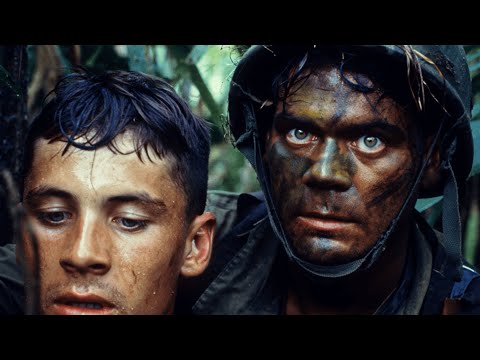
March 19, 1967. Anderson Base, 12 kilometers west of Baria. The base sat on a low hill that offered good fields of fire but poor visibility of the surrounding jungle. American infantry from the 1st Battalion, 16th Infantry Regiment, controlled the site. They were good soldiers, seasoned warriors. They had survived ambushes, mortar attacks, and the daily grind of patrolling in an environment that wanted them dead.
That morning, a helicopter landed without warning. No radio call, no advance notice, just the sudden appearance of a Huey touching down on the pad, dropping off four men, and departing before the dust settled. The base commander, a captain named Mitchell, walked out to meet the new arrivals, expecting a routine liaison team, maybe some intelligence personnel. What he found standing in the morning heat made him stop walking.
Four men in mismatched military fatigues. No unit patches. No clear rank insignia. Their equipment was wrong—too light, too simple. They carried weapons that looked modified with saws and wire. Their faces were sun-blasted, but it was their eyes that froze Captain Mitchell in place. Those eyes were not scanning the base the way normal soldiers checked out a new site. They looked at everything with a cold, calculating gaze, like predators assessing their prey.
The team leader, a sergeant whose name tape was covered in mud, approached Mitchell and handed him a set of papers. Australian Special Air Service Regiment attached for joint operations. The papers were signed by someone so high up the chain of command that Mitchell knew asking questions would be pointless.
“Do your men know we’re here?” the Australian sergeant asked. His voice was quiet, almost gentle, but there was something underneath the courtesy that made Mitchell stand straighter.
“They will in about five minutes,” Mitchell replied. “You’ll need a briefing on billeting.”
The sergeant looked at his three companions. Something passed between them without words. “We’ll billet in the western perimeter. We don’t need quarters. We’ll be outside the wire most nights.”
Mitchell nodded slowly. “Do you need me to assign you a patrol schedule in the sector?”
“No.” That single word carried more weight than a full briefing.
The Australian sergeant turned and walked toward the perimeter. His team followed in a loose formation that looked casual but allowed each man to cover the others without apparent effort. Mitchell watched them go and felt a chill despite the heat. He summoned his senior NCOs.
An hour later, First Sergeant Rodriguez, the sergeant of 2nd Platoon, appeared, the question already etched on his face. “Are those the Australians everyone’s talking about?”
Mitchell confirmed it. “They’re here for an indefinite period to conduct unspecified operations.”
“They look like they’ve been eating rocks and drinking swamp water,” Rodriguez said. “Have you seen their gear? My kid has better camping equipment.”
Private First Class Jenkins, a young soldier who had transferred in three months ago, paled when he heard the Australians were on base. The other soldiers noticed. Jenkins was not the nervous type. He wore a combat infantry badge and had a reputation for staying calm under fire.
“You know something about them?” Rodriguez asked.
Jenkins took a deep breath. “I was at Coral Base for two weeks last year. We had four Australian SAS attached to our company for a recon op. I saw what they did in the jungle. I saw how they moved. I saw what they left behind after they hit an enemy position. And I’m telling you now, Sergeant, those men are not like us. They don’t think like us.”
When you talk to them, when you look at them, you get the sense they’re not really present in the conversation. They’re somewhere else, somewhere cold.
The warning spread through the firebase. Within hours, the Americans watched the Australians establish what they called a patrol base just outside the western wire. It wasn’t a base. It wasn’t even a camp—barely. They strung some ponchos between trees and dug shallow scrapes in the ground. That was it. No fortifications, no comms wire, nothing resembling a defensive position.
That first night, the Australians disappeared. Perimeter guards saw them walking toward the tree line just after dusk. Four shadows merged with the bush and were gone. At dawn, the guards expected to see them return. Nothing. The second night, the same thing. They went out and vanished.
The Americans began making jokes. Maybe the jungle ate them. Maybe they got lost. Maybe they weren’t as tough as their reputation suggested.
On the third morning, the jokes stopped. The four Australians walked back into the firebase just after sunrise. They were covered in mud. Their fatigues were soaked through. One had leeches attached to his neck that he didn’t bother to remove until he sat down by the water point. They carried a canvas bag that they dropped at Captain Mitchell’s feet without explanation.
Mitchell opened the bag. Inside were three AK-47s, two working RPD machine guns, a stack of plastic-wrapped documents, and a collection of personal items clearly taken from enemy soldiers. ID cards, photographs, letters.
The Australians had walked into the jungle for three days and come back with enough intelligence to fill a tactical operations center for a week.
“Where did you get this?” Mitchell asked.
The Australian sergeant pointed west, about six kilometers away. “Enemy staging area. Battalion strength. We counted about 300 personnel. They’re preparing an operation against your supply line.”
Mitchell stared at the man. “You got within surveillance distance of 300 enemy soldiers?”
“We were inside their perimeter for most of yesterday afternoon. Watched them cook. Watched them clean their weapons. Watched them brief their officers.”
The other Americans in the command bunker exchanged looks. The casualness with which the sergeant delivered this information was more disturbing than if he had been boasting.
“Did they detect you?” Mitchell asked.
“No.”
“How do you know?”
“Because they’d be reacting.”
Mitchell looked at the bag of captured equipment. “What do you want us to do with this intel?”
“That’s your decision, Captain. We’ll go out again tonight. Different sector, north of here. We’ve received reports of enemy movement along the river.”
The sergeant picked up his weapon and walked out of the bunker. His team followed. They moved in that same strange loose formation that seemed like they weren’t paying attention to each other but somehow maintained perfect spacing.
Private Jenkins watched them go, then turned to Sergeant Rodriguez. “I told you those men aren’t natural. Not natural at all.”
“How?” Rodriguez demanded. “They just brought in intel that might have saved half this base from being overrun.”
“That’s exactly what I mean, Sergeant. They don’t care about the intel. They don’t care about the medals or the credit. They go out there because that’s what they are now. They’re hunters. And when you look at them, when you really look into their eyes, you see it. They’re not afraid of the jungle. They’re not afraid of the enemy. They’re not afraid of anything because they stopped being prey a long time ago.”
The Americans began paying closer attention after that. They watched the Australians prepare for patrols. They watched how they checked their equipment. They watched their movements around the base and started noticing things that made them uncomfortable.
The Australians didn’t talk much to each other. When they did communicate, it was in whispers so low that the Americans couldn’t hear them from three meters away. They never seemed to sleep normally. One would lie down for a few hours while the others stayed awake, watching the perimeter with that same calm, assessing gaze. They ate cold food. They never cooked anything hot. They didn’t play cards or write letters or do any of the things soldiers do to pass the time.
But it was the way they cleaned their weapons that really unsettled the Americans. Most soldiers cleaned their weapons as a maintenance task, a necessary chore. The Australians cleaned their weapons with the focus of priests performing a ritual. They would sit for an hour, disassembling their rifles, inspecting each part, reassembling them, testing the action over and over. They cleaned their knives the same way. Long, meticulous attention that bordered on obsession.
Sergeant First Class Rodriguez watched this one evening and mentioned it to Captain Mitchell. “Those men, they treat their weapons like they’re living things.”
Mitchell had noticed the same thing. “Maybe that’s how you stay alive out there. Take care of your equipment.”
“No, sir, it’s more than that. I watched one of them sharpening his knife yesterday. It took him two hours. Two hours for a blade that was already sharp enough to shave with. When he finished, he held it up to the light and looked at it like it was a religious object. Then he wrapped it back in an oiled cloth and put it away.”
“That’s not normal maintenance. That’s something else.”
The Americans started avoiding direct eye contact with the Australians. It happened gradually. No one set an official rule, but the word spread through the firebase. When you talk to them, look at their chests or over their shoulders. Don’t stare into their eyes because something in those eyes made the American soldiers feel a deep, instinctive unease they couldn’t explain.
Private Jenkins tried to explain it to his squad one night. “You know how you can tell what a dog is thinking when you look at it? Whether it’s friendly or scared or aggressive? Those men, when you look at them, you can’t read anything. There’s nothing behind those eyes but cold calculation. Like they’re always running numbers in their heads, measuring distances, planning the most efficient way to take you out if you became a problem.”
“You’re being paranoid,” another soldier said. “They’re on our side.”
“I know they’re on our side. That’s what scares me, because if they weren’t, we’d all be dead and we’d never see it coming.”
The days blurred into weeks. The Australians came and went like shadows, always returning with intelligence, always leaving the Americans with that same hollow unease. Then came the night that broke the unspoken barrier forever.
A young private, barely nineteen, stumbled upon one of them sitting alone at the wire, staring into the dark. The Australian didn’t move. Didn’t blink. The private, forgetting every warning, met his gaze.
“What do you see out there?” the boy whispered.
The Australian turned slowly. For one heartbeat, his eyes held something ancient and terrible—a reflection of every kill, every silent hunt, every piece of himself he had sacrificed. Then it vanished, replaced by that familiar emptiness.
“Everything,” he said. “And nothing worth saving.”
He stood and melted into the jungle, leaving the private trembling in the dark.
Years later, that boy—now an old man—still wakes screaming. He never told anyone what he truly saw that night.
What do you think he saw in those eyes?
Report this article
Select a reason for reporting:






