In the sweltering heat of the Vietnamese jungle, a young medic from New Zealand crouched beside a wounded Viet Cong prisoner, his hands steady despite the chaos of war. This was not the story most people knew—a tale of quiet heroism that would remain buried for decades. New Zealand’s involvement in the Vietnam War was never about glory or conquest; it was about compassion, sacrifice, and a commitment that few outside the annals of history ever understood.
From the operating tables of Bong Son to the treacherous patrols of the Special Air Service, the Kiwis carved out a legacy that was as complex as it was courageous. They were the understated allies, the ones who provided medical aid to civilians and enemy combatants alike, who built roads and bridges under the shadow of conflict, and who stood shoulder to shoulder with Australian and American forces in some of the war’s fiercest battles. But their story is not just one of battles won or lost—it is a story of humanity in the midst of hell.
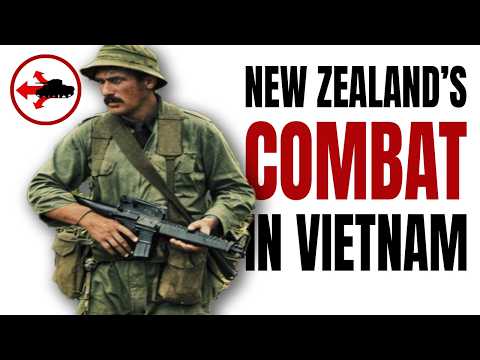
The first wave of New Zealanders arrived not with guns blazing, but with stethoscopes and surgical kits. In 1963, a civilian surgical team began treating the wounded and sick, but it wasn’t until 1967 that the New Zealand Services Medical Team was deployed—a 19-strong detachment drawn from the Royal New Zealand Air Force, Navy, and Army. Their mission: to provide medical and surgical assistance to South Vietnamese civilians and military personnel. They soon found themselves at Bong Son in Binh Dinh Province, relieving a United States Army medical team.
The conditions were harrowing. The team treated everyone—ARVN soldiers, civilians, even Viet Cong prisoners. By June 1969, they had moved to a new 100-bed hospital that operated at near capacity, with an average of 92 beds occupied at any given time. Approximately 46,000 outpatients, mostly civilians, were treated annually. Over four and a half years, 98 personnel served—47 from the Army, 27 from the Air Force, and 24 from the Navy. Their withdrawal in December 1971 left behind a rebuilt hospital that reopened in 1998, a testament to their enduring impact.
But the Kiwi contribution went far beyond medicine. New Zealand also poured millions into economic assistance, funding mobile health teams, refugee camps, vocational training, and even a science building at the University of Saigon. From 1966 onwards, the equivalent of nearly 350 million US dollars (3.3 billion in today’s money) flowed into South Vietnam, a silent lifeline for a nation torn apart.
And then there were the soldiers. Beginning in June 1964, New Zealand committed military forces—first 25 Army Engineers who built roads and bridges, then the legendary 161 Battery Royal New Zealand Artillery. Equipped with 105mm howitzers, the battery was pivotal in battles like Long Tan and Binh Ba, initially under U.S. command but later integrated with the First Australian Task Force. The United States awarded them the Meritorious Unit Commendation, and in 2019, the Australian Army honored them with the first Australian Unit Citation for Gallantry ever given to a New Zealand unit.
The Navy and Air Force played their parts too. The Royal New Zealand Air Force’s No. 40 Squadron transported troops, while No. 41 Squadron flew resupply missions from Singapore. Forward air controllers served with U.S. tactical air support squadrons, and pilots flew with Australian and Marine units. In 1970, RNZAF A-4 Skyhawk pilots were attached to the U.S. Marine Corps, adding another layer to the Kiwi story.
Perhaps most secretive was the deployment of the New Zealand Special Air Service in November 1968. Four troops—one officer and 25 other ranks—joined the Australian SAS at Nui Dat, conducting long-range reconnaissance and ambushing enemy supply routes. They mounted 155 patrols over three tours until their withdrawal in February 1971. At their peak, New Zealand had 543 men in Vietnam, a small but significant force.
By the time the last flight departed in April 1975, carrying embassy staff and refugees, New Zealand had lost 37 killed and 187 wounded. Their contribution was never fully acknowledged, but for those who served, the memories linger—of lives saved, bridges built, and a quiet courage that defined a generation.
Yet behind the statistics and citations lies a story rarely told—the story of the men themselves, and the strange, quiet moments that war leaves in its wake. One such moment came in the autumn of 1969, when a young artillery officer from the 161 Battery found himself sharing a cigarette with an Australian forward observer on a firebase overlooking the Binh Ba rubber plantation. They spoke not of the battle that had raged there months earlier, but of home—of green hills, cold beer, and the smell of rain on dry earth.
It was a conversation that would never make it into any official history. But it captured something essential about the Kiwi presence in Vietnam: they were not conquerors, not empire-builders, but ordinary men thrust into extraordinary circumstances, doing their duty with a quiet dignity that their allies noticed and their enemies, at times, respected.
The Special Air Service patrols were another matter entirely. Deep in the jungle, far from the firebases and the hospitals, the SAS troopers moved like ghosts. They carried everything they needed on their backs and lived for days on end in a world of leeches, monsoon rain, and the constant threat of ambush. Their mission was to watch, to listen, to report—and, when necessary, to strike.
It was during one such patrol in the summer of 1970 that a four-man New Zealand SAS team stumbled upon something unexpected. They had been tracking a Viet Cong supply route for three days when they found themselves looking down at a small village nestled in a valley. It was not on any map they carried.
What they saw below them would stay with them for the rest of their lives. Villagers were working in the rice paddies, children were playing near the water’s edge, and there was no sign of Viet Cong activity. The patrol leader, a quiet man from Canterbury, made a decision that was not in the manual: they would not call in an airstrike, not report the village as a suspected enemy position. They would simply move on.
Months later, back at Nui Dat, the same patrol leader would learn that the village had been destroyed in a subsequent operation by another unit. He never spoke of it publicly, but those who knew him said he carried the weight of that decision for the rest of his life.
Such was the moral complexity of the war—a complexity the Kiwis navigated with no formal doctrine and little public recognition. They were a small force in a large war, and they knew it. But they also knew that their actions, however small, mattered.
The medical teams understood this better than anyone. At Bong Son, the New Zealanders treated not only the wounds of war but also the diseases of poverty—malaria, tuberculosis, and the slow, grinding toll of malnutrition. One nurse, a young woman from Auckland, wrote in her diary that she had delivered fourteen babies in a single week, all of them healthy, all of them born into a world that seemed determined to destroy them.
She would later say that those fourteen babies were the reason she had come to Vietnam—not to fight, but to bring life into a place that was surrounded by death.
By the time the last New Zealand troops withdrew in 1972, the war had changed them all. Some returned to quiet lives, never speaking of what they had seen. Others struggled, haunted by memories that would not fade. And still others, like the medic who had treated the Viet Cong prisoner, went on to careers in medicine, carrying with them the lessons of Bong Son.
Today, the New Zealand contribution to the Vietnam War remains one of the least known chapters in the country’s military history. There are no grand monuments, no annual parades. But in the archives of the Bong Son hospital, in the memories of the villagers who still remember the Kiwi doctors, and in the quiet pride of the veterans who served, the story lives on.
And it is a story that deserves to be told—not because it glorifies war, but because it reveals something true about the human spirit. In the midst of one of the most divisive conflicts of the twentieth century, a small nation chose to send not just soldiers, but healers, builders, and peacekeepers. They did not win the war, and they did not end it. But they made a difference, one life at a time.
Decades later, in a small town outside Christchurch, an old man sat on his porch watching the sun set over the hills. He was one of the last surviving members of the 161 Battery, and his hands still remembered the weight of the shells. His granddaughter asked him once what he was most proud of, and he thought for a long time before answering.
“We didn’t go there to win,” he said quietly. “We went there to help. And I think, in our own small way, we did.”
That quiet pride is all that remains for many veterans. There are no ticker-tape parades for the Kiwis who served in Vietnam, no national holidays in their honor. But the marks they left are still there—in the rebuilt hospital at Bong Son, in the roads and bridges that still carry traffic, in the families who remember the foreign doctors who saved their children.
And in the archives, the citations gather dust: the Meritorious Unit Commendation, the Australian Unit Citation for Gallantry. Symbols, perhaps, but symbols that matter.
The story of New Zealand in Vietnam is not a story of victory or defeat. It is a story of ordinary people who chose to serve, and who carried the weight of that choice for the rest of their lives.
So the next time you hear about the Vietnam War, remember the Kiwis. Remember the medics who treated their enemies, the engineers who built instead of destroyed, the gunners who fired in support of their allies, and the SAS troopers who moved like ghosts through the jungle. They were a small force in a large war, but they made a difference.
And that, perhaps, is the greatest lesson of all: that even in the darkest of times, there are those who choose to bring light. The question is—what will you choose to do with the story they left behind?
Report this article
Select a reason for reporting:






