The B-17 Flying Fortress, a marvel of engineering, was crippled and losing altitude. Fuel gauges dipped dangerously low, and the crew faced an impossible choice: certain death or a desperate gamble. In the chaos of World War II’s deadly skies, a battle-damaged bomber limped toward safety, its pilot ordering the jettison of anything not bolted down—including the massive ball turret. This is the story of how and why crews dropped the iconic turret, a decision that could mean the difference between life and death.
But this wasn’t the first time such an order had been given. In the series Masters of the Air, a B-17 with a jammed main gear faced a belly landing, and the ball turret was dropped to minimize damage. The turret, a 46.5-inch sphere weighing 850 pounds, was a crucial defensive weapon, but also a potential liability in an emergency. Dropping it required a 20-minute process with simple tools: a crescent wrench and a hammer. Two crewmen would remove bolts, disconnect fittings, and hopefully salvage the expensive K-4 gun sight. The weight reduction would extend fuel range, but it came with a terrifying risk: a gaping hole that could flood the plane in a water ditching.
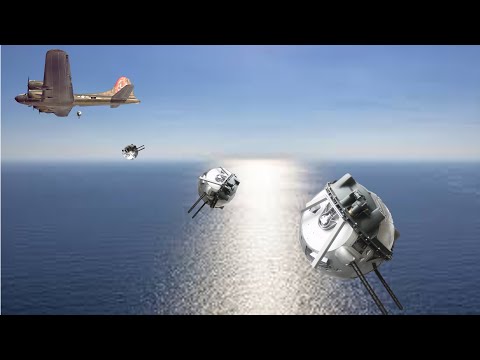
The decision to jettison the turret was never taken lightly. Over land, it made sense—a belly landing with the turret gone reduced structural damage. But over water, the hole acted as a deadly scoop, dooming the crew if they ditched. In the episode, the bomber was over land, and the order was given. “Jettison the ball turret!” The words crackled over the intercom, and the crew sprang into action. The turret’s barrels were pointed down, bolts removed, and the massive sphere fell away, tumbling toward the earth. The bomber, lighter by 850 pounds, struggled on.
This wasn’t just a plot device; it was a real tactic used by B-17 crews. The turret’s removal was a calculated risk, one that required cool heads under pressure. As the bomber limped toward safety, the crew could only hope their gamble paid off. The sky was unforgiving, and every decision mattered.
The process was straightforward but fraught with danger. The supporting yoke assembly remained on the bomber, and the turret’s removal left a large cutout. In a ditching, that hole would act as a ram scoop, flooding the plane in seconds. But over land, it was a lifesaver. The pilot had to weigh the odds: fuel exhaustion versus water ditching. In the episode, the choice was clear—drop the turret and pray for a safe landing.
As the B-17 flew on, the crew knew they had done everything they could. The ball turret, once a symbol of defense, was now a distant memory, and the bomber was lighter, more agile, and hopefully, able to reach safety. But the story was far from over.
Inside the fuselage, the sudden absence of the turret changed everything. The floor beneath the radio room now held a ragged, open wound where steel and glass had once sealed the belly. Wind tore through the compartment, snatching at maps and loose gear. “She’s flying lighter,” the co-pilot muttered, eyes fixed on the fuel gauges. The needles still hovered near empty, but they had stopped their sickening slide.
The pilot, hands steady on the yoke, kept the bomber trimmed and level. Every unnecessary movement burned precious fuel. He ordered the crew to shift weight forward, to keep the tail from dragging. The B-17 responded, her wounded belly catching the air like a broken wing.
In the waist section, the gunners stared at the empty mount where the turret had been. It had been their friend and their prison—a cramped sphere of cold steel and roaring guns. Now it was gone, a crumpled heap somewhere in the English countryside. “Hope nobody down there was standing under that thing,” one of them said, forcing a grim laugh.
The real danger, however, was still ahead. The pilot knew the manual by heart: belly land with the ball turret gone, tail wheel down, flaps at thirty-four degrees. But the tail wheel mechanism had been damaged in the fight, and the indicator light flickered uncertainly. Without it, the bomber would slide on its nose, risking a catastrophic fire.
He called back to the crew chief, who scrambled aft with a flashlight and a wrench. The tail wheel had to be cranked down by hand—a brutal job in the buffeting slipstream pouring through the open turret hole. “I’ve got it!” the chief shouted over the intercom, his voice raw. “Wheel’s down and locked!”
The pilot exhaled slowly. One problem solved. Now came the landing itself—a controlled crash onto a patch of English soil, with a hole in the belly and a crew praying the gear would hold. He eased back on the throttles, and the B-17 began her final descent.
The airfield at Kimbolton appeared through the haze, a thin strip of gray against the green of the countryside. The pilot keyed the intercom one last time. “All hands, brace for belly landing. We’re coming in hot and heavy.” The crew tucked themselves against bulkheads, feet braced, helmets pressed to their knees.
The B-17 crossed the threshold low and slow, engines coughing as the last drops of fuel fed the props. She touched down tail-first, the rear wheel biting into the turf with a shudder that ran the length of the fuselage. Then the belly met the earth.
Metal screamed. Sparks showered past the open turret hole like a fireworks display gone wrong. The bomber slid, shedding speed, gouging a long dark scar across the grass. Inside, the crew were thrown forward against their harnesses, teeth rattling, ears ringing. “Hold on! Hold on!” someone shouted, though no one could hear.
And then—stillness. The engines sputtered and died. Dust drifted through the fuselage, thick and choking. For a long moment, nobody moved.
Then the hatch banged open, and the ground crew’s voices spilled in, frantic and relieved. Men in oil-stained coveralls hauled airmen out one by one, counting heads, slapping backs. The bomber sat slumped in the dirt, her belly torn, her turret gone, her crew alive.
The pilot climbed down last, his knees trembling as his boots hit the ground. He turned and looked back at his ship—the long scar in the grass, the empty hole where the turret had been, the tail wheel still stubbornly locked in place. “She got us home,” he said quietly, almost to himself.
But the debriefing that followed was anything but quiet. The intelligence officers wanted every detail: the fuel state, the damage, the decision to drop the turret. The pilot recounted it all, the words coming slow and careful. When he described the jettison, one of the officers leaned forward. “You dropped it over land, then? Not water?”
The pilot nodded. “Over land. If we’d been over the Channel, I’d have thought twice. That hole would’ve drowned us in a ditching.” The officer made a note, and the room fell silent for a moment, the weight of what might have been settling over them all.
Outside, the mechanics had already swarmed the bomber, their torches cutting bright arcs through the dusk. They measured the scar in the grass, inspected the damaged belly, and shook their heads at the empty turret mount. One of them, a grizzled sergeant who’d seen too many wrecks, ran his hand along the jagged edge of the cutout. “Eight hundred fifty pounds of good American steel,” he muttered. “Somewhere in a field, and nobody to thank for it.”
He was wrong about that last part. The crew would thank it every day they drew breath. The turret had done its final duty—not as a weapon, but as ballast tossed overboard to keep a wounded bird aloft. By morning, the bomber would be towed to a hangar, her wounds patched, her belly sealed. But the hole in the crew’s memory would stay open a while longer.
The pilot found the grizzled sergeant at the hangar door the next morning, a mug of tea gone cold in his hand. “You said nobody’d thank it,” he said. “We will. Every man on that ship.” The sergeant nodded slowly, then pulled a crumpled scrap of paper from his pocket—a requisition form for a replacement turret.
But replacements were scarce that winter, and the bomber was needed back in the fight. So she flew without her belly gun, a strange, hollowed-out thing that rattled in the slipstream. The crews called her Old Hollow, and they flew her anyway, because a Fortress without a turret was still a Fortress.
Months later, another pilot brought her home on two engines, and the men who’d flown her the first time came out to watch. “She’s still got the hole,” one of them said, almost fondly. “Some things you don’t patch over.”
The war moved on, as wars do. But the story of the dropped turret traveled with the crews—a lesson passed from pilot to pilot, scribbled in margins of flight manuals and whispered in briefing rooms. Over land, you drop it. Over water, you pray.
And when the men who flew that battered B-17 gathered years later, someone always raised a glass to the 850 pounds of steel that fell somewhere in an English field. “To the turret,” they’d say. “She gave us one last shot.”
What would you have done—dropped the turret over land, or gambled on the water?
Report this article
Select a reason for reporting:






