Tokyo gave them ten days. Ten days to cross the Owen Stanley Range, seize the airfield at Port Moresby, and cut Australia off from the war. The Imperial Japanese Army had taken Malaya in seventy, Singapore in seven, the Dutch East Indies in ninety-one, Rabaul in a single afternoon. They had not lost a land campaign since 1895. The force chosen for this operation—the South Seas Detachment—had swept through Guam and New Britain without breaking stride. Five thousand battle-hardened veterans of the most successful military expansion in modern history.
Against them stood fewer than four hundred Australian militiamen. Most had never heard a shot fired in anger. Some were seventeen. Some were sixteen. When Major General Tomitaro Horii reviewed the intelligence reports on these defenders, he reportedly set the papers aside after six minutes and said one sentence that would prove to be the most catastrophic misjudgment of the entire Pacific War: “They are not soldiers. They are children in fancy dress. We will sweep them aside.”
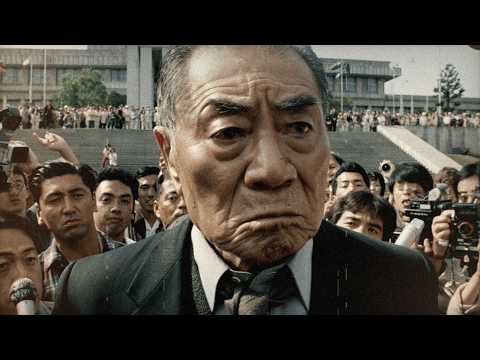
He was wrong. Deeply, historically, devastatingly wrong—so wrong that within five weeks his after-action reports contained language no Japanese commander had used since the Russo-Japanese War. Words like “fanatical.” Words like “suicidal resistance.” Words like “incomprehensible tenacity.” By the time the campaign ended, Horii himself was dead, drowned in a river during a retreat from a position he should never have underestimated.
Ten days became 131. And those four hundred teenagers did not merely delay the most feared army on earth. They broke its spear. They bled it white. They forced it to retreat and chased it back across the same mountains the Japanese had crossed with drums beating and flags raised.
Stay with me, because what the Japanese commanders actually said in their reports—in their own words, in documents Tokyo tried to destroy before the surrender—tells a story that should have rewritten everything the world knew about Australian soldiers.
But first, you need to understand what the Japanese were marching into, and who they thought they were about to crush beneath their boots.
July 1942. The world was on fire, and Australia was losing. Singapore had fallen five months earlier. Fifteen thousand Australians marched into captivity. Darwin had been bombed—sixty-four raids and counting. Japanese submarines shelled Sydney Harbour. The barrier islands had fallen. New Guinea was next, and if New Guinea fell, the road to the Australian mainland would be wide open. This was not strategic theory. This was geography. Port Moresby sits on the southern coast of New Guinea, roughly five hundred miles from the tip of Queensland. Take Port Moresby, and you own the air corridor. Own the air corridor, and Australian cities burn. Everyone knew it. The Japanese knew it. MacArthur knew it.
The problem was who was available to stop them. The answer was almost no one. Australia’s best troops—the 6th and 7th Divisions, veterans of Tobruk and North Africa—were on the other side of the world. Churchill wanted to keep them there. The American buildup in Australia was still months away from combat readiness. What remained in New Guinea were scattered militia units, reservists, and amateur soldiers—the ones the regular army called “chocos,” short for chocolate soldiers, on the assumption they would melt under the heat of battle.
That was the joke. But by August, no one was laughing.
The unit that drew the shortest straw in military history was the Australian 39th Infantry Battalion, a militia force raised from young men in Victoria and New South Wales. Their average age was eighteen. Some had been in uniform for less than three months. Their equipment was World War I surplus. Their rifles were Lee-Enfields with worn-out barrels. They had no jungle training, no combat experience, no armored support, no air cover, and they were being sent up a sixty-mile track through some of the most brutal terrain on the face of the earth to hold off five thousand Japanese veterans who had never lost a day in the field.
You’ve heard the name Kokoda. You might think you know the story. You don’t. Not yet.
The track itself is the first enemy. Forget the tidy paths and green canopies of documentaries. The Kokoda Track rises from sea level to seven thousand feet through jungle so dense that sunlight never reaches the ground. Mud runs knee-deep in the dry season and chest-deep in the wet. Temperatures swing from ninety-five degrees in the valleys to near freezing on the ridges. Malaria is not a possibility; it is a certainty. Dysentery hits everyone. Scrub typhus. Tropical ulcers that eat flesh to the bone. Leeches the size of your thumb latch onto every inch of exposed skin. The track is often less than two feet wide, carved into the sides of slopes where one wrong step means a five-hundred-foot drop into a ravine no one will ever search.
Men carrying sixty-pound packs climbed gradients so steep they had to pull themselves up by tree roots. Some sections rise three thousand feet in less than a mile. Australian soldiers later described it as climbing a vertical ladder for ten hours while someone pours warm water over your head and punches you in the stomach.
This is where four hundred militiamen were asked to stop the Japanese Empire.
Now let me tell you what the Japanese brought. The South Seas Detachment was not a garrison force. It was not a second-rate unit. General Horii handpicked his battalions for speed, endurance, and aggression. The 144th Infantry Regiment formed the backbone—three full battalions of men who had fought in China, stormed Guam, and crushed resistance across the Pacific with mechanical efficiency. They were supported by the 41st Infantry Regiment, mountain warfare specialists trained specifically for operations in vertical terrain. Engineers and artillery detachments hauling mountain guns that could be broken down and carried on human backs. A total force that would eventually reach nearly ten thousand men on the track.
Their soldiers were older, harder. Many had five years of combat experience. Their officers had studied the terrain. Their intelligence told them the defenders were militia—poorly trained, poorly equipped, poorly led. And on that last point, Japanese intelligence was initially right about the leadership. The 39th Battalion’s commanders had limited combat experience. But intelligence reports cannot measure what a man discovers about himself when the jungle closes in and the moment comes and there is literally nowhere to retreat but the ocean behind him and home behind that.
Here the Japanese made their first mistake. They assumed the Australians would fight the way the British had in Malaya. They were catastrophically wrong.
The first contact came on July 23, 1942. A company of the 39th Battalion, about 120 men under Lieutenant Colonel William Owen, took positions around the village of Kokoda and its vital airstrip. The strip was the only flat ground for miles. The only place where supplies could be flown in. Lose the strip, and the defenders were cut off entirely.
The Japanese attacked at night. Lead elements of Horii’s force—a reinforced company of roughly 300 men from the 144th—moved through the jungle in darkness. They expected to overrun the position in minutes. They had done it before. In Guam and Rabaul, a quick bayonet charge in the dark against garrison troops and it was over by dawn.
It was not over by dawn.
Lieutenant Colonel Owen placed his men in a tight perimeter around the strip. When the Japanese charged, the Australians opened fire from prepared positions and did not stop. Owen himself was everywhere, moving between positions, directing fire, steadying the teenagers who had never heard a shot fired outside training. The fighting dissolved into hand-to-hand within twenty minutes. Rifle butts, bayonets, fists. In pitch darkness on a plateau in the middle of the jungle, boys who had been in school six months earlier stood their ground against the finest jungle fighters in the world and stopped them cold.
Owen was hit. A bullet pierced his forehead. He died hours later, but his men held. By dawn, the Japanese had taken the airstrip, but at a cost their commander had never anticipated. And the Australians had melted into the jungle, regrouped, and were already setting ambushes along the track behind them.
This was not Malaya. The defenders were not surrendering. They were not panicking. They were bleeding, terrified, sick, outnumbered five to one, and yet they fought with a ferocity the Japanese had not encountered since Guadalcanal. And Guadalcanal had not even started yet.
Now listen to what the Japanese said. Captain Tadashi Ogawa, commander of the 1st Company of the advance force, wrote in his field diary after that first engagement. I want you to hear the exact tone of a veteran Japanese officer putting pen to paper after fighting Australian militia for the first time.
“The enemy did not act as expected. We achieved surprise. We had numerical superiority. We attacked at night, which has always broken the will of colonial defenders. These men did not break. When we reached their positions, they fought with bayonets and bare hands. Many continued to fight after wounds that should have been fatal. One soldier, shot through the chest, charged three of my men using his rifle as a club before he was killed. I do not understand these Australians. They are not like the British. They are not like the Dutch. They fight as if they are defending their own homes.”
Read that last line again. They fight as if they are defending their own homes. He was more right than he could possibly imagine. Port Moresby was the last door. And behind it was Australia. These militia soldiers had grasped something with absolute clarity—something no amount of training or experience can replicate. There was nowhere else to go. The Japanese could afford to lose a battle. The Australians could not afford to lose a single ridge line. Every position they gave up brought the enemy closer to home. Not London. Not Washington. Home. Their homes, their mothers, their country. And that made them dangerous in a way the Japanese had never faced.
The withdrawal from Kokoda was a fighting retreat, not a rout. Understand that difference, because the Japanese did not. Their tactical manual said a defending force that loses its main position collapses, disintegrates, and streams to the rear in disorganized panic. That is what happened in Malaya. That is what happened in Burma. That is what happened everywhere the Japanese had fought Western-led troops. The 39th Battalion did not collapse. They fell back to Deniki. Dug in. Fought again. Fell back to Isurava. Dug in. Fought again. At every village, every ridge, every river crossing, the pattern repeated with the mechanical persistence of men who simply refused to accept defeat.
The Japanese kept attacking in overwhelming numbers. The Australians kept fighting until their positions were encircled or overrun. Then they withdrew—not in panic, but in ordered fighting retreat to the next defensive position—and did the whole thing again. And every time the Japanese advanced, they paid.
Colonel Masao Kusunose, commander of the 144th Infantry Regiment, gave an assessment to Horii after two weeks of fighting that contained a sentence no Japanese regimental commander had written since the war began: “The rate of advance is unacceptable. Enemy resistance exceeds all intelligence estimates. I request additional forces.”
Unacceptable. The word echoed through the Japanese command structure like a gunshot. Kusunose was not a man who asked for help. His regiment had taken Guam in forty-eight hours, and now he was telling his commander that fewer than four hundred Australian teenagers were costing him a week per mile. Do the math on that. Five thousand Japanese soldiers, four hundred Australian defenders. The Japanese should have been moving at the speed of march. Instead, they were measuring progress in hundreds of yards. And every hundred yards came with a body count.
Horii responded by throwing more troops at the problem. He pushed the 41st Infantry Regiment forward. He brought in engineers to improve the track for supply operations. He moved himself closer to the front—something Japanese generals in the Pacific almost never did. And in his communications with the 17th Army headquarters in Rabaul, Horii began using language that would later be studied by every military historian who examined the campaign. “The enemy fights with a ferocity we did not expect. Their withdrawal is not a retreat. It is a fighting method. They yield ground slowly and exact a price for every yard. Our casualties are becoming operationally significant.”
Operationally significant. From a general who had given himself ten days.
Now let me take you inside the jungle, because reports and numbers tell only part of the story. The part they don’t tell is what it sounded like, what it smelled like, what it felt like to be nineteen years old with a 103-degree fever from malaria, down to your last magazine, watching shapes moving through the trees at three in the morning and knowing that every single one of them wants you dead.
Private Bruce Kingsbury was twenty-four years old. He had been a bank clerk in Melbourne. He was at Isurava when the Japanese launched their heaviest assault of the entire campaign—over a thousand men hitting the Australian perimeter from three sides at once. The Australians had about two hundred effective soldiers left. Ammunition was running low. The defensive line was buckling. Kingsbury grabbed a Bren gun. He charged—not backward, not sideways, but forward, straight into the Japanese attack, firing from the hip, screaming. One man running directly at a thousand soldiers. The Japanese advance stopped. They actually stopped. A single Australian with a machine gun charging them was so far outside their tactical framework that the lead elements hesitated. And in that hesitation, the Australian line re-formed. Positions were reinforced. The perimeter held.
Kingsbury was shot by a sniper minutes later. He was awarded the Victoria Cross—the first of four earned on the Kokoda Track. But what matters here, what matters for understanding what the Japanese were writing in their reports, is how his charge looked from the other side.
A Japanese platoon commander, Lieutenant Sakamoto, wrote about that day. Not about Kingsbury by name. He didn’t know his name. He wrote about what he saw: “One enemy soldier came out of the position firing a machine gun and ran directly at our forward section. He was making a sound—not a battle cry as we understand it, but something between a scream and a laugh. My men stopped advancing. I could not get them to move again for several minutes. When we finally reached the position where the soldier fell, we found he had advanced over fifty meters alone. He had killed or wounded at least eight of our men. One soldier. I reported this to battalion and was told similar incidents had occurred along the entire line.”
Between a scream and a laugh. That is how a Japanese officer described an Australian charging to his death. Think about that. But Isurava was not an isolated moment of madness. It was the pattern. And the pattern was what broke the Japanese psychologically before it broke them physically.
The Australians fought differently. The Japanese trained for mass attack, overwhelming force concentrated at a single point. Bayonet charges for close combat. The spiritual superiority of the Japanese warrior overcoming material disadvantage. It was a doctrine rooted in Bushido. It had worked everywhere. It worked in China. It worked against the British. It worked against the Americans at Bataan. But it did not work against the Australians in the jungle.
The Australians did not stand in neat lines and try to match the Japanese bayonet for bayonet. They fought dirty. They used the jungle. They set ambushes so close that the first shots were fired from ten to fifteen feet. They let Japanese patrols walk past them, then attacked from behind. They booby-trapped their abandoned positions. They booby-trapped bodies. They fought at night, which no Western force was expected to do against the Japanese. And they were quiet in ways that unnerved Japanese soldiers trained to believe they were the masters of jungle warfare.
Sergeant Morrison of the 39th told his men something before their first ambush that became a mantra along the track: “Don’t fire until you can see the color of his eyes. Then put two rounds in his chest and move. Don’t wait to see him fall. Move. They’ll be on you in thirty seconds.”
The ambush doctrine the Australians developed—not from any manual, but from raw survival instinct—produced results the Japanese could not reconcile with their intelligence assessments. A patrol of eight Australians would hit a Japanese column of fifty, kill six to ten men in three seconds of concentrated fire, and vanish into the scrub before the response came. The Japanese would spend an hour searching for an enemy who was already a mile away setting the next ambush.
Colonel Kusunose wrote about this specifically: “The Australians do not fight as a conventional force. They appear and disappear. When we locate them and attack, they are gone. When we advance carelessly, they are suddenly behind us. Our flank patrols are ambushed and destroyed. I have lost seventeen scouts in three days to an enemy I cannot locate.”
Seventeen scouts in three days to an enemy that was supposed to be an untrained militia. And here is the detail that sits at the heart of what the Japanese commanders kept writing about. The thing they could not assimilate. The observation that appeared in report after report from every level of the Japanese command on the track: The Australians did not surrender to death—not literally, but figuratively and operationally. The Japanese would fight a savage engagement, take a position, count enemy dead, and calculate that the defending force must be combat-ineffective, finished, destroyed. No unit could take those casualties and keep fighting. They would advance confidently toward the next hill, only to find the Australians there, dug in, prepared, and fighting with the same intensity as if the previous battle had never happened.
Major Koiwai, who commanded a battalion of the 144th, expressed this bewilderment more clearly than anyone: “We have been fighting the same enemy for twenty-three days. According to our calculations, based on confirmed casualties we have inflicted, the opposing forces should have been annihilated twelve days ago. Yet they are in front of us every morning. And every night, they probe our positions. I have concluded either that our casualty estimates are wrong, or that these men are receiving reinforcements by methods we cannot detect, or that they simply refuse to accept that they have been defeated.”
Read that third option. They simply refuse to accept that they have been defeated. That was the Japanese conclusion. It was not a compliment in a postwar memoir. It was not a generous reassessment decades later. It was a battalion commander in the field trying to explain to his superiors why his advance had stalled against an enemy that no longer existed on paper. And he was right. The 39th Battalion was effectively destroyed as a fighting force. Their casualties were staggering. At one point, the entire battalion could not muster seventy men fit to carry a rifle. But those seventy men fought like seven hundred. They fought because they could see the coast behind them. They fought because there was no one coming to save them. They fought because the alternative was not capture—the Japanese did not take prisoners on the Kokoda Track. The alternative was annihilation—of themselves, of their mates, and of the country they had left behind.
Now I need to tell you about the reinforcements. Because this is where the story shifts from desperate defense to something the Japanese never anticipated. The 2/14th and 2/16th Battalions reached the track in late August. Australian Imperial Force. Volunteers. Veterans. These men had fought Rommel in North Africa. They had held Tobruk. They were tough, they were hardened, and they were furious about what had been done to the militia boys they were replacing.
Brigadier Arnold Potts took command, and the dynamic on the track changed. Not in terms of ground immediately—the Japanese still had numerical superiority. They still had momentum. Potts conducted what military historians now call one of the finest fighting withdrawals in the history of warfare, a disciplined, painful retreat that bled the Japanese at every turn while preserving his force for the counterattack he knew was coming. But the Japanese did not know it was a disciplined withdrawal. They thought they were winning. Their reports from early September reflected growing confidence. Horii signaled Rabaul that Port Moresby would fall within weeks. Forward units could smell the ocean.
Then the Australians stopped retreating. They stopped at a place called Ioribaiwa—the last ridge before the coastal plain, thirty miles from Port Moresby, close enough to see the smoke of the town on a clear day. This was it. The last stop. There was no more track behind them. There was only home.
And then something happened that no Japanese intelligence officer had anticipated. Something that defied everything the Japanese understood about Western troops when pushed to the edge. The Australians attacked. Not a probing attack, not a limited counterpunch to adjust the lines, but a full-scale assault with bayonets fixed, moving back down the track they had retreated up for two months. The 25th Brigade, the 16th Brigade, fresh units arriving behind the reinforced veterans now. And they drove into the Japanese with a violence that the South Seas Detachment had not experienced from any enemy on any battlefield.
Horii’s communications with Rabaul in the last days of September tell the story of a general watching his victory dissolve: “The enemy has launched a major counteroffensive along the entire front. Forward positions have been crushed. I request permission to consolidate and regroup.”
Regroup. The Japanese euphemism for retreat. The request was denied. The 17th Army ordered Horii to hold. Tokyo could not accept that the drive on Port Moresby had failed. The Imperial Army does not retreat. It was ideologically impossible, spiritually unacceptable. But the Australians did not care about Japanese doctrine. They kept coming.
The fighting during the Australian counteroffensive was, by the testimony of both sides, among the most savage of the entire Pacific War. Hand-to-hand combat on ridges so narrow that two men could not stand side by side. Bayonet fights in mud so deep that men drowned in it. Australians fighting uphill, Japanese fighting downhill, over the same bodies that had fallen weeks earlier, through positions littered with the wreckage of both armies. And here the Japanese broke. Not all at once, not in a single collapse, but in stages. Unit by unit, ridge by ridge, the South Seas Detachment began to fall back. First to Templeton’s Crossing, then to Eora Creek, then to Kokoda itself. The same villages they had taken in July, the same track they had marched up with flags and drums. Now they stumbled back down it, starving, sick, leaving their wounded in the mud because there were not enough healthy men left to carry them.
Lieutenant Sakamoto—the same officer who had written about the Australian with the Bren gun—wrote his final diary entry before the withdrawal from Eora Creek: “We entered this jungle believing we were the greatest soldiers in the world. I believe now that we were wrong. Not about Japanese courage, but about Australian resolve. These men fight for something I can feel but cannot name. It is not emperor worship. It is not ideology. It is something rooted in the land itself. They fight as if this jungle is their home. It is not their home. But they fight as if it is. I do not think we can defeat them here. There is something in the ground itself.”
A Japanese lieutenant, trained from childhood in the spiritual superiority of the Yamato race, a man who believed with every fiber of his being that the Japanese soldier was the supreme warrior on earth, had written that about farmers and bank clerks and schoolboys from Victoria. The withdrawal became a catastrophe. The same track that had punished the Australians now destroyed the Japanese, and worse. Because the Australians were retreating toward their supply lines, closer to food and ammunition and medical support with every step back. The Japanese were retreating away from theirs. Every step back took them farther from Rabaul, from supplies, from any chance of survival.
And the hunger began. Japanese soldiers stripped bark from trees. Ate grass. Ate the leather belts of their equipment. Ate things that cannot be mentioned in this text. The medical situation was apocalyptic. Malaria, dysentery, beriberi, and tropical ulcers—men who had crossed the Owen Stanleys as the most feared infantry in the Pacific were now skeletal figures crawling through mud, too weak to carry their rifles. And behind them came the Australians, relentless and merciless, pressing the pursuit, setting ambushes, cutting off withdrawal routes, destroying rear guards, giving the Japanese exactly what the Japanese had given every retreating army they had ever chased. No mercy. No rest.
General Horii never made it back. On November 19, 1942, Major General Tomitaro Horii drowned while attempting to cross the Kumusi River on a primitive raft. The current swept him away. The man who had given himself ten days to take Port Moresby died in a river while fleeing from it. His body was never found. Think about that. The general who had looked at his intelligence reports and said, “They are just children playing dress-up,” died running from those children. Drowned during a retreat. His command shattered. His forces annihilated. His mission—the only overland advance toward Australia that Japan ever attempted—a failure so complete, so unambiguous, so irreversible that it echoed through the rest of the war.
And what are the final numbers? Because this is a story about a number, and that number needs to be reckoned. The Japanese committed roughly ten thousand troops to the Kokoda campaign. Of those, more than six thousand were killed, wounded, or died of disease. Sixty percent casualties. Some battalions ceased to exist entirely. The 144th Infantry Regiment—the regiment that had taken Guam in forty-eight hours—was effectively destroyed. Battalions that had crossed the mountains at full strength came back with fewer than a hundred men. The Australians lost 625 killed on the track and more than 1,600 wounded, but they held. They held against an enemy that outnumbered them at every engagement. They held without air cover, without artillery support, without armor, and sometimes without food. They held while sick, exhausted, and watching their mates die in mud that swallowed their boots. And the ten days Horii had promised took 131 days—thirteen times longer than planned. At the end of those 131 days, the Japanese were not at Port Moresby. They were dead in the jungle.
Examination of Japanese records after the war revealed something the Australian government did not announce at the time, and most history books still do not emphasize. The Kokoda campaign fundamentally altered Japanese strategic thinking toward Australia. Before Kokoda, the Japanese high command viewed the Australian Army as a subsidiary of the British—colonial troops who fought by British methods and would collapse under Japanese pressure as they had in Singapore and Malaya. After Kokoda, the Japanese reclassified Australian forces not as colonial or auxiliary troops, but as a primary threat.
Colonel Tsuji Masanobu—one of Japan’s most influential staff officers, the man who had planned the invasion of Malaya and had a hand in the fall of Singapore—reviewed the Kokoda reports and wrote an assessment distributed to Imperial General Headquarters: “The Australian soldier is not a British soldier in a different uniform. He is a different type of fighter. In Malaya, the British fought for an empire they had never seen from where they stood. The Australian fights for the ground beneath his feet. He does not surrender. He does not retreat beyond a point he determines himself. When he reaches that point, he attacks. This is more dangerous than any tactic. It is a characteristic. We cannot train against a characteristic.”
We cannot train against a characteristic. Consider that sentence carefully. A Japanese colonel who had helped destroy the British Empire in Southeast Asia, who had watched 130,000 Allied soldiers surrender at Singapore, was telling Tokyo that the Australians were fundamentally and qualitatively different. Not better equipped or better supported, but different in a way that could not be measured by military doctrine or numbers or morale. And this was not the opinion of a single officer. The pattern of Japanese commentary on Australian soldiers after Kokoda is one of the most striking and least discussed threads in the history of the Pacific War.
General Adachi Hatazo, commander of the 18th Army in New Guinea after Kokoda, issued instructions to his officers specifically about fighting Australians compared to other Allied forces: “When engaging American forces, expect heavy preliminary bombardment followed by cautious infantry advance. When engaging Australian forces, expect no warning. They will approach to bayonet range before you are aware of their presence. Prepare accordingly. Do not expect any warning.”
This assessment, born directly from Kokoda, shaped Japanese defensive planning across New Guinea for the rest of the war. And every time the Japanese fought Australians after Kokoda, the same pattern held. Lae. Salamaua. Finschhafen. Buna. Gona. Shaggy Ridge. Wewak. In every engagement, the same reports filtered back through Japanese channels. The Australians fight differently. They get closer. They stay longer. They do not stop.
But all of it—the campaigns, the reclassification, the doctrinal shifts—traces back to those first weeks on the Kokoda Track, to four hundred militiamen who were never supposed to last a single day. You have to understand something that gets lost in military analysis. Those boys on the track, the men of the 39th Battalion, the ones the regular army called “chocos,” did not know they were making history. They did not know that Japanese officers were writing stunned reports about them. They did not know that their stand would be studied in war colleges for decades. They knew their mates were dying. They knew the Japanese were coming. They knew that behind them was the ocean, and beyond the ocean was home, and that no one was going to defend it if they didn’t.
Private Stan Bisset, eighteen years old, 39th Battalion, survived the track. Years later, when asked what kept him going when everything said he should have broken, he gave an answer that explains the entire campaign better than any general’s memoir: “We were scared. We were sick. Mates were dying everywhere, and we didn’t know what we were doing most of the time. But you couldn’t go back. There was nothing back there but Mum. And you weren’t going to let them get to Mum.”
You weren’t going to let them get to Mum. That’s it. That’s what the Japanese ran into on the Kokoda Track. Not tactics, not technology, not training. A group of teenagers who decided, in the worst conditions on earth, against the worst odds imaginable, that the enemy would not get past them—and then made it true through sheer, stubborn Australian determination and a flat refusal to accept surrender.
The Japanese wanted ten days. They got 131. They wanted Port Moresby. They got the Kumusi River. They wanted children playing dress-up. They got the fight of their lives.
And when it was all over, when the last Japanese soldier had been driven back across the mountains, the bodies buried and the wounded evacuated, and silence fell on the track for the first time in four months, Brigadier George Vasey—who had led the counterattack—stood on the Kokoda plateau where it had all begun, looked out at the airstrip where Owen had died, and said something every Australian should know but few do: “The 39th Battalion held the track. They were outnumbered, outgunned, and outclassed by enemy commanders at every turn. They should have been wiped out within twenty-four hours. But they held. And because they held, the rest of us had something to hold onto.”
Ten days. 131. That was the Kokoda Track. That was what the Japanese found when they finally met Australian soldiers who had nothing to lose and nowhere to go. And the reports those Japanese commanders wrote—filled with words like “fanatical,” “incomprehensible,” and “we cannot train against a characteristic like that”—those reports are the truest measure of what happened on that track. Not Australian propaganda. Not Allied spin. The words of the enemy himself, written in shock, written in respect, written by men who entered those mountains believing they were invincible and came out knowing they were not—because four hundred boys from Victoria proved them wrong in the mud, in the rain, in the dark, with nothing but Lee-Enfields and the knowledge that Mum was standing behind them.
Ten days. Impossible.
But here is the part that never makes it into the documentaries. The 39th Battalion did not fight alone. They fought beside Papuan carriers—the Fuzzy Wuzzy Angels—who hauled the wounded down cliffs no white man could climb, who carried ammunition up the track on their backs and died in the mud beside the soldiers they served. “They were the bravest men I ever saw,” one digger wrote. “And we never even learned their names.”
The Japanese never understood that either. They were fighting not just an army, but a country—and a people—that refused to be conquered.
So when you walk that track today, through the mud and the mist and the silence, listen. The ghosts are still there. Four hundred boys who stared down an empire and said: no further.
What would you have done, at seventeen, with the world closing in and Mum behind you?
Report this article
Select a reason for reporting:






