The desert sun blazed down on the besieged port of Tobruk, where 14,000 Australian soldiers stood defiant against the might of Rommel’s Afrika Korps. For 241 days, they endured relentless bombing, dwindling supplies, and the constant threat of annihilation. Surrounded by over 100,000 enemy troops, outnumbered seven to one, these men were expected to crumble. Instead, they became a symbol of unyielding resistance.
The Germans sneered, calling them ‘Rats of Tobruk’—a taunt meant to break their spirit. But the Australians, with typical defiance, embraced the name. “We’re the rats,” they proudly declared, “and rats we’ll stay.” In the face of overwhelming odds, their morale never wavered. They knew that holding Tobruk was crucial; it was the last Allied stronghold in North Africa, a thorn in Rommel’s side that he was determined to pluck out.
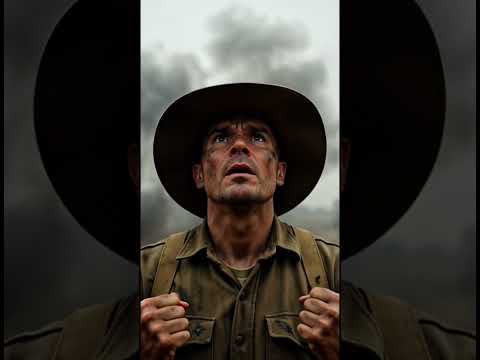
April 1941. The siege had begun. Rommel’s forces swept through the desert, capturing town after town, and Tobruk stood isolated, 500 miles from the nearest friendly base. Cut off from reinforcements and supplies, the Australians dug in. They turned the port’s defenses into a fortress, using every inch of ground to their advantage. “We had no choice but to hold,” one soldier later recalled. “It was either fight or die.”
Day and night, the Luftwaffe pounded the city. The constant bombing became a grim soundtrack to their existence. Supplies were scarce; food and water were rationed, and medical supplies dwindled. Yet, the defenders held on. They launched daring raids, sabotaged enemy positions, and made Rommel’s life miserable. The ‘Rats’ proved to be a festering wound that wouldn’t heal.
Rommel, the Desert Fox, was baffled. He had expected a quick victory, but Tobruk became his worst nightmare. The siege dragged on, tying down his precious resources and delaying his advance into Egypt. “The rats are everywhere,” he reportedly fumed. “They pop up from holes and sting us.” The Australians, with their backs to the sea, fought with a ferocity that stunned the world.
As the weeks turned into months, the defenders’ resilience became legendary. They endured air raids, artillery barrages, and even a plague of fleas. But their spirit remained unbroken. They sang songs, played cricket, and even published a newspaper they called ‘The Tobruk Truth’. Their defiance was a beacon of hope for the Allies, a reminder that victory was possible even in the darkest hours.
After 241 days, the siege was finally broken. The Australians had done the impossible. They had held out against overwhelming odds, inflicting heavy casualties on the enemy and shattering the myth of Rommel’s invincibility. The ‘Rats of Tobruk’ had earned their place in history. But their story was far from over; the war would rage on, and new battles would test their mettle once more.
The relief came not with a triumphant charge, but with the quiet, exhausted arrival of fresh troops. British and Polish units slipped into the harbor under cover of darkness, their ships sliding past the blockade to take over the battered perimeter. One by one, the Australians staggered aboard the transports, their faces hollow, their uniforms ragged, but their eyes still burning. They had held the line for eight months, and now they were leaving it to others.
As the ships pulled away from the ruined port, many of the men stood at the rails, staring back at the smoke-shrouded ruins they had called home. Some wept openly. Others simply stood in silence, too drained for words. “We left a lot of mates back there,” one soldier murmured, his voice barely audible over the hum of the engines. “A lot of good men.”
The ‘Rats’ were scattered across the Middle East—some to rest camps in Palestine, others to garrison duty in Syria. But the war was not finished with them. Within months, many would find themselves on new battlefields, carrying the lessons of Tobruk with them. The siege had forged them into something harder, something unbreakable.
Back in Australia, the news of the siege’s end was met with relief and pride. Newspapers splashed headlines across their front pages: “TOBRUK HOLDS! RATS TRIUMPH!” Families gathered around radios, listening to broadcasts describing the defenders’ heroism. In pubs and kitchens, on farms and in city streets, the name ‘Rats of Tobruk’ became a badge of honor, spoken with reverence.
But the men themselves rarely spoke of it. They had done what was asked of them, nothing more. “We weren’t heroes,” one veteran later insisted. “We were just blokes who didn’t know how to quit.” That quiet humility, perhaps more than anything else, defined them.
Yet even as they rested, the desert war rumbled on. Rommel, stung by his failure at Tobruk, regrouped and rearmed. His eyes remained fixed on Egypt, on the Suez Canal, on the prize that had eluded him. And the Australians, though scattered and weary, knew they would be called upon again.
For now, though, there was a brief respite. A chance to sleep without the crump of artillery, to eat a meal that wasn’t tinned beef and hardtack, to write letters home without the fear that they might be the last. But in the back of every mind lingered the same thought: this was only a pause, not an ending.
The rest camps in Palestine offered little comfort. Dust, flies, and the relentless heat were constant companions, and the men grew restless. Training resumed with grim intensity, the veterans of Tobruk drilling new recruits who had never heard a shot fired in anger. “You think you know war?” a grizzled sergeant barked at a fresh-faced private. “You know nothing yet.”
The lessons of the siege had been written in blood, and they were not about to be forgotten. The Australians reorganized, re-equipped, and waited. Word came down the chain of command that the 9th Division would be needed again soon. Where, no one would say. But the men had learned to read the signs.
It was in Syria, of all places, that the next chapter began. The campaign there was a strange, bitter affair—fighting Vichy French forces who had once been allies. The Australians, hardened by Tobruk, moved through the dusty hills with a confidence that unnerved their opponents. “These men fight like demons,” a captured French officer reportedly said. “They do not seem to fear death.”
But they did fear it, of course. They feared it every day. They simply refused to let it rule them. The ‘Rats’ had learned that survival was not guaranteed, that the only certainty was the man beside you. And so they fought for each other, as they always had.
By late 1941, the war in the desert had shifted again. The British launched Operation Crusader, a massive offensive meant to relieve Tobruk and push Rommel back. The Australians, now in Syria, listened to the radio reports with a mixture of hope and frustration. They wanted to be there, in the thick of it, finishing what they had started.
But their war had moved on. New battles, new enemies, new sacrifices awaited. The ‘Rats of Tobruk’ would fight again, in places they had never heard of, against foes they had never imagined. And through it all, they carried the same stubborn defiance that had kept them alive for 241 days.
“Tobruk was just the beginning,” one veteran wrote in his diary. “We thought we had seen the worst of it. We were wrong.”
The desert had forged them, but it had not finished with them. The war stretched on, vast and hungry, and the men who had once been called rats would soon be asked to prove themselves again. This time, the stakes would be even higher.
The months that followed tested them in ways Tobruk never had. In the jungles of New Guinea, the same men who had defied Rommel in the desert now faced an enemy far more brutal—the Japanese, fighting a war without rules, without mercy. The heat was suffocating, the terrain a green hell of mud and vines. “This is worse than Tobruk,” a veteran whispered to his mate. “At least in the desert, you could see them coming.”
But the ‘Rats’ adapted, as they always did. They learned to fight in the jungle, to move silently, to endure. The lessons of the siege—the patience, the resilience, the refusal to break—carried them through. They held the Kokoda Track, they fought at Milne Bay, they pushed the enemy back inch by bloody inch.
“We were rats once,” one soldier said, wiping mud from his face. “Now we’re something else entirely.” The war had changed them, hardened them, but it had not broken them. Nothing could.
When the war finally ended, the survivors came home to a country that had changed as much as they had. They returned to farms and factories, to families who had grown older in their absence, to a peace that felt strange and fragile. Many never spoke of what they had seen. “It’s not something you can put into words,” one veteran said, staring at the ground. “You had to be there.”
But the name endured. The ‘Rats of Tobruk’ became legend, a story told to children and grandchildren, a reminder of what ordinary men could do when the world demanded the impossible. Their defiance, their humor, their stubborn refusal to quit—it became part of the national soul.
And somewhere, in a quiet cemetery by the sea, the men who never came home lay at rest. Their graves face the desert they defended, the ground they refused to surrender. “They held the line,” the inscription reads. “They did not falter.”
The Rats of Tobruk are gone now, most of them. But their story remains, a testament to courage in the darkest hours. And the question lingers: when the world demands the impossible of you, will you hold the line?
Report this article
Select a reason for reporting:






