July 1942. The radio in Port Moresby crackled with news that silenced every man in the room. Japanese troops had landed at Gona and Buna on the north coast of Papua New Guinea—thousands of them, maybe 10,000, maybe more. They were already pushing south through the jungle, straight toward the only thing between them and Australia: a tiny mountain village called Kokoda and the narrow jungle track that bore its name.
Between those Japanese soldiers and Port Moresby stood exactly 77 Australian militiamen. Not hardened veterans. Not experienced fighters. Weekend warriors—part-time soldiers who drilled on Saturdays and worked regular jobs during the week. The oldest was barely 30. The youngest had lied about his age to enlist and wasn’t yet 18.
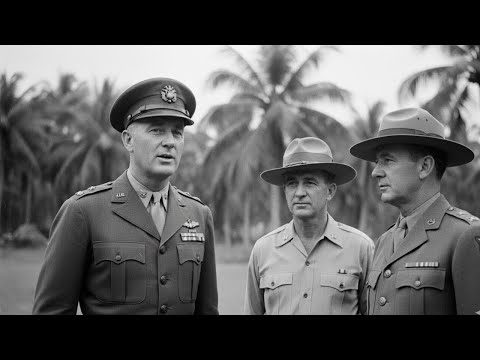
In his headquarters, General Douglas MacArthur studied the map of New Guinea with growing alarm. The supreme commander of Allied forces in the Southwest Pacific had been driven from the Philippines months earlier, forced to leave thousands of American soldiers behind in Japanese prison camps. He had promised to return, but first he had to hold Australia. And at that moment, Australia looked terribly vulnerable.
MacArthur’s eyes traced the thin line on the map that marked the Kokoda Track—96 kilometers of jungle path connecting the north and south coasts of Papua. If the Japanese seized that track, they could take Port Moresby. If they took Port Moresby, they could launch bombers against Australian cities. They could invade the mainland.
MacArthur had seen how Japanese soldiers fought. He knew what they were capable of. He looked at the intelligence reports on the Australian militia defending Kokoda and shook his head. These weren’t real soldiers. They were clerks, farmers, and shopkeepers playing at war. The Japanese would cut through them like a hot knife through butter.
The men MacArthur so easily dismissed were members of the 39th Battalion, and they knew exactly what everyone thought of them. Other soldiers called them ‘chocos’—short for chocolate soldiers—because they would melt as soon as things got hot. Regular army troops looked down on the militia with barely concealed contempt. Even their own newspapers wondered if part-time volunteers could stand against Japan’s battle-hardened veterans.
The Japanese soldiers advancing toward them were survivors of campaigns in China, Malaya, and Singapore. They had conquered Singapore in just 70 days, forcing 80,000 British and Commonwealth troops to surrender. They had driven experienced American forces from the Philippines. They had never lost a major land battle.
Now 13,000 of these elite troops were advancing on Kokoda, and in their path stood 77 boys who had never seen real combat.
Lieutenant Colonel William Owen commanded the small Australian force at Kokoda, and he understood the math of the situation perfectly. Even if all his men were sharpshooters, even if every bullet found its target, they couldn’t stop an army. The Japanese could lose 100 men without it barely registering. Owen could lose 10, and his force would collapse.
He had no artillery, no air support, no tanks. His men carried rifles that jammed in the humidity, boots that rotted away in the constant rain, and survived on half rations because supply planes couldn’t always brave the weather.
The track itself was their greatest enemy. It climbed from sea level to over 2,000 meters, then plunged back down again. The slopes were so steep that men had to pull themselves up with vines and roots. It rained every day, turning the path into a river of mud that sucked at their boots and made every step a struggle. Malaria mosquitoes swarmed in clouds. Leeches dropped from trees onto anyone who brushed against the foliage. Men could march all day and barely cover 10 kilometers.
Back in Australia, military planners were drafting reports explaining why Kokoda couldn’t be held. The terrain was impossible. The supply lines were too long. The Japanese were too strong. One general proposed abandoning the track entirely and focusing on defending Port Moresby from the sea. Another advised sending only regular army troops, arguing that the militia wasn’t worth the transport cost.
The consensus was clear. This was a lost battle, and it made no sense to waste resources on it. Better to save their strength for fights that could actually be won.
MacArthur read these reports and nodded in agreement. The situation was hopeless. The Australians would fight for a few days, maybe a week if they were lucky, and then they would break and run. That’s what untrained soldiers always did when faced with overwhelming odds.
But Owen saw something the generals in their comfortable offices couldn’t see. He saw his men digging foxholes in the red mud. He saw them checking their weapons again and again, making sure every mechanism worked. He saw them sharing cigarettes and jokes, trying to keep their courage up even though they all knew what was coming.
These weren’t professional killers, but they were Australians defending their homeland. The Japanese were 1,500 kilometers from Tokyo. Owen’s men were fighting for their families, their cities, their country. Every hour they delayed the Japanese advance was another hour for Port Moresby to prepare. Every Japanese soldier they killed was one less soldier who could bomb Sydney or invade Brisbane.
Owen didn’t need to win with his men. He just needed them to fight.
As he looked at their young, determined faces, he realized something that contradicted everything the experts believed. These amateur soldiers, these ‘chocolates,’ were written off by everyone. They would not melt. They would make the Japanese pay for every meter of jungle.
The Japanese attacked the village of Kokoda on 29 July 1942 with overwhelming force—15 to 1. Owen had pulled most of his men back from the village and positioned them in the jungle along the track, where the dense vegetation would hide their small numbers. The Japanese came expecting an easy fight. Their officers were confident they would be in Port Moresby within a week.
What they got instead was something they had never experienced before. The Australians let the first wave of Japanese soldiers pass their hidden positions, then opened fire from behind. As the confused Japanese turned to face this new threat, more Australians fired from the flanks. The crack of rifles echoed through the rainforest. Japanese soldiers fell. Their commanders screamed orders, trying to organize a response, but the Australians had already vanished back into the bush.
By the time Japanese reinforcements arrived, Owen’s men were a kilometer further down the track, setting up the next ambush. The Japanese had taken the village of Kokoda, but it had cost them three hours and 40 men. Owen had lost six.
The track itself became the Australians’ greatest weapon. Where the Japanese saw a simple jungle path, Owen’s men saw 100 opportunities. The track climbed steep ridges where a single machine gun could hold off an entire company. It crossed ravines where bridges could be destroyed, forcing the Japanese to waste days building new ones. It wound through sections of rainforest so dense that 10 men could hide within meters of the path without ever being seen.
Owen positioned his troops at every natural choke point, every hairpin bend, every place where the track narrowed between cliffs or rivers. The Japanese would advance until they hit Australian fire, set up for a battle, and discover their enemy had already withdrawn to the next position. It was maddening. It was exhausting. And it worked.
By 5 August, the Japanese had advanced only 15 kilometers in seven days. At this rate, it would take months instead of weeks to reach Port Moresby.
But MacArthur saw no strategy. He saw a retreat. From his headquarters in Brisbane, 1,600 kilometers away, far removed from the actual fighting, he sent angry messages demanding the Australians hold their ground and fight. Hold every position to the last man, he ordered. No more withdrawals. No more falling back.
MacArthur had never walked the Kokoda Track. He had never felt the mud that reached waist-deep in some places. Never climbed slopes so steep that ropes were needed to haul supplies up. Never spent a night in the jungle where the darkness was so total you couldn’t see your own hand in front of your face. He looked at maps and saw a simple line connecting two points. He didn’t understand why professional soldiers, even militia, couldn’t hold a simple jungle path.
His messages grew increasingly hostile. The Australian commanders were cowards, he said. They were letting the Japanese walk into Port Moresby without a real fight. If they wouldn’t hold the line, he would find officers who would.
Australian General Thomas Blamey read MacArthur’s demands, then read the reports from Kokoda. He saw what MacArthur couldn’t see. Every day the Japanese were delayed meant more time to build defenses around Port Moresby. Every ambush that killed 10 or 20 Japanese soldiers weakened their invasion force. Owen’s fighting retreat wasn’t cowardice. It was the only tactic that made sense against an enemy who outnumbered his troops 20 to 1.
Blamey sent a message back to MacArthur defending Owen’s strategy, but he knew it wouldn’t be enough. MacArthur wanted a conventional battle, a clear front line, territory held at all costs. He wanted World War I tactics in a World War II jungle. Blamey gave Owen permission to continue the fighting retreat, but he knew the political pressure was mounting. If the strategy didn’t show results soon, MacArthur would replace everyone involved.
The results came in ways the headquarters couldn’t measure on maps. By mid-August, the Japanese advance had slowed to a crawl. Their soldiers were getting sick. Malaria struck first, then dysentery, then tropical ulcers that turned small cuts into infected wounds. Japanese supply lines stretched 60 kilometers back over the worst terrain on earth. Every bullet, every grain of rice, every bandage had to be carried by hand over mountains and through swamps. Men who were strong at the coast arrived at the front exhausted and half-starved.
The Japanese had brought enough supplies for a quick campaign, not a grinding war of attrition. Australian ambushes targeted supply columns, destroying precious food and ammunition. One Australian patrol destroyed 50 tons of Japanese supplies in a single attack, delaying their advance by a full week. The Japanese soldiers who reached the front line were hungry, sick, and demoralized.
The Australians they fought were just as hungry and sick, but they were falling back toward their own supply lines, while the Japanese were stretching theirs. Owen’s men learned to fight in ways their training had never anticipated. They set booby traps with grenades in abandoned positions. They poisoned water sources the Japanese would use. They built dummy camps with burning fires to draw Japanese attacks, then ambushed the attackers.
An Australian soldier named Bruce Kingsbury became famous among the troops for single-handedly charging a Japanese position with a machine gun, killing dozens of the enemy before being shot down himself. His suicidal courage gave his company time to withdraw safely. Stories like his spread through the Australian ranks. These weren’t ‘chocolates’ melting under pressure. They were fighting harder and smarter than anyone had expected, including themselves. Every small victory reinforced their confidence. Every successful ambush proved they could hit the Japanese despite the impossible odds.
By the end of August, 31 days after the Japanese landing, they had advanced less than half the distance to Port Moresby. They had expected to cover the entire track in 7 to 10 days. Japanese commanders sent increasingly desperate messages to headquarters requesting reinforcements, supplies, and air support. Their casualty lists showed hundreds dead and thousands sick.
The Australians had also suffered heavy losses, with entire companies reduced to the size of platoons. But they were still fighting. Still delaying the advance. Still making the Japanese pay for every meter of jungle. The track was littered with Japanese bodies no one had time to bury. The stench of death mixed with the smell of rotting vegetation and constant rain. Men on both sides fought in conditions that would have seemed impossible weeks earlier, pushing their bodies and minds beyond the limits of what they thought they could endure.
And still the Australians withdrew. And still the Japanese advanced, but at a cost that was bleeding their invasion force dry.
In September 1942, the numbers told a story that shocked both sides. The Japanese had predicted they would reach Port Moresby in 7 days. It was 6 weeks later, and they were still 50 kilometers from their objective. They had started with 13,000 elite troops. Now fewer than 6,000 were healthy enough to fight. Disease had done what Australian bullets could not: it had nearly halved the invasion force.
Almost every Japanese soldier on the track was infected with malaria. Men who could barely stand were ordered to march. Dysentery left soldiers too weak to carry their own weapons. Tropical ulcers ate through flesh to the bone. Japanese medical units were overwhelmed, out of quinine, bandages, and medicine. The sick outnumbered the healthy. The dead outnumbered the buried.
And still they pushed on, because their orders demanded it and their culture forbade surrender.
The Australians were not much better off. They had started with 77 men and received reinforcements in August, but disease and combat had taken a terrible toll. Men fought with fevers of 40°C, shivering with cold even in the tropical heat. They carried wounded comrades for days on stretchers through jungle where no vehicle could go, taking turns because four men could barely handle the weight on the steep slopes. For one stretcher patient, 16 men were needed to rotate the carry from the front line to a field hospital, a journey that took 5 days. The wounded man survived, but three of his stretcher bearers collapsed from exhaustion and had to be carried themselves.
Soldiers wrapped rags around their rotting boots because there were no replacements. They ate half rations, then quarter rations, then anything they could find in abandoned supply dumps. The mud was so thick in some places that it pulled the boots off men’s feet, and they had to dig in the muck to get them back. Every afternoon the rain fell like clockwork, turning the track into a brown river that flowed downhill in streams.
Then on 16 September, something changed. The Japanese stopped advancing. They had reached a village called Ioribaiwa, just 50 kilometers from Port Moresby, close enough to see the lights of the city at night, but they could go no further. Their supply line had completely collapsed. Soldiers at the front received one rice ball per day. Some ate grass and tree bark. Japanese commanders reported that their men were too weak to attack. They needed time to rest, recover, and rebuild their strength.
But time was the one thing they didn’t have. Fresh Australian reinforcements were arriving by ship and plane in Port Moresby. The original militia boys of the 39th Battalion were joined by hardened veterans from the Middle East—soldiers who had fought Rommel’s Afrika Korps and won. The balance of power was shifting.
MacArthur saw his chance. For weeks he had criticized the Australian retreat, calling it cowardly and unnecessary. Now he ordered an immediate counterattack. The Australians would push the Japanese back along the entire Kokoda Track. They would retake every village, every ridge, every meter of lost ground. It was the same kind of order he had been giving all along. Attack, hold, never retreat. But this time the circumstances were different. This time the Japanese were starving, sick, and demoralized. This time the Australians had reinforcements and supplies. This time MacArthur’s aggressive tactics finally made sense.
Australian commander Blamey organized the counteroffensive, and on 26 September the Australian troops attacked. The Japanese, who had dragged themselves through hell for six weeks, now had to retreat back through the same hell with Australian soldiers on their heels.
The fighting on the way back was even more savage than the advance. Japanese soldiers, trained never to surrender, fought to the death at every position. They set up defensive lines on the same ridges and river crossings where the Australians had ambushed them weeks earlier. Now the Australians had to assault these positions: climbing steep slopes under fire, crossing rivers while machine guns aimed at them, and clearing bunkers and foxholes one by one.
An Australian soldier named Ralph Honner later wrote: “We advanced through a slaughterhouse. The track was littered with Japanese corpses. Some had been dead for weeks, rotting in the heat. Others were fresh. We couldn’t tell if they had died from our bullets, from disease, or from starvation. Many looked like skeletons even before they died. The stench was so overwhelming that men had to vomit while they fought. Flies swarmed in black clouds. The rain kept falling, washing the slopes, which were slick with mud and blood. But the Australians kept advancing.”
Every kilometer they gained was a kilometer the Japanese had fought six weeks to hold. The momentum had completely reversed. Villages the Japanese had taken days to capture fell within hours to Australian attacks. The Japanese retreated along supply lines that had already been stripped bare. They had no food, no reserves, no medical supplies, and no reinforcements. They abandoned equipment they were too weak to carry. They left their wounded behind because they couldn’t evacuate them.
An Australian patrol found a Japanese field hospital where 206 soldiers had been left to die because their comrades were too weak to move them. The doctors had committed suicide rather than surrender. The patients were too far gone to even call for help. Most were already dead. Those still alive died within hours.
On 2 November 1942, Australian troops recaptured the village of Kokoda. The place where this whole campaign had begun, where 77 militia boys had faced an entire army and still chosen to fight, was back in Australian hands. The Japanese were in full retreat to the north coast, abandoning the Kokoda Track entirely.
In four months of fighting, they had advanced to within sight of Port Moresby and then been driven all the way back to where they started. It was the first major Allied land victory against Japan in the entire war. The Japanese had won every land battle, from Pearl Harbor to the Philippines, Singapore, and Burma. They had seemed unstoppable. And then they ran into Australian soldiers on a jungle track in New Guinea. And for the first time, they were stopped and driven back.
When MacArthur heard the news that Kokoda had been recaptured, he made a statement that shocked everyone who knew him. Douglas MacArthur was not a modest man. He rarely praised anyone but himself. He had spent months criticizing the Australian retreat, questioning their courage, and doubting their ability. He had called them amateurs and part-timers and suggested they couldn’t fight like real soldiers. Now, standing before reporters in Brisbane, MacArthur made a statement that would be remembered forever. “The Australians are the best soldiers in the world.”
He went on to praise their fighting spirit, their determination, and their refusal to give up despite impossible odds. It was a complete reversal of everything he had said before. The ‘chocolate soldiers’ who were supposed to melt had instead fought one of the most important defensive campaigns of the Pacific War. They held when no one expected them to hold. They fought when everyone said they couldn’t fight. And they won when victory seemed impossible.
The Kokoda campaign didn’t end when the Australians recaptured the village. Fighting continued along the north coast of Papua into December and January 1943. The Japanese dug in at Gona and Buna, where they had first landed, and built bunkers from coconut logs that could withstand artillery fire. Australian and American troops assaulted these positions in some of the bloodiest fighting of the Pacific War.
The same Australian militia soldiers who had fought the retreat and then the advance kept fighting in swamps where the water reached their waists and crocodiles were as dangerous as enemy bullets. They fought until the last Japanese stronghold fell on 22 January 1943. The campaign that began with 77 militia boys against impossible odds ended with Japan’s first complete defeat on land. Of the 13,000 Japanese soldiers who landed in July, fewer than 1,000 managed to return to their bases. The rest died from combat, disease, or starvation. Australian losses were also heavy, with more than 600 killed and 1,000 wounded, but they had saved Port Moresby and protected Australia from invasion.
The victory changed how Australians saw themselves and how the world saw them. Before Kokoda, Australia had always relied on Britain for its defense. Australian soldiers had fought bravely in World War I and in North Africa, but always as part of British forces under British command. Kokoda was different. These were Australian soldiers fighting on Australian territory under Australian command to defend their own homeland. The militia boys, whom everyone called chocolate soldiers, had proven they were just as tough as any fighting force in the world.
The 39th Battalion became legendary. Songs were written about them. Newspapers published their stories. Parents named their babies after officers who had died on the track. The contempt regular soldiers had for the militia vanished like snow in the sun. Everyone who fought at Kokoda, whether militia or regular troops, whether they were there for the retreat or the counterattack, became part of a shared story of impossible courage. The expression ‘Kokoda spirit’ entered the Australian language, meaning the refusal to give up, no matter how bad the prospects were.
Lieutenant Colonel William Owen lived long enough to see the ultimate victory but not to be part of it. He was killed on 11 November 1942, just nine days after the village of Kokoda was recaptured. A Japanese sniper’s bullet hit him while he was leading an attack on an enemy position. He was 34 years old. He never received the recognition he deserved during his life. MacArthur never mentioned him by name in his official reports. Australian newspapers focused on the later battles after reinforcements arrived, not on the desperate fighting retreat Owen had led. But the men who served under him never forgot him. They knew that Owen’s tactics had saved Port Moresby. His refusal to fight the kind of battle MacArthur demanded. His insistence on fighting the battle the terrain and the numbers required had made victory possible. Without Owen’s fighting retreat, the Japanese would have reached Port Moresby in August, when the defenses were weak. They would have taken the city, built airfields, and prepared for the invasion of the Australian mainland. Owen bought time with the lives of his men, spending those lives carefully and making sure each death had meaning. It was a cruel calculation, but it worked.
The relationship between MacArthur and the Australian commanders remained complicated for the rest of the war. In public speeches and press conferences, he praised the Australian soldiers and called them the best troops he had ever commanded. But in private, he continued to clash with Australian generals over strategy and tactics. He wanted aggressive attacks and clear victories. Australian commanders who remembered Kokoda preferred careful planning and protecting the lives of their soldiers. MacArthur usually got his way because he was the supreme commander. But the Australians never fully trusted him again. They had learned on the Kokoda Track that generals in comfortable headquarters didn’t always understand what was happening in the jungle. They had learned to trust their own judgment over orders from afar. This independent attitude shaped Australian military culture for generations. Australian forces have maintained a reputation in every war since Kokoda for toughness, resourcefulness, and the willingness to question authority when orders don’t match reality.
The lessons of Kokoda spread far beyond Australia. Armies around the world studied the campaign as an example of how smaller forces could defeat larger ones through superior tactics and knowledge of the terrain. The fighting retreat became a textbook example of trading space for time, wearing down an enemy while preserving one’s own strength. Special forces studied how the Australians used ambushes and mobility to compensate for their numerical disadvantage. The campaign proved that jungle warfare required completely different tactics from conventional combat. You couldn’t simply send soldiers at the enemy and expect numbers to win. You had to understand the environment, use it to your advantage, and be willing to fight unconventionally. These lessons proved crucial in later conflicts in Vietnam, Malaya, and other jungle environments. The Kokoda campaign showed that Western troops could defeat Asian troops in jungle fighting, something many military planners doubted before 1942.
Today, the Kokoda Track is one of Australia’s most sacred places. Thousands of Australians walk it every year, following in the footsteps of their grandfathers and great-grandfathers. The trek takes fit hikers about five to seven days, the same time soldiers needed while carrying weapons and equipment and fighting. Modern walkers struggle with the same steep slopes, the same mud, and the same rain that falls every afternoon. They visit the villages where battles were fought, see memorials at the places where men died, and gain some insight into what the campaign was like. Veteran groups maintain the track and the memorials. Villagers from Papua New Guinea serve as guides. Many of them are descendants of the ‘Fuzzy Wuzzy Angels’ who carried wounded Australian soldiers to safety during the fighting. The track has become a pilgrimage, a way for Australians to connect with their history and honor the sacrifice of the men who saved their country.
The deeper lesson of Kokoda reaches beyond military tactics and national pride. It is a story about what happens when people refuse to accept what everyone tells them is inevitable. Every expert said the militia couldn’t stop the Japanese. Every analysis predicted a quick Japanese victory. The numbers, the experience levels, the equipment—everything favored Japan. But numbers don’t fight battles. People do. And people with enough determination and enough reason to fight can achieve things that seem impossible on paper.
The ‘chocolate soldiers’ weren’t supposed to hold. They held anyway. They weren’t supposed to slow an elite Japanese force. They slowed them to a crawl. They weren’t supposed to win. They won anyway. Their victory came from the refusal to believe they had already lost. From fighting when fighting seemed pointless. From trusting their own ability to adapt, survive, and hurt the enemy despite impossible odds. That lesson is as important today as it was in 1942.
We live in a world that loves to declare things impossible, to explain why the underdog can’t win, and to list all the reasons why trying is pointless. Kokoda teaches us to be skeptical of those claims. The greatest victories often come not from the side that is predicted to win, but from the side that refuses to accept that it must lose. Sometimes determination matters more than numbers. Sometimes local knowledge beats professional training. Sometimes amateurs surprise everyone, including themselves. The chocolate soldiers who melted in the heat of battle weren’t the Australians. They were the assumptions, the predictions, and the confident analyses that said this fight was over before it began. On a jungle track in New Guinea, 77 boys who were thought unable to fight proved that courage, stubbornness, and a refusal to give up can change history. That is a lesson worth remembering.
What would you have done if you were one of those 77 young militiamen, staring into the dark jungle knowing an entire army was coming? Share your thoughts in the comments below.
Report this article
Select a reason for reporting:






