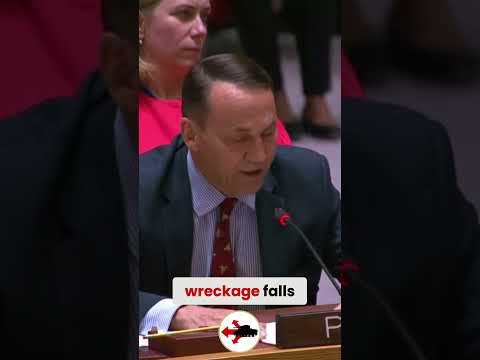
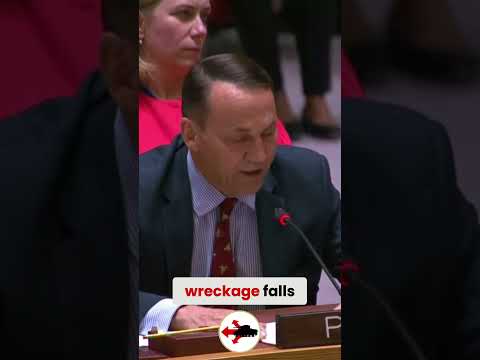
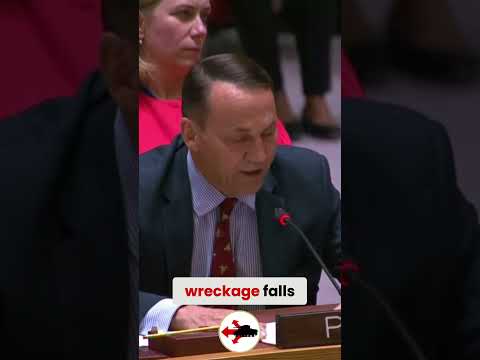
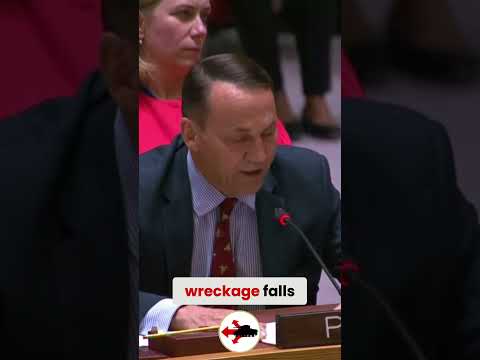
If another missile or aircraft enters our space without permission, deliberately or by mistake and gets shot down and the wreckage falls on NATO territory, please don’t come here to whine about it. You have been warned.
The words hung in the air like a live grenade, tossed casually across the diplomatic table. In Warsaw, the message was crystal clear: Poland had had enough. No more polite protests, no more careful hedging. This was a line drawn in the sand—or rather, in the sky.
For months, the tension had been simmering. Russian missiles had strayed into Polish airspace before, and each time, the response had been measured, diplomatic. But patience is a finite resource, and Poland’s reserves were running dry. The latest incursion—a missile that veered off course and exploded in a Polish village—had been the final straw.
In the corridors of power, the warning was met with a mix of shock and grudging respect. “They’re not mincing words,” a NATO official muttered, shaking his head. “But someone had to say it.” The Poles had long been the hawk among the doves, but this was a new level of defiance. The Kremlin, for its part, dismissed the statement as “hysterical,” but behind the bravado, analysts noted a subtle shift in tone. Russia had been testing the West’s resolve, and Poland had just pushed back—hard.
The warning wasn’t just about missiles. It was about sovereignty, about the right to defend one’s airspace without asking permission. “We will not be a doormat,” a Polish defense official declared, echoing the sentiment of a nation that had suffered too much history to be timid now. The message was clear: Poland would shoot first and ask questions later—if it asked at all.
But the stakes were enormous. A single miscalculation could trigger Article 5, dragging NATO into a direct conflict with Russia. The world held its breath, waiting to see if Moscow would test Warsaw’s resolve. And in the background, the wreckage of that missile still smoldered, a silent testament to the new reality.
The silence that followed was heavier than any speech. Diplomats in Brussels scrambled to decipher the subtext, but there was no subtext—only text. “They didn’t clear it with us first,” a NATO spokesperson admitted, the irritation barely concealed. The alliance had been caught flat-footed, and Poland knew it.
Within days, the rhetoric escalated. Moscow summoned the Polish ambassador, delivering a stern demarche that was promptly leaked to the press. The Russian foreign ministry’s statement accused Warsaw of “reckless brinkmanship” and warned of “unpredictable consequences.” But the Poles didn’t blink. Instead, they announced a snap military exercise near the border—a live-fire drill that left little to the imagination.
On the ground, the mood was a strange brew of anxiety and defiance. In the border town of Lublin, residents went about their business, but conversations turned hushed when the topic arose. “We’ve lived next to the bear for centuries,” an elderly shopkeeper said, shrugging. “We know when to shout and when to run. Right now, shouting feels right.”
What the public didn’t know was that the warning had been months in the making. Classified intelligence had revealed that Russian aircraft were probing Polish airspace more frequently, sometimes switching off their transponders to avoid detection. The missile that crashed was no accident—it was a test, and Poland had decided to fail it.
Behind closed doors, the Polish government debated the wording for hours. Some argued for softer language, fearing escalation. Others wanted to go further. In the end, the final version was a compromise: blunt, unambiguous, and deliberately undiplomatic. “We wanted them to hear it in their own language,” a senior official later explained. “No translator needed.”
The Kremlin’s response was telling. Instead of the usual bluster, there was a pause—a long, uncomfortable silence that spoke volumes. Analysts noted that Russian state media had downplayed the story, burying it beneath domestic news. The message had landed, and it had stung.
But the real test was yet to come. In the skies over eastern Poland, NATO jets continued their patrols, their pilots scanning radar screens with heightened vigilance. Every blip was scrutinized, every approach measured. The warning had changed the rules of the game, and now everyone was watching to see who would blink first.
Then, on a gray Tuesday morning, a blip appeared. A Russian Su-24—an older bomber, but still lethal—crossed the border near Białystok, its transponder dark. Two Polish F-16s scrambled within minutes, their pilots under orders that left no room for interpretation.
“You are in Polish airspace. Turn back immediately or you will be engaged,” the lead pilot radioed, his voice steady despite the adrenaline. The Russian crew didn’t respond. They didn’t turn. They kept flying, deeper into Polish territory, as if daring the warning to be real.
On the ground, the command center fell silent. The order had already been given. The pilot’s thumb hovered over the trigger. “Fox two,” he said, and the missile left the rail.
The Su-24 erupted in a ball of fire, its wreckage spiraling down into a remote forest near the Belarusian border. There was no time to celebrate. Within minutes, the Kremlin’s hotline to Warsaw lit up—not with apologies, but with threats. “This is an act of war,” the Russian defense minister snarled. The Polish response was icier still: “Then you should have warned your pilots.”
NATO convened an emergency session. The Baltic states demanded immediate reinforcements. Germany urged restraint. Washington, caught between its obligations and its instincts, said little in public but moved a carrier strike group into the North Sea. The wreckage, meanwhile, had landed not in Poland, but in Belarus—a detail that Moscow seized upon with theatrical outrage.
“Your missile, your mess,” the Polish foreign minister tweeted, attaching a map of the crash site. The post went viral within hours, shared by millions who saw in it a rare moment of unvarnished truth. But behind the bravado, Warsaw knew it had crossed a threshold. The next move belonged to Moscow, and no one could predict what it would be.
In the days that followed, Russian aircraft stayed grounded near the Polish border. Analysts debated whether it was caution or calculation. But in the corridors of the Kremlin, a quieter conversation was underway—one that asked whether the cost of testing Warsaw’s resolve was finally too high.
The answer came not in words but in absence. For three weeks, not a single Russian aircraft approached Polish airspace. The silence was so complete that some analysts began to wonder if Warsaw had overplayed its hand—if Moscow was simply regrouping, planning something far worse.
Then the first sign came from an unexpected place. A Russian state television anchor, usually a reliable mouthpiece for the Kremlin’s most belligerent rhetoric, stumbled over a sentence. “Our pilots are… exercising appropriate caution in the region,” he said, the words sounding foreign in his mouth. The clip circulated widely, and seasoned observers recognized it for what it was: a face-saving retreat.
Behind the scenes, the diplomatic machinery had been grinding. Back-channel talks in Vienna, mediated by a Swiss diplomat who had spent decades navigating East-West tensions, had produced a quiet understanding. Russia would keep its aircraft at a respectful distance. Poland would not publicize the arrangement. No one would admit anything had changed.
But everyone knew. “The bear blinked,” a senior NATO intelligence official said, the satisfaction barely concealed. “Not because it wanted to, but because it had to. Poland made the cost too high.”
In Warsaw, the mood was triumphant but tempered. The government had taken a gamble and won—this time. But the wreckage in Belarus remained, a rusting monument to how close they had come to catastrophe. And the warning, now etched into the annals of European security, had become something more than a statement: it was a doctrine.
Months later, a Polish pilot who had been on alert that gray Tuesday sat in a bar in Warsaw, nursing a beer. A journalist asked him what he remembered most about that day. He thought for a moment. “The silence after the missile left the rail,” he said. “It was the loudest sound I’ve ever heard.”
The warning had worked. But the question that lingered, in Warsaw and Brussels and Washington alike, was whether it would keep working—or whether the next test would demand a price no one was prepared to pay.
What would you have done if you were in that cockpit—fire, or give the Russians one last chance to turn back?
Report this article
Select a reason for reporting:






