In the dense, unforgiving jungles of Papua New Guinea, a battle raged that would become known as the Stalingrad of the Pacific. The Kokoda Trail—a narrow, muddy path through towering trees and steep mountains—was the stage for a desperate struggle between Australian and Japanese forces in 1942. This was not just a fight for territory; it was a fight for survival against both a relentless enemy and nature itself.
As Japanese forces advanced with the goal of capturing Port Moresby, they underestimated the resilience of the Australian soldiers. Young, inexperienced militia men from the 39th Battalion would soon face the might of General Tomitaro Horii’s battle-hardened troops. What followed was a campaign of brutal close-quarters combat, guerrilla tactics, and unwavering courage that would ultimately decide the fate of the Pacific.
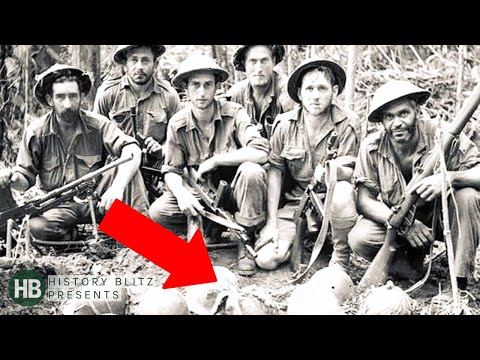
The Kokoda Trail stretched approximately 96 kilometers through the Owen Stanley Range, a treacherous landscape of dense tropical jungle, fast-flowing rivers, and steep inclines exceeding 45 degrees. Soldiers on both sides battled not only each other but also oppressive heat, torrential rains, and deadly diseases like malaria and dysentery. Every step was a struggle, every moment a test of endurance.
In early 1942, Japan’s rapid conquests across Southeast Asia and the Pacific had left the Allies reeling. Capturing Port Moresby was critical for Japan—it would provide a base to isolate Australia and disrupt Allied supply lines. The Japanese high command devised a two-pronged attack: an amphibious landing thwarted at the Battle of the Coral Sea, and an overland assault via the Kokoda Trail. General Horii led his South Seas Detachment through the jungle-clad mountains, aiming to strike at the heart of Allied defenses from an unexpected direction.
For the Allies, the fall of Port Moresby would leave Australia exposed to devastating air raids and the threat of invasion. General Douglas MacArthur and Australian General Sir Thomas Blamey prioritized the defense of the trail, entrusting the initial resistance to the 39th Battalion—a militia unit of young, untrained soldiers. Their mission: delay the Japanese long enough for reinforcements to arrive.
On July 23, 1942, the first significant clash occurred near Awala. Despite being outnumbered and lacking heavy weaponry, the Australians used guerrilla tactics, leveraging their knowledge of the jungle to ambush the Japanese. Hit-and-run attacks slowed the enemy’s advance, buying precious time. At the Battle of Deniki, a surprise counterattack temporarily pushed the Japanese back, demonstrating Australian tactical ingenuity.
But the Japanese, though initially underestimating the Australians’ resolve, quickly regrouped and launched relentless assaults. The Australians were forced to retreat further along the trail, engaging in brutal hand-to-hand combat and close-quarter fighting. The 39th Battalion, comprising young militia from Victoria, became the lynchpin of the early defense. Their bravery at the Battle of Isurava would become legendary.
Positioned at a critical choke point, the 39th Battalion, alongside elements of the 2/14th Battalion, faced ferocious attacks. Private Bruce Kingsbury’s heroic charge with a Bren gun into enemy lines earned him a posthumous Victoria Cross and boosted morale. Despite heavy casualties, they inflicted severe losses on the Japanese, slowing their advance.
By mid-August, the Japanese had captured the village of Kokoda, forcing the Australians to retreat. The Japanese pressed forward relentlessly, but their supply lines stretched thin, and the harsh terrain took a toll. The Australians’ dogged resistance turned every Japanese gain into a costly victory.
As the Japanese neared Port Moresby, the Australians, now reinforced by the battle-hardened 7th Division, prepared to make a stand. The stage was set for a decisive confrontation at Isurava, where the tide of the campaign would begin to turn.
The Battle of Isurava erupted on August 26, 1942, with ferocious intensity. Japanese forces launched wave after wave of assaults, aiming to break through the Australian defenses and maintain their momentum toward Port Moresby. The dense jungle transformed the battlefield into a chaotic, close-quarters combat zone where visibility was limited and every inch of ground was fiercely contested.
Both sides endured heavy casualties. The Australians, though outnumbered, used their intimate knowledge of the terrain to mount a staunch defense. They engaged in hand-to-hand combat and employed guerrilla tactics to ambush the advancing Japanese, buying precious time with each skirmish. The sound of gunfire, explosions, and battle cries echoed through the jungle as the fighting raged day and night.
Japanese soldiers, seasoned and disciplined, pressed their attacks with unwavering determination. They exploited every weakness in the Australian lines, but the defenders’ resilience and strategic use of the terrain slowed their progress. The battle became a brutal test of endurance and willpower, with neither side willing to concede.
Amid the ferocity of Isurava, acts of extraordinary heroism stood out. Private Bruce Kingsbury of the 2/14th Battalion seized a Bren gun and charged enemy lines with sheer audacity, single-handedly clearing a path through the attacking Japanese. His actions momentarily halted the enemy advance and allowed the Australians to regroup. Tragically, Kingsbury was killed by a sniper shortly after, but his bravery earned him a posthumous Victoria Cross.
Despite their tenacious defense, the Australians were eventually forced to withdraw from Isurava. Yet their stand inflicted severe losses on the Japanese and significantly slowed their advance. The battle demonstrated the Australians’ ability to stand up to the Japanese onslaught, boosting morale and proving that the tide could be turned.
The delay and attrition suffered by the Japanese at Isurava allowed the Allies to bring in additional reinforcements and supplies. The determination and bravery displayed there galvanized the Australian troops and underscored the importance of holding the line. It marked the beginning of a shift in momentum toward the Allies in the Kokoda campaign.
With the Japanese advance stalled, the Australians faced the monumental task of reinforcing and resupplying their forward positions. The trail was narrow, muddy, and steep, making it extremely difficult to transport troops, weapons, and provisions. Despite these challenges, the Australian High Command was determined to bolster their frontline units.
Reinforcements from the battle-hardened 7th Division, including the 21st and 25th Brigades, were dispatched to the front. These soldiers had gained invaluable experience in the Middle Eastern campaigns and were crucial in strengthening the Australian defense. Supplies were carried by native Papuan carriers—the legendary Fuzzy Wuzzy Angels—who braved harsh conditions, often under fire, to deliver ammunition, food, and medical supplies.
Air drops were also utilized, though the dense jungle canopy and unpredictable weather made this method risky. The determination and ingenuity of the Australian forces in overcoming these logistical hurdles were instrumental in maintaining their fighting capability along the Kokoda Trail.
With reinforcements in place and supply lines established, the Australians began planning their counteroffensive. The strategy involved a series of coordinated attacks designed to push the Japanese back along the trail and regain control of strategic positions. One of the key battles in this counteroffensive was the Battle of Brigade Hill in early September 1942.
The Australians aimed to surprise the Japanese by attacking their rear positions, cutting off supply lines, and encircling their forces. Despite fierce resistance, the Australian troops managed to inflict significant casualties and disrupt the Japanese advance. The counteroffensive continued with battles at Eora Creek and Templeton’s Crossing, where the Australians utilized their knowledge of the terrain to gain the upper hand.
These engagements were marked by intense jungle warfare, with both sides suffering heavy losses. The Australians’ ability to coordinate their attacks and maintain pressure on the retreating Japanese gradually shifted the momentum in their favor. As the Australians advanced, the Japanese defensive efforts became more desperate—they constructed makeshift fortifications, laid ambushes, and conducted delaying actions to slow the pursuit.
The harsh jungle conditions, combined with supply shortages and disease, took a heavy toll on the Japanese troops. Malaria and dysentery ravaged their ranks, and the constant harassment of Australian patrols left them exhausted and demoralized. Yet they continued to fight with grim determination, knowing that their mission to capture Port Moresby was critical to Japan’s strategic goals in the Pacific.
But the resilience of the Japanese forces could not indefinitely withstand the sustained Australian counteroffensive. Gradually, the Australians reclaimed key positions along the trail, pushing the Japanese back toward their starting point. Each engagement was fiercely contested, but the momentum had unmistakably shifted.
The Australians employed a combination of frontal assaults and flanking maneuvers, using their knowledge of the terrain to outmaneuver the Japanese and regain control of strategic points. Battles at Templeton’s Crossing, Eora Creek, and Oivi-Gorari were marked by intense combat, with the Australians gradually gaining the upper hand through superior tactics and relentless pressure.
As the Australians advanced, the Japanese forces faced mounting hardships. Their retreat through the unforgiving jungle took a severe toll on the already exhausted soldiers. Supply lines stretched thin and constantly harassed by Australian attacks failed to deliver the necessary food, ammunition, and medical supplies.
Malnutrition and disease ravaged the ranks further, weakening their fighting capability. The morale of the Japanese troops began to waver as the reality of their situation became clear. The initial momentum they had gained was lost in the face of the Australians’ relentless pursuit and the harsh conditions of the trail.
The lack of adequate medical care and the relentless pressure from the advancing Australians left the Japanese in a dire situation, struggling to maintain cohesion and combat effectiveness. Recognizing the untenable position, the Japanese High Command made the strategic decision to withdraw their forces from the Kokoda Trail.
General Tomitaro Horii, understanding that continued resistance would only lead to greater losses, ordered a retreat toward the northern coast. The goal was to regroup and fortify positions in areas where they could better sustain their defenses and maintain supply lines. The decision to withdraw was a significant turning point in the Kokoda campaign for the Japanese.
It marked the end of their ambitious push toward Port Moresby and a recognition of the limits of their operational reach in the face of determined Australian resistance. The strategic withdrawal allowed them to preserve what remained of their fighting force for future operations, albeit at a considerable loss in terms of territory and morale.
For the Australians, the Japanese withdrawal was a hard-earned victory. It underscored the effectiveness of their strategy and the resilience of their soldiers in overcoming seemingly insurmountable odds. The recapture of the Kokoda Trail not only secured Port Moresby but also marked a pivotal shift in the Pacific Theater.
The campaign’s outcome demonstrated that the Japanese advance could be halted and reversed. It bolstered Allied confidence and set the stage for subsequent offensives that would eventually lead to Japan’s retreat across the Pacific. Yet the cost had been staggering—thousands of casualties on both sides, and the trail itself was littered with the debris of war.
As the Australians secured the northern end of the trail at Kokoda and pushed toward the coastal villages of Buna and Gona, the nature of the fighting shifted once more. The Japanese had established formidable defensive positions along the coast, and the Australians would soon face a new kind of battle—one fought in swamps and coconut plantations rather than mountain jungle.
But for now, along the Kokoda Trail, there was a brief moment to breathe. The Fuzzy Wuzzy Angels continued their tireless work, carrying the wounded down the mountains and bringing supplies forward. Their contributions, often overlooked in the annals of military history, had been indispensable to the Australian victory.
General Horii’s retreating forces faced a grueling journey back across the mountains. Many would not survive the trek, falling victim to disease, starvation, or the unforgiving terrain. The once-proud South Seas Detachment had been shattered by the campaign.
For the young soldiers of the 39th Battalion, who had borne the brunt of the early fighting, the victory was bittersweet. They had held the line when all seemed lost, and their sacrifice had bought the time needed for reinforcements to arrive. Their names would be remembered alongside the legends of Australian military history.
The Kokoda Trail campaign was far from over, however. The Japanese still held strong positions along the northern coast, and the Allies were preparing for the next phase of the operation—the brutal battles of Buna, Gona, and Sanananda. The jungle war in Papua New Guinea would continue to demand a terrible price from both sides.
The battles of Buna, Gona, and Sanananda would prove to be among the most brutal of the Pacific War. Australian and American forces, now fighting side by side, faced a fanatical Japanese defense in swamps and coconut plantations. The victory at Kokoda had broken the myth of Japanese invincibility, but the cost in lives would continue to mount.
In the end, the Kokoda Trail campaign stands as a testament to the courage and endurance of the Australian soldiers. They had faced a formidable enemy, unforgiving terrain, and the constant threat of disease—and they had prevailed. The trail itself, once a path of retreat and desperation, became a symbol of national pride and resilience.
The Fuzzy Wuzzy Angels, the Papuan carriers who had borne the wounded on their shoulders, were honored for their indispensable role. Their loyalty and sacrifice forged a bond between Australia and Papua New Guinea that endures to this day.
As the war in the Pacific raged on, the lessons of Kokoda echoed through subsequent campaigns. The tide had turned, and the Allies were now on the offensive. But the jungles of Papua New Guinea would forever hold the memory of those who fought and fell.
What do you think was the most pivotal moment of the Kokoda Trail campaign? Share your thoughts in the comments below.
Report this article
Select a reason for reporting:






