July 11, 1943. The beaches of Gela, Sicily, are chaos. Italian radio operators crackle with an intercepted American message: General Patton is ordering his troops to bury their equipment and retreat to the ships. The Hermann Göring Division, Nazi Germany’s elite Panzer unit, reports that the Americans have been pushed back into the sea. The great George Patton, on his first day ashore in Europe, is supposedly ready to run.
But that report is a lie. The US Army’s official history is blunt: it didn’t happen. And the intercepted order? Italian officers swore to it after the war, but the men who were with Patton that day remember nothing of the sort. Because while that message was supposedly going out, Patton was on the upper floor of a building in Gela, close enough to be shot at, calmly picking out targets for the Navy. The real story is a two-day fight between Patton and the one German division that carried Hermann Göring’s name—Göring’s own men.
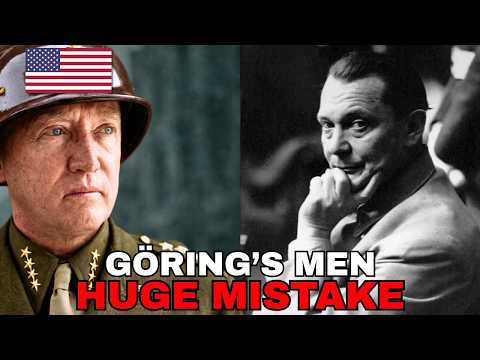
This was no ordinary Panzer division. It began in February 1933 as Göring’s personal police unit, about 400 men in Berlin. When he took over the Luftwaffe, he brought it with him because he refused to lose control of his favorite unit. It guarded his country estate, grew into a regiment, then a division—a tank division owned by the Air Force. In May 1943, most of it was lost in Tunisia, and its general escaped only on Göring’s personal orders. Two months later, it was back, rebuilt in Sicily with about 90 tanks plus a company of 17 Tigers, the heaviest tank in the German army. Its commander, Paul Conrath, had once been Göring’s own adjutant.
Conrath’s plan was simple: hit the Americans the moment they came ashore, before they could dig in, and drive them back into the sea. Patton, crossing from Africa, wrote in his diary of the feeling that only God and the Navy can do anything until we hit the shore. Keep that line in mind.
July 10th, the first American invasion of Europe in this war. And Göring’s other weapon arrives first. Just before 5:00 in the morning, a German plane hits the destroyer Maddox off the beaches. It sinks in less than two minutes, and 212 of its crew go down with it. Göring’s air force flies 370 sorties against the invasion that day. Patton spends D-Day stuck aboard his command ship, the Monrovia, running the landings from offshore—and he hates it. “I feel like a cur,” he writes that night.
Göring’s division is supposed to attack before 9:00 in the morning. At 9:00, its columns are still on the road, out of contact with each other. Some of the brand-new Tigers have faulty steering, and the olive groves slow them down. But they still hit hard. Near Biscari, Göring’s infantry and Tigers slam into the 1st Battalion of the 180th Infantry, part of the green 45th Division—men in combat for the first time. After the second attack, the battalion is overrun. Its commander is taken prisoner along with most of the survivors. The rest stream back toward the coast. Remember that battalion. We’ll meet it again four days from now.
Then a second American battalion holds, and Göring’s men, in the words of the army’s history, unexpectedly panic. Conrath fires the officer leading the attack. That evening, from the deck, Patton watches German planes hit a landing ship off the beach. Göring’s air force isn’t finished, and neither is his division. At 6:15, Conrath sends three columns at the beaches. On the other side of town, the Italian Livorno division comes at Gela with infantry and light tanks.
Patton lands at Gela at 9:30 that morning with his chief of staff and his aide, Major Alexander Stiller. He wades in with a cigar in his teeth while enemy shells throw up water around the landing craft. He tells his chief of staff not to worry: “The bastards can’t hit us on account of the defilade afforded by the town.” When some of the men in the dunes see him, they climb out of their foxholes and charge. A reporter wrote that he’d seen for the first time just how a brave general can turn the tide of battle by sheer leadership.
Patton climbs to the second floor of the Rangers headquarters to watch the Italian attack. He finds a young navy ensign at a radio and tells him to connect with the Navy and drop shells on that road. He steps out onto the veranda, and enemy soldiers open fire at him. Then an enemy gun—an 88 or a 105 by his own guess—hits the building he’s standing in twice. The cruiser Savannah fires about 500 five-inch shells into the Italian columns. In the middle of it, local children run out to the enemy guns and climb on them so the Americans can’t fire back. Before the invasion, asked how many military government officers he wanted, Patton had answered, “Not a goddamn one.” Now he radios for 25 military police and 25 military government officers who can handle children.
As he leaves the Rangers, he turns to one of their officers, Captain Lyle. His exact words are on the record and they aren’t polite. The clean version: “Kill every one of the enemy.” Between the Rangers and the Savannah‘s guns, the Italian attack falls apart. The Rangers take almost 400 prisoners, and the army’s history says the Livorno division is finished as an effective combat unit.
East of town, Göring’s tanks keep coming. By mid-morning, the lead tanks reach the coastal highway about 2,000 yards from the water. The destroyer Beatty fires 799 five-inch rounds at one German column in three hours. Patton wants his reserve tanks ashore now. The navy officer running the landing says he needs orders from Admiral Hewitt. So Patton gets Hewitt and gets the orders. Shortly after 2:00 in the afternoon, Conrath calls off the attack. Sixteen German tanks lie burning on the plain, and Patton sends 10 fresh American tanks after the ones pulling back.
He isn’t done. He drives to General Terry Allen of the 1st Division and tells him he wants Ponte Olivo Airfield. Allen promises a night attack, come hell or high water. On the way, German bombers strafe the road, and a piece of shrapnel lands 10 yards from Patton. Out at sea, German bombers hit the Liberty ship Robert Rowan, and it blows up and breaks in two. When the planes come back over the beach, Patton walks up and down the sand giving orders while they strafe it.
By the end of the day, Göring’s division reports 54 tanks still running out of about 90. The Navy came through. And Patton had been standing in the fight while it did. That night he wrote, “I am well satisfied with my conduct today.”
But there’s a second fight that same day, a few miles east, and it’s where Göring’s Tigers go. Colonel James Gavin, the paratrooper commander, has been on the ground since the night before the landings, scattered like the rest of his men. He gathers what he can find—about 180 paratroopers, some engineers, and around 40 men from Company L of the 180th Infantry. Later, clerks, cooks, and truck drivers join the line. They take a ridge called Biazzo, and then the Tigers arrive.
Gavin is hit in the leg by a mortar fragment and stays. “We’re staying on this god damned ridge,” he tells them, “no matter what happens.” A paratrooper howitzer knocks out a Tiger. By evening, American tanks arrive, and the Germans pull back. By the 14th, Göring’s division is down to 45 working tanks, and 10 of its 17 Tigers are gone.
What makes this unusual is not that Göring’s division failed, but that its headquarters reported the opposite—that the Americans had been pushed back onto their ships. And the Italian intercept? A British liaison officer who worked with Patton thought someone on a staff at division or even army headquarters may really have sent something like it at the height of the battle. But it never came from the man on the veranda.
That night, Patton has one more fear. That morning, he’d ordered another paratrooper regiment flown in behind the beaches. By evening, he’s seen how jumpy every gunner on the ships and the beach has become after a day of German air attacks. So he tries to cancel the drop. His ship’s radio can’t reach the airborne headquarters.
Around 10:00, Göring’s bombers hit the fleet again, an hour and a half before the transports are due. When the planes finally come in, every gun opens up. Of 144 transports, 23 never come back. The 504th Parachute Infantry loses 229 men—81 of them killed, all by their own side. “I’m terribly worried,” Patton wrote before he went to bed. He was right.
Out on the plain, Allen keeps his word. At midnight, his men hit the Germans while they’re getting ready for a dawn attack of their own and take Ponte Olivo airfield.
Two days later, Patton is watching supply ships come in at Gela when a jeep pulls up. It’s Gavin, who’s been fighting since he hit the ground. Patton pulls out his flask. “Gavin, you look like you need a drink. Have one.”
That same day, one of Göring’s Messerschmitts strafes the beach. Men dive for the sand. Stiller, the aide who came ashore with Patton, grabs a .50 caliber machine gun and shoots it down. Patton gives him a Silver Star on the spot. Hold on to that name. Twenty months later, Stiller will ride with one of the most controversial missions Patton ever ordered—Task Force Baum.
There’s one more part of this story, and it belongs here because it happened in the same days to the same men. July 14th, the 1st Battalion of the 180th Infantry—the battalion Göring’s Tigers overran on D-Day—is fighting for the airfield at Biscari. Captain John Compton later testified that snipers in a gully were shooting the wounded and the medics who tried to reach them. In one of his platoons, 12 of 34 men were hit. He slept about an hour and a half in four days.
None of that excuses what happens next. In two separate incidents that day, men of that battalion kill 73 prisoners—71 Italians and two Germans. One group is shot by a sergeant with a borrowed submachine gun; the other by a firing squad on Compton’s order.
When Bradley brings it to Patton the next day, Patton’s first reaction is one of the darkest lines in his diary. “Tell the officer to certify that the dead men were snipers or had attempted to escape or something.” Bradley refuses. Then the division’s Inspector General reports no provocation on the part of the prisoners, and Patton changes course. “Try the bastards,” he says.
At trial, both men blame a pep talk Patton gave their division in June about enemies who keep shooting and then try to surrender at close range. “I took him at his word,” Compton says. He’s acquitted—and killed in action 16 days later. The sergeant gets life. A War Department inspector later clears Patton. His defense was simple: the division had been taking prisoners for three days, so if his words were an order to kill, the killing would have started on the 11th, not the 14th.
Göring’s division slipped out of Sicily with most of its heavy equipment and fought on. Conrath kept his command until the following spring. And Patton never forgot those two days.
A year later in France, waiting for his army to go into battle, he wrote: “One year ago today was one of the biggest days of my life, the fight at Gela.” He had trusted the Navy, and the Navy had held up its end. Patton had held up his.
The report that went up the chain—the one that said the Americans ran—was a lie. But the man on the veranda was never running. He was picking targets.
So here’s the question for you: when the official record and the men who were actually there tell two different stories, which one do you trust—and what does that say about the history we inherit?
Report this article
Select a reason for reporting:






