The 1970s weren’t just another decade in music—they were a revolution. From the thunderous riffs of Led Zeppelin to the haunting melodies of Pink Floyd, from the disco beats of ABBA to the raw energy of the Ramones, this era birthed bands that didn’t just top charts; they defined generations. But behind the fame, there were stories of heartbreak, betrayal, and tragedy that make their music even more poignant today. What made these bands so unforgettable? And why do we still crave their return?
Let’s dive into the stories of the bands that shaped the 1970s, starting with the one that changed rock forever.
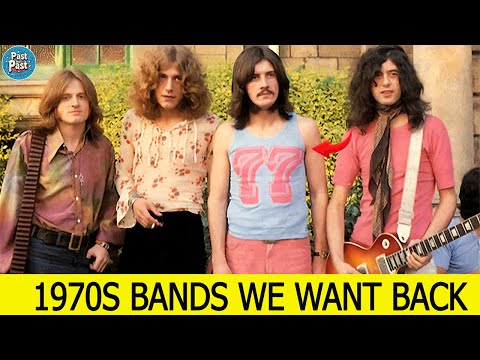
Led Zeppelin exploded out of London in 1968 like a force of nature. With Robert Plant’s soaring vocals, Jimmy Page’s blistering guitar, John Paul Jones’s solid bass, and John Bonham’s thunderous drums, they didn’t just play music—they created a sonic revolution. They flipped the script on the music industry, prioritizing albums over singles and pioneering album-oriented rock. Their live shows were epic, filling stadiums with thousands of screaming fans. But behind the scenes, the tension was palpable. The band’s meteoric rise was accompanied by intense pressure, and their eventual disbandment after Bonham’s death in 1980 left a void that’s never been filled.
Pink Floyd, the pioneers of progressive rock, were no strangers to internal strife. Formed in 1965, their early psychedelic sound, led by Syd Barrett, was groundbreaking. But Barrett’s mental health struggles forced his departure in 1968, and David Gilmour stepped in. The band’s subsequent albums, like The Dark Side of the Moon and The Wall, became milestones, but the creative genius came at a cost. Roger Waters left in 1985, leading to a bitter legal battle over the band’s name. Despite the turmoil, their music remains a testament to the power of artistic vision.
Fleetwood Mac’s story is one of love, loss, and resilience. Originally a British blues band, they found global fame after Lindsey Buckingham and Stevie Nicks joined in 1974. Their album Rumours, born from the breakups of multiple band members, became one of the best-selling albums of all time. The raw emotion in songs like ‘Go Your Own Way’ and ‘Dreams’ resonated with millions, but the personal drama nearly tore them apart. Yet, they persevered, and their legacy as one of the greatest rock bands endures.
The Eagles, with their country-rock sound and impeccable harmonies, dominated the 1970s. Their Greatest Hits album became the best-selling record in US history, and Hotel California is still a staple of rock radio. But the band’s perfectionism and internal conflicts led to a breakup in 1980. They reunited in 1994, proving that some bands are timeless.
ABBA, the Swedish pop sensation, charmed the world with their catchy tunes and dazzling performances. Behind the scenes, the two married couples in the band faced heartbreak as their relationships fell apart. Songs like ‘The Winner Takes It All’ reflected their personal struggles, adding depth to their seemingly perfect pop. After their split in 1982, their music lived on, and their recent reunion shows that the world still wants more.
The Doors, fronted by the enigmatic Jim Morrison, were a force of nature. Their poetic lyrics and dark, psychedelic sound made them icons. But Morrison’s tragic death at 27 left the band reeling. They tried to carry on, but without their charismatic leader, the magic was gone. Their music, however, remains immortal.
Black Sabbath, the godfathers of heavy metal, emerged from Birmingham with a sound that was darker and heavier than anything before. Ozzy Osbourne’s haunting vocals and Tony Iommi’s crushing riffs created a genre. Despite lineup changes and internal battles, their influence is undeniable.
Lynyrd Skynyrd’s southern rock anthems like ‘Sweet Home Alabama’ and ‘Free Bird’ became American classics. But tragedy struck in 1977 when a plane crash killed three band members. The band’s resilience in the face of loss is a testament to their spirit.
The Carpenters, with Karen’s velvet voice and Richard’s arrangements, defined soft rock. But Karen’s battle with anorexia nervosa, which led to her death in 1983, shed light on the pressures of fame. Their music continues to soothe and inspire.
Creedence Clearwater Revival, led by John Fogerty, churned out hit after hit in the late 1960s and early 1970s. But internal conflicts and legal battles led to a bitter breakup. Their music, however, remains a staple of classic rock.
The Ramones, the pioneers of punk, kept it simple and fast. Their raw energy and DIY ethos influenced countless bands. Despite never achieving massive commercial success, their legacy is monumental.
The Clash, with their politically charged lyrics and genre-blending sound, were dubbed ‘the only band that matters.’ Their album London Calling is a masterpiece, but internal tensions led to their eventual demise.
The Bee Gees, with their unmistakable falsetto harmonies, ruled the disco era. Their soundtrack for Saturday Night Fever defined a generation, but the disco backlash and personal tragedies took their toll.
Badfinger, once hailed as the next Beatles, were plagued by financial mismanagement and legal woes. The suicides of Pete Ham and Tom Evans are a tragic reminder of the dark side of the music industry.
UFO, though never achieving superstardom, were hugely influential in the hard rock and heavy metal scenes. Their live album Strangers in the Night is considered one of the greatest live recordings ever.
These bands gave us more than just music; they gave us memories, moments, and a soundtrack to our lives. But their stories are also cautionary tales of the price of fame. As we revisit their legacies, we can’t help but wonder: what if they had stayed together? What if the tragedies had been avoided? The 1970s may be over, but the music and the stories live on.
But the 1970s weren’t done with us yet. Beyond the stadium giants and the punk pioneers, there were quieter revolutionaries—bands whose influence crept in through the back door and stayed for decades. Their stories are often messier, stranger, and more heartbreaking than the ones that made the headlines. And that’s exactly why they deserve a second look.
Take the Bee Gees, for instance. Long before the white suits and the falsetto fever of Saturday Night Fever, they were three brothers from Manchester who’d been harmonizing since childhood. Barry, Robin, and Maurice Gibb had already survived a decade in the industry—complete with a mid-career slump that nearly ended everything—before disco resurrected them. But the same genre that made them untouchable also turned on them. The disco backlash of 1979 hit them hardest, and for years they were treated as a punchline rather than the songwriting geniuses they were.
Then there’s Badfinger, the band that should have been huge. Signed to the Beatles’ Apple Records, they had the songs, the looks, and the momentum. But their story is one of the darkest in rock history—a cautionary tale of what happens when talent meets greed, incompetence, and betrayal. Pete Ham’s suicide note, written just before he hanged himself in 1975, named the manager he blamed for the band’s financial ruin. It’s a detail that still haunts anyone who digs into their story.
And what about the bands that never quite got their due? UFO, for all their influence on the likes of Iron Maiden and Metallica, never cracked the mainstream in America. Their live album Strangers in the Night is legendary among musicians, yet ask the average rock fan to name a UFO song and you’ll likely get a blank stare. It’s a strange injustice—being worshipped by your peers but forgotten by the public.
The Carpenters offer another kind of tragedy. Karen Carpenter had one of the most pure, emotionally resonant voices of the century. But behind the polished arrangements and the smiling album covers, she was fighting a disease that nobody around her understood until it was too late. Her death at 32 forced the music industry to confront eating disorders—a conversation that, tragically, is still painfully relevant today.
And then there’s the question of what might have been. Creedence Clearwater Revival burned bright and fast, imploding after just a few years of astonishing productivity. John Fogerty’s bitter legal battles with his former label—and with his own bandmates—kept CCR’s music off the radio for years. It’s only recently that their catalog has been fully reclaimed, reminding a new generation of just how vital they were.
The Ramones, meanwhile, never had a hit single. Not one. They toured relentlessly for 22 years, played over 2,200 shows, and influenced virtually every punk and alternative band that followed—yet they never had the commercial success their imitators did. Johnny Ramone reportedly said he wished he’d been in a band that made money. It’s a bittersweet admission from a man who helped change music forever.
So what do these bands have in common? They were all, in their own way, casualties of the machine they helped build. The 1970s music industry was a Wild West of shady managers, exploitative contracts, and relentless pressure. For every band that made it out intact, there were three that didn’t.
But here’s the thing: their music outlived all of it. The betrayals, the lawsuits, the tragic deaths—none of it could erase the songs. And that’s why we’re still talking about them, still listening, still wishing they’d come back, if only for one more show.
Maybe that’s the real reason we want these bands back. Not just for the music—though the music alone would be enough—but for the chance to see them whole again. Before the lawsuits, before the plane crashes, before the funerals and the farewell tours that never really said goodbye.
We want to believe that talent and passion can outrun tragedy. That a band like Badfinger could have gotten the fair shake they deserved. That Karen Carpenter could have found help in time. That Ronnie Van Zant could have written one more anthem. The 1970s gave us immortality in three-minute increments, but it charged a steep price for the privilege.
Still, the music refuses to fade. Rumours still spins. Dark Side of the Moon still echoes. Kids born decades after the Ramones last plugged in are discovering Blitzkrieg Bop for the first time and feeling that same jolt of rebellion. These bands didn’t just survive the decade—they became the decade, and in doing so, they became part of us.
So we keep listening. We keep arguing about who was greatest. We keep hoping, against all reason, that somewhere in a rehearsal room, a reunion is being planned. Because the 1970s never really ended—not as long as we’re still playing those records.
Now it’s your turn. If you could bring back just one of these legendary bands for a single night, who would it be—and what song would you want to hear them play one last time? Tell us in the comments below. We’d love to know which band still lives on in your speakers, and in your heart.
Report this article
Select a reason for reporting:






