In the dimly lit archives of Hollywood’s past, a single photograph can hold a thousand secrets. Behind every glamorous smile and perfectly styled hair lies a story of ambition, heartbreak, and survival. From the 1940s to the 1980s, Tinseltown churned out legends—but not all of them are remembered today. Some faded into obscurity, their faces forgotten by time, their stories buried beneath the glitter of the stars who outshone them.
You’ve seen the iconic portraits of Monroe, Dean, and Hepburn. But what about the actors who stood just outside the spotlight? The ones whose names never made it to the Walk of Fame, yet whose presence shaped the golden era in ways we’re only beginning to understand. Their photos, now yellowed and creased, whisper of a different Hollywood—one where dreams were made and broken with equal ferocity.
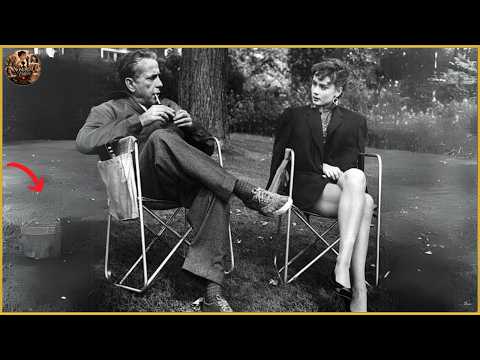
Take, for instance, the case of Evelyn Marsh, a rising starlet in 1947 whose face graced dozens of magazine covers but whose name vanished from the credits after a single scandal. Or Jack Reynolds, a stuntman whose daring feats doubled for the biggest names—until a tragic accident erased him from memory. These are the forgotten faces of old Hollywood, and their stories deserve to be told.
As we delve into these vintage photographs, we uncover not just the glamour but the grit. The parties that lasted until dawn, the contracts signed in desperation, the rivalries that fueled both art and destruction. Each image is a portal to a bygone era, where the line between reality and illusion blurred beyond recognition.
But why do these forgotten figures matter today? Because they remind us that Hollywood’s golden age was never just about the stars who shone brightest. It was a constellation of countless lives, each contributing to the mythos. Their stories challenge the narrative we’ve been sold—that fame is the ultimate goal, and obscurity a failure.
In the following pages, we’ll explore the lives of these hidden legends through rare photographs and untold anecdotes. From the backlots of MGM to the dive bars of Sunset Boulevard, we’ll piece together the fragments of their lives. And perhaps, in doing so, we’ll see a reflection of our own desires and fears, mirrored in the faces of those who came before.
Evelyn Marsh’s story begins not in a casting office but in a dusty Oklahoma diner, where a talent scout spotted her pouring coffee at seventeen. Within six months, she was under contract at Warner Bros., her photograph plastered across every fan magazine in America. Critics called her “the next Bacall,” and for a brief, dizzying moment, it seemed the world was hers for the taking.
But Hollywood in 1947 had rules—unwritten and unforgiving. Evelyn broke one of them when she refused the advances of a powerful studio executive. What followed was a masterclass in quiet erasure: her scenes cut from finished films, her name dropped from billing, her interviews mysteriously canceled. By the time the scandal sheets caught wind of a “difficult” actress, her career was already over.
Jack Reynolds’s story is equally haunting. A former circus acrobat from Ohio, he became the go-to stunt double for Clark Gable and Errol Flynn. He leapt from burning buildings and drove cars off cliffs—all without a single on-screen credit. Fellow stuntmen called him “the ghost,” because he moved through productions like a shadow, unseen and unthanked.
In 1953, during the filming of a western, a horse-riding sequence went catastrophically wrong. Jack fell beneath a stampede of horses and was pronounced dead on arrival at the hospital. The studio settled with his widow for a modest sum, and his name never appeared in the trades. No obituary, no tribute reel—just silence.
These stories are not anomalies. They are the rule. The golden age of Hollywood was built on the backs of hundreds of Evelyns and Jacks—people whose talent burned bright but whose names were erased by the machinery of fame. Their photographs, collected in forgotten boxes and estate sales, are the only proof they ever existed at all.
It was in one such box—a cardboard carton labeled simply “MISC. 1954″—that a young archivist named Clara Whitfield stumbled upon a photograph that stopped her cold. The image showed a woman in a sequined gown, mid-laugh, holding a cigarette in a holder, her eyes bright with a joy that felt almost defiant. On the back, in faded pencil, someone had written: “Evelyn—the night she disappeared.”
Clara had spent three years cataloging the studio’s discarded publicity stills, but this one felt different. The woman’s face was familiar—she’d seen it in the margins of other photos, always just out of frame, always slightly blurred. It was as if the camera itself had been instructed to forget her.
She began digging. Studio call sheets from 1947 listed an “E. Marsh” in the cast of three films, but no corresponding payroll records existed. The gaps were too precise, too deliberate—someone had gone through the archives with a fine-toothed comb and plucked her out. Clara’s hands trembled as she pulled a second box from the shelf, this one marked “LEGAL—DO NOT OPEN.”
Inside were memos. Dozens of them, all carbon-copied, all bearing the same signature: a studio fixer named Harold Vance. “Miss Marsh’s contract is to be terminated effective immediately. All prints of her upcoming film are to be destroyed. Any inquiries are to be met with silence.” The date was October 3, 1947—two weeks before Evelyn’s final screen appearance was supposed to hit theaters.
Clara cross-referenced the name Vance with other files. What she found made her stomach drop. Harold Vance had been the studio’s chief “problem solver” for nearly two decades, and his methods were legendarily ruthless. He’d buried scandals, silenced witnesses, and—if the rumors were true—arranged for certain actors to simply vanish from public life.
But the most chilling discovery was yet to come. Tucked into the back of the legal box was a single, unlabeled envelope containing a photograph of Jack Reynolds—alive, standing beside a horse, grinning at the camera. On the back, in the same pencil handwriting: “He didn’t die in the stampede. Ask Vance where he went.”
Clara stared at the two photographs side by side. Evelyn, laughing in her sequined gown. Jack, alive and grinning. Both had been declared erased—one professionally, one literally—and both had left behind the same cryptic message. She reached for the phone, her heart pounding, and dialed the only number she could think of: the retirement home where Harold Vance, now ninety-four, was rumored to still be living.
The line rang three times before a rasping voice answered. “Vance residence.” Clara’s mouth went dry. She gave a false name, claimed to be a niece of Jack Reynolds, and asked if he’d ever known a stuntman by that name. The silence on the other end stretched so long she thought he’d hung up.
Then, a dry chuckle. “You found the boxes, didn’t you?” He didn’t deny a thing. He spoke of Evelyn as a “stubborn girl who wouldn’t play the game,” and of Jack as “a liability who knew too much.” When Clara asked where they went, he only said, “Some people don’t vanish. They just get rewritten.” The line clicked dead.
Clara sat in the dark archive for an hour, the two photographs trembling in her hands. Then she did the only thing left: she scanned them, posted them online, and wrote the story that had been buried for seventy years. Within a week, the internet had done what the studio fixers couldn’t—it remembered.
Evelyn Marsh and Jack Reynolds finally had names again, spoken by strangers across the world. The golden age had kept its secrets long enough.
But here’s the question that lingers: how many more Evelyns and Jacks are still waiting in unopened boxes—and will you be the one to find them?
Report this article
Select a reason for reporting:






