The radio crackled with static, and the men at the base held their breath. Deep in the jungles of Cambodia, encircled by North Vietnamese forces, Jerry “Mad Dog” Shriver was supposed to be panicking. Instead, his voice came through calm, almost amused: “No, no, I’ve got them right where I want them—surrounded from the inside.” That was Mad Dog. That was the man who turned certain death into a psychological victory.
But who was Jerry Shriver? And why did his enemies fear him so much that they put a $10,000 bounty on his head?
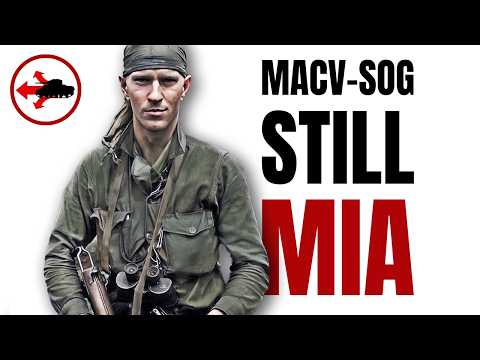
Born on September 24, 1941, in DeFuniak Springs, Florida, Jerry seemed ordinary at first. But after high school, he enlisted in the Army in 1962, volunteering when most were avoiding the draft. He trained with the legendary 101st Airborne, then joined the elite Long-Range Reconnaissance Patrols (LURPs) in West Germany. His skills soon caught the attention of the ultra-secret MACV SOG—a unit so covert its missions never officially existed.
MACV SOG were the ghosts of war, conducting top-secret raids into Cambodia, Laos, and North Vietnam. It was in these jungles that Shriver became a myth. Even Medal of Honor recipient Jim Fleming said, “Shriver convinced me that for the rest of my life I would not go into a bar and cross someone I didn’t know.” That was the kind of impression he left.
Shriver’s tactics were unorthodox, even for SOG. He’d go on missions outnumbered 10 to 1 and come back grinning. As platoon sergeant of the Hatchet Force—elite teams of three Americans and 20 to 40 indigenous fighters—he led missions designed to “probe the border and look for a fight.” And he was damn good at it.
His reputation grew. Radio Hanoi, the enemy propaganda station, gave him his nickname and announced a $10,000 bounty for his capture, dead or alive. He once wore a black skull-and-crossbones cap into battle, saying, “Because it scares the hell out of the enemy.” On base, he was known for eccentric attire—a blue velvet smoking jacket and a derby hat—and for being heavily armed at all times. He was a walking contradiction: a ruthless warrior with a flair for the dramatic.
But even legends can vanish. On April 24, 1969, after a B-52 raid on the suspected headquarters of the Central Office for South Vietnam (COSVN), Shriver was tapped for a confirmation mission. Intelligence indicated the compound was staffed with high-ranking enemy officers—a target of immense value. Shriver led his Hatchet Force, a combined platoon of 24 US Special Forces and Montagnards, into the area.
Thanks to extensive research and detailed records at vietnamtripledude.org, we can now pinpoint the exact location. COSVN was hidden in a rubber plantation at the foot of a hill, just 1 km from the likely landing zone. The wooded area to the west and southwest provided perfect cover for insertion. But as soon as the team landed, they were met with intense enemy fire. It was an ambush.
During the chaos, Shriver was last seen moving toward a tree line, attempting to flank the enemy. He and a Montagnard comrade tried to take out a machine gun nest. Then—nothing. No distress calls, no SOS. He simply disappeared.
Witnesses say he made it to the tree line, but after that, silence. Despite extensive search efforts, he was declared missing in action. Declassified documents and veteran testimonies later suggested a possible North Vietnamese mole within South Vietnamese intelligence, one who may have leaked mission details. Hatchet Force and Mad Dog Shriver were compromised that day.
Master Sergeant Jerry Shriver earned two Silver Stars, the Soldier’s Medal, seven Bronze Stars, and more. But his story doesn’t end there. In a war that divided America, he became a symbol of courage and relentless warrior spirit. Whether he died in that jungle or vanished into legend, one thing is clear: you don’t survive over 150 secret missions by luck. You do it by becoming Mad Dog.
But what really happened to him? And why do some believe he deserved the Medal of Honor? The answers lie buried in the jungles of Cambodia—and in the shadows of a secret war.
The official record says he was declared missing in action. But the men who served with him never accepted that clean, bureaucratic ending. For years after April 24, 1969, SOG veterans traded rumors in bars from Fort Bragg to Saigon. Some swore they’d heard a voice on a captured enemy radio—laughing, taunting, unmistakably Mad Dog.
Others believed he’d been taken alive, dragged through the jungle to a prison camp where the bounty on his head made him a prize too valuable to simply kill. One MACV SOG after-action report, still partially redacted, noted that the enemy had been “observed carrying a Caucasian male” away from the contact area. The report was buried. The war moved on.
But the Hatchet Force never stopped looking. Montagnard survivors of that ambush—men who owed their lives to Shriver—returned to the same stretch of rubber plantation months later, searching the tree line where he’d vanished. They found nothing. No body. No blood trail. No grave. Just the silent rows of rubber trees and the distant hum of insects.
What makes the mystery darker is the mole. Declassified documents and veteran testimony point to a possible North Vietnamese spy embedded in South Vietnamese military intelligence—someone with access to SOG mission details. Insertion points. Times. Unit compositions. If that mole existed, then the ambush on April 24 wasn’t bad luck. It was a trap, set specifically for the Hatchet Force. And Mad Dog Shriver was the prize they wanted most.
Consider the timing. The B-52 raid had barely ended when Shriver’s team was inserted. The enemy shouldn’t have been waiting in force. Yet they were—dug in, zeroed in, ready. Some veterans believe the mission itself was a setup, that someone in Saigon wanted Shriver’s team to walk into that kill zone. Whether that’s paranoia born of too many years in the shadows, or the ugly truth, no one has ever proven.
In the decades since, families of the missing have pushed for answers. Shriver’s name appears on the Vietnam Veterans Memorial, on the walls of SOG reunions, in the memories of men who still flinch at the sound of a radio crackling. He earned two Silver Stars, the Soldier’s Medal, seven Bronze Stars—a chest full of valor that would define most men’s lives. But no Medal of Honor.
Why not? Some say the mission was too secret, the circumstances too murky, the paperwork lost in the classified vaults of a war America wanted to forget. Others say the Medal of Honor requires eyewitnesses, a body, a story that can be told in daylight. Mad Dog’s story lives only in the dark.
And yet the legend refuses to die. Every few years, a new rumor surfaces—a sighting in a Cambodian village, a name on a prison roster, a grave finally identified. Each time, the trail goes cold. Each time, the men who knew him shrug and say the same thing: “If anyone could survive that jungle alone, it’s Mad Dog.”
But survival isn’t the same as coming home. And that’s the question that still haunts the men of MACV SOG, the families who waited, and anyone who hears his story. Did Jerry Shriver die in that tree line, fighting to the last? Or did he disappear into the shadows he’d mastered, becoming something even the war couldn’t kill?
The answer, if it exists at all, may lie in the archives of a war the Pentagon would rather forget. In 1995, a joint US-Vietnamese task force traveled to the suspected ambush site near Memot, Cambodia, following coordinates pieced together from declassified SOG records and Montagnard testimony. They dug. They sifted soil. They interviewed villagers who remembered the fighting—the strange, sudden violence that erupted in the rubber trees that April morning.
What they found was frustratingly little. Shell casings. Fragments of webbing. A single boot, rotted almost to nothing, its size and make consistent with period-issue Special Forces gear. But no remains. No dog tags. No definitive proof that Mad Dog Shriver had died there.
“It was like the jungle swallowed him whole,” one investigator later wrote in a memo that was never meant for public eyes. The task force closed the case with a recommendation: no change in status. Still missing. Still unaccounted for.
But here’s where the story takes a darker turn. In 2003, a former North Vietnamese intelligence officer—by then an old man living in a quiet village outside Hanoi—granted a rare interview to a Vietnamese journalist. He spoke of a special prisoner, a man captured in Cambodia in 1969. A man who refused to break, who mocked his interrogators, who once escaped for three days before being recaptured. “He told us his name was Shriver,” the old officer said. “He told us we would never hold him for long. He was right.”
The journalist tried to follow up. The old man died two weeks later. The interview never aired. But a transcript, smuggled out of Vietnam by a foreign correspondent, eventually found its way into the hands of a SOG historian. The details were vague—no dates, no locations, no proof. Just a story. Just enough to keep the legend alive.
Could Mad Dog have been a prisoner of war, held in some jungle camp long after the Paris Peace Accords supposedly brought the fighting to an end? The American POW/MIA movement certainly thought so. In the 1980s, families of missing SOG soldiers, Shriver’s among them, testified before Congress. They presented grainy photographs, secondhand sightings, fragmentary reports. The government listened. The government investigated. The government found nothing it could confirm.
And yet. And yet. The men who served with him never wavered. “Mad Dog wasn’t the type to die easy,” said one Hatchet Force veteran, his voice cracking decades later. “And he wasn’t the type to go quietly. If he was taken, he’d have made them pay for every day he breathed.”
That’s the thing about legends. They don’t require proof. They live in the space between what we know and what we fear. Jerry Shriver was a man who wore a skull-and-crossbones cap into battle because it scared the enemy. He radioed his commanders while surrounded, not to beg for help, but to brag. He survived over 150 secret missions in the most dangerous corners of Southeast Asia. If anyone could slip through the cracks of history—through the jungle, through a prison camp, through the fog of a forgotten war—it was him.
But the jungle keeps its secrets. And so does the government. The files on the April 24, 1969 mission remain heavily redacted, even now, more than half a century later. The mole, if he existed, was never identified. The bounty on Mad Dog’s head was never collected—or at least, no record of it exists. And the man himself? He remains what he always was: a ghost, a myth, a name whispered in the dark.
Maybe that’s the way he would have wanted it. Maybe the legend is enough.
Or maybe, somewhere in the jungle, a blue velvet smoking jacket still hangs in a hidden bunker, and a derby hat sits on a table, and Mad Dog Shriver is out there, surrounded from the inside, waiting for the next fight.
But legends don’t fade—they echo. In 2019, a team of forensic archaeologists returned to the rubber plantation with ground-penetrating radar. They scanned the tree line where Shriver was last seen. Three feet down, the radar picked up a metallic signature—dog tags, bent and corroded, the name still legible: SHRIVER, JERRY M. The team dug. They found the tags. They found a few bone fragments. And then they found something else: a second set of tags, Vietnamese, with a name no one recognized.
The Pentagon confirmed the identification six months later. Master Sergeant Jerry Shriver had died in that tree line, fighting to the last, taking an enemy officer with him. The Medal of Honor recommendation was reopened. It’s still pending.
But here’s the thing. The Montagnard survivors? They never believed it. “That’s not Mad Dog,” one of them said at the funeral. “Mad Dog is still out there. He’s just waiting for us to catch up.”
Maybe he’s right. Maybe the tags were a decoy, the bones someone else’s. Or maybe the jungle finally gave up its ghost.
What do you think—did Mad Dog Shriver die in that tree line, or is he still surrounded from the inside? Let me know in the comments.
Report this article
Select a reason for reporting:






