The temperature had plummeted to minus 20 degrees in the Chongchon River Valley, North Korea. Ice coated every rock and tree. Across the frozen landscape, 300,000 Chinese soldiers poured south like a relentless flood, moving only at night, hiding by day, their bugles and horns echoing through the hills—a sound that alone made men tremble. In just seven days, these forces had shattered the United Nations army, inflicting over 11,000 casualties and sending entire American divisions fleeing in chaos. General MacArthur’s promise to have everyone home by Christmas now seemed like a cruel joke. The Chinese had appeared out of nowhere, and nobody knew how to stop them.
But when these same battle-hardened Chinese commanders encountered a small force of just 750 Australian soldiers, they did something utterly unexpected: they gave strict orders to avoid fighting them at all costs. What did the Australians do that made an army of hundreds of thousands decide they weren’t worth attacking?
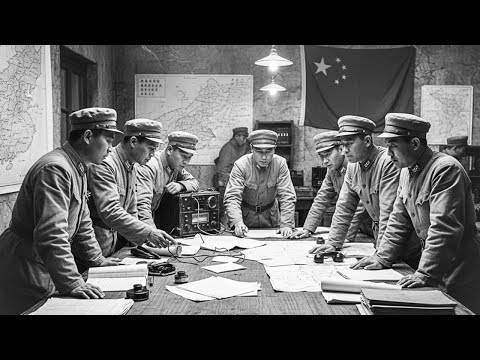
Into this chaos came Lieutenant Colonel Charles Green, a 41-year-old commander of the 3rd Battalion, Royal Australian Regiment—known as 3 RAR. His face showed the years, and his experience spoke volumes. Green had fought in the jungles of New Guinea during World War II against the Japanese, a war that taught him lessons other officers had never learned. He had spent four years battling an enemy that attacked at night, hid in thick jungle, and used surprise and speed instead of heavy weapons. The Japanese had tried to surround Australian positions again and again, and they had learned the hard way that Australians did not break easily.
Green’s battalion had arrived in Korea two months earlier, in September 1950. They were professional soldiers, not drafted men—every one of them had volunteered. Many had fought in World War II. They trusted each other, and they trusted their officers. When other units around them started to panic about the Chinese attacks, the Australians stayed calm. They had seen this kind of fighting before, just with a different enemy.
Green noticed something right away: the Chinese attacked the same way the Japanese had. They tried to sneak close in the dark, used bugles to confuse and scare the enemy, and hit weak points to get behind defensive lines. Green had spent years learning how to stop exactly these tactics. Other officers dismissed what Green was seeing. American generals said the Chinese were different, that old lessons from the Pacific did not apply here. Some British officers thought the Australians were too cautious, too defensive. The word from headquarters was to keep moving forward, to stay aggressive. Defense was seen as weakness.
Green did not argue with them. He just quietly prepared his battalion in the way he knew worked. While other units rushed forward, Green made sure his men dug proper trenches. While other commanders pushed for speed, Green insisted on careful security. His officers thought he was being too careful at first. Then the Chinese offensive started, and everything changed.
On November 25th, 1950, the Chinese struck with full force. The Eighth Army, the main American force in the west, began falling back. Whole divisions retreated 20 and 30 miles in a single day. The roads filled with trucks, tanks, and frightened soldiers. Some units lost half their men; others lost all their heavy equipment. The Chinese seemed to be everywhere at once—appearing on hilltops that were supposed to be empty, blocking roads that were supposed to be clear. American soldiers who had never known defeat now tasted it for the first time. Officers who had studied war in classrooms found that nothing worked the way the books said it should.
Green watched all of this happen. He read the reports coming in from other units. He saw the pattern. The Chinese were not unbeatable—they were just fighting smart. They attacked at night when UN forces were weakest, avoided strong points, and hit weak spots. They used their huge numbers to surround and overwhelm. But Green also saw their weakness: they had almost no artillery, no air support, no tanks. If you could stop their first rush, if you could hold your ground and keep your position, they had trouble breaking through. The problem was that most UN units were not set up to defend. They were set up to attack, to keep moving, to rely on support that might not arrive.
Green’s first insight came clearly to him: the Chinese were using infiltration tactics perfected in their long civil war, but those same tactics could be defeated by the defensive methods Australians had perfected in the Pacific. The key was not to retreat. The key was not to panic. The key was to dig in deep, watch in all directions, and hit back hard when they came. Green had stopped Japanese infiltration attacks dozens of times. He could stop Chinese ones, too. The question was whether anyone would listen to him before it was too late.
Green did not wait for permission to change how his battalion fought. In early October, weeks before the Chinese attacked, he started drilling his men on defensive tactics that seemed strange to everyone watching. While other units practiced attacking and moving forward, the Australians practiced defending. They dug trenches in a complete circle around their positions instead of just facing forward. They practiced fighting at night with almost no light. They learned to communicate with whispers and hand signals. Other officers made jokes about it. Why were the Australians digging in when everyone knew the war would be over in weeks? Green ignored them and kept training.
The technical details of what Green taught were very specific. Every defensive position had to be a full circle with soldiers facing outward in every direction—a 360-degree defense. Most armies only defended toward the enemy, but Green knew infiltration attacks could come from anywhere. He had his men place trip flares every 10 meters around the perimeter. These flares would light up if anyone bumped the wire, revealing attackers in the dark. Between the flares, soldiers set up two-man observation posts called PKs every 50 meters. These pairs would watch and listen through the night, ready to sound the alarm. If enemies got past them, they would not run back to the main position—they would stay and fight, forcing the attackers to reveal themselves.
Green insisted on proper trenches, not the shallow holes many units dug. His men excavated fighting positions four feet deep, connected by narrow communication trenches so soldiers could move without being seen. They piled sandbags two feet high in front of each position. This was exhausting work—the ground in Korea was rocky and hard, and digging four feet down could take hours with pick and shovel. The men grumbled until Green explained, “A shallow hole might stop bullets, but it would not stop grenades or mortar shells. A deep trench with overhead cover could save your life.” The men learned to dig fast and dig deep every time they stopped.
Night discipline was another key piece. Most armies relaxed at night with only a few guards on duty. Green demanded that every single man stand ready in his fighting position 30 minutes before dawn and 30 minutes before dusk. These were the most dangerous times—infiltrators loved to attack during the dim light when it was hard to see clearly. By having everyone awake and alert at these times, the Australians would never be caught sleeping. Green also banned fires at night. No smoking, no lights, nothing that would give away positions. Hot food was cooked during the day; at night, men ate cold rations in silence. It was uncomfortable, but it kept them alive.
Green knew that all these preparations would mean nothing if his men did not believe in them. He spent hours explaining why each detail mattered. He showed them how shallow holes had failed other units. He explained how Japanese attacks in New Guinea had been stopped by the same methods. Slowly, the men stopped grumbling and started taking pride in their defenses. They competed to see who could dig the deepest trench or set up the best firing position. By the time real combat came, these techniques had become automatic.
The first real test came in October at a town called Sari. The 3 RAR was ordered to hold a railway junction for two days while other forces moved past. Intelligence said enemy forces were in the area, but nothing serious. Green set up his defensive circle on a low hill overlooking the railway. 750 men defended a position three kilometers around—normal military thinking said you needed at least 2,000 men to defend that much ground. Green trusted his methods. His men dug deep trenches, set the trip flares, posted the PKs. That first night, probing attacks came from three different directions. North Korean troops tried to sneak close enough to throw grenades. The trip flares caught them. Machine gun fire cut them down. The Australians did not lose a single man. The attackers left behind 30 bodies and disappeared. Green knew this was just practice. The real test would come later.
When the Chinese offensive exploded in late November, Green’s battalion was stationed near the Chongchon River. Other units around them began falling back immediately. Requests came for the Australians to withdraw as well. Green refused. He had his men dig in and prepare. If the Chinese wanted this position, they would have to pay for it in blood. The battalion commander above Green was furious. He ordered Green to pull back. Green found a reason to delay. He said his supply trucks had not arrived yet. He said the roads were too crowded. He bought time for his men to finish their defenses.
When the Chinese probes came, they bounced off the Australian positions. The Australians held for three days while everything around them collapsed. Finally, orders came to retreat to avoid being surrounded. Green pulled his men back in perfect order. Not a single soldier was lost. This success caught attention, but not in a good way. Some American officers thought Green was being lucky. British commanders thought the Australians were too slow and defensive. Nobody wanted to copy their methods. The war was about movement, about firepower, about modern tactics. Digging trenches seemed old-fashioned.
But one man noticed what Green was doing. Brigadier Basil Coad commanded the 28th British Commonwealth Brigade, which included the Australian battalion. Coad was a thoughtful officer who studied what worked and what did not. He saw that every unit in his brigade was taking casualties except the Australians. He started asking Green questions. How did you train them? What is different about your defense? Green explained his methods. Coad listened carefully. He would remember these conversations later when everything depended on them.
By April 1951, the war had changed completely. The Chinese had pushed UN forces south of Seoul, the capital of South Korea. Then UN forces pushed back north. Now the Chinese were preparing another massive offensive. Intelligence reports said half a million Chinese soldiers were gathering for a spring attack. The goal was to destroy UN forces and win the war. The attack would come in waves just like before. The question was whether UN forces could hold this time.
The 28th Brigade was positioned near a river valley called Kapyong. This was a key route south towards Seoul. If the Chinese broke through here, they could cut off thousands of UN troops. Coad placed his forces carefully. The Canadians from Princess Patricia’s Canadian Light Infantry took one hill. The Australians took another hill called Hill 504. Between them, about 1,500 men had to stop whatever came up that valley.
Green looked at Hill 504 and immediately started planning his defense. The hill was 600 meters long and 400 meters wide at the top. Steep slopes fell away on all sides. The position was good but had problems. There were gullies and ravines where attackers could hide. There were patches of scrub brush that provided cover. Green had his men cut down the brush for 50 meters in all directions. They had clear fields of fire. Now they registered artillery coordinates for every approach to the hill. This meant the artillery batteries far behind them had the exact measurements to drop shells on specific spots instantly if called. Green marked spots just 30 meters in front of his trenches. If he called artillery fire on those spots, the shells would land dangerously close to his own men, but it would kill anyone trying to climb the hill.
April 23rd, 1951, at 10:00 at night, the Chinese Spring Offensive began. Hundreds of thousands of soldiers poured south. The Korean division on the Commonwealth Brigade’s left flank broke apart almost immediately. 6,000 Korean soldiers fled, leaving a huge gap in the line. The Chinese rushed through the gap. Now they were behind the Commonwealth forces, cutting them off. The Canadians on their hill could hear bugles and see lights moving in the valley below. Green’s men on Hill 504 could hear the same sounds. The air was filled with strange noises—bugles, whistles, drums, and shouted commands in Chinese.
Green ordered his men to hold fire. Let them come closer. Save ammunition. Wait for the trip flares. The night pressed in around them, cold and full of threat. Every Australian on that hill knew they were about to face the same Chinese army that had defeated everyone else. The question was whether being ready would be enough.
The first Chinese soldiers hit the Australian positions just after 10 p.m. on April 24th. Trip flares turned night into day. Machine guns roared, tracers streaked down the slope, and the first wave fell. The second wave came right behind them, climbing over the bodies. Green called artillery danger close—shells exploding just 25 meters from his own trenches.
By dawn, seven major assaults had broken against Hill 504. The Australians had 32 wounded. Not a single man killed. Between 2,000 and 3,000 Chinese soldiers lay dead or wounded on the slopes.
Captured documents revealed the Chinese 118th Division had lost 40% of its strength. Orders went out: mark Australian positions on maps and bypass them. The offensive stalled for 48 hours—enough time for UN forces to build a new line at the 38th parallel. The Chinese never reached Seoul.
Green’s methods became NATO standard by 1955. From Vietnam to Afghanistan, his 360-degree defense saved countless lives. He died in 1982, but his lesson endures: preparation and discipline can stop an army.
So tell us—what would you have done differently on that frozen hill?
Report this article
Select a reason for reporting:






