May 1969. The jungles of Quang Tin Province, Vietnam. The air was thick with heat and the stench of fear. For four years, American soldiers had been fighting a war that seemed to have no end. But nothing could prepare them for what was about to happen—a battle so brutal, so costly, that the government would try to erase it from history.
Just 100 miles south of the infamous Hamburger Hill, another battle was raging. One that would claim more American lives than the battle that shocked the nation. But unlike Hamburger Hill, this one was kept secret. The soldiers who fought there were left forgotten. Their sacrifices unknown. This is the story of the Battle of Tam Kai—one of the most brutal and overlooked battles of the Vietnam War.
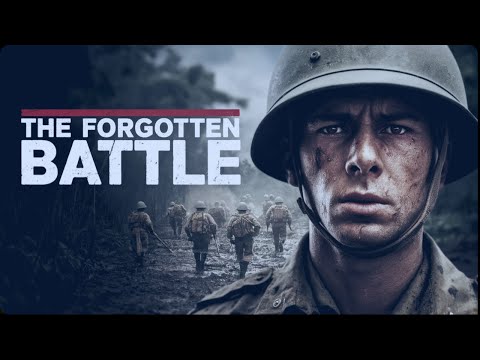
By 1969, the Vietnam War was at a turning point. The North Vietnamese Army (NVA) had become stronger, more organized, and more determined than ever. Back home, public support for the war was collapsing. Protests spread across the country. The American public was tired of the conflict, tired of the horrifying images of young men dying in the jungles.
One of the most dangerous areas in Vietnam was Quang Tin Province, located just 40 miles south of Da Nang. This region was crucial because it connected North and South Vietnam. Whoever controlled this province could control the movement of troops and supplies. The US Americal Division, responsible for defending this area, was already stretched thin. But in early May 1969, something even worse happened.
The NVA secretly moved two full regiments into the province. These were battle-hardened troops, highly trained and ready to fight. The Americal Division had no idea what was coming.
On May 12, 1969, the NVA launched a massive surprise attack. Within just two days, they took control of 80% of the province. American bases, fire support zones, and landing zones were under siege. The Americal Division was caught completely off guard. The attacks were fierce, and the Americans struggled to hold their ground.
One of the hardest-hit areas was Landing Zone Professional, a critical fire support base defended by the 1st Battalion, 46th Infantry Regiment. They were badly outnumbered and struggling to survive against relentless enemy attacks. The situation was becoming desperate.
Realizing that the Americal Division could not hold the province alone, the US military called for reinforcements. The Military Assistance Command, Vietnam (MACV) saw the importance of the battle and reacted quickly. They ordered two battalions from the legendary 101st Airborne Division to be deployed to the province. The operation was code-named Operation Lamar Plain, and it would send the 101st Airborne into one of the toughest fights of the entire Vietnam War.
But the men of the 101st Airborne Division had no idea what they were walking into. They were about to face some of the most intense jungle warfare of the entire conflict—one that history would later forget.
The battle begins.
On May 15, 1969, the first wave of 101st Airborne soldiers arrived in Quang Tin Province. They landed in large CH-47 Chinook helicopters carrying only the most essential supplies—ammunition, weapons, and a few rations. Due to the urgency of the situation, their heavier gear, food, and vehicles were scheduled to arrive later by truck and jeep.
There was no time to rest. The moment their boots touched the ground, the paratroopers were thrown into combat. Their first task was reconnaissance in force—moving through the jungle to locate enemy positions and attack them head-on.
The 1st Battalion of the 501st Infantry Regiment was assigned to patrol near Landing Zone Professional, where the heaviest fighting was taking place. They were ordered to push forward, clear enemy bunkers, and rescue trapped soldiers from the Americal Division.
The men quickly realized that this was not like their previous battles. The terrain was harsh, hot, and unforgiving. The thick jungle, high humidity, and scorching sun made every movement exhausting. The soldiers were already suffering from dehydration and fatigue, but they had no choice but to keep moving.
Adding to the danger was the unpredictability of the enemy. The NVA had spent years building an elaborate system of bunkers, tunnels, and hidden spider holes throughout the region. These underground networks allowed them to move unseen, ambush American patrols, and disappear before air strikes could hit them.
Over the next few days, the 101st Airborne pushed deeper into enemy territory. They encountered abandoned NVA huts, hidden weapons caches, and the occasional sniper fire. But the main force of the enemy was still nowhere to be found. The soldiers knew one thing—the enemy was out there, waiting. And soon enough, they would make their presence known in the most brutal way possible.
The Battle for Hill 187. May 21, 1969.
For days, the 101st Airborne Division had been patrolling the dense jungles of Quang Tin Province, searching for the enemy. The heat was unbearable, supplies were running low, and the soldiers were exhausted. But on May 21, 1969, they finally found what they were looking for—or rather, the enemy found them.
Intelligence reports warned of a large enemy presence near Hill 187, a heavily forested ridge that overlooked key American positions. Three companies from the 1st Battalion, 501st Infantry Regiment—Bravo, Charlie, and Delta—were sent to investigate. They were accompanied by a Recon platoon whose job was to scout ahead and locate the enemy.
As they moved toward Hill 187, the Recon platoon and Bravo Company suddenly came under heavy fire. The NVA had dug in and were waiting for them. Enemy soldiers fired from hidden bunkers, spider holes, and tree lines, using AK-47s, mortars, and a powerful 12.7mm machine gun that pinned the Americans down.
The Americans were in an open area with little cover, making them easy targets. For 30 minutes, they were unable to move, trapped by relentless enemy fire. Every time a soldier tried to lift his head, bullets whizzed past. Mortar rounds exploded all around them. The situation was critical.
Charlie and Delta Companies arrived just in time, forcing the NVA to withdraw temporarily. But this was only the beginning. Now that they knew where the enemy was hiding, the battalion received a new order: take the hill.
Advancing up Hill 187 would be a nightmare. The NVA had fortified their bunkers using stone walls, giving them a major advantage. Every American advance was met with machine gun fire, grenades, and mortar shells. Worse still, the enemy used underground tunnels to move between bunkers, reinforcing positions even after they had been cleared. American soldiers would take out one bunker only to be ambushed from behind by enemy soldiers emerging from hidden tunnels.
The battle turned into a brutal close-quarters fight. Soldiers had to rely on grenades, suppressive fire, and bayonets to clear out enemy positions. The 101st Airborne was determined to push forward, but casualties were mounting, and the battle was far from over.
Amid the chaos and bloodshed on Hill 187, one soldier’s bravery stood out. Sergeant Santiago Arava, a radio telephone operator in Charlie Company, was ordered to stay back and administer first aid to the wounded. But as he moved between the injured men, he realized the enemy had four machine gun bunkers positioned to wipe out his entire platoon. His comrades were trapped, pinned down by relentless fire, with no way to escape.
Arava had a choice: stay in cover, or risk his life to save his fellow soldiers. He chose to fight. Arming himself with two M16 rifles, several hand grenades, and extra ammunition, he crawled through the dirt and jungle brush toward the first bunker. Under heavy fire, he threw a grenade inside, taking out the enemy soldiers within.
Without hesitation, he sprinted to the next bunker, using his two rifles to lay down suppressive fire. He repeated this process four times, eliminating every machine gun position on the hill. His fearless assault saved his platoon from being wiped out and allowed the 101st Airborne to continue their attack.
Despite his heroism, Arava’s actions went unrecognized for decades. It wasn’t until 2014—45 years later—that he was finally awarded the Medal of Honor. His story is just one example of the incredible courage displayed by the soldiers of the 101st Airborne during the Battle of Tam Kai. But the fight for Hill 187 was far from over.
As the sun set on May 21, American forces had finally managed to secure part of the hill, but the price was high: 12 men killed and 49 wounded. Yet the enemy was still out there. The NVA troops had not completely retreated—instead, they had pulled back to a massive bunker complex at the summit, waiting for another chance to strike.
The next day, US commanders made a tough decision. Rather than losing more men in direct assaults, they called in air strikes. Three 250-pound bombs were dropped directly onto the enemy bunkers. The powerful explosions sent shock waves through the jungle, collapsing tunnels and forcing the remaining NVA troops to flee. Hill 187 was finally under American control.
But the battle wasn’t over. The NVA wasn’t just defending one hill—they controlled the entire region. As the 101st Airborne pushed forward, they encountered more heavily defended enemy positions. The next major battle took place at Hill 376, where another NVA stronghold was waiting for them.
June 2, 1969. The 1st Battalion, 501st Infantry Regiment moved toward Hill 376. Just as before, the NVA was waiting. This time, an 18-man platoon from the 2nd Squadron, 17th Cavalry Regiment got pinned down by a much larger enemy force. For seven straight days, the Americans fought to take Hill 376.
The battle was just as intense as Hill 187, with soldiers facing a constant barrage of machine gun fire, mortars, and grenades. Once again, the enemy used tunnels and spider holes to launch surprise attacks, appearing behind American positions before vanishing underground. The fighting reached its peak on June 9, when Delta Company woke to the sound of enemy mortar shells raining down on their position.
Luckily, the bombardment was inaccurate, causing no casualties. But the attack was just the beginning. Reconnaissance reports indicated a large-scale enemy assault was coming. As expected, hundreds of NVA soldiers charged up the hill, firing everything they had at the Americans. Delta Company was in danger of being overrun.
The air cavalry came just in time. American helicopters and fighter jets arrived, unleashing devastating firepower that broke the enemy’s advance. With air support and heavy artillery, the soldiers of the 101st were able to hold the line. But just as the battle seemed to be ending, disaster struck: a friendly fire incident. An American air strike mistakenly hit Bravo Company, causing more casualties.
Despite this tragedy, the soldiers continued their mission, determined to defeat the NVA. By June 12, 1969, the exhausted men of the 101st Airborne were finally relieved from Hill 376. Another brutal battle had ended—but the war was far from over.
After weeks of brutal combat at Hill 187 and Hill 376, the 101st Airborne Division was exhausted. The men had fought in intense heat with little rest, low supplies, and constant enemy ambushes. But their mission wasn’t over yet. The NVA had suffered heavy losses, but they were not completely defeated. Instead of fighting in large battles, they began splitting into smaller units, retreating into the dense jungles of Quang Tin Province. They avoided direct engagements and instead relied on hit-and-run attacks, booby traps, and sniper fire.
American commanders realized that continuing the same tactics wouldn’t work. Instead of launching more assaults on enemy-held hills, they changed their strategy. The mission now focused on tracking down the scattered NVA forces and destroying their supply routes. For the next two months, the 101st Airborne carried out constant patrols and search missions.
The jungle was filled with dangers—not just enemy snipers, but also hidden bunkers, traps, and underground tunnels. The enemy had built an entire network of hospitals, storage facilities, and living quarters beneath the jungle floor. One of the largest discoveries was made near Fire Support Base Boxer, where soldiers uncovered an extensive system of enemy bunkers and tunnels. Inside, they found weapons, medical supplies, and even makeshift classrooms where the NVA had trained new recruits.
These findings proved just how well prepared the enemy was—and why the battle had been so difficult. By August 11, 1969, the US military decided it was time to end Operation Lamar Plain. The 101st Airborne had pushed the NVA out of Quang Tin Province, and the remaining enemy forces had retreated into the mountains. One by one, American units boarded helicopters, trucks, and transport planes, heading back to their base at LZ Sally.
Finally, on August 14, 1969, at 8:00 a.m., Operation Lamar Plain was officially declared over. In total, 126 American soldiers were killed and 444 were wounded—a higher death toll than the famous Battle of Hamburger Hill. Yet despite their sacrifices, very few people knew about this battle.
It had been overshadowed by other events, and many of the fallen soldiers’ families were even told their loved ones had died at Hamburger Hill instead of Tam Kai. The battle may have been forgotten by history, but the soldiers of the 101st Airborne never forgot.
For decades, Operation Lamar Plain and the sacrifices of the 101st remained unknown to the public. Veterans who survived felt ignored and forgotten. Unlike other famous battles, there were no movies, books, or documentaries to tell their story.
It wasn’t until much later that historians began uncovering the truth. Veterans started sharing their experiences, and records from the battle were finally examined. In 2014, Sergeant Santiago Arava finally received the Medal of Honor—nearly 45 years after his bravery on the battlefield.
But despite these efforts, the Battle of Tam Kai still remains unknown to most Americans. The soldiers fought with unmatched courage and determination, enduring weeks of relentless combat against impossible odds.
Their fight was not for recognition, but for their comrades and their duty. Now it is our responsibility to honor their memory. Their story should be told, their sacrifices honored, and their legacy preserved.
Have you ever heard of the Battle of Tam Kai before today—and if not, why do you think history chose to forget it?
Report this article
Select a reason for reporting:






