The roar of engines and the thunder of artillery shattered the dawn. After four days of relentless combat, the SS Panzer Corps had finally breached three layers of Soviet defenses. Their tanks, battered but unyielding, now advanced toward the village of Kakara. Victory seemed within reach—soon they would be in the clear, able to circle back and crush the remaining Red Army around Kursk.
But 1,500 miles away, a decision had already been made. The Allies, seizing the moment, activated their long-held plan to open a second front. The German Army, already stretched thin, would now face a new threat—one that could shift the balance of the entire war.
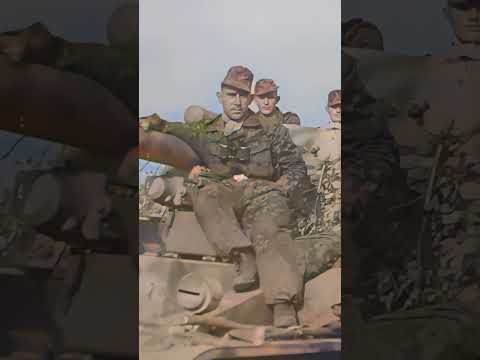
On the Eastern Front, the fields around Kursk had become a graveyard of steel and flesh. The SS Panzer Corps, led by battle-hardened commanders, pushed forward with mechanical precision. “We have them on the run,” a young tank commander radioed, his voice tight with exhaustion and hope. But the Soviets, though bloodied, were far from broken.
In the village of Prokhorovka, a massive concentration of Soviet armor was assembling. The Red Army had anticipated the German thrust and prepared a deadly welcome. Hundreds of T-34 tanks, hidden in the rolling hills, awaited the order to strike.
The German advance, spearheaded by Tiger tanks, seemed unstoppable. Their armor was thick, their guns powerful. Yet the Soviets had learned to adapt. They used the terrain to their advantage, funneling the Germans into narrow corridors where their superior numbers could overwhelm the enemy.
As the SS Panzer Corps approached Kakara, they encountered fierce resistance. “Enemy tanks ahead! Multiple contacts!” a panzer commander shouted. The air filled with the deafening roar of cannons and the acrid smell of burning fuel. The battle for Kursk was about to reach its climax.
Meanwhile, the Allied decision to open a second front sent shockwaves through the German high command. “We cannot fight on two fronts,” a general warned. But Hitler, obsessed with his eastern campaign, refused to divert resources. The fate of the war hung in the balance.
Back on the battlefield, the Soviets launched their counterattack. T-34s surged forward, their engines screaming. The Germans, caught off guard, scrambled to regroup. “Hold the line! Hold the line!” an SS officer yelled, but it was too late. The Soviet tanks crashed into the German formation like a tidal wave.
The Battle of Prokhorovka would become one of the largest tank engagements in history. The outcome would determine the fate of the Eastern Front—and the world.
The clash at Prokhorovka unfolded like a storm of fire and steel. T-34s darted between burning wrecks, their crews desperate and defiant, while the heavier German tanks answered with brutal precision. “They’re everywhere—left flank, right flank!” a panzer gunner screamed into the intercom as another Soviet tank exploded just yards from his turret.
Dust and smoke swallowed the horizon. The sun, once bright, had become a dull orange smear behind the carnage. Tank commanders on both sides fought almost blind, guided by radio chatter and instinct. Each advance was measured in meters, each retreat paid for in blood.
In the village of Kakara, the SS Panzer Corps had nearly achieved its breakthrough. But the Soviet counterattack at Prokhorovka threatened to sever their supply lines. A German colonel, his uniform stained with soot, studied the map with trembling hands. “If we push further, we expose our rear. If we pull back, we lose everything we’ve gained.”
Far from the battlefield, in a cramped command bunker, Allied generals monitored the reports with cautious optimism. The second front was no longer a plan—it was a reality. Landing craft massed along the English coast, and bombers pounded German positions in the west. “Every division they send east is one less we face in France,” a British commander noted grimly.
But Hitler remained fixated on Kursk. In a heated briefing, his generals pleaded for reinforcements to the west. “The Eastern Front is where the war will be decided!” the Führer thundered, slamming his fist on the table. His commanders exchanged uneasy glances. They knew the truth: the German Army was bleeding out on too many fronts.
Back at Prokhorovka, the Soviet tide showed no sign of ebbing. Fresh T-34 units rolled into the fight, their crews young and fierce. “For the Motherland!” a lieutenant shouted over the radio, and dozens of tanks surged forward in unison. The Germans, low on fuel and ammunition, began to falter.
An SS tank commander, his face pale with exhaustion, peered through his periscope. “They just keep coming,” he whispered. Around him, the once-proud Panzer formation was dissolving into isolated pockets of resistance. The dream of encircling Kursk was slipping away.
As evening fell, the battlefield fell eerily quiet. Fires flickered across the plains, and the wounded cried out in the darkness. Neither side had won—but the momentum had shifted. The Red Army had held the line, and the Germans had lost their chance to break through.
In the aftermath, a Soviet general surveyed the wreckage. Hundreds of tanks lay twisted and burning, but his soldiers stood among them, weary and bloodied. “We have not won the war,” he said quietly, “but we have shown them they cannot win.”
That night, the German high command received the grim reports. The SS Panzer Corps, once the spearhead of the offensive, was now a shadow of its former self. And far to the west, the Allies were preparing to land on the beaches of Normandy.
The news reached the Führer’s headquarters like a delayed thunderclap. The SS Panzer Corps, the pride of the German army, had been halted—not by a single decisive blow, but by a thousand cuts. “The offensive is over,” a staff officer murmured, the words tasting like ash. No one dared repeat them aloud.
In the weeks that followed, the Eastern Front settled into a sullen stalemate. The Germans pulled back to defensive lines they had once sneered at, while the Red Army licked its wounds and rebuilt its shattered tank brigades. Both sides knew the truth: the initiative had changed hands.
Yet the war was far from decided. In the west, the Allied landing craft still waited, their crews drilling under gray English skies. The second front was coming—and when it did, the German Army would have to fight for every mile of ground it had stolen.
On a rain-soaked airfield near Smolensk, a German transport plane touched down with urgent dispatches. A young courier sprinted across the tarmac, clutching a leather satchel to his chest. Inside were orders that would reshape the war.
The officers gathered in a dimly lit bunker, their faces drawn. The courier handed the satchel to a general, who broke the seal with trembling fingers. “The Führer has authorized a withdrawal from the Kursk salient,” he read aloud. The room fell silent. It was an admission of defeat, dressed up as strategy.
One colonel, a veteran of the First World War, shook his head slowly. “We spent our best divisions for nothing,” he said. No one argued. Outside, the rain hammered against the bunker walls, as if the sky itself was mourning.
Far to the south, in a Soviet command post carved into a hillside, the mood was different. Officers huddled around a radio, listening to intercepted German transmissions. “They’re pulling back,” a signals officer reported, barely containing his excitement. A general nodded, his eyes gleaming in the lamplight.
“Let them run,” he said. “We will follow.” The Red Army had learned patience. It would need every ounce of it in the months ahead.
But the Germans were not finished yet. In the west, the Atlantic Wall bristled with guns, and Rommel himself had been dispatched to inspect the defenses. “If the Allies land, we must throw them back within twenty-four hours,” he warned his commanders. The stakes could not have been higher.
And in the east, the smoldering ruins of Prokhorovka stood as a grim monument. A lone German tank, its tracks shattered, sat abandoned in a field of wheat. A Soviet soldier climbed onto its hull and planted a red flag. The tide had turned—but the storm was only beginning.
The summer of 1943 wore on, and the war’s center of gravity shifted inexorably westward. On the beaches of Normandy, the Allies stormed ashore, catching the German defenders in a vice. “They’re landing in force—thousands of them!” a panicked radio operator screamed from the Atlantic Wall. Hitler, still reeling from Kursk, diverted divisions from the east, but it was too late.
In the east, the Red Army launched Operation Bagration, a colossal offensive that shattered the German front. “We are advancing on all fronts!” a Soviet marshal declared, his voice ringing with confidence. The Wehrmacht, bled white at Kursk and now stretched to the breaking point, could only retreat.
By the spring of 1945, the war in Europe was in its final act. Soviet soldiers raised their flag over the Reichstag, and Hitler, trapped in his bunker, took his own life. The Thousand-Year Reich had lasted just twelve years.
In the quiet aftermath, a Soviet veteran returned to Prokhorovka. The wheat had grown tall over the scorched earth, and children played among rusted tank hulls. “We paid a terrible price,” he whispered to his grandson, “but we ensured that the world would not fall to darkness.”
The Battle of Kursk was over—but its echoes would never fade. The war had turned, and history had chosen its side. What lessons do you think we should carry from these battles into our own lives?
Report this article
Select a reason for reporting:






