May 1945. The war in Europe was over, Hitler was dead, and the Nazi regime had collapsed like a house of cards in a strong wind. Across Germany, millions wandered through the rubble of bombed cities, searching for food, family, or any reason to keep living. Factories were silent, trains barely ran, and food rations had dropped to 1,200 calories per day—just enough to keep a person alive, but not enough to keep them strong. Children with hollow cheeks dug through garbage piles for potato peels. Women traded family jewelry for a loaf of black bread. The great German Reich that Hitler had promised would last a thousand years had lasted only twelve, and now it was nothing but ash and broken stone.
Far from the ruins of Berlin, in the Pacific theater, 120 German women sat in a holding camp in Singapore. They had served the Reich in different ways: some as nurses tending wounded soldiers, others as communications officers sending coded messages, and a few as auxiliaries doing paperwork to keep military operations running. Now they were prisoners of war, waiting to learn their fate. The tropical heat pressed down on them like a hot, wet blanket. Mosquitoes buzzed in the thick air. The women sat on hard benches, their uniforms stained with sweat and dirt, wondering what would happen next.
They had been told many things during their years of service. Nazi propaganda had filled their heads with stories about the Allies. The Americans were cruel barbarians who would assault women prisoners. The British were cold and heartless, ready to let captured enemies starve. And the Australians—those rough men from the far edge of the world—were said to be the worst of all. “They are barely civilized,” one officer had told them. “They will treat you like animals because that is what they are themselves.” The women believed these warnings because they had no reason not to. When you serve a regime that controls all the newspapers, all the radio broadcasts, and all the information you receive, you believe what you are told.
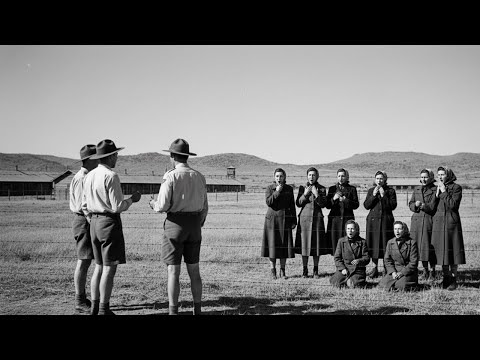
The transport ship that would take them to Australia was called the Dantrun. It was a military vessel, gray and rusted, with narrow corridors and cramped sleeping quarters below deck. When the women climbed aboard, their hands were shaking. Some cried quietly; others stood stiff and silent, their faces hard as stone. They expected the worst. They had been taught that losing a war meant punishment, humiliation, and suffering. That was how wars worked, wasn’t it? The victors took everything from the defeated. That was what Germany had done to others. So surely others would do the same to them.
The voyage took three weeks. The women were kept below deck most of the time, packed together in hot, airless rooms. They slept on thin mattresses laid on the floor. The food was simple but regular, which surprised them: rice, tinned vegetables, hard biscuits, weak tea. It wasn’t much, but it was more consistent than what many of them had eaten in the final months of the war. Still, they waited for the cruelty to begin. They waited for the guards to become mean, for the food to be taken away, for the punishment they had been promised.
When the ship finally reached Australia in late May, the women were ordered on deck. The sun was bright and warm, but not as brutal as the Singapore heat. The air smelled different here—clean and fresh, with a hint of eucalyptus trees carried on the breeze. The women lined up on the deck, their eyes squinting against the light, their bodies tense. They were about to step onto enemy soil. They were about to meet the men who had defeated them.
The ship docked at a port, and Australian soldiers came aboard to escort the prisoners off. The women watched these men approach, and something felt wrong. Not wrong in a dangerous way, but wrong in a way that didn’t match the stories they had been told. The soldiers were young, mostly in their twenties, with suntanned skin and easy smiles. They didn’t snarl or shout. They didn’t carry whips or clubs. Instead, one of them nodded politely and said, “Ladies, if you’ll follow us, please, ladies.”
He had called them ladies. A German woman who had been a nurse turned to her friend and whispered, “Did you hear that?” Her friend nodded, her eyes wide with confusion. The walk from the ship to the waiting trucks was short, maybe two hundred yards. But in that distance, the women saw things that made their hearts beat faster with something that wasn’t quite fear. Australian guards held doors open for them. One soldier picked up a fallen bag and handed it back to its owner with a smile. Another offered his canteen to an older woman who looked thirsty. These small acts of kindness felt like bombs exploding in the women’s minds. This wasn’t how enemies were supposed to behave. This wasn’t what they had been taught.
As they climbed into the trucks that would take them to the camp, the women sat in confused silence. They had expected monsters and found men who called them ladies and opened doors. If these simple acts of respect shattered their expectations so completely, what did that mean about everything else they had been told?
The camp was called Tatura, located in the state of Victoria in southeastern Australia. The trucks rolled through gates topped with barbed wire, but the wire looked almost decorative compared to the prison camps the women had seen in Europe. The buildings were low and simple, painted white with red roofs that gleamed in the afternoon sun. Gardens grew between the barracks, with flowers blooming in colors the women hadn’t seen in years. Roses, bright pink and yellow, climbed up trellises. Vegetable patches showed neat rows of tomatoes and beans. This didn’t look like a prison. It looked like a small village.
The women were assigned to barracks and told to settle in. Each woman received her own bed—not a bunk bed shared with three others, but an individual metal frame with a real mattress. Clean white sheets were folded at the foot of each bed along with two wool blankets. A pillow, soft and full, sat at the head. One woman sat down on her mattress and bounced slightly, testing it. She had slept on wooden boards for the last year of the war. She had slept on concrete floors in bomb shelters. This mattress felt like a cloud. “They’ll take it away tomorrow,” she whispered to herself. “This must be a mistake.” But nobody came to take the mattresses away.
That evening, the women were called to the dining hall for their first meal. They walked in a nervous group, expecting watery soup and a crust of bread. Instead, they found long tables set with metal plates, cups, and forks. The smell hit them first—the rich aroma of cooked meat that made their stomachs clench with sudden, desperate hunger. Australian camp staff stood behind a serving line, using big metal spoons to dish out food onto each plate. The first woman in line held out her plate and watched in disbelief as the server placed a piece of roasted chicken on it. Four ounces of real meat, golden brown and steaming. Then came potatoes mashed with butter that glistened on top. Then carrots, bright orange and cooked tender. Then a thick slice of white bread, soft and fresh, not the hard black bread they had known in Germany. A pat of yellow butter sat beside it.
The woman carried her plate to a table and sat down, staring at the food. Other women joined her, all of them silent, all of them looking at their plates like they were seeing a magic trick. “This can’t be for us,” one of them finally said. “This must be officer rations. They made a mistake.” But a guard walking past heard her and smiled. “No mistake, love,” he said in his Australian accent. “That’s your dinner. Eat up.”
The women ate slowly at first, afraid the food would vanish if they moved too fast. Then they ate faster, scooping the potatoes into their mouths, tearing at the chicken with their fingers, soaking the bread in the butter until it dripped. Some of them cried while they ate. The last time they had tasted this much food at once had been before the war, in a different lifetime—in a world that no longer existed.
After dinner came tea, hot and strong, with real sugar to stir into it. Not the fake sugar made from chemicals, but actual white sugar that dissolved and made the tea sweet. The women sat at the tables long after they finished eating, holding their warm cups, not wanting to leave this place where abundance seemed to flow like water. That night they went to the showers and found hot water, clean towels, and bars of soap that smelled like lavender. They stood under the hot spray until their skin turned pink, washing away months of dirt and fear and the gray dust of a broken empire.
The days that followed brought more shocks. Each week, the camp staff collected their bed sheets and returned them clean and pressed. The women were given work assignments in the camp kitchens and gardens. And for this work, they were paid small wages that they could save. They could buy extra items from a camp store—things like writing paper, pencils, and hair ribbons. A doctor visited the camp twice a week, and any woman who felt sick could see him for free. He checked their teeth, their eyes, their hearts. He gave them medicine when they needed it. A dentist came once a month to fix cavities and pull bad teeth. All of this was free. All of this was given to them—the defeated enemy—by the people who had won the war.
In December, summer arrived in Australia, and the heat grew thick and heavy. One afternoon, a truck pulled up to the camp gate carrying something the women had never seen before: large metal containers filled with ice cream—vanilla and chocolate, cold and sweet and creamy. The guards scooped it into small bowls and handed them out to the prisoners. “Merry Christmas,” one guard said with a grin. The women stood in the shade of a tree, eating ice cream with little wooden spoons, the cold sweetness melting on their tongues. One woman laughed out loud, a sound that surprised even her. She couldn’t remember the last time she had laughed.
Christmas Day itself brought another feast. Roasted chicken again, golden and crisp. Potatoes roasted in their skins. Pudding thick with raisins and covered in sweet cream. Fresh fruit—apples and oranges that gleamed like jewels on the serving plates. The women ate until their stomachs ached, until they felt full for the first time in years. An Australian guard noticed one woman crying quietly as she ate. “You all right, miss?” he asked gently. She nodded, unable to speak, tears running down her face as she bit into an orange, and the juice ran sweet and sharp over her tongue.
In the evenings, Australian civilian women began visiting the camp to teach English classes. These volunteers sat with the German prisoners, speaking slowly and clearly, writing words on a blackboard, laughing when the prisoners mispronounced difficult sounds. The volunteers brought books, magazines, and newspapers. They treated the German women like students, not like enemies. One volunteer brought extra blankets from her own home when the nights grew cool. She didn’t ask permission. She just brought them because she noticed some of the women shivering after lights out.
Slowly, quietly, the women began to question everything. They whispered to each other in the barracks after dark. If the enemy was this kind in victory, what did that say about the propaganda they had believed? If these rough Australian men and women showed more humanity than their own leaders had, what did that mean about the cause they had served? The questions grew like cracks in a dam—small at first, then wider, then impossible to ignore. What else had been lies? What else had they been taught that crumbled under the weight of simple kindness and a plate of warm food?
Easter Sunday arrived in April 1946. The guards hid chocolate eggs around the camp—behind bushes, on window ledges, among the tomato plants. “Ladies,” a red-haired sergeant called out, “we’ve hidden some Easter treats. They’re yours to keep.” The women stood frozen, unsure if this was real. Then young Greta stepped forward and picked up a foil-wrapped egg from a fence post. She bit into it, and the sweetness exploded on her tongue. She started to cry.
One by one, the others joined in, laughing as they searched. They were playing a game—treated not as prisoners, but as guests at a party. Ilsa, a nurse who had seen men die screaming in her arms, sat on a bench with three eggs in her lap. Something inside her chest cracked open like an egg itself. That night she wrote in her diary: “They treat us with more dignity than our own officers often did.”
Greta finally spoke the thought they had all been circling. “We were on the wrong side.” No one argued. The silence was agreement—the sound of a belief system collapsing. Freda wrote: “These men treated us better than we’d been taught to treat ourselves. Real strength doesn’t come from cruelty. It comes from having enough power to be gentle.”
Repatriation came in late 1947. The women sailed home with savings, photographs, and a truth they would carry forever. Freda, among the last to leave, turned back at the camp gates. “I came here a prisoner of war. I’m leaving a prisoner of memory.”
What would you have believed, if everything you were taught turned out to be a lie?
Report this article
Select a reason for reporting:






