June 2002, Shah Wali Kot, Afghanistan. The radio crackled, then went dead. Staff Sergeant Robert Kellian, embedded with US Green Berets, watched through his scope as an Australian SAS patrol moved into position. He waited for the call—the request for permission to engage. It was a ritual every American operator knew by heart. One second. Two. Three. The call never came.
Instead, the Australians advanced, weapons raised, and breached the compound without a single word to higher command. The American team froze, waiting for the protocol that never arrived. Kellian later called it the most professionally disorienting moment of his career. “We counted three seconds while the radio stayed silent, then they opened fire.”
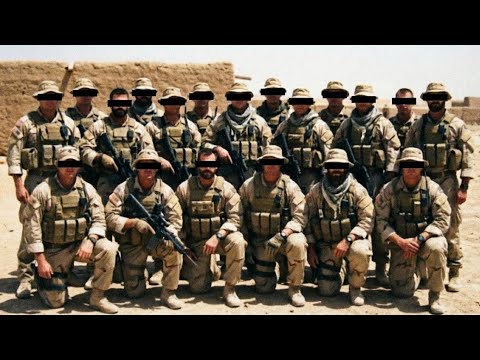
That silence—deliberate, deafening—shattered every rule the Americans had trained under. For US Special Forces, the process was sacred: request permission, wait two to four minutes, then engage. For the Australians, waiting was the real danger. Their doctrine had been forged in the jungles of Borneo and the hills of Vietnam, where hesitation meant death. The SASR selection itself was designed to weed out anyone who couldn’t act alone: a 70-kilometer trek through the Stirling Ranges, no support, no second chances. Only 15 to 20 percent survived it.
What happened in those three seconds became a case study in two opposing philosophies. The Americans centralized control; the Australians decentralized initiative. And in the mountains of Afghanistan, that difference would soon prove decisive.
Three months later, in the Dai Rawood region, four Australian SAS operators slipped into a hidden observation post above a Taliban compound. Their orders: observe, confirm, report. No strike authority. For six hours they watched, silent and unseen, as three high-value targets—a logistics coordinator, a senior commander, and a communications specialist—moved below. At 10:02, the patrol leader sent a single encrypted message: “Green target confirmed.” Biometric data and GPS coordinates followed. Eight minutes later, two 500-pound bombs fell. The patrol withdrew without a scratch.
A CIA cable from Kandahar later assessed the strike: four to six months of gained intelligence advantage. Four men, six hours, one message—and a result the American approval chain could never have matched in time. The official after-action summary became required reading for allied risk assessments.
By 2003, a memo from Joint Special Operations Command circulated among senior analysts. It quoted the Australian example directly: “The SASR conducted operations we would not have authorized under current rules of engagement.” The author, Colonel James L. Creighton, had built his case on Shah Wali Kot and Dai Rawood. The debate had begun.
Inside JSOC, two camps formed. One argued that autonomy, paired with elite selection, multiplied combat power. The other warned of legal risk and loss of control. But the evidence was hard to ignore. By 2004, a review board cited Dai Rawood as proof that target approval authority could be pushed down to team leaders in low-risk missions. By 2006, under General Stanley McChrystal, JSOC set a new standard: twelve raids per night. It was a tempo impossible without compressed kill chains and decision authority at the team level.
The shift was institutional, not personal. The world’s most powerful special operations system quietly rewrote its rules, driven by evidence that speed and autonomy could achieve what bureaucracy could not. Today, the debate over risk, authority, and trust continues. But the lesson of Shah Wali Kot remains: when seconds matter, institutional design decides who acts—and who waits.
But the story did not end with doctrine on paper. In late 2004, a young Australian patrol commander named Captain Liam Farrow found himself on the receiving end of the very autonomy his regiment had championed. His four-man team was inserted into the Spin Ghar range, tasked with tracking a courier network feeding weapons to Taliban cells in the Khost corridor. The orders were deliberately thin: confirm the route, disrupt if feasible, and report. No pre-approved target list. No waiting for a green light from a distant command post.
For three days, Farrow’s team shadowed the couriers through pine forests and frozen creek beds, sleeping in two-hour rotations behind rock walls. On the fourth morning, the network split—two men heading north, two south. Farrow had seconds to choose. He split his own team, sent one pair after the northern branch, and took the other himself. It was the kind of decision no manual could authorize in time.
What Farrow did not know was that an American Predator crew, orbiting overhead from a base in Bagram, was watching the same intersection. The drone’s sensor operator, a young Air Force sergeant named Delgado, saw the Australians break formation and immediately flagged it to his mission commander. “They’re splitting. No comms check. No call to us. What the hell are they doing?” The commander, a Navy SEAL lieutenant, watched the feed in silence for a moment, then answered: “They’re doing their job. Keep watching.”
The northern pair intercepted their targets near a mud-brick waystation, capturing one courier alive and recovering a satchel of documents and a Thuraya phone. The southern pair, with Farrow, lost their targets in a ravine but marked the cache site for later exploitation. By dusk, both elements had regrouped at the extraction point. No shots fired. No casualties. And no permission ever requested.
The captured phone and documents were flown to Bagram and handed to a JSOC intelligence cell. Within seventy-two hours, analysts had mapped a logistics chain stretching from Pakistan’s Kurram Agency to three Taliban shadow governors in eastern Afghanistan. The chain had been invisible to satellite imagery and signals intercepts for months. It took four men on the ground, acting on their own judgment, to expose it.
When the after-action report reached JSOC headquarters, it landed on the desk of a lieutenant colonel named Marcus Webb, a veteran of the 75th Ranger Regiment who had spent years arguing that decentralized authority was a recipe for blue-on-blue incidents and legal exposure. Webb read the report twice. Then he did something unusual: he forwarded it to the command’s legal advisor with a single handwritten note. “Find me the rule that would have let us do this. I’ll wait.”
The legal advisor’s reply, declassified years later, was blunt. Under existing rules of engagement, the Australian patrol’s decision to split and pursue without notifying the drone crew would have required a formal risk assessment and commander’s approval—a process that typically took forty-five minutes to two hours. By then, the couriers would have vanished into the mountains. The rules, the advisor wrote, “were designed to prevent mistakes, not to enable success.”
That memo became a quiet catalyst. In early 2005, JSOC convened a working group on “decentralized engagement authority”—a bureaucratic phrase that masked a radical question: how much trust could be pushed down to the men actually pulling triggers? The Australian experience kept surfacing in the discussions, not as a model to copy wholesale, but as evidence that the American system was leaving opportunities on the table.
One participant, a British exchange officer from the Special Air Service, put it more plainly during a closed session. “You Americans spend so much time asking who’s allowed to decide that you forget someone has to actually decide.” The room went quiet. No one argued.
Webb did not forget the British officer’s words. In the months that followed, he began collecting cases—not the clean, triumphant ones, but the messy near-misses where American teams had hesitated, waited, and lost. He built a file he called “The Cost of Asking.” Each entry was a timestamped record of an opportunity that slipped away while a request climbed the chain.
One entry dated March 2005 described a Green Beret team in Zabul Province that had eyes on a mid-level Taliban facilitator for nearly forty minutes. The team requested strike authority. The approval came back ninety-one minutes later. By then, the facilitator had moved into a village mosque and the strike was called off. “We had him,” the team leader wrote. “Then we had paperwork.”
Webb circulated the file quietly, never in formal channels. It became the kind of document passed hand to hand, read in silence, and remembered. What struck him was not the failures themselves but how few people were surprised by them. The system had been built to prevent the wrong strike. It had never been built to catch the right one.
In Canberra, the Australians were watching the American debate with quiet interest. A liaison officer at the Australian Embassy, Major Fiona Hargreaves, filed a cable to Defence headquarters in mid-2005 noting that JSOC had begun citing Australian after-action reports in its internal reviews. Her assessment was characteristically understated: “They are learning from us. They will not say so publicly.”
Hargreaves had spent two years embedded with American planning cells, and she understood the cultural gap better than most. The Australian model was not built on superior courage or sharper instincts. It was built on a different assumption about human judgment—that a trained operator on the ground, seeing what no screen could show, deserved the benefit of the doubt.
The American model assumed the opposite: that restraint, review, and layered authority were the only reliable guards against catastrophe. Both assumptions had saved lives. Both had cost them. The question was which failure a military could live with more easily.
By the end of 2005, JSOC’s working group had produced a draft framework. It recommended a tiered system: low-risk, time-sensitive targets could be engaged by team leaders under pre-authorized parameters, while high-risk or ambiguous targets still required command approval. The draft was careful, legalistic, and deliberately unglamorous. But buried in its annexes was a single sentence that echoed Shah Wali Kot: “Speed of decision is itself a form of force protection.”
Not everyone was convinced. A senior legal officer attached to SOCOM wrote a dissenting memo warning that the framework risked creating “pockets of unaccountable authority” and that the Australian example, however compelling, was a sample of one. “We are being asked to rewrite a decade of doctrine on the strength of a handful of anecdotes,” he wrote. “Anecdotes are not evidence.”
Webb read the memo and, for once, did not argue. He simply appended it to his file and kept collecting. He knew the dissent was not wrong. He also knew that somewhere in the mountains of Afghanistan, another team was watching another target, and the clock was already running.
The dissent didn’t stop the tide. In early 2006, a team from the 3rd Special Forces Group in Kunar Province found itself in a firefight that would settle the argument. A Taliban ambush pinned them in a narrow valley. The team leader, Captain David Reyes, had a clear shot at a fleeing commander—but protocol demanded a call to the tactical operations center. He made the call. He waited. The commander disappeared into a cave complex.
Two weeks later, the same commander orchestrated a bombing that killed three Afghan police officers. Reyes read the report in silence. He thought of the three seconds at Shah Wali Kot. “I had him,” he told his sergeant. “And I let him go because I followed the rules.”
The story reached Webb’s desk within days. He added it to his file—not as a failure of the system, but as proof of its cost. By summer, JSOC had approved a pilot program: twelve teams would receive pre-delegated authority for time-sensitive targets. The pilot was called “Shah Wali Kot.” No one needed to ask why.
Reyes was one of the first team leaders authorized under the new rules. In August, he tracked the same commander to a compound near the Pakistan border. This time, he didn’t call. He confirmed the target, sent the coordinates, and watched the strike go in. Nine minutes from eyes-on to bomb-on-impact.
The commander was dead. The valley was quiet. Reyes keyed his radio: “Target neutralized. No further tasking.” He didn’t wait for a reply. He didn’t need one.
What do you think—was the Australian way reckless, or was the American system too slow to save lives? Share your thoughts below.
Report this article
Select a reason for reporting:






