The sun had not yet risen over the mountains of Uruzgan Province when a Taliban fighter pressed his radio close to his mouth, his hands trembling. “The Australians are here. Fall back. Fall back now.” In the darkness before dawn, shadowy figures moved through the poppy fields like smoke drifting across water. The fighter could barely see them, but he knew who they were. Without firing a single shot, he turned and ran.
This was not an isolated incident. NATO intelligence officers recorded this behavior again and again throughout the war. Hardened insurgents who had fought for years simply fled when they spotted Australian patrols. The fear was real, documented in radio intercepts, captured letters, and prisoner interviews. Something about these soldiers was different—something that made them more terrifying than any other force in Afghanistan.
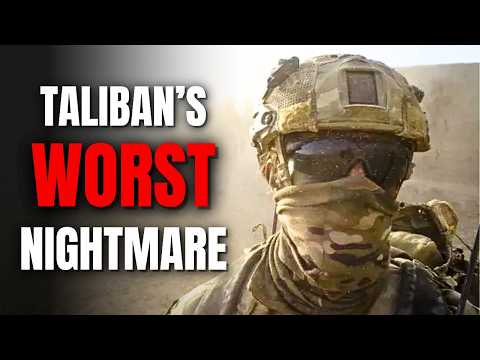
By the summer of 2010, the war had dragged on for nine long years. The Taliban had learned to fight every type of soldier the coalition threw at them. American Marines rolled through villages in heavy armored vehicles, and the Taliban knew exactly how to respond: plant bombs, fire from a distance, disappear before the helicopters arrived. British paratroopers followed similar patterns. Canadian infantry operated in predictable ways. After nine years, the insurgents had figured out the playbook. They had adapted to every tactic, learned every weakness, and developed counters for every strategy. Coalition casualties climbed higher each month. The Taliban were winning the adaptation game.
But there was one group that broke every pattern the Taliban had learned. The Australian Special Air Service Regiment operated differently than anyone else. Between 2007 and 2013, these commandos ran more than 300 direct action missions in Uruzgan and Kandahar provinces. Their record was almost unbelievable: for every Australian operator killed or wounded, they killed or captured roughly 100 enemy fighters. That ratio seemed impossible in modern war, especially in counterinsurgency operations where the enemy blended into the civilian population. Yet the pattern was documented and real.
The most stunning evidence came from captured Taliban communications. Intelligence teams intercepted radio conversations where insurgent commanders specifically warned their men to avoid Australian patrols. In some cases, these commanders ordered full retreats when Australians were identified in an area. This was extraordinary. The Taliban had fought the most powerful military in human history for nearly a decade. They had learned to stand and fight against overwhelming American firepower. They had adapted to British tactics refined over centuries of colonial warfare. But when roughly 400 Australian commandos appeared in their province, Taliban fighters were told to run.
What made them different? What did they do that separated them from every other elite unit in theater? Why did Taliban commanders who preached martyrdom and holy war tell their fighters to retreat rather than engage these particular soldiers? The answer lay not in superior weapons or larger numbers, but in something far more fundamental about the nature of warfare itself.
The Australian SAS was born in 1957, modeled after the British SAS but forged into something unique in the jungles of Vietnam. Unlike many special forces units that expanded rapidly after September 11th, the Australian SAS stayed deliberately small. Only about 400 to 600 operational commandos rotated through at any given time. The selection process took 21 months. More than 80% of candidates failed. The SAS refused to lower the bar no matter how badly they needed more operators.
Australia deployed forces to Afghanistan in October 2001, but the SAS did not begin serious combat operations until 2005 and 2006 in Uruzgan province, one of the most dangerous regions in southern Afghanistan. While American and British special forces rotated different units through every three to six months, the Australians did something different. They sent the same operators back to the same area again and again. A commando might deploy to Uruzgan three, four, or even five times. They learned the terrain like their own backyard. They memorized the villages, the valleys, and the people. This institutional knowledge became a weapon.
The way the SAS operated broke every standard rule. Most NATO units patrolled in armored Humvees or massive mine-resistant vehicles. The Australians preferred to walk. They would move on foot for five, six, or even seven days at a time without resupply. They wore local scarves, carried lighter loads, and moved faster. A typical patrol consisted of just four to six men compared to an American platoon of 30 or 40 soldiers in convoys of armored trucks. Officers led with a clear philosophy: integrate with local populations to gather intelligence while simultaneously running aggressive operations against Taliban leadership. These were not random raids. They were surgical strikes targeting specific individuals based on weeks or months of patient intelligence gathering.
By 2009, a normal day for most NATO forces in Uruzgan followed a predictable pattern. Soldiers would load into vehicles at a forward operating base and drive along known routes. At some point, usually from 300 to 500 meters away, Taliban fighters would open fire. The NATO unit would return fire and call for air support. Apache helicopters would arrive 15 to 20 minutes later. By then, the Taliban would have disappeared. Everyone would return to base and do the same thing the next day. The Taliban had completely adapted to this pattern. They knew the routes, the timing, and exactly when helicopters would arrive. It had become a grinding stalemate that consumed lives and resources while accomplishing almost nothing.
The insurgents had spent nine years studying American tactics and learning how to survive them, but they had never encountered anything like what the Australians were about to bring to their valleys and villages. By 2010, the Taliban had become masters of asymmetric warfare. They had studied American patrol patterns for nine solid years. They had memorized how long it took Apache helicopters to arrive after an ambush—usually 15 to 20 minutes. They had learned to exploit the rules of engagement that required NATO forces to visually confirm targets before firing. In Uruzgan province specifically, the insurgent networks had achieved something remarkable and terrifying: near total intelligence superiority over their own territory. They knew when NATO forces left their bases. They knew which routes the convoys would take. They knew where the patrols would set up their checkpoints. Local children watched from rooftops. Farmers made phone calls. The Taliban saw everything.
The Kora Valley in northern Uruzgan had become a Taliban stronghold. By mid-2010, three separate attempts by conventional NATO forces to clear the area had failed. Each time, coalition troops would sweep through, engage in heavy fighting, lose soldiers to roadside bombs, and eventually pull back. The valley provided critical routes for weapons trafficking from Pakistan. Its terrain was a nightmare for attackers and a fortress for defenders. Deep wadis cut through the landscape like scars. Steep ridges overlooked every approach. Dense green zones along the Helmand River provided perfect cover. The Taliban had transformed entire villages into fortified positions with interlocking fields of fire. They had weapons caches hidden in compounds, buried in fields, and stashed in irrigation tunnels. Early warning systems covered every avenue of approach.
In June 2010, an Australian SAS squadron received a difficult mission. Intelligence indicated that a high-value target was operating from a compound near the village of Kakarak in the Kora Valley. This was not just any Taliban fighter. He was a subcommander responsible for coordinating improvised explosive device networks that had killed and maimed dozens of coalition soldiers. The intelligence was solid. The problem was everything else.
The target compound sat in what military planners call a killbox. Elevated positions surrounded it on three sides. Only narrow approaches led to the compound, and all of them were exposed to observation and fire. The civilian population in the area was either sympathetic to the Taliban or too terrified to resist them. Attacking during the day would result in massive civilian casualties and likely failure. The conventional approach would be to surround the area with a large force and call in air strikes, but that would kill the target instead of capturing him, destroy valuable intelligence, and probably kill innocent people in the process. The tactical complications made the mission nearly impossible by standard operating procedures.
Daytime temperatures in June reached 118°F. A human being working hard in that heat could die of heat stroke in hours without constant water. Electronic communications were unreliable in the mountain terrain. Radio signals bounced off ridges or disappeared into valleys. The civilian population made distinguishing combatants from non-combatants almost impossible. Intelligence estimated 40 to 60 Taliban fighters in the immediate area around Kakarak. The nearest conventional backup was 45 minutes away by helicopter. The rules of engagement required positive identification before engaging targets. Every possible advantage belonged to the defenders.
Four SAS operators prepared to insert into the area. They would travel on foot carrying 60-pound packs through terrain that NATO maps marked as impossible. The maps were wrong, but only if you were willing to move at night, navigate by stars and terrain features, and survive on minimal water in heat that could kill. The team moved into position over 48 hours, covering 23 kilometers through mountains and valleys. Local Taliban spotters never detected their movement. In a landscape where the insurgents saw everything, four foreign soldiers somehow became invisible.
For 36 hours, the team observed the target compound from a concealed position 400 meters away. They documented everything through their optics: patrol patterns, guard positions, weapons locations, the number of fighting-age males, the presence of women and children. The target was confirmed inside the compound, but he never separated from civilians. Every conventional tactical option risked massive collateral damage or walking directly into a prepared ambush. As the second night fell, the team faced their decision point. They could call in air strikes and hope the target died without too many civilian casualties. They could assault through the killbox and probably die in the attempt. Or they could try something the Taliban had never encountered before.
During this period, the SAS patrol leader made a decision that violated every standard special operations manual ever written. They would not assault the compound with overwhelming firepower. They would not call in air strikes or wait for reinforcements. Instead, they would infiltrate the compound itself during the hours before dawn—not as a raid with explosions and gunfire, but as a silent penetration. They would rely on absolute stealth, hand-to-hand combat skills, and the psychological shock of appearing where the enemy believed themselves completely safe.
At 3:20 in the morning, the world was as dark as it ever gets. Three operators approached the compound walls, moving in complete darkness. They did not use night vision goggles, relying instead on natural night vision and intimate knowledge of the terrain. They moved by feel and by memory of the terrain they had studied for 36 hours. Taliban sentries stood guard only eight meters away. The Australians could hear them breathing. They could smell the tobacco smoke from their cigarettes. Yet the guards never saw the shadows moving past them along the base of the wall.
The compound wall was made of mud brick, dried hard by decades of sun. The operators found cracks in the masonry and used them like a ladder. No ropes, no climbing equipment—just fingers and boots finding purchase on a wall that looked smooth from a distance. They pulled themselves up and over, dropping into the interior courtyard. This was the Taliban sanctuary. This was where they slept, ate, and planned their attacks. Foreign soldiers were not supposed to be able to reach this place without the entire valley knowing about it.
Inside the compound, the operators moved through rooms where Taliban fighters slept on mats. The air was thick and hot even at night. The smell of unwashed bodies, cooking oil, and gun oil filled the small spaces. Using suppressed pistols and hand signals, the team cleared three rooms without firing a single shot. In the first room, two fighters slept back to back. An operator covered one man’s mouth while another secured his hands. The Taliban fighter’s eyes went wide with terror when he realized foreign soldiers were standing over him in the dark. He did not make a sound. In the second room, a single fighter woke as the Australians entered. He reached for a rifle leaning against the wall. An operator was on him in two steps, driving him to the floor and controlling his arms before he could cry out. The third room held supplies and ammunition, but no people.
The target was located in the fourth room with two bodyguards. The door opened silently on old hinges. Three Taliban fighters slept inside. The high-value target lay on a mat in the center. His bodyguards flanked him on either side, their rifles within arm’s reach. This was the moment where stealth would either hold or shatter into violence. It shattered. One bodyguard woke and saw the silhouettes of the Australian operators in the doorway. He grabbed for his weapon. The engagement that followed lasted eight seconds. Both bodyguards were killed in close quarters with suppressed gunfire that sounded like sharp coughs in the confined space. The target jerked awake to find his guards dead and foreign soldiers standing over him. He was secured with plastic restraints before he fully understood what was happening. Not a single round had been fired that neighboring compounds could hear clearly.
The mission’s success lasted approximately four minutes. A Taliban fighter in another part of the compound discovered what was happening. Perhaps he went to use the bathroom and saw the secured prisoners. Perhaps he heard the muffled shots. Whatever the reason, he began shouting an alarm. The team’s fourth member, providing overwatch from outside the compound, radioed immediately: “Compromised. They know.” Within seconds, the entire valley began to wake up. Lights appeared in windows. Voices shouted in Pashto. The sound of rifle bolts being pulled back echoed off the walls. The SAS operators had to extract with their prisoner through 400 meters of open ground while an estimated 50-plus insurgents converged on their position.
What followed became the stuff of legend in Australian special forces history. The three-man team moved in a tactical formation they called “the wheel.” They constantly rotated positions so that at every moment someone faced each direction while the group moved forward. They engaged targets at ranges from three meters to 200 meters. A Taliban fighter appeared from behind a wall almost close enough to touch. He went down before he could raise his weapon. Another opened fire from a rooftop. Return fire was immediate and accurate. The entire firefight was conducted while moving—never stopping, never losing momentum toward the extraction point. Later, ammunition counts would show the team fired only 73 rounds total during the extraction. Seventy-three bullets to fight through 400 meters of enemy-controlled terrain against 50 or more fighters. The accuracy was surgical.
The fourth operator repositioned three times during the withdrawal, providing covering fire that kept Taliban reinforcements pinned down long enough for his teammates to move. Taliban radio intercepts captured during the fight revealed something extraordinary. Multiple insurgent commanders, after realizing they were fighting Australians and not some other NATO force, ordered their men to maintain distance and not pursue closely. The fear was explicit in the recorded communications. One commander said, “Do not follow into the dark. They see everything. They are ghosts.”
An Australian Blackhawk helicopter arrived exactly on schedule at the designated landing zone. This required the team to maintain their movement timeline despite sustained combat. They loaded the prisoner and lifted off under fire. The helicopter took three rounds through the tail section but kept flying. Total mission time from compound infiltration to wheels up was 47 minutes. The captured Taliban commander provided intelligence within 72 hours that led to the disruption of 14 separate improvised explosive device cells. But the greater impact was not measured in networks destroyed. It was measured in what happened next.
Within one week, Taliban radio communications revealed that fighters were refusing assignments in areas where the Australians who walk operated. The psychological weapon had been forged in darkness and blood, and it would haunt the insurgents for years to come.
Within 72 hours of the Kakarak operation, NATO intelligence officers noticed something they had never seen before. Taliban radio communications across Uruzgan province had changed dramatically. Insurgent commanders struggled to maintain control as their fighters questioned orders. One intercepted conversation captured the shift perfectly. A mid-level Taliban leader ordered his men to set up an ambush along a known patrol route. His subordinate’s response was recorded word for word: “We heard the Australians are in that sector. We should wait.” The commander tried to insist, but the hesitation in his own voice was clear. The fear had spread like a virus through the insurgent networks.
The success could be measured in hard numbers. Taliban attack rates in areas where the SAS operated dropped by 34% in the month following the operation. Meanwhile, in adjacent sectors patrolled by conventional forces, attacks actually increased by 12%. The Taliban were not giving up the fight. They were simply choosing to fight where the Australians were not. At a July 2010 briefing for the International Security Assistance Force, an American colonel looked at the data and made a blunt assessment: “Whatever the Aussies are doing, we need to bottle it.”
The casualty numbers were remarkable. The Kakarak operation produced zero Australian casualties. From 2007 to 2010, Australian SAS commandos conducted 287 direct action missions. 41 involved sustained firefights. During this three-year period, only three operators were wounded and all returned to duty. Not a single commando was killed in action. Enemy casualties told the opposite story. Documented Taliban deaths exceeded 400. An additional 150 were captured alive.
Despite their fearsome reputation, the SAS maintained strict adherence to the laws of armed conflict. After one engagement in September 2010, an SAS medic treated three wounded Taliban fighters for 40 minutes while waiting for medical evacuation. He used his own supplies, carefully bandaging wounds and providing water in the searing heat. One of those fighters survived and was later interrogated. He told American intelligence officers that he could not understand it. “The same soldiers who killed with such precision had then worked to save his life. I thought they would leave me to die or finish me quickly,” he said through a translator. “Instead, one of them stayed with me and told me I would be okay. I did not expect mercy from men I had been told were devils.”
By late 2010, senior NATO leadership wanted to understand what made the Australian approach so effective. They commissioned a detailed analysis of SAS operations. The resulting report remained classified for eight years. When portions were finally declassified in 2018, the conclusions were striking. These operators were producing strategic effects far beyond their numbers. They accounted for an estimated 18% of all high-value Taliban captures in southern Afghanistan. They represented only three-tenths of one percent of NATO forces deployed. The ratio defied everything military planners thought they knew about force requirements and combat effectiveness. A tiny group of commandos was punching so far above their weight that it changed the fundamental calculus of the war in their area of operations.
The Australian SAS operations fundamentally altered how the Taliban planned their war in southern Afghanistan. By early 2011, captured Taliban planning documents showed explicit written instructions to avoid Australian patrol areas when establishing new command nodes and training camps. Insurgent leaders physically relocated their headquarters and staging areas to parts of Helmand Province where only British and American conventional forces operated. This was a tacit admission that they preferred fighting larger conventional units over small Australian commando teams. The fear had become policy.
By 2012, multiple NATO special operations commands had updated their tactical manuals based largely on Australian practices. The British SAS—ironically, the original model that Australia had copied in 1957—now adopted elements of their former students’ approach. They began emphasizing extended-duration foot patrols and minimal electronic signature. The student had become the teacher. But these changes came with limitations. The Australian method required patience, years of investment in elite training, and acceptance of operational approaches that could not be easily scaled or replicated. Politicians wanted visible results and large numbers. The Australian way offered neither.
Psychological operations assessments conducted in 2011 and 2012 revealed shifts in Taliban recruitment messaging. Where propaganda videos had previously emphasized defeating the American occupiers with scenes of successful ambushes and destroyed vehicles, the tone changed. New videos focused on resisting foreign invasion in general terms without mentioning specific nationalities. Taliban fighters interviewed after capture consistently described Australian commandos as different and more dangerous than other NATO troops. The propaganda could not spin fear into motivation when the fear was too real.
By 2012, Taliban tactical guidance explicitly addressed Australian forces in training materials. A captured manual from a Taliban camp across the border in Pakistan included an entire section on countering Australian patrols. The instructions were extraordinary: maintain observation only. Do not engage unless absolutely necessary. Retreat to prepared positions with multiple exit routes. The manual specifically warned that Australians excelled at close combat and night operations and therefore both should be avoided at all costs. An enemy force had adapted their entire tactical doctrine around avoiding contact with a single small unit.
The statistics tell part of the story. The human experiences tell the rest. Sergeant M was 34 years old on his fourth deployment to Afghanistan when he participated in the Kakarak operation. He had grown up in Perth as the son of a diesel mechanic and joined the army at 19 with dreams of becoming something more than ordinary. He failed SAS selection twice before finally passing on his third attempt after seven years of trying. Most men would have given up. He kept coming back until they said yes. His role during the compound infiltration was overwatch sniper, positioned outside to provide covering fire if things went wrong. During the 47-minute extraction under fire, he fired 23 rounds from his rifle. Every single bullet found its target. He kept Taliban reinforcements pinned down while his teammates moved the prisoner across 400 meters of open ground. He never spoke publicly about the mission. His wife later remembered him returning from that deployment quieter than before, like part of him had stayed behind in that valley. He received the Medal for Gallantry in a private ceremony with no media present, no cameras, no public recognition. He retired from military service in 2015 and now works as a wilderness guide in Tasmania, teaching survival skills to at-risk youth who need second chances like the ones he received.
The Taliban commander captured at Kakarak was 28 years old. Before the war, he had been a school teacher in a small village. He joined the Taliban in 2007 after his younger brother was killed in an air strike that destroyed their family compound. The grief and rage turned him into a fighter, then a leader, then a coordinator of the improvised explosive device networks that killed coalition soldiers. During his interrogation at Bagram Air Base, he told American intelligence officers something they found hard to believe. “I have fought Americans, British, Canadians. I was never afraid. But when I saw the Australians in my room in the dark, I knew I was already dead. That they took me alive was unexpected.” He provided intelligence that disrupted 14 bomb-making cells, saving countless lives on both sides. In 2012, he was transferred to Afghan government custody. He was released two years later in a prisoner exchange. Some reports suggest he rejoined Taliban forces. His current location is unknown.
Captain L of American Special Forces requested to work with the SAS in 2010 after hearing stories he assumed were exaggerated. “We’d heard the stories and honestly thought they were nonsense. Nobody’s that good,” he recalled. Then he watched a four-man Australian patrol accomplish what would take his 12-man team twice as long with half the noise. “The difference wasn’t equipment or training. It was mindset. They moved like they belonged in that terrain. We moved like we were conquering it.” He later incorporated Australian tactics into his training program at Fort Bragg. He retired as a major in 2016 and wrote an unpublished memoir that includes a chapter he titled “Learning to be Ghosts.”
The story of respect and restraint had a darker counterpoint. Not every mission ended without loss. Trooper S was 26 years old from Brisbane when he died in June 2011 during a patrol in Kandahar province. He was one of only three SAS fatalities during this period of the war. He was killed not by enemy gunfire, but by a roadside bomb that detonated during what should have been a routine reconnaissance patrol. His death devastated the close-knit SAS community precisely because it was so rare. His patrol members described him as the guy who made everyone laugh, even in the worst moments. His family established a scholarship for indigenous youth pursuing military service, honoring his Aboriginal heritage and his belief that service to country could transform lives. The scholarship continues to this day, helping young people find the same path he walked.
A 19-year-old Taliban fighter captured in 2012 had been recruited only six months before his capture. During interrogation, he revealed that his commanders showed new recruits videos of American and British patrols being ambushed. “This is how we defeat the infidels,” the trainers said. But the recruits were also warned specifically about one group. “If you encounter Australians, do not be a hero. They are trained by jinn, by spirits. They see in darkness and move like smoke. Live to fight another day.” He described how half his unit deserted when they heard Australians were operating in their area. The morale collapsed before a single shot was fired.
In 2014, the Australian government finally began acknowledging what the SAS had accomplished in Afghanistan. The unit received the Meritorious Unit Citation for sustained outstanding service from 2007 to 2013. Individual decorations included nine Medals for Gallantry, 41 Commendations for Gallantry, and numerous other honors. Many of these awards remained classified and the recipients were forbidden from discussing the specific actions that earned them. The broader Australian public remained largely unaware of how much their commandos had achieved. Most media attention focused on conventional forces and humanitarian efforts, not the silent warriors who had hunted Taliban commanders through dark valleys.
But the legacy became complicated. Beginning in 2016, allegations emerged of war crimes committed by some SAS members during Afghanistan deployments. A four-year investigation concluded in 2020 with a report that found credible evidence of 39 unlawful killings by 25 Australian special forces personnel. The report devastated the SAS community and cast a shadow over everything they had accomplished. The same culture that produced extraordinary combat effectiveness had also created conditions where accountability failed. Tight-knit teams, extreme autonomy, and brotherhood above all else came with a dark side. The Australian government revoked unit citations and several individual medals. Criminal investigations were launched. The entire special operations force underwent cultural reform. The story of the SAS in Afghanistan became inseparable from both their remarkable achievements and their darkest failures.
Despite the controversy, the tactical innovations of Australian SAS operations permanently influenced special operations doctrine worldwide. The British SAS, American Special Forces, New Zealand SAS, and Canadian Special Operations Forces all incorporated elements of the Australian method. The emphasis on small-team operations, extended foot patrols, cultural integration, and minimal-signature tactics became the new standard. A 2015 NATO study concluded that light-footprint, high-effect operations represented the future of counterinsurgency, directly citing Australian operations as the model.
In Campbell Barracks in Perth, home of the Australian SAS, a memorial wall bears the names of 41 regiment members killed in action since the Vietnam War. Three of those names are from the Afghanistan war during the 2007 to 2013 period. The wall includes no operational details, no mention of missions or medals—just names, ranks, and dates. It reflects the SAS ethos that has always defined them: quiet professionalism, service without fanfare. Each year on Anzac Day, April 25th, a small private ceremony occurs at the memorial. Only regiment members and families attend. No media, no public speeches, just remembrance among those who understand the price that was paid.
Following the Taliban’s return to power in August 2021, many Afghans who had worked with or been protected by Australian forces faced deadly reprisals. Several former interpreters and partners who had worked specifically with SAS units managed to evacuate to Australia. They built new lives in a country far from home, carrying memories of a time when highly trained soldiers came to their villages in darkness, removed the Taliban fighters who had terrorized their families, and were gone before sunrise. Their children think the stories are exaggerated, but the men who lived through it remember every detail.
Military strategists studying the Afghanistan war consistently point to Australian SAS operations as examples of effective counterinsurgency done right. The lessons are clear: small, highly trained units with deep area knowledge and cultural understanding produce effects far beyond their size compared to large conventional forces. But this approach requires patience, investment in elite training, and acceptance of methods that cannot be easily copied or expanded. These factors often conflict with political demands for visible and immediate results.
In a rare 2018 interview, a retired SAS operator who served three tours in Afghanistan offered this reflection. “We went there to fight the Taliban and we did that well—maybe too well. We became so effective at killing and capturing that we forgot to ask whether what we were doing was building anything that would last. We made the Taliban fear us, and that was the mission. But fear doesn’t build nations. It doesn’t create peace. I’m proud of my service, proud of my mates, proud that we brought almost everyone home. But I also know that the minute we left, the fear left with us and everything went back to how it was before. We were ghosts. We left no lasting trace except in the memories of those we haunted.”
The story of why Taliban fighters feared Australian SAS patrols more than any other NATO forces is ultimately a story about the nature of modern warfare. It demonstrates that in counterinsurgency, quality matters more than quantity, precision matters more than firepower, and cultural understanding matters more than technological superiority. But it also raises uncomfortable questions about whether creating fear—even highly effective and precisely targeted fear—can ever substitute for the political, economic, and social solutions that actually end conflicts.
The Australians proved that small teams of elite operators could dominate any battlefield. What they could not prove was whether dominating battlefields wins wars that are not primarily military in nature. They made the Taliban fear them like no other force in Afghanistan. That fear was real, documented in intercepted communications and the testimony of men who fought them. But fear alone has never won a war. It only determines who survives to see the end.
So here is the question that lingers long after the last helicopter lifted off from that valley: if the most effective soldiers in the war could only rent fear for a season, never build peace for a generation—what does that say about every war we still choose to fight?
Report this article
Select a reason for reporting:






