Three US helicopters shot out of the sky. Seven US special operators dead before noon. Twenty-four Army Rangers pinned in a kill zone, watching Al-Qaeda fighters climb the slope to finish them off. And you know what saved them? Not the Marines, not Delta, not the SEALs. Six Australians sitting on the next ridge over with one radio between them.
Australians in Afghanistan? The country that hadn’t fought a real war since Vietnam? Yeah, those Australians. The ones the Pentagon had nearly sent home four months earlier because nobody in American command could figure out what to do with them.
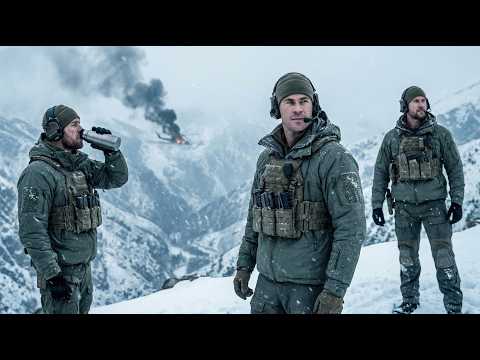
Oh, this story gets so much darker than the official version. Because what those six Aussies did over the next 18 hours—calling in air strikes from 1,200 meters away, walking 500-pound bombs onto positions inside 100 meters of friendly forces, killing an estimated 300 Al-Qaeda fighters with nothing but a scope, a radio, and 10 days of staring at the ground—was so far outside American special operations doctrine that the Pentagon classified the after-action report for over a decade.
One US Army Ranger captain came back from that mountain and said four words about the men on the next ridge. Those four words got buried in the citation. He said: “They saved our lives.”
And by the end of this video, you’re going to understand why the three-star American general in command of the entire operation, Lieutenant General Frank Hagenbeck, eventually went on camera and said something no American flag officer is ever supposed to say. He said he would not have wanted to do that operation without them. About foreign soldiers. About a country with a smaller army than the New York Police Department.
The Al-Qaeda fighters in that valley had a name for the men who hunted them through the snow. They called them Shaba Al-Jabal—the mountain ghosts.
Stay with me.
Sixty miles south of Gardez, hard against the Pakistani border, sits a valley the Pashtun locals call Shah-i-Kot—the place of the king. Nine kilometers long, five kilometers wide. Walled on every side by ridges climbing into thin, freezing air. At the southern end, one peak rises above all the others: 10,469 feet of frozen rock. The locals call it Takur Ghar.
The Mujahideen had another name for this valley. They called it the place the Russians lost. Twice during the Soviet-Afghan War, the Red Army rolled in here with helicopters, artillery, and entire battalions of motorized infantry. Twice they came back out with body bags.
The trench systems on those ridges, the bunkers carved into the limestone, the pre-registered mortar pits zeroed onto every flat spot in the valley—those were built by the men who killed Soviets. By 2002, those same fortifications were waiting. Empty for a decade. Then suddenly, not.
What had moved into them was al-Qaeda—not Taliban farmers with old AK rifles, but hardened foreign fighters: Arabs, Uzbeks, Chechens, men who had retreated south after Tora Bora, let Osama bin Laden slip into Pakistan. American intelligence in Bagram put their numbers at 150, maybe 200. The real number was somewhere between 700 and 1,000. They had recoilless rifles, an artillery battery, and mortars zeroed onto every landing zone the Americans were going to use. And they were not running. They were waiting.
Now, the man tasked with rolling into this valley and crushing them was Major General Franklin “Buster” Hagenbeck of the 10th Mountain Division. The plan he was given had a name straight out of a high school textbook: Hammer and Anvil.
A force of Afghan militia led by an American special forces warrant officer named Stanley Harriman would drive south from Gardez into the valley floor. That was the hammer. American conventional infantry—the 101st Airborne and the 10th Mountain—would air assault onto the ridges on either side and block the escape routes. That was the anvil. Squeeze, crush, walk out.
This was supposed to be the win after Tora Bora, the largest American combat operation in Afghanistan up to that point. The Pentagon had told itself this was the battle that would close the book on the foreign fighters in eastern Afghanistan.
The plan lasted about four hours.
But before we get to how spectacularly it came apart, there’s a piece of this story almost nobody in the American chain of command was paying attention to. While planners in Bagram were still finishing their operations order, six men in cold weather gear were already inside the valley. They’d been there for 10 straight days—lying in the snow, watching, counting, marking enemy positions on a map the Americans were going to dismiss.
This was 10 days of patient observation. They were not American. They were Task Force 64, 1 Squadron, Australian Special Air Service Regiment.
They were operating in observation posts other coalition special operations forces had tried to occupy and failed. Earlier teams had been compromised inside 24 hours—spotted by shepherds, blown by villagers, pulled out. The Australians stayed.
A serving Australian trooper later told Time magazine in an investigative piece called “Phantoms of the Mountains” that British SAS patrols in the same theater could last about four days without resupply. American special operations units less. The Australians were doing seven on the first patrol. Some pushed past 10.
This was not bravado. This was doctrine. Australian SAS reconnaissance had been refined in Vietnam-era jungle, sharpened on the Malayan Emergency before that, then adapted for the deserts of Iraq and the mountains of Afghanistan. They were trained to live in a hide for a week and a half without moving, to eat cold rations out of plastic pouches, to watch a valley until they had counted every fighter going in and out of every cave—and then to bring that picture home.
What they brought home in late February 2002 was a problem. The picture they had built said three things. One: the actual number of Al-Qaeda fighters in the valley was three to five times what American intelligence assumed. Two: the fighters were not in the villages on the valley floor—they were dug into the ridges. Three: the landing zones the 101st Airborne and the 10th Mountain had picked for the air assault were already inside enemy mortar fans.
The Australian intelligence officer who later spoke to Time, identified only as Adam, put it bluntly: “The Americans could not comprehend that we would have the ability to go into areas for protracted times to do our strategic roles.”
In plain English: 10 days of intelligence built by men freezing on a ridge got mostly ignored. The plan went forward.
The operation kicked off at dawn on the 2nd of March, 2002, and within hours every fear those Australians had quietly raised was happening on a different ridge. Harriman’s Afghan column moving south from Gardez got hit almost immediately by accurate mortar fire. The Al-Qaeda fighters on the ridges did not have to guess where to drop the rounds. The Soviets had ranged that road in the ’80s. The mortar tubes were sitting in the same pits.
Then it got worse. An American AC-130 gunship overhead, working through bad target identification and degraded communications, mistook Harriman’s column for enemy and opened up. Harriman was killed. Several Afghans were wounded. By mid-morning, the Afghan militia had decided they were done.
The hammer was gone.
Which left the anvil holding the entire operation alone.
The anvil was now landing into ground the enemy had been training to defend for 20 years. Helicopters from the 101st put infantry down on landing zones that turned out to be inside enemy fields of fire. The 10th Mountain came in under mortars. Men were taking rounds before their boots cleared the ramp. Whole platoons found themselves pinned in reentrant positions where they could neither advance nor extract.
The three-day plan was already a fiction, and the worst of it had not started yet. That came on the night of the 3rd of March on a mountain called Takur Ghar.
The plan was clean on paper. Two SEAL reconnaissance teams, Mako 30 and Mako 21, would insert by Chinook onto observation posts overlooking the valley. The peak of Takur Ghar was the prize. From that elevation, you could see every approach. You could call fires onto everything.
The problem was that Mako 30’s original landing zone, 1,300 meters east of the peak, got delayed by mechanical issues. By the time the helicopter—a special operations MH-47E Chinook with the call sign Razor 03—was inbound, the team was running out of darkness. The pilots and the team made a decision. They would insert directly onto the peak.
An AC-130 gunship overhead, call sign Nail 22, had swept the summit on infrared and reported it clear. It was not clear. The Al-Qaeda fighters on top had drawn blankets over themselves to defeat thermal imaging. They were dug in—positions, bunkers, a DShK heavy machine gun, and an unknown number of men.
The Chinook touched down. Three rocket-propelled grenades hit it inside 10 seconds. The right turboshaft engine died. The cabin filled with smoke and hydraulic fluid. As the pilot fought to lift off, a SEAL named Petty Officer First Class Neil C. Roberts—28 years old from Woodland, California—slipped off the rear ramp. He fell roughly 10 feet to the rock. The helicopter was already gone.
Roberts was alone on a frozen 10,000-foot peak, surrounded by enemy fighters, with his weapon, a few magazines, and zero friendly ground forces within four miles. What he did next is the reason the mountain is now called Roberts Ridge. He fought in the dark, alone. He killed at least one fighter before he was overrun and killed himself.
The crippled Razor 03 crash-landed four miles down the valley. The surviving members of Mako 30 boarded another Chinook and went back to the peak to find their man. They did not know he was already dead. They landed under heavy fire. Air Force Combat Controller Technical Sergeant John A. Chapman, 24 hours into the worst night of his life, charged a bunker, killed two fighters inside, and took rounds himself. The SEALs, believing him also dead, withdrew under fire down the side of the mountain.
Chapman was not dead. Predator drone footage reviewed years later would show Chapman survived his initial wounds, that he kept fighting alone in his bunker for more than an hour, that he engaged multiple enemy positions before he was finally killed. In 2018, he was posthumously awarded the Medal of Honor.
But on the morning of the 4th of March, nobody on the American side knew any of that. What they knew was two Americans were down somewhere on that peak and a quick reaction force was already inbound.
The quick reaction force was 19 Army Rangers and a three-man Air Force Special Tactics team, Captain Nate Self in command. Two Chinooks, call signs Razor 01 and Razor 02. They’d been told a downed SEAL needed extraction. They had not been told the peak was now occupied by a dug-in enemy company.
Razor 01 went in first. As it flared to land, a rocket-propelled grenade hit the right engine. Small arms fire chewed through the cabin. The helicopter slammed into the snow. Three Rangers—Private First Class Matthew Commons, Sergeant Bradley Crose, and Specialist Mark Anderson—were killed in the first seconds. The survivors fought clear of the wreck and took cover in a small depression on the slope.
This is the moment Hagenbeck would later put a name to. This is the moment the Australians have been waiting for.
Now, hold up. Before we get into the next 18 hours—the part the Pentagon does not put in the briefing slides—subscribe if you’re not already, because the rest of this story, what one Australian sergeant did with one rifle and one radio against a mountain full of Al-Qaeda, is the kind of military history most channels won’t touch. Hit the button. Let’s keep going.
Across the valley on a separate ridge, an Australian SAS patrol had been watching the entire Takur Ghar disaster unfold through their scopes. From the first RPG hitting Razor 03 to the SEALs slipping off the ramp to Razor 01 going down in the snow. They’d been on that ridge for 10 days at this point. They had built a picture of every enemy position around the peak. They had survived weather that, as one Queensland trooper later put it on Australian national television, “wore off after about five minutes once the novelty of seeing snow for the first time disappeared.”
They were carrying a radio with a direct satellite link back to coalition command at Bagram. They had a sniper rifle. They had eyes on. And they had the ability to talk aircraft onto the targets that were about to kill 24 young Americans.
What they did next over the next 18 hours is what the Australian Distinguished Service Cross citation and the US Silver Star citation would later describe in clinical, declassified language. The patrol identified the Al-Qaeda elements moving toward the trapped Rangers on the slope below the peak. They marked positions and they began calling in air strikes from more than 1,000 meters away with the kind of precision you can only deliver when you have been staring at the same ground for a week and a half.
Now, this is the part where you remember what the Australians had been telling the Americans for months. They were not a “kicking doors” unit. They were not, as one SAS veteran put it in Time magazine, “bodybuilder types full of steroids running off adrenaline.” They were patient. They were quiet. They could lie on a freezing ridge with a scope and a radio for 10 days eating cold rations—and then, when the moment came, turn that 10 days of watching into precision steel from 20,000 feet.
For 18 hours straight, Australians on that ridge did exactly that. When Al-Qaeda fighters moved to flank the Rangers from the north, the Australians called fast air onto the route. When mortar teams tried to reposition, the Australians killed them with directed bombs. When enemy elements tried to push uphill to finish the survivors of Razor 01, the air strikes broke them. 500-pound bombs were landing inside 100 meters of friendly forces. The Rangers held the position because nobody on that mountain could move without dying.
Up to 300 Al-Qaeda fighters were later estimated to have been killed by the air strikes those Australians called in.
Hagenbeck, the three-star American general in command of the entire operation, later said on Australian television about the Australian signaler working the radios that day: “He went into the hottest landing zone in the valley. The Australian SAS soldier there was instrumental because he had direct communications right back to us at Bagram. And he could, in essence, talk us through what was happening on the ground.”
When the rescue helicopters finally came in after dark on the 4th of March to pull the survivors of Razor 01 off the mountain, every man of the 24 who walked down alive owed that flight to people they had never met.
Hagenbeck put it plainer in his own words. He said: “I would not have wanted to do that operation without the Australian SAS folks on that ridgeline. I mean, they made it happen that day.”
That is an American three-star general about foreign soldiers—on camera, on the record.
Operation Anaconda officially dragged on for another two weeks. There were more sweeps, there were thermobaric bombs dropped into caves for the first time in combat, but the major fighting was over. The toll: eight Americans dead, 70-plus wounded, somewhere between 200 and 800 al-Qaeda fighters killed, depending on who’s counting. The coalition force that walked in thinking the enemy was on the valley floor walked out knowing the enemy had been on the ridges the whole time.
And the Australians. In July 2002, Lieutenant Colonel Rowan Tink, the commander of Task Force 64, was awarded the United States Bronze Star at Bagram. The man who pinned it on him was Hagenbeck. Tink’s name became public. Most of the other names from that valley never did. One sergeant patrol commander—the man who actually called in those air strikes, whose identity remains classified by the Australian government to this day—was awarded both the Australian Distinguished Service Cross, the second highest gallantry award in the Australian honor system, and the United States Silver Star. He is one of a very small number of foreign nationals to hold both. He still does not have a face.
Tommy Franks, the four-star American general who commanded CENTCOM and the entire war, later said this on the record in an interview with the Australian Army Journal: “The Australian SAS were exceptionally good at this task. They possess some incredible tactical skills, and sniping is not the least of these. The Australians conducted several interdiction operations that were among the most highly effective actions that we conducted in Afghanistan.”
There’s one more part of this story. Four days into Anaconda—before the Battle of Takur Ghar, but after the operation had already begun to come apart—a different Australian SAS patrol working from a separate ridge spotted a group of figures moving through the high ground. They were dressed in Russian-pattern camouflage. They wore black balaclavas. They carried weapons more advanced than what the average insurgent was carrying. And they appeared to be escorting an older man in white robes carrying a cane, being moved away from the fight.
The Australians called in an airstrike from more than 1,200 meters away. US intelligence initially believed the older man was Osama bin Laden. That was later revised to Ayman al-Zawahiri, his second in command. Whether the strike killed anyone of significance is still disputed.
What is not disputed is what happened to the Australian relationship with US special operations from that day forward. The same Australian intelligence officer who had told Time that the Americans could not comprehend Australian capability also told them what changed after that strike. He said: “It was not until after certain high-tempo combat engagements during Anaconda that we kind of worked out that we can do better than this.”
Translation: From that day forward, the Australian SAS were not on blocking duty. They were at the planning table for senior Al-Qaeda operations. They would deploy back to Afghanistan in rotation through 2014. They would, before that war ended, produce two Victoria Cross recipients: Trooper Mark Donaldson in 2009, and Corporal Ben Roberts-Smith in 2011. The first Australian Victoria Crosses since Vietnam. The special operations command battle honor for Afghanistan was officially announced in March 2013—Australia’s first battle honor since Vietnam.
All of it traces back to a freezing ridge above the Shah-i-Kot, where six men nobody in the American chain of command had wanted to listen to for the first four months of the war ended up being the only thing keeping 24 Rangers alive.
Hagenbeck said it on television. Franks said it in print. The citation said it in the careful, antiseptic language of military awards. And the Pentagon, for the next decade, mostly said nothing at all—because the lessons of Tora Bora were uncomfortable in the way real lessons always are. That high technology is not all that. That you can’t replace eyes on the ground with a thermal camera. That sometimes the people who know the most about the battlefield are the ones nobody is asking. And that some battles aren’t won by the largest force on the field. They’re won by six quiet men with a radio. Watching the wind, counting the bodies, waiting to be useful.
The peak is still called Roberts Ridge. The valley is still called the place of the king. The Al-Qaeda fighters who survived that mountain spent the rest of the war telling each other about the strikes that came out of the snow without warning. The strikes that arrived before the sound of the aircraft did.
If you want to see what came next for that same regiment—the actions that earned the first Australian Victoria Crosses since Vietnam, the operations of Mark Donaldson and Ben Roberts-Smith in the valleys further south—that story is on screen now.
The mountain is still there.
Six men. One radio. Ten days of silence in the snow. And a mountain full of enemy fighters who never saw them coming.
That is the part the briefing slides left out. Not the bombs. Not the helicopters. The patience.
Because in the end, Takur Ghar was not won by the largest force on the field. It was won by the men nobody had wanted to listen to—who listened to the mountain instead.
The peak still carries Roberts’ name. The valley still carries the king’s. And somewhere in the declassified margins, a three-star general’s words still echo: they made it happen that day.
So here is the question worth carrying off this ridge: if six quiet men with a scope and a radio could change the course of a battle the Pentagon had already written off—how many other voices are we ignoring right now, waiting to be useful?
Report this article
Select a reason for reporting:






