The war was almost over, and in a modest POW camp outside Colorado Springs, something extraordinary was about to happen—something that would challenge everything Americans believed about victory, redemption, and the simple power of human kindness.
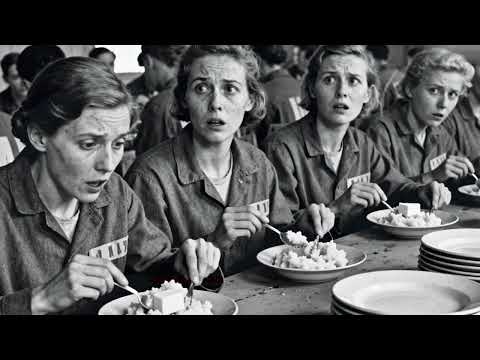
It began with butter. Real butter, creamy and golden, spread thick on mashed potatoes that steamed on metal trays in an American mess hall. For the 53 female German prisoners at Camp Carson, that single pat of butter would become the first crack in a wall of lies—and the beginning of a transformation no one could have predicted.
When camp officials gathered the women in May 1945 to announce their impending repatriation, they expected relief, perhaps even joy. Instead, 22 women stepped forward with an impossible request: they asked to stay in captivity rather than return to freedom in their homeland.
These weren’t hardened Nazi ideologues or fanatics. They were young women—radio operators, nurses, administrative personnel—who had served the Wehrmacht and been captured during the final chaotic months of the European war. What could possibly transform enemy prisoners into people who preferred American captivity to German freedom?
The answer lay not in grand political gestures, but in something far simpler and more profound. It began six months earlier, in November 1944, when the first transport of female German prisoners arrived at Camp Carson. The women stepped off the trucks carrying years of propaganda, deeply embedded beliefs about American cruelty, and an absolute certainty that they were about to experience the worst treatment imaginable.
Among them was 21-year-old Ottilie Bauer—called Tilly—a radio operator from Stuttgart who clutched a small leather diary containing the only remnants of her previous life. She had no idea that within hours, everything she believed about America would begin to crumble.
The mess hall was warm, heated against the November cold. Sergeant Theodore Jackson, a tall man with dark skin and gentle eyes, spooned portions onto her tray: mashed potatoes, green beans, roasted chicken. Then, as she watched in disbelief, he added a pat of butter to the top of her potatoes.
It had been three years since Tilly had seen real butter. Three years of ersatz spreads made from coal byproducts, of margarine so inferior it barely deserved the name. The last time she had tasted actual butter was at her grandmother’s house in 1942, before everything good disappeared from German tables.
Around her, the other women stared at their trays in silence. Some whispered in rapid German, their voices pitched high with confusion. A few were already eating, mechanically at first, then with increasing speed as if afraid the food might be taken away. Aloisia Becker, a 26-year-old signals operator, had tears streaming down her face.
Tilly finally lifted her fork. The butter was rich and creamy, the potatoes smooth and properly seasoned. The flavor was so intense after years of bland, inadequate food that it almost hurt. She closed her eyes and felt something break inside her chest—some carefully maintained wall between what she believed and what was real.
Over the following days, the women began to understand that the first meal had not been an aberration. Every meal at Camp Carson followed the same pattern of abundance: eggs with yellow yolks at breakfast, sandwiches with generous portions of meat and cheese at lunch, dinners that would have fed a German family for a week.
Corporal Francine Sullivan, one of only three female guards, watched the prisoners carefully. She had been briefed on German propaganda claims about American shortages, but seeing the women’s actual shock gave her a new perspective on just how thoroughly they had been deceived.
Tilly began lingering near the mess hall between meals, drawn by curiosity. Through the kitchen windows, she saw sacks of potatoes stacked along one wall—dozens of them. More potatoes than she had seen in one place since before the war. Crates of canned goods lined shelves from floor to ceiling. A large refrigeration unit held quantities of milk, butter, and fresh vegetables.
Sergeant Jackson noticed her watching and invited her inside. Through halting English and a translator, he explained the American military supply system. Food came from farms across the country, transported by a logistics network that had grown more efficient during the war. The abundance she saw was normal, expected—the baseline for feeding American soldiers and, by extension, prisoners in their custody.
The realization of how thoroughly they had been deceived created a complex emotional storm. By their second week, the women were no longer simply grateful for the food. They were struggling with shame, confusion, and growing anger at the system that had lied to them so completely.
Some tried to rationalize the contradiction. Perhaps this camp was unusual. Perhaps the Americans were feeding them well as a psychological operation. But this explanation grew harder to maintain as days became weeks and the food never diminished in quality or quantity.
Tilly wrestled with a different aspect of the shame. She had been hungry for so long that the relief of regular meals felt almost sinfully good. Her body responded with obvious gratitude—she slept better, felt stronger, noticed her hair becoming less brittle. But with each physical improvement came a wave of guilt. Was she betraying Germany by accepting American food?
The shame was compounded by the kindness with which the food was offered. If the Americans had been cruel, it would have been easier to maintain the narrative of American barbarism. But Sergeant Jackson served food with quiet dignity, never commenting on how quickly the women ate. Corporal Sullivan ensured that anyone still hungry could request additional portions without judgment.
One evening, Trudy tried to refuse seconds, her guilt overwhelming her hunger. Lois, sitting across from her, finally spoke what many were thinking. “We were lied to,” she said quietly in German. “Everything they told us about America was a lie. Refusing to eat won’t change that. It will only mean we suffer for no reason—just as we suffered in Germany for no reason.”
The words hung in the air, uncomfortable but undeniable. A truth that was becoming harder to ignore with each passing day.
By late November, the prisoners were permitted to write letters home, subject to military censorship. The announcement brought a mixture of relief and anxiety. Most of the women had not contacted their families since their capture—some for even longer. The prospect of finally communicating with loved ones should have been joyful, but instead it created a new dilemma that kept many awake at night, wrestling with impossible choices about truth and silence.
Tilly sat at a wooden table in the common room with a single sheet of paper before her, a pencil in her hand, and absolutely no idea what to write. How could she tell her mother and sister in Stuttgart about her life in captivity without mentioning the food? But if she did mention the food, how could she possibly make them understand without sounding insane or seeming to have been brainwashed by American propaganda?
She started several times, each attempt ending with the paper crumpled and discarded. “Dear Mutter,” she wrote, “I am safe and well treated. We receive adequate food.” But adequate was a lie. “Dear Mutter, I am safe. The Americans feed us butter and fresh meat daily.” But that sounded like mockery when she knew her family was surviving on rations that had been cut repeatedly.
Around the room, other women grappled with the same impossible task. Some chose to write brief, emotionless notes that revealed almost nothing. Others wrote longer letters that carefully avoided any mention of food or living conditions, focusing instead on questions about family members and requests for news from home.
Tilly finally settled on a compromise. She wrote a letter that was honest but vague, describing adequate treatment without specifics. But separately, in her leather diary, she began documenting everything in detail. She wrote about the butter, the fresh milk, the quantities of meat and vegetables. She described Sergeant Jackson’s kitchen and Corporal Sullivan’s kindness. She documented her own shame and confusion. Someday, she told herself, this record might matter.
Sergeant Jackson had been working as a military cook for three years, but the German women at Camp Carson were unlike any group he had previously served. He noticed things about them that others missed—subtle signs that spoke to someone who had personal experience with real hunger. The way they positioned themselves near the serving line long before meal times. The careful attention they paid to portion sizes. Their eyes tracking his serving spoon as if calculating exactly how much food they would receive.
One evening in early December, he watched as Tilda approached the serving line for the second time. Her movements were hesitant and uncertain. She had already finished her first serving but was clearly still hungry. Yet she approached with visible reluctance, as if expecting to be refused or punished for wanting more. Jackson spooned a full second portion onto her plate without comment, adding an extra pat of butter, and gestured for her to take additional bread if she wished. The look of surprise and gratitude on her face troubled him deeply.
He mentioned the incident to Corporal Sullivan during cleanup. “These women eat like people who’ve been starving for years, not months,” he observed. Sullivan nodded, sharing her own observations about the prisoners’ physical condition when they arrived. Most had been underweight, some dangerously so. Their hair had been dull and brittle. Their skin showed signs of vitamin deficiencies. The transformation over just a few weeks of adequate nutrition had been remarkable—but also revealing about the deprivation they had endured.
Jackson began making subtle changes to his meal preparations. He increased portion sizes slightly, knowing the women needed more calories to recover from extended malnutrition. He made sure there was always extra food available for anyone who wanted seconds or thirds. He began baking bread daily, knowing that fresh bread with butter seemed to affect the prisoners particularly deeply. The aroma of baking bread, he noticed, brought women to the mess hall windows even between meal times, drawn by a smell that apparently held powerful associations with better times in their lives.
His own childhood in Depression-era Mississippi informed his understanding. He remembered his mother’s creativity in feeding seven children on almost nothing. The way hunger had been a constant presence in their household during the worst years. He remembered the shame of being hungry—the way it diminished a person’s sense of dignity and worth. He recognized that same shame in the German women’s eyes, and he was determined that no one would feel ashamed about needing food while under his care.
Tilly began to understand that Sergeant Jackson’s generosity was intentional, not accidental. She observed how he served food, noting that he gave slightly larger portions to women who appeared particularly thin or weak. She saw how he positioned extra bread near the end of the serving line where women could take additional pieces without having to ask. Most tellingly, she noticed that he never showed surprise or judgment when prisoners returned for second or third servings, treating their hunger as completely normal and acceptable.
December arrived with heavy snow that transformed Camp Carson into a landscape both beautiful and alien to the German prisoners. Most had never experienced mountain winters, and the dramatic Colorado weather became another reminder of how far from home they truly were. But the approaching Christmas holiday created an atmosphere of complicated emotions throughout the compound. For many prisoners, this would be their first Christmas away from family, their first holiday celebrated in enemy captivity, and no one knew quite how to navigate the strange intersection of tradition, homesickness, and their current circumstances.
Corporal Sullivan proposed organizing a modest Christmas celebration for the prisoners, understanding that depression and homesickness could pose serious morale and health problems during the holidays. She cleared the idea with camp command, receiving permission to allow the women to create simple decorations and to organize an evening gathering on Christmas Eve. What she didn’t tell the prisoners immediately was that Sergeant Jackson had been planning something special for the Christmas meal—something that would prove to be another turning point in their understanding of American intentions.
The prisoners approached the holiday preparations with cautious interest. Tilly and several others volunteered to create decorations from available materials, cutting paper stars and chains from old newspapers and magazines. Herta organized a small group to practice German Christmas carols, thinking that music might help ease the homesickness that was becoming increasingly visible in the barracks. The activities provided welcome distraction from the uncertainty about their futures and the guilt many felt about being adequately fed while their families in Germany struggled.
Christmas Eve arrived cold and clear, the Colorado sky brilliant with stars visible in the mountain air. The mess hall had been transformed as much as circumstances allowed. The paper decorations hung from rafters, and candles borrowed from the camp chapel provided warm light. The women gathered nervously, unsure what to expect. Some wore their best remaining clothes, attempting to mark the occasion with whatever dignity they could muster given their limited resources.
Then Sergeant Jackson and his kitchen staff began bringing out the Christmas meal, and the prisoners fell into stunned silence.
The dinner exceeded anything they had experienced in weeks. Roasted turkey emerged on large platters. Sweet potatoes topped with marshmallows—a dish none of them had ever seen. Fresh rolls, still warm, piled in baskets. And for dessert, Sergeant Jackson had somehow managed pumpkin pie, explaining through Wilhelm Klein that this was a traditional American holiday dish.
Lois began crying quietly before the meal even began. Herta, who had maintained careful emotional control since their arrival, felt her composure crack at the sight of such abundance offered to enemy prisoners on the Americans’ own special day.
In the days following, conversations became more frequent and personal. The barrier of mutual suspicion had been weakened by generosity. One January afternoon, Herta sat with Corporal Sullivan, a letter from Nuremberg trembling in her hands. “My sister tells me they have no butter since 1942. Their Christmas dinner was turnip soup and a small piece of bread.” She looked up, eyes wet. “Why do you give us butter when my sister has none?”
Sullivan considered her answer carefully. “Because feeding people properly is the right thing to do, regardless of who they are. And because we have enough to share.”
Herta absorbed this, then asked the question haunting her since arrival. “Everything they told us about America was a lie, wasn’t it?” Sullivan nodded. “Yes. It was all lies.”
By February, the transformation was impossible to ignore. The women had gained weight, their complexions had improved, their energy had returned. Captain Morrison documented the changes with professional satisfaction—and troubled awareness of what they revealed. Trudy voiced what many were thinking: “We are healthier as prisoners than we were as free women serving our own country. What does that say about the government we served?”
Then came the letters that shattered them. Tilly’s sister wrote that their mother had given her own food to the children, growing weak and thin. Minna learned her brother had been killed. Lois discovered her younger sister had died of pneumonia complicated by malnutrition.
That evening, several women refused dinner entirely. Others ate mechanically, each bite tasting like ash. Tilly wrote in her diary with shaking hands: “I ate roasted chicken and mashed potatoes with butter while my mother starves herself to feed her grandchildren. We were told America was our enemy, but America feeds us while Germany starves its own people. Who then is the real enemy?”
Days later, Tilly approached Sergeant Jackson during kitchen cleanup. Through halting English, she asked why he fed them so well when their families starved. Did they not deserve to suffer as their families suffered?
Jackson gestured for her to sit. “I grew up poor. Real poor. Depression poverty where we didn’t know if we’d eat from one day to the next.” He described his mother’s miracles of creativity, feeding seven children on almost nothing. “She taught us that hungry people deserve to eat, regardless of who they were or why they were hungry. Hunger isn’t something people earn or deserve. It’s just suffering, and easing suffering when you can is what decent people do.”
Tilly felt tears welling. “But we are your enemies.”
Jackson shrugged. “You’re people who need food, and I have food to give. That’s all that matters in my kitchen.”
May 8th, 1945 arrived with Germany’s unconditional surrender. At Camp Carson, the announcement brought not celebration but profound uncertainty. What would happen to the 53 women who had spent six months learning truths that shattered their understanding of the world?
On May 15th, Colonel Patterson called a general assembly. Transportation would be arranged within three weeks. The women would be processed through displaced persons camps before returning to whatever remained of their homes.
Then Tilly stood, her legs shaking but her voice steady. “Colonel Patterson, may I speak for some of us? Some of us wish to ask if there might be alternatives to immediate repatriation.”
The words fell like stones into still water. Tilly pressed forward. “Many of us have no families to return to. Others have not heard from their families in years. We have learned things here that have changed how we understand the world. Going back means returning to starvation after months of adequate food, facing suspicion and shame for having been captured.”
Herta stood next. “Here we have found something we never expected. Dignity even as enemies. Kindness where we anticipated cruelty.”
Twenty-two women stood, creating a group within the assembly. The request was unprecedented—enemy prisoners asking to remain in captivity rather than return to freedom.
The War Department’s response took ten days. They would not prevent repatriation for any who wished to return. However, those who wished to remain could be reclassified as displaced persons rather than prisoners of war, allowing them to apply for sponsors and potentially immigration status.
After agonizing debate, nine women chose to seek new lives in America. Thirteen decided the uncertainty was too great and opted for repatriation. The remaining thirty-one had never wavered in their desire to return home.
Finding sponsors for the nine proved easier than expected. A Worcester family offered to sponsor Tilly. The local hospital arranged for Herta to continue her medical training. Other sponsors emerged from church groups and community organizations that saw the women’s integration as an opportunity to demonstrate American values of second chances.
The final day at Camp Carson arrived on June 20th. The thirty-one women choosing repatriation stood in formation, their military bearing softened. They carried letters from American soldiers, photographs, small gifts. More importantly, they carried a different understanding of what America represented—a truth they were determined to share with other Germans.
Twenty-five years later, in 1970, Tilly stood in a university lecture hall in Denver, Colorado. Now forty-six, an American citizen with grown children and a career as a State Department translator, she carried the same small leather diary she had clutched when she first arrived at Camp Carson.
She began by describing that first meal—the moment when she had seen real butter melting into mashed potatoes and felt the foundations of her worldview begin to crack. “The butter was just butter,” she told the audience, “but it represented something far larger. It was proof that everything we had been told about American deprivation was a lie. And if that was a lie, what else had we been lied to about? That single pat of butter started a process of questioning that eventually led me to understand that I had been serving a government built on deception.”
She held up the diary, its pages yellowed but preserved. “In these pages, I documented everything. The butter, the fresh milk, the kindness of Sergeant Jackson and Corporal Sullivan, my confusion, my shame, my gradual understanding that enemies could become friends.”
She paused, looking out at the young faces before her. “The remarkable thing about America is not that it is perfect—because it isn’t. The remarkable thing is that it gave me the freedom to discover truth, to change my mind, to become someone different than who I was trained to be. That freedom began with butter and mashed potatoes, with the simple act of feeding hungry people adequately, regardless of who they were or what they had done.”
What would you have chosen in Tilly’s place—return to a devastated homeland, or build a new life among former enemies?
Report this article
Select a reason for reporting:






