The spring of 1843 had barely begun to thaw the Texas frontier when a small party of white men set out from the settlements, their mission one of peace. At their side rode an eleven-year-old girl named Maria, her eyes red from weeping, her heart heavy with dread. She had been captured three years earlier, and in that time she had forgotten her native tongue, learned to love the people who raised her, and come to fear the very Indians she was now being returned to. “She cried bitterly and begged that she would not be carried away,” one witness later recalled. But orders were orders, and the commissioner of Indian affairs, Colonel J.C. Eldridge, had been commanded by President Sam Houston himself to return the captives and secure a treaty with the Comanche nation.
Maria was no ordinary captive. Unknown to her or to the white men who had cared for her, she was the daughter of the former head chief of the Comanches, a man who had died from wounds received at the Battle of Plum Creek in 1840. She was, in truth, a princess of her people—and her return was meant to be a gesture of goodwill, a bridge to peace. But the child knew none of this. All she knew was that she was being taken from the only home she could remember and delivered into the hands of strangers.
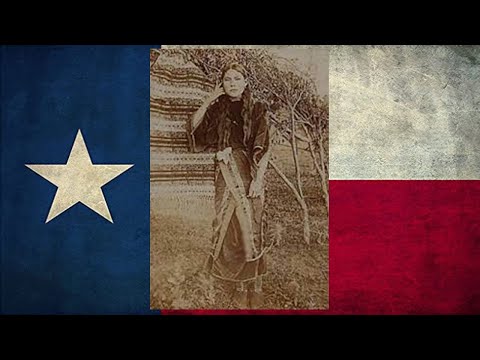
The journey across the endless prairies lasted four months. With Maria traveled another captive, a fourteen-year-old boy named Bill Hockley, who had been adopted by a white colonel and had quickly shed his civilized clothes for buckskin and moccasins. Unlike Maria, Bill had not forgotten his Comanche language, though he stubbornly refused to speak it. He kept his eyes on the ground and his thoughts to himself, even when an old woman offered him a precious roasting ear. “That ugly old woman is not mammy,” he muttered when she was out of sight, “but I will eat her roasting ear.” The party pressed on, guided by the whims of a child’s moods: when Maria was cheerful, they knew the Comanche camp was far; when she fell silent, they knew it was near.
At last they reached the village of Pahahuko, the head chief of all the Comanches. Maria’s arrival caused a sensation. The elders recognized her at once as the long-lost daughter of their fallen leader. “This is the child of our long-mourned chief,” the chief declared. “She is of our blood.” But the girl shrank from their embraces, unable to understand their words, terrified by their unfamiliar faces. The white men did their best to prepare her for the formal handover, dressing her in a flaming red calico dress, adorning her with brass beads and prairie flowers, painting her face with vermilion. She looked every inch a princess—but she felt like a lamb dressed for sacrifice.
On the day of the grand council, Colonel Eldridge stood before the chief, holding Maria’s hand. He spoke of peace and goodwill, of the great white father’s desire for friendship. Then he tried to place her hand in the chief’s. At that moment, the most distressing screams burst from Maria. She ran behind the colonel, clung to him with all the madness of despair, and begged him for God’s sake not to give her to those people. The council fell into a death-like silence. The Indians stood in stern stoicism; the white men were silent with emotion. Only the child’s cries pierced the bloom-scented air.
The chief spoke: “If the great white chief only sent her for us to see that she is fat and well taken care of, tell him I thank him—and she can go back.” It was an opportunity. General B. urged the colonel to save the child. But Eldridge’s sense of duty was iron. He replied that he had been ordered to give her up, and give her up he must. The chief, hearing this, said no more. He swung Maria roughly behind him into the arms of her grandmother, who bore her screaming from the council tent. The last sound the party heard as they left the camp was the wail of the poor desolate child.
Years later, General B. received a message from Maria. She had become the main interpreter of her nation, often meeting with white men in council. She sent her thanks and a few presents. She had fulfilled her destiny, becoming an instrument of good between two worlds. But the memory of that bright, desolate child and her prayers and tears when she was forced to leave her white friends remained fresh in the heart of at least one of the party—and would last him through life.
General B. never forgot the sound. He would wake in the night sometimes, hearing it again—that long, rising cry that had followed them out of the camp and across the darkening prairie. He had seen men die in battle, had heard the screams of wounded horses and the frantic shouts of soldiers. But a child’s wail of abandonment was a different thing altogether. It had a way of working into the bone.
What troubled him most, in the years that followed, was not the cruelty of the Comanches nor the stubbornness of Colonel Eldridge. It was the strange arithmetic of it all. The girl had been taken from her people by war, raised by her captors in kindness, and then returned—by treaty and by duty—to a world she no longer knew. Every hand that touched her life had meant well. Every step had been ordered by something larger than the child herself: the needs of the republic, the customs of the tribe, the cold logic of diplomacy.
And yet the result was a little girl screaming in a council tent, clawing at the coat of a man she barely knew, begging not to be left among her own blood.
He thought often of the grandmother, too. The old woman had said nothing during the council. She had simply stood there, her face like carved wood, while the child shrieked and the white men argued. When the chief swung Maria into her arms, she had taken her without a word and carried her out of the tent. What must it have been like, B. wondered, to hold your own granddaughter and feel her fight against you, feel her small hands pushing at your chest, hear her crying in a language you did not understand?
It was Bill Hockley who gave him the answer, years afterward. The two met by chance at a trading post on the Brazos, and Bill—now a grown man, broad-shouldered and quiet—sat with him a while over coffee. The boy had gone fully back to his people, as was expected, but he had never forgotten the white men who had raised him. He spoke of the camp, of the chief, of the old grandmother.
“She never stopped watching for the girl,” Bill said. “Every time a rider came in from the south, she would come out of her tent and look. Every time. For years.”
B. asked what had become of Maria in those first hard months. Bill shrugged. “She cried. She ran away twice. They brought her back both times. Then one day she stopped crying, and she started listening. That was all. She listened, and she learned, and she was clever—cleverer than any of them. By the time I left the camp she was already speaking for the old women when the traders came.”
He paused, turning his cup slowly in his hands. “The grandmother used to say the girl had two hearts in her chest. One for the white people, one for us. She said it was a hard thing to carry two hearts, but that it made her strong.”
B. sat with that a long while. He thought of the red calico dress, the brass beads, the vermilion on the child’s cheeks. He thought of the way she had clung to Eldridge’s hand, and the way—if Bill was to be believed—she had eventually stopped crying and started listening. Two hearts. It seemed to him a fair description of the whole sorry business: the white men who had meant well and done harm, the Indians who had meant well and done harm, and the child in the middle who had somehow survived them all.
He asked Bill if he had ever seen her again, after that.
Bill set down his cup. “Once,” he said. “At a council on the San Saba. She was interpreting for the chief, standing up in front of everyone, speaking both languages as easy as breathing. She looked at me across the fire and she smiled.” He shook his head slowly. “I don’t know what that smile meant. Maybe she was glad to see me. Maybe she was remembering the roasting ear.”
B. laughed at that, and Bill laughed too, and for a moment the two of them were young again, riding across the spring prairie with a weeping child between them and the whole wide republic waiting at the end of the trail.
But the laughter faded, as laughter does when the memory behind it is not a happy one. And B. found himself wondering, as he would wonder for the rest of his life, whether Maria’s two hearts had ever learned to beat as one—or whether she carried them, even then, like two stones in the same pocket, knocking against each other with every step she took.
Bill finished his coffee and stood to go. At the door he turned back, as if something had just occurred to him. “You know what the grandmother told me, near the end? She said the girl’s two hearts were not a curse. She said the Great Spirit gives two hearts only to those who must speak for two peoples.” He pulled his hat down low. “Maybe that was the whole point of it. Maybe that was why she was taken, and why she was given back.”
B. sat alone at the trading post long after Bill had gone, watching the light fade through the dusty window. He thought of the council tent, the screaming child, the chief’s stern and patient face. He thought of the grandmother’s carved-wood silence, holding her granddaughter while the girl fought her. None of it had been clean. None of it had been just. And yet the child had grown, and spoken, and stood between two worlds that could not speak to one another without her.
He rose at last and walked out into the evening. The prairie stretched away, bloom-scented and endless, the same prairie that had carried that long-ago wail across the dark. He did not hear it anymore. What he heard instead, if he listened, was a woman’s voice—steady, patient, translating one people to another, word by careful word.
Perhaps that was the answer to the arithmetic after all. Perhaps the two stones in the same pocket had not knocked against each other forever. Perhaps, in time, they had worn each other smooth.
But B. never knew for certain. He carried the question with him to the end, as we all carry the questions that have no clean answer. And now it passes to you: was Maria’s return a cruelty done to a child, or a destiny she was born to fulfill—and can the two ever truly be separated? Tell us what you think in the comments below.
Report this article
Select a reason for reporting:






