February 19, 1942. The skies over Darwin, Australia, filled with the drone of aircraft. Locals, mistaking them for American planes returning from an exercise, went about their morning routines. The air raid sirens wailed, but it was too late. Within moments, explosions tore through the harbor, sinking ships and shattering the quiet town. This was the first time war had struck the Australian mainland, and it would change the nation forever.
The attack was led by Commander Mitsuo Fuchida, the same man who had planned Pearl Harbor just months earlier. In just 40 minutes, eight ships were sunk, 11 damaged, and at least 243 people killed. The USS Peary took five direct hits, sinking with over 90 lives lost. Hospitals, airfields, and barracks were destroyed as terrified residents ran for their lives. A second wave of 54 bombers arrived two hours later, targeting the Royal Australian Air Force Base. Leading Aircraftman Stanley Hawker watched as planes were blown apart, and Wing Commander Archibald Tindal fought bravely until he was killed by a cannon shell. The base would later be named after him.
But why did Japan attack Australia in the first place? To answer that, we need to go back to the 1930s. Japan, inspired by Western imperialism, sought to establish itself as the dominant power in East Asia. By the late 19th century, it had modernized rapidly during the Meiji Restoration and aimed to compete with Western powers by acquiring colonies and expanding its influence. China, with its vast resources and strategic position, was seen as a key area for expansion. The ongoing civil strife between nationalists and communists made China vulnerable to external invasion, which Japan exploited. Beginning with the invasion of Manchuria in 1931 and escalating to full-scale war in 1937, Japan expanded its reach. By 1941, it had moved into Indochina, but the United States responded with crippling economic sanctions, including a severe oil embargo. The US supplied about 80% of Japan’s oil, and with supplies dwindling, Japan needed a new plan.
Japan was pushed toward seeking alternative sources of oil, leading to the decision to strike southward. But one major threat stood in the way: the US Pacific Fleet. On December 7, 1941, Japan’s surprise attack on Pearl Harbor pulled the United States into the war. In just 10 weeks, Japan swept through Hong Kong, Malaya, Singapore, and the Australian territory of New Britain. It was a rapid advance meant to secure resources and strategic positions before the Allies could coordinate a response. This leads us to Australia, positioned at the southernmost edge of the Asia-Pacific theater. From the Japanese perspective, Australia posed a strategic threat due to its close alliance with the United States. Japan aimed to secure its southern flank and maintain control over the South Pacific, including key areas like the Solomon Islands and as far east as the Marshall Islands. Disrupting the Australia-US alliance and neutralizing Australia’s military infrastructure were crucial steps in preventing interference with Japan’s broader plans for dominance.
Australia’s journey into the Pacific War was decided for them. On December 9, 1941, just two days after Pearl Harbor, Australia declared war on Japan. Suddenly, this peaceful continent found itself in the middle of a struggle for control in the Pacific. Thousands of American troops began arriving on Australian soil, and the land that had once seemed so far from the action became an important center for the Allied forces’ Pacific strategy. Australia was becoming what the Japanese feared most: a stronghold for the Allies and a staging area for future counterstrikes. Japan knew it had to act fast. As Allied support arrived quickly, Japan turned its focus to the northern coast of Australia, specifically to Darwin—a town that up until then was largely unknown to the outside world.
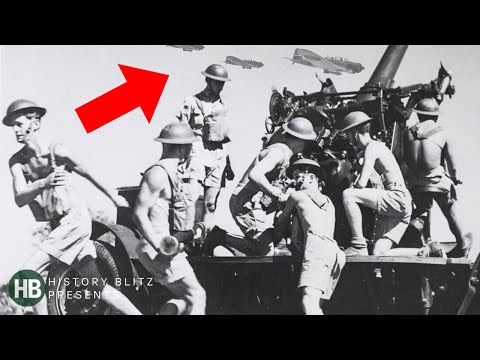
To the Japanese, Darwin wasn’t just a distant base; it was an important connection in the Allied route for supplies, a preparation area for troops, aircraft, and military supplies moving north into the Pacific. If Japan could strike a blow here, it could interrupt the Allies’ plans before they fully developed. So on February 19, 1942, Darwin woke up to the sound of incoming aircraft—not friendly planes, but a fleet of 188 Japanese bombers and fighters sweeping down from the sky. They struck with brutal precision. The attack was led by the same commander who had planned Pearl Harbor, and the similarities were frightening. Explosions shook the harbor as bombs fell on ships, docks, and military installations. The USS Peary took five direct hits and sank with the loss of over 90 lives. The scene was chaos: ships on fire, smoke billowing across the water, and explosions echoing through the town. People hurried for cover as the reality of war struck the Australian mainland for the first time.
This was Darwin’s own Pearl Harbor. In just 40 minutes, eight ships had been sunk, 11 more damaged, and critical infrastructure lay in ruins. Hundreds were killed and many more wounded. The Japanese weren’t finished. A second wave of bombers came roaring in just hours later, targeting the airfields and military bases around Darwin. More buildings were destroyed, and the once-busy harbor was left a shattered reminder of the intensity of modern warfare.
This was only the beginning. Between February 1942 and November 1943, Japan launched an astonishing 97 air attacks on various towns and military bases on the Australian mainland, including Darwin, Port Hedland, Derby, Katherine, Townsville, Mossman, and Horn Island. The raids came like hammer blows, aimed at keeping the Australian forces off balance and ensuring the Allies couldn’t use the north as a starting point for their counterattacks. In Broome, a remote town on Australia’s northwest coast, a Japanese raid in March 1942 targeted flying boats loaded with refugees from the Dutch East Indies. The attack left many of those boats destroyed, scattered across the shallow waters. These raids weren’t about conquest; they were meant to cause disorder, to terrorize, and to keep Australia and its allies from gaining any footing in the region.
On May 31, 1942, three Japanese submarines sneaked into Sydney Harbor, bringing the war to Australia’s largest city for the first time. The intended target was the USS Chicago, a US heavy cruiser, but the torpedoes missed and struck the harbor bottom near HMAS Kuttabul, an old ferry being used as a naval barracks. The explosion resulted in the sinking of Kuttabul, killing 21 sailors. Further submarine attacks in June 1942 saw shots fired near Sydney and Newcastle. These incidents heightened fears of invasion. Despite the destruction, despite the constant attacks, the full-scale invasion of Australia never came. Why?
The reality of a long-term campaign against Australia was more challenging for Japan than what they could manage. The logistics alone were a nightmare. Japan had already stretched its supply lines thin across the vast reaches of its new empire, and Australia, with its difficult environment, great distances, and a growing Allied presence, proved to be a much harder target than their earlier successes. It would require a larger commitment of ships and men than they had available at that time. Therefore, unbeknownst to Australia and its allies, Japan had placed full-scale invasion plans of Australia onto the back burner for the time being.
There was also the tide of the war itself. In May 1942, the Battle of the Coral Sea, just northeast of Australia, marked a critical turning point. Allied forces, including American and Australian naval units, managed to stop a major Japanese advance for the first time in the war. Just a month later, Japan suffered a terrible loss at the Battle of Midway, losing four of its valuable aircraft carriers. These battles indicated a shift in progress as the once-unstoppable Japanese advance began to weaken. With increasing losses and stretched resources, Japan had to adjust its goals. The plan to strike south and dominate Australia became impossible to maintain. The war was turning, and Japan had more urgent problems than a full-scale attack on the Australian mainland. The Allied forces, regrouping and rearming, began to press back island by island, inch by inch, pushing the Japanese back across the Pacific.
And so Australia was saved from the worst of what could have been, but the attacks they suffered were still devastating—not just physically but psychologically. The raids on Darwin and other towns along the northern coast left a mark on the Australian mind, a reminder that even the most remote corners of the world were not safe from the reach of war. Australia’s sense of isolation was shattered, replaced by a new resolve to stand side by side with their allies in the fight against oppression. Japan’s attack on Australia wasn’t about conquest; it was about control. It was about securing a region, denying the Allies a position, and expanding a vision of an empire that stretched across the Pacific. But ultimately, that vision was flawed. Japan underestimated the resilience of its enemies, the willpower of Australians, and the logistical nightmare of sustaining such an enormous expansion.
The bombing of Darwin, known as Australia’s Pearl Harbor, marked a turning point for the nation. It brought the war home in a way that Australians had never experienced before. It broke the false belief of being untouchable and started a new vision to contribute to the war effort. Australian soldiers, sailors, and airmen would go on to fight across the Pacific, from New Guinea to Borneo, as part of the Allied push to roll back the Japanese advance. Japan’s decision to attack Australia was borne out of a complex mix of ambition, hopelessness, and opportunity. They saw a chance to secure resources, neutralize a threat, and assert dominance. In doing so, they brought the war to Australian soil, turning once-quiet towns into battlefields and making clear that no corner of the world was beyond the reach of worldwide war.
But the story doesn’t end with the bombs dropping on Darwin. It continues in the courage of those who stayed to rebuild, in the resilience of a nation that rose to the challenge, and in the alliances that were formed in the fires of war. It is a story of ambition, of conflict, and of the unquestionable strength of the human spirit in the face of hardship. Australia may have been a target, but it was never a victim. The bombing of Darwin was a warning—a call that was answered with determination. Japan’s attempt to intimidate the Australian people into submission failed. Instead, it started a fierce spirit of resistance and unity that would carry Australia through the darkest days of World War II and beyond. The traces of those attacks are still felt today, not just in the history books but in the memories passed down, the memorials that stand in honor, and the stories told of courage and resilience. The attacks on Australia show how the world was pulled into war by greed and power, but they also highlight the strength and bravery of the people who helped end the conflict. The question of why Japan attacked Australia is not simply answered by strategy or resource needs; it is a story of human ambition, fear, and resilience set against the vast blue expanse of the Pacific. And in that story, Australia stood as proof of the lasting will to fight for freedom.
Today, the rusted hull of the USS Peary still rests in Darwin Harbour, a silent witness to that February morning. Each year on February 19, sirens sound across the city—not in warning, but in remembrance. Veterans, families, and schoolchildren gather at the Cenotaph as the last survivors lay wreaths for the 243 who never came home.
Darwin rebuilt, but it never forgot. The harbour that once burned now hums with trade, and the airfields that were cratered are busy with commercial flights. Yet beneath the ordinary rhythm of daily life, the memory endures. “We will remember them,” the crowd murmurs, and the words carry the weight of a nation forged in fire.
So the story ends where it began—with ordinary people on an ordinary morning, forever changed by the sound of aircraft overhead. But what if those sirens had sounded just minutes earlier? Would Darwin’s story have unfolded differently?
What do you think—was the bombing of Darwin a turning point Australia needed, or a tragedy that should never have happened? Share your thoughts below.
Report this article
Select a reason for reporting:






