The grainy photograph trembled in her hand, but the truth it held was unmistakable. There, in the cold light of day, a Russian fighter jet screamed across the sky—and slung beneath its wing, a missile. This wasn’t a drill. This wasn’t a rumor. This was hard evidence.
For months, the world had watched and waited, parsing vague statements and denials. But now, the proof was irrefutable. A series of images, smuggled out at great risk, showed what many had feared: Russian jets, armed and ready.
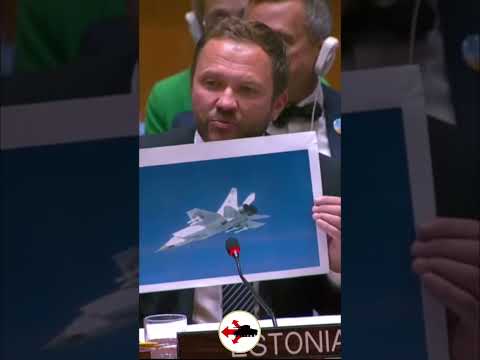
Each photo was a damning indictment. The sleek lines of the aircraft were unmistakable, and the payload they carried was even more so. “There can be no doubt,” a defense analyst whispered, his voice tight with concern. “These jets are carrying missiles.”
The implications were staggering. In a region already on edge, this revelation threatened to tip the balance of power. Governments scrambled to respond, while military strategists pored over the images, searching for any detail that might reveal intent.
But the evidence was more than just photos. There were flight logs, intercepted communications, and eyewitness accounts—all pointing to a coordinated deployment. “It’s not just one jet,” another source confided. “It’s a pattern. They’re preparing for something.”
As night fell, the images flickered on screens across the world, sparking heated debates in capitals and living rooms alike. The question on everyone’s mind: what happens next?
In a small office in Washington, a team of analysts worked late into the night, cross-referencing the evidence. They knew that this was just the beginning. The jets were real. The missiles were real. And the story was far from over.
The analyst closest to the screen leaned in, magnifying a detail that made her breath catch. “Look at the tail numbers,” she said, tapping the glass. “These aren’t from the same squadron. We’re seeing at least three different units converging.”
A hush fell over the room. If the deployment was coordinated across multiple squadrons, it wasn’t a show of force. It was the architecture of an operation.
Across the Atlantic, the reaction was swift and sharp. Emergency meetings were convened, and ambassadors were summoned. “This crosses a line we warned them about,” a senior official declared, his jaw tight. “The world is watching.”
But the response from Moscow was colder than expected—a terse statement dismissing the images as “fabricated provocation.” No explanation, no denial of the hardware itself. Just silence where the facts should have been.
That silence spoke volumes. In the intelligence community, it was read as confirmation. “They’re not denying the jets,” a retired general noted on a late-night broadcast. “They’re denying the cameras. That tells you everything.”
Meanwhile, the source who had smuggled the photographs was already on the move, changing safe houses by the hour. The risk had multiplied the moment the images aired. A single phone call could end everything.
Back in the operations room, a new piece of evidence arrived—a fragment of intercepted audio, crackling with static. Analysts crowded around the speakers, straining to catch the words buried beneath the noise.
Then, clear as a bell, a voice cut through: a set of coordinates, followed by a single phrase in Russian. The room went still.
“Those coordinates,” the lead analyst said, tracing the map with her finger, “they’re not in disputed territory. They’re deep inside allied airspace.” The realization landed like a hammer. This wasn’t posturing on a distant border—it was a spear aimed at the heart of the alliance.
Within the hour, the fragment had been scrubbed, replayed, and verified by three separate stations. The phrase in Russian translated, roughly, to a time and a call sign. A rendezvous. “They’re not just flying patrols,” the analyst continued. “They’re rehearsing a strike package. Fighters, escorts, the works.”
The room erupted into controlled chaos. Phones were lifted, secure lines opened, and the first warnings began to ripple outward through the chain of command.
By dawn, the diplomatic channels were ablaze. A hastily arranged call between foreign ministers ended without agreement—only a frosty promise of “further consultations.” In the corridors of power, that phrase had a single meaning: prepare for the worst.
On the streets, the public was only beginning to grasp the scale of what the photographs revealed. Newspapers splashed the grainy images across their front pages, and the same question echoed from every corner: if the jets were real, what else was being hidden?
In the operations room, the team had moved on to a new discovery. One of the photographs, dismissed earlier as redundant, contained a detail no one had noticed. A faint reflection in the canopy of the lead jet—a second aircraft, smaller, trailing behind.
“That’s not a fighter,” the analyst said, her voice dropping. “That’s a drone. They’re flying armed drones alongside the jets.”
The implication was chilling. A manned fighter could be reasoned with, tracked, even deterred. But a swarm of armed drones changed the calculus entirely. The deployment was no longer just a show of strength—it was a demonstration of a new kind of warfare, one the alliance had no ready answer for.
Before anyone could respond, the door to the operations room swung open. A junior officer stood there, pale-faced, holding a single sheet of paper. “Sir,” he said, “we’ve lost contact with the observation post near the coordinates. No signal. No response.”
The silence that followed was heavier than any words. The lead analyst looked back at the screen, at the jets frozen mid-flight, and understood that the story had just crossed a threshold from which there was no return.
The lead analyst stared at the blank monitor where the observation post’s signal had once pulsed. “Get me the last transmission,” she ordered, her voice steady despite the tremor in her hands. The audio crackled to life—a burst of static, then a voice, calm and clinical, reading off coordinates before cutting to silence.
It wasn’t panic. It wasn’t chaos. It was a professional signing off mid-sentence. “They didn’t abandon the post,” she said quietly. “They were taken.”
The room absorbed the words like a physical blow. A NATO observation post, deep inside allied territory, had gone dark—and the only evidence left behind was a recording of men who knew they were about to disappear.
Within minutes, the first satellite tasked to the coordinates returned its images. The team crowded around the screen, scanning the familiar terrain—the ridge, the tree line, the small concrete structure. Everything was there. Except the post itself.
“It’s gone,” someone whispered. “The whole structure—flattened.” A crater now marked the spot where the observation post had stood, its edges too precise, too clean. This wasn’t an accident.
The lead analyst zoomed in on the surrounding forest, her eyes hunting for any sign of movement. Then she saw it—a single set of tire tracks, leading east. “They took prisoners,” she said. “And they’re moving them toward the border.”
The order came down from the highest level: intercept. A rapid-response team was scrambled, but the clock was already against them. Every minute the captives were moved deeper into hostile territory made rescue harder—and the risk of escalation greater.
In the corridors of power, the debate turned bitter. Some argued for restraint, for diplomacy, for one last chance to pull back from the brink. Others pointed to the photographs, the drones, the flattened post. “Restraint is what got us here,” one official snapped. “They’re testing our resolve. If we blink now, they’ll take everything.”
But the lead analyst wasn’t listening to the debate. She was staring at the tire tracks, at the direction they were heading, and at a small detail no one else had noticed—a second set of tracks, fainter, circling back. “Someone got away,” she said. “One of ours is still out there.”
A new signal appeared on the screen—a distress beacon, weak but steady, pulsing from a ravine three kilometers from the crater. The rapid-response team adjusted course, racing against the dawn.
In the operations room, the team watched the beacon flicker, each pulse a heartbeat they couldn’t afford to lose. “Hold on,” the lead analyst murmured, as if the survivor could hear her. “Just hold on.”
The beacon blinked once more, then steadied. And in that small, stubborn signal, the story found its final question—not whether the evidence was real, but whether the world would act before the next post went dark.
What would you do if you were in that operations room, watching the beacon flicker—wait for orders, or move before it’s too late?
Report this article
Select a reason for reporting:






