December 19, 1944. A cold stone barracks outside Verdun. Sixteen officers sit in stunned silence as General Dwight Eisenhower asks the question that will decide the fate of thousands: Who can rescue the surrounded Americans at Bastogne?
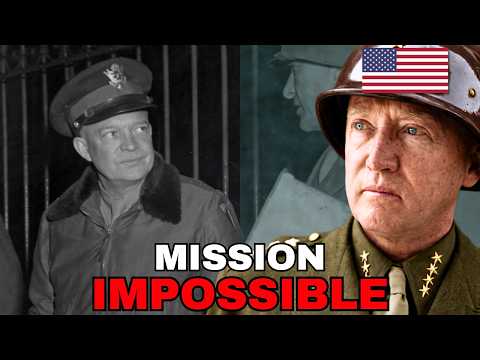
The room laughs when George S. Patton answers. Not politely. Not with hope. But with disbelief. His Third Army is 100 miles away, facing east, mid-attack toward Germany’s Saar region. Turning them 90 degrees in 48 hours? Impossible.
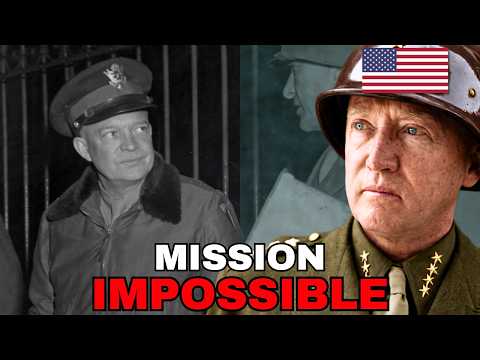
But Patton isn’t joking. He’s already been preparing for this moment for a week. What the room doesn’t know is that his intelligence chief, Colonel Oscar Koch, saw the German buildup coming before anyone else. And Patton listened.
“We’ll be in a position to meet whatever happens,” Patton had said days earlier. It wasn’t bravado. It was homework.
While the other generals laugh, Patton adjusts his offer: December 22nd with three divisions. Eisenhower, skeptical, calls it fatuous. But Patton insists. And he delivers.
What follows is six days of brutal movement. Trucks slide on ice. Convoys get buried in drifts. Aircraft are grounded. But Patton doesn’t stop. He leaves Verdun and never returns to his headquarters, spending the next six days on the road, pushing his men forward by phone and by presence.
On December 22nd, exactly as promised, Third Army attacks north. Four days later, they reach the men they’re racing to save. But who are they saving? The 101st Airborne, who, when demanded to surrender, replied with a single word: “Nuts.”
Now, the spearhead has a face. Captain Charles Trover is killed by a sniper. His replacement: 32-year-old Lieutenant Charles Boggess. On December 26th, Boggess leads C Company’s nine remaining tanks toward Bastogne. Lieutenant Colonel Creighton Abrams briefs him with four words: “Get to those men.”
At 4:15 PM, Boggess’s tank, Cobra King, leads the column out. They hit a pillbox. Gunner Corporal Milton Dickerman fires 21 rounds in minutes. The column loses four Shermans pushing through Assenois. Germans detonate mines behind them, sealing the gap. The single lane they’ve opened is now the only route in or out.
Near an old Belgian pillbox, Dickerman silences a German position with three rounds. In the fading light, Boggess spots movement and calls out, “Come on out. This is the Fourth Armored.” A soldier breaks from a foxhole. Lieutenant Webster of the 326th Airborne Engineers. He’s glad to see them.
At 5:10 PM, Abrams shakes hands with Brigadier General Anthony McAuliffe. The siege is over. The cost: nearly 1,000 men killed and wounded from the Fourth Armored alone.
But here’s the name you need to hold on to: Oscar Koch. Ten days before Verdun, he told Patton the Germans were coming. Patton’s response wasn’t alarm—it was preparation. Three complete plans were ready, each triggered by a single code word: “Play ball.”
That’s the real shape of the 48-hour promise. Not bravado. Homework finished a week early. And the man who made it possible? A name historians have to go looking for.
Charles Boggess later said, “I believe it is appointed to each man to have a few minutes of glory in his life. Mine lasted 4 miles and 25 minutes.” He died the following year.
Was Patton’s promise genius? Or was it a general cashing in on a colonel’s homework? The answer lies in the details—and in the men who paid the price.
The corridor Boggess cut open on December 26th did more than end a siege. It gave the 101st Airborne a lifeline, and it gave the Germans a problem they couldn’t solve. The same day Abrams shook McAuliffe’s hand, German commanders were already regrouping, trying to figure out how an entire American army had appeared out of nowhere.
They had a name for Patton’s speed. They called it reckless. But reckless doesn’t move three divisions across icy secondary roads in four days. Reckless doesn’t keep a corridor open while the enemy blows mines behind you. What the Germans were actually facing was an army that had rehearsed this pivot before the first shot was fired.
By December 27th, the corridor was widening. More tanks, more infantry, more supplies poured through the narrow lane Boggess had carved. The 101st, still holding Bastogne, finally had room to breathe. And the Germans, who had gambled everything on speed, found themselves out of time.
But the story doesn’t end with the relief of Bastogne. It ends with a question about who gets remembered. Patton’s name is in the history books. Koch’s isn’t. And yet, without Koch’s briefing on December 9th, there would have been no plans to execute, no code word to whisper, no 48-hour promise to keep.
Koch wasn’t a fortune teller. He was a professional. He read the intelligence, he trusted his analysts, and he told his commander the truth even when it contradicted the prevailing wisdom. That’s not glamorous. It’s not the stuff of legend. But it’s what made the legend possible.
Patton understood this. He called Koch the best intelligence officer in any American command. And then he went out and proved it by doing exactly what Koch said the Germans would force them to do.
So when you hear the story of the 48-hour pivot, remember the laughter in that cold stone barracks. Remember the doubt. And then remember that the man who made it all work was already a week ahead of everyone else in the room.
The Ardennes campaign would grind on for another three weeks. The bulge would close on January 16th. But the moment Bastogne stopped being a siege and became a salient the Germans couldn’t afford to hold—that moment belonged to Boggess, to Abrams, to the men of the Fourth Armored who paid in blood for every mile.
And it belonged to Oscar Koch, who saw it coming and made sure his general was ready.
What happened inside Bastogne after the corridor opened is its own story. The 101st Airborne had held for six days on almost no sleep, no resupply, and no guarantee anyone was coming. Now the trucks could roll. Ammunition, blankets, medical supplies, and food came through the narrow lane Boggess had carved, and the wounded went out the same way.
But a corridor is a fragile thing. The Germans knew exactly what it was worth. For the next several days, they threw everything they had at keeping that lane closed, or at least making it too costly to use.
Artillery fell on the road day and night. The same men who had punched through on the 26th now found themselves fighting to hold the shoulders of the gap, clearing woods, repelling counterattacks, and praying the weather stayed bad enough to keep German aircraft grounded.
It was during those days that the cost of the promise became fully visible. The Fourth Armored Division’s casualty lists grew longer. The 37th Tank Battalion, the unit that had led the charge, kept losing men in the woods and fields around Assenois. The corridor held, but it held because soldiers who had already done the impossible kept doing it.
Meanwhile, Patton was already looking past Bastogne. He wanted to keep the pressure on, to turn the relief into a counteroffensive that would push the Germans back toward the Siegfried Line. But Eisenhower and the higher command had other priorities. The Bulge had to be reduced first, and that meant more fighting in more places.
By early January, the weather finally broke. The skies cleared, Allied aircraft returned, and the Germans, who had gambled on speed and bad weather, found themselves on the defensive. The bulge began to shrink. On January 16th, the last German forces withdrew from the western tip of the salient, and the battle that had started with a surprise in the Ardennes forest was officially over.
But the questions remained. What had gone wrong with Allied intelligence? How had an entire German offensive been missed? And why did it take a colonel named Oscar Koch to see what the rest of the Western Front had missed?
Those questions were asked in the months after the war, and the answers were uncomfortable. The intelligence failure was real, and it had many causes: overconfidence, faulty assumptions, and a belief that the Germans were finished. Koch’s warning had been one of the few voices that cut through the noise, and it had been heard because Patton was willing to listen.
That willingness, more than any single decision, is what made the 48-hour pivot possible. Patton didn’t invent the plan. He didn’t personally drive the trucks or fire the guns. What he did was trust a subordinate who had done his job, and then act on that trust before anyone else was willing to.
“We’ll be in a position to meet whatever happens.” Those words, spoken days before the attack, were not a prediction. They were a promise, backed by preparation.
And when the moment came, the army was ready. Not because of luck. Not because of genius. Because someone had done the homework, and someone else had listened.
The corridor held, but the men who held it paid in ways that don’t make the history books. For the Fourth Armored Division, the relief of Bastogne cost nearly 1,000 killed and wounded in less than a week. The 37th Tank Battalion alone lost five dead, 22 wounded, and five missing. The 53rd Armored Infantry lost 30 dead and 180 wounded. Every one of those names was the price of a promise made in a cold stone barracks.
Oscar Koch never sought the spotlight. He went back to his maps and his analysts, doing the quiet work that had already saved thousands of lives. Patton got the legend. Koch got a line in a diary. But the men in Bastogne got something more: a corridor, a lifeline, and a future.
Charles Boggess lived to see the world remember the general, not the colonel. He died in 1985, a year after telling a reporter that his glory lasted four miles and 25 minutes. Creighton Abrams went on to command American forces in Vietnam and become Army Chief of Staff. He died in 1974, six years before the Army named its next main battle tank after him.
The bulge closed on January 16th, 1945. But the moment Bastogne stopped being a siege and became a salient the Germans couldn’t hold—that moment belonged to Boggess, to Abrams, to the men of the Fourth Armored who paid in blood for every mile. And it belonged to Oscar Koch, who saw it coming and made sure his general was ready.
So when you hear the story of the 48-hour pivot, remember the laughter in that cold stone barracks. Remember the doubt. And then remember the man who was already a week ahead of everyone else in the room. Was Patton’s promise genius, or was it a general cashing in on a colonel’s homework? Tell me what you think in the comments.
Report this article
Select a reason for reporting:






