The camera shutter clicks, freezing a moment in time: a woman with a steely gaze, a revolver on her hip, standing amidst the dust and danger of a frontier town. This is not a scene from a Hollywood Western, but a glimpse into the real lives of the women who tamed the Wild West. From notorious outlaws to pioneering doctors, their stories have been overshadowed by legend—until now.
In the annals of the Old West, countless women defied convention, carving out lives of independence and adventure. Names like Calamity Jane, Annie Oakley, and Belle Starr echo through history, but behind the myths are flesh-and-blood women whose courage and resilience shaped the American frontier. Their photographs, captured in stark black and white, offer a window into their world—a world of hardship, opportunity, and relentless determination.
Take Mattie Blaylock, a woman whose life was intertwined with the infamous Wyatt Earp. Her story is one of love, betrayal, and tragedy, a far cry from the glamorized tales of the Wild West. Then there’s Lola Montez, the Irish actress and dancer whose fiery spirit and scandalous affairs made her a legend on two continents. And Julia Bulette, the beloved madam of Virginia City, whose murder shocked the nation and exposed the dangerous underbelly of frontier society.
But the West was not just a stage for outlaws and entertainers. It was also home to women like Dr. Susan Anderson, known as ‘Doc Susie,’ who braved the Colorado wilderness to tend to miners and their families, often traveling miles on horseback through blizzards to reach her patients. “I’ll go anywhere I’m needed,” she once said, embodying the selflessness and grit of frontier women.
And who could forget Mary Ellen Pleasant, the African American entrepreneur and civil rights activist who used her wealth and influence to fight for equality in a time when the color of one’s skin could mean life or death. Her story, like so many others, is a testament to the indomitable spirit of women who refused to be confined by society’s expectations.
As the camera pans across the dusty streets of Deadwood and the saloons of Dodge City, we see women from all walks of life: cowgirls, entrepreneurs, activists, and outlaws. Each photograph tells a story of survival and triumph. “The West was built on the backs of women as much as men,” historian Dr. Eleanor Gates once remarked. And indeed, these women were not merely passive observers; they were active participants in shaping the destiny of a nation.
Yet, for all their contributions, their stories have often been relegated to footnotes. This collection of over 100 photographs aims to bring these women back into the spotlight, to honor their legacy and inspire future generations. From the brothels of Alaska to the ranches of Texas, their faces stare out at us, challenging us to remember their names and their deeds.
But the journey into the past is not without its mysteries. Who was the mysterious ‘Big-Nose Kate,’ and what secrets did she carry? What drove Pearl de Vere, the ‘soiled dove’ of Cripple Creek, to end her life in a dramatic fashion? And what of the countless unnamed women whose stories are lost to time? Their photographs remain, silent witnesses to lives lived on the edge.
As we delve deeper into this visual history, we begin to understand that the Old West was not just a place of violence and lawlessness, but also a place of unexpected freedom for women. Here, they could own land, run businesses, and even vote—decades before the rest of the country caught up. “The frontier was a great leveler,” wrote suffragist Abigail Scott Duniway. “It gave women a chance to prove their worth.”
Yet, the freedom came at a cost. The West was a harsh and unforgiving land, and women had to be tough to survive. They faced loneliness, danger, and the constant threat of disease and childbirth. But they also found sisterhood and solidarity, forming bonds that transcended class and background. From the mining camps of Colorado to the cattle towns of Kansas, women supported each other, building communities and forging a new society.
This is their story—a story of courage, resilience, and the unyielding spirit of the women who helped shape the American West. As we look at these photographs, we are reminded that history is not just about the famous and the powerful, but also about the ordinary people who did extraordinary things. Their legacy lives on, not just in the annals of history, but in the hearts of those who continue to be inspired by their example.
Among the faces in this collection, one portrait stands apart—a young woman in a plain cotton dress, her hair pulled back severely, her eyes holding a calm that belies the chaos swirling around her. This is Mary Fields, better known as ‘Stagecoach Mary,’ the first African American woman to drive a mail coach in the United States. Born into slavery, she later found her way to Montana, where she became a legend for her fearless runs through wolf-infested territory, her shotgun always within reach and her cigar never far from her lips.
“She could whip any man in a fistfight and out-drink them too,” one contemporary recalled, though her generosity to the nuns of St. Peter’s Mission was equally legendary. Fields represents a truth often obscured by the romanticized Western myth: that Black women were present, powerful, and pivotal in the frontier’s story, their contributions buried beneath layers of prejudice and omission.
Nearby, another photograph captures Cathay Williams, who enlisted in the U.S. Army under the name William Cathay, becoming the only documented African American woman to serve as a Buffalo Soldier. For two years she disguised her gender, enduring the brutal conditions of military life before her secret was discovered and she was honorably discharged. Her pension claim, denied for decades, stands as a stark reminder of how the contributions of women of color were systematically erased from the record.
The collection also reveals the complex lives of women who operated outside the law. Pearl Hart, the notorious stagecoach robber, stares defiantly from one frame, her masculine attire and unrepentant smirk challenging every Victorian notion of femininity. “I shall not be a slave to any man,” she declared during her trial, a statement that resonated far beyond her Arizona jail cell. Though her criminal career was brief, her legend endured—a symbol of women’s refusal to accept the narrow roles society prescribed.
Yet not all defiance was so dramatic. In a quiet studio portrait from 1885, a woman named Eliza Cook sits with her hands folded, her expression serene. She was one of the first women to graduate from the University of Michigan Medical School, eventually settling in Denver where she treated patients regardless of their ability to pay. Her story is echoed by Dr. Mary Edwards Walker, the only woman to receive the Medal of Honor, whose insistence on wearing trousers scandalized and inspired in equal measure.
The photographs also document the lives of Native American women whose stories are too often relegated to the margins. Sarah Winnemucca, a Paiute author and activist, used her fluency in English to advocate for her people’s rights, becoming the first Native American woman to publish a book in English. Her portrait, taken during a lecture tour, shows a woman of quiet dignity—a bridge between two worlds, fighting to preserve one while navigating the treachery of the other.
And then there is Lozen, the Apache warrior and sister of Chief Victorio, whose strategic brilliance and spiritual power made her a feared adversary to the U.S. Cavalry. “Lozen is my right hand,” Victorio reportedly said, “strong as a man, braver than most, and cunning in strategy.” Her photograph, though rare, captures a woman whose legacy as a healer and protector transcends the battlefield.
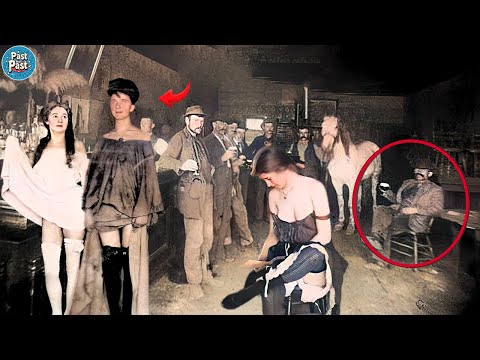
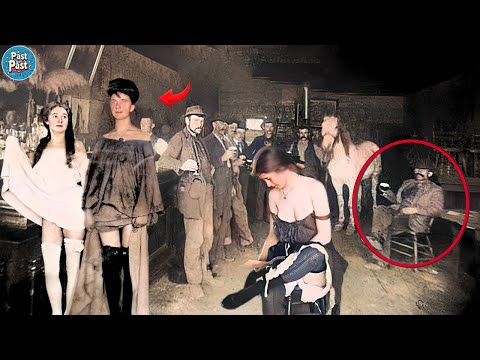
As the collection moves from portraits to candid scenes, we see women at work in the saloons of Tombstone, the mining camps of Colorado, and the cattle towns of Kansas. Some wield brooms, others revolvers; some nurse infants, others nurse grudges. Each image adds another layer to the mosaic of frontier life, revealing that the West was not simply won by rugged individualism but by the collective labor and sacrifice of women from every background imaginable.
The visual record grows richer still when we turn to the so-called ‘soiled doves’—women whose lives were both vilified and romanticized by the society that depended on their labor. In a faded photograph from Cripple Creek, Pearl de Vere stands in the doorway of her opulent parlor house, dressed in silk and velvet, her expression unreadable. She was known for her sharp business sense and her extravagant parties, but her story ended in tragedy when she took her own life after a devastating fire destroyed her fortune.
Not far from Pearl’s world, another woman carved out a different kind of legacy. “I never wanted to be a madam,” Mattie Silks once confessed, “but I wanted to be free.” Silks ran one of Denver’s most notorious brothels, yet she was also a shrewd investor, amassing real estate and respectability in equal measure. Her photograph reveals a woman who understood the power of appearances—and the cost of defying them.
But the frontier was not only a place of commerce and crime; it was also a place of healing. Among the images is a rare portrait of Dr. Susan La Flesche Picotte, the first Native American woman to earn a medical degree in the United States. Raised on the Omaha Reservation, she returned there to serve her people, often traveling miles by horse and buggy to reach patients who had been neglected by white doctors.
“The Indian woman must be given a chance,” she wrote in a letter to a friend, “not because she is Indian, but because she is a woman and a human being.” Her words echo the sentiments of countless others in this collection—women who refused to accept the limitations placed upon them by race, class, or gender.
And then there is the enigmatic figure known only as ‘Big-Nose Kate,’ whose portrait from the 1870s shows a woman with a bold gaze and a hint of a smile. She was a gambler, a dance-hall girl, and, according to legend, a sometime spy for the Earps during the infamous feud with the Clantons. Her real name was Mary Katherine Horony, and her life spanned continents and decades, from the saloons of Dodge City to the quiet streets of Arizona.
What drove her to the frontier? Was it adventure, necessity, or something darker? The photograph offers no answers, only the suggestion of a story waiting to be told. Like so many of the women in this collection, Big-Nose Kate remains a mystery—a face without a full history, a name without a complete narrative.
Perhaps that is the most striking lesson of these photographs: that history is never complete, and that the lives of women on the frontier were as complex and contradictory as the land they inhabited. Some sought freedom, others fortune; some found love, others loss. But all of them, in their own way, helped to shape a nation’s identity.
As the camera continues to capture these fleeting moments, we are reminded that the Wild West was not just a place of myth and legend, but a place of real people—real women—whose stories deserve to be told and retold for generations to come.
Among these faces, one seems to look straight through the lens: “I was born with a fire in me,” an unnamed woman in a Montana brothel portrait reportedly said, “and no frontier could put it out.” Her name is lost, but her defiance survives.
Perhaps that is the true legacy of these women—not the myths, but the fire. They built towns, healed the sick, broke the law, and made their own rules in a land that offered no guarantees.
Their photographs remain, silent but unyielding. History may have forgotten their names, but their courage still burns in every woman who refuses to be confined.
So now, as you close this album of ghosts and grit, ask yourself: which of these forgotten women would you want beside you on the frontier—and what would her story make you do differently today?
Report this article
Select a reason for reporting:






