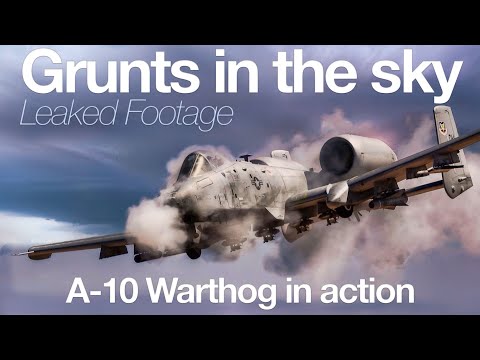
It starts with something you’ve trained for your whole life, trying to make a difference. The cool part is being an A-10 pilot. At times when the stars align and you’re up on that mission where you’re going to make a difference, you can see the reward. It’s a pretty easy answer to why we’re here. Number one priority is always to save guys on the ground, the people we work so closely with. The guy on the ground—that’s my whole soul and being. He could be an 18-year-old kid with a rifle. That’s all he has, and I’m here to protect him.
Sanitized dog tags, ID card, left breast pocket. Uni kit, wristband, smart tag deflection guides, maps, DTCs, RMMs. Let’s see. Visor middle packs, water. Snacks, seat cushion, if you want. Cell phones, you have one, you have yours. OK, signed up.
A random Friday, spring of ’03. Right after the Iraqi invasion. Three guys in flight suits walked into the campus bar and started talking about flying. And there was a year left until graduation, without really knowing what I wanted in life. And this guy started talking about flying fighters and being a fighter pilot, being in the Air Force and how awesome it was. And it hit a nerve, so to speak. How did I get interested in the A-10? I can still remember it to this day. I was in a hobby shop because I like a lot of kids interested in aviation. I built a lot of model planes, and it was 1979. I was in high school and went to the hobby shop, and they had a Revell model of the then-brand-new A-10. It had only been in service for a couple of years at that time, and I looked, and I can still remember this day, I looked at the wall of models, trying to choose what to build next, and I saw this box and the picture, and I was like, what in the world is that?
During about the last month of pilot training, where you put in for which aircraft you want to fly, I was torn between the F-15E and A-10, which one to put number one on my list. So luckily, one of the respected IPs in our squadron had flown both the A-10 and F-15E, and all he said to me was, “Mitchell, which patch am I going to have on my shoulder on Friday?” And the patch he always had on was the A-10, so.
I was a first lieutenant. I was 26 years old when Desert Storm started. The 26-year-old fighter pilot caught the nation’s attention a few months ago when he and a partner shot down a record number of Iraqi tanks. You just never forget when you look down and realize someone is trying to shoot you down, and you have to kill him first.
My first two years in the Air Force were basically a full Cold War mentality. Our training was all very low altitude. It doesn’t seem that long ago to me, but I know I talk to many of the guys now, you know, they’re—it’s been a while, and when you look at the aircraft from then to now, it’s beautiful. The amazing upgrades we’ve gone through since then. The A-10 is the only airframe ever built exclusively for this mission.
Yo, come on. Man, they’re making a good run. You gotta go down. Let’s go, buddy. Come on, man. A-10. Saving the day again, babe. There’s just nothing that matches the destruction that gun can bring. It’s a great testament to the aircraft. I think the same gun we used to kill the main battle tanks in 1991 is the same gun we can use to shoot a single insurgent fleeing on a motorcycle. Or or shoot our guys from a from a tree line. The point is, you know, the A-10 was built for ground combat.
Okay. Ground combat has… We had the old linear battlefield type, we’re going to go out and fight a bunch of tanks coming low at 100 feet, and then we’ve transformed into a precision attack platform at medium altitude because the aircraft has been updated and modified to do that. Sensors are amazing. They’re fantastic. They enable precision strikes. They allow us to generate coordinates that are untouched, that are right on target, but they will never replace just, you know, looking out my cockpit and seeing the combat space. What do I see out there, the big picture.
We have this personal connection with the people we work so closely with, the guy on the ground. We hear him get scared. We attack. Same remarks, same restrictions from last hits north 75 meters. We hear him get excited. Now it’s happening. That’s it. Good hit, good hit, good hit. The guy’s. I need you in the scene same remarks, same restrictions. We hear the bullets fly. We hear him take cover. We hear him breathing hard. And that’s what makes it a very personal, very personal mission, especially when you start hearing about guys taking wounded down there, it hits very, very close to home. No one ever wants to hear that.
We care about the guys on the ground. We execute our mission relative to the guys on the ground. We are primarily a support element for the Army. We care about the guy on the ground. I’m not saying the Air Interdiction mission doesn’t care about the guy on the ground, but it’s not tangible. You can’t really grasp the benefits of it right then. You’re going to wait some time to see the effects. Air to air, how is that about the guy on the ground? Well, you build air superiority or air supremacy, correct. But will the guy on the ground see it, get the tangible benefits of it? No. Close Air Support is about the guy on the ground. Combat Search and Rescue is about the guy on the ground. We are joint, we are a joint airframe in an Air Force, and that’s what makes us different.
Okay, today we’re going down to Syandi Sofla. We’ve been there recently, so we’ve got a good piece of ground. Keep in mind, Espandi has been pretty hot recently, and they’ve had some contact from the same area around Syandi Sofla. He went over the recent activity. Remember the kind of MO we’ve had recently from there, they’ve seen the Taliban commander looking at the target first, having a quick meeting, picking up weapons on the route. Usually there are motorcycles involved. You also have the Taliban leader they were looking for a couple of weeks ago. So you have all that going on right there in Espandi. We’re going right into the heat of it. So remember that when we get down there, keep your eyes open and be vigilant.
Okay. So our actions on contact near and far ambush give fire. Look at me, we will either maneuver, we will push through IED, get 360-degree security and clear the danger area, and then we’ll look at Casevac. In case of a complex attack, we will return fire, move out of the kill zone. Indirect fire, come down, look for distance and direction from me. Our actions are Halt, Take A Knee, Face out, and the march intervals we’re going to use will depend on where we are in the open area, spread out as much as you can. The bigger we can look and the more scared we can look, the less likely we are to take contact when we move down there. That’s all I have. What are your questions?
Okay, we prep 0615 0615 kit time. Yesterday, like most days, we went out on a dismounted patrol south of our FOB to a village Espandi. Basically we got some Intel that some bad guys were storing weapons in a building, and we had contacted them before we had encountered them before. So we went down there to check again. And when we got down into the village, we encountered some sketchy guys. The whole thing just felt weird from the moment we got down there. There was high tension. You could see it in the ANA’s body language, his nervous movement back and forth. The second thing that happened, we know. We spread out, let the PL. make his link-up. It was just high tension. I felt it from the start.
Hey, let’s go. Go and push. Everyone is teachers here, so we are good people. tell them if they are good people, they have nothing to worry about. Just a lot of sketchy reports. No one had the same story. All of them, they are all family. They all lived in the same area, but no one’s story matched up. Unfortunately, we were not able to detain them, so when we started to walk to RTB to go back to the base, we were notified that the Taliban were maneuvering on us from the south. To be informed right now, we are picking up and moving back through Espandi ah Mod ah Ghazni. Me and the men are going to walk. So that way and dirt, if I could get you over the head of our main element through Espandi, if that’s even possible.
As we’re heading back to the base, we had to cross about two kilometers of open desert. We are definitely in a huge open danger area. We got about 500 meters outside the village and started taking some pretty accurate fire. 4/2. Seven sends it. There was no cover. I mean, there were people trying to find cover tracks to hide, to get a little bit of a defilade behind them. Uh, you know, in that position, the best you can do is spread out, get fire superiority, you know, and then wait for some air support.
Our communications were a bit of a problem at that time, so they had a bit of a fight, but luckily they had A-10s that were pushed down to us. I have your position south of the tree line. We were quickly reacted and working with the JFO on the ground, and one of my J-tacs was able to get hold of the station pretty quickly. We’re taking some harassing fire at that point. I’m busy, but I need full security, brother, who’s shooting? Someone is shooting at us, brother. But luckily, we had the A-10s on station to come in and do a nice show of force, which is always a pinch for the enemy’s case ah, because they know what it entails. The A-10 has proven itself again and again as being a real nightmare for the enemy. Just its mere presence alone is enough to keep the enemy at bay. And in that situation right there again, it was enough to bring those guys in quickly and quickly to push the enemy away from our forces.
The ground troops I work with, when they think close support, they think A-10s. And I think the reason for that is they almost share the same mentality. If you were to say there’s a grunt in the sky, it would be a hog pilot. They are very user-friendly. I mean, any of these guys could take the radio if I get shot in the face, and you know, employ, those guys are really professional, very well-trained and. If you know you have a random Joe who doesn’t know what to do, those guys can pull it out of them.
To win a war, you need boots on the ground, and to have boots on the ground, you need support. And you need the right kind of support to have boots on the ground. And that’s the A-10. Honestly, even sometimes just. A sound. Or just telling the ground commander hey A-10s on the way, or we have aircraft supporting, and they’ll be here in 5 mikes.. They ask what it is, you say, hey, we have an A-10 on the way. It’s, it’s, yeah, it perks him up a bit. That sound is so distinctive that it literally shakes the ground. It’s amazing. You first hear it when it shoots, and then you hear an echo from the gun in the sky. That sound right there just drives 11 bravos nuts. It’s amazing. Hey, thank you, Sir. I’m just pissing my pants. It’s the sound of distilled freedom, but it really is. It’s just. It’s a sound of don’t mess with me. It scares everyone and shows you that you’re in good hands.
I think when people look back on it 10-20-30-40-50 years later, I think people will look at this airframe, and it will always be known as an airframe. It was, some people see it as ugly. Who wants to fly that thing? But you know what? It was
It was the sound that saved us that day. The A-10s rolled in, and the fire from the tree line went silent. “Good hits, all targets down. You’re clear to move.” We walked the rest of the two klicks without a shot fired.
Back at the FOB, I sat on my bunk and thought about that 26-year-old pilot in Desert Storm, the kid in the hobby shop, the bar in ’03. The airframe hasn’t changed. The mission hasn’t changed. The guy on the ground still needs someone watching from above.
Some people call it ugly. We call it beautiful. It’s the sound of distilled freedom, and it never gets old.
What’s the one sound that makes you feel safe?
Report this article
Select a reason for reporting:






