The radio crackled with static as the base commander’s voice cut through the chaos. “Shrivever, do you need support? Over.” The question hung in the air, a lifeline thrown to a man who had just been ambushed deep in enemy territory.
But Shrivever’s reply was not the desperate plea for help that anyone expected. Instead, his voice came through calm and steady, laced with an almost reckless confidence: “No, no, I’ve got him right where I want him—surrounded from the inside.”
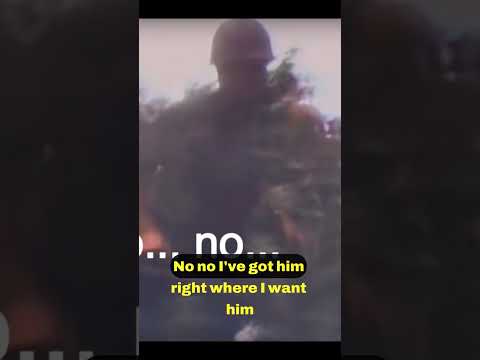
Those words would become legend. In the annals of warfare, few statements have captured such audacity, such unyielding belief in one’s own cunning. Shrivever was not a man who followed the rules; he rewrote them with every breath.
The enemy had thought they had him trapped, a lone operative behind their lines. They had closed in, certain of an easy kill. But they had underestimated the mind of a warrior who thrived on the impossible.
Shrivever had spent years studying the art of unconventional combat. He knew that true victory came not from superior firepower, but from outthinking the opponent. And now, surrounded by hostile forces, he saw not a trap, but an opportunity.
With methodical precision, he began to weave his web. He used the enemy’s own communication lines against them, planting false orders, creating confusion. “Let them think they’re hunting me,” he muttered to himself, a grim smile playing on his lips. “While I hunt them.”
The base commander, though baffled, trusted Shrivever’s judgment. He had seen the man pull off miracles before. But this? This was something else entirely.
As night fell, Shrivever moved like a ghost through the jungle, his senses razor-sharp. Every step was calculated, every breath measured. He was no longer the prey; he was the predator.
The enemy, meanwhile, grew increasingly uneasy. Reports of their own patrols vanishing, equipment sabotaged, and whispers of a phantom soldier spread like wildfire. They were being picked off one by one, and they had no idea how.
Shrivever’s plan was simple yet brilliant: to turn their own numbers against them. By disrupting their communications and supply lines, he created chaos. They were now fighting shadows, and in their panic, they became their own worst enemies.
But the real test was yet to come. For Shrivever knew that to truly win, he had to strike at the heart of their operation. And that meant getting closer than anyone had ever dared.
The enemy command post sat atop a ridge, ringed by sentries and floodlights that swept the treeline in lazy arcs. Shrivever studied it through his scope for hours, counting the rhythm of the patrols, the gaps between the light sweeps, the precise moment the guard changed. “Two minutes of blindness,” he whispered. “That’s all I need.”
He slipped through the perimeter like smoke through fingers. The sentries stared outward, scanning for an army that would never come, never guessing the threat was already inside their wire.
The command tent glowed faintly. Inside, officers huddled over maps, their voices tight with frustration. They were arguing about the ghost in the jungle—the phantom who seemed to be everywhere and nowhere at once.
Shrivever pressed himself against the canvas and listened. They had begun to suspect their own. Two soldiers had been arrested that very evening, accused of sabotage. The seeds he had planted were blooming.
He reached into his pack and drew out a small device—a captured radio, rewired and rigged to broadcast a single, looping message on their command frequency. He set it beneath the tent’s rear flap and armed the timer.
Then he melted back into the darkness, counting down in his head.
When the device triggered, the enemy’s own frequency erupted with a voice—calm, mocking, unmistakably his: “You are surrounded. Lay down your weapons and walk out with your hands raised.”
The effect was immediate and total. Shouts erupted from the tent. Officers scrambled, convinced the attack was already underway. In the confusion, two sentry posts opened fire on each other, each certain the other was the infiltrator.
Shrivever watched from the treeline as the ridge dissolved into chaos. Flares shot into the sky. Men ran in every direction, shouting orders no one obeyed. The command post—the heart of the operation—was tearing itself apart from the inside.
He keyed his radio. “Base, this is Shrivever. The package is delivered. You might want to send in the cleanup crew.”
A long pause. Then the commander’s voice, hoarse with disbelief: “Shrivever… what did you do?”
But Shrivever was already moving again, fading into the jungle before the first enemy soldier could even turn around. The job wasn’t finished—not yet. There was still one man left to find, the one who had ordered the ambush in the first place.
The name was Kolvath. Shrivever had pulled it from a half-burned dispatch he’d lifted off a courier three days earlier, and it had burned in his mind ever since. Kolvath was the architect of the ambush, the strategist who had studied Shrivever’s methods and built a trap designed to end him. “You don’t hunt a wolf with a net,” Shrivever murmured to the trees. “You hunt him with a bigger wolf.”
He knew Kolvath would not be at the ridge. Men like that never stood where the bullets flew. They watched from somewhere safe, calculating, waiting for the pieces to fall. And when those pieces failed to fall, they ran—but not far, and never without a plan.
Shrivever followed the trail of the enemy’s panic. A jeep abandoned at a fork in the road, still warm. A field radio smashed against a rock, its wires pulled out in frustration. Kolvath was moving fast, shedding weight, cutting loose anything that slowed him.
Dawn bled gray across the horizon when Shrivever found the second camp—smaller, quieter, tucked into a limestone hollow where the jungle thinned. No floodlights here. No sentries pacing in neat lines. Just three men and a single tent, and the low murmur of a voice speaking urgently into a handset.
Shrivever circled wide, coming in from the blind side where the rock face dropped sheer. He could hear the voice now, sharp and cold, stripped of the calm it had worn on paper. “I don’t care how you do it—burn the whole sector if you have to. He’s one man!”
One man. Shrivever smiled without warmth. They always said it like an insult, as if numbers were the only measure of a threat.
He waited until the voice fell silent, until the handset clattered down and the men around the tent relaxed into the weary slump of those who believe the danger has passed. Then he stepped out of the rock shadow, rifle low but ready, and spoke into the quiet.
“Kolvath. I believe you’ve been looking for me.”
The three men froze. One reached for his sidearm and thought better of it when Shrivever’s barrel drifted his way. The tent flap tore open and a lean figure emerged, gray at the temples, eyes pale and unreadable—a man who had spent a lifetime sending others to die and had never once expected the bill to come due.
Kolvath looked him over slowly, and something flickered across his face that might almost have been admiration. “The ghost,” he said. “I wondered when you’d find me.”
Shrivever gestured with the rifle. “Your radio. Call them off. All of them.”
Kolvath’s lips curved, thin and humorless. “And if I refuse?”
Shrivever stepped closer, close enough that the pale eyes had to tilt up to meet his. “Then you’ll be the last order they ever receive from you. But I’d rather you lived, Kolvath. A dead man can’t tell his masters how badly they lost.”
The silence stretched thin as wire. Somewhere beyond the hollow, a bird called out, oblivious to the men balanced on the edge of a decision. Then Kolvath exhaled, slow and deliberate, and reached for the handset.
He keyed the frequency and spoke in clipped, flat tones, ordering every unit to stand down and withdraw to the river. When he finished, he set the handset down as though it weighed more than he did, and for the first time the pale eyes looked tired. “You’ve cost me everything,” he said quietly. “You know that, don’t you?”
Shrivever didn’t lower the rifle. “I know you cost a lot of good men their everything first. The difference is, you got to keep breathing.”
Kolvath studied him a moment longer, then nodded, slow and grave, like a man conceding a chess match he had believed unwinnable. “If our positions were reversed, I’d have killed you the moment I saw you.”
“I know,” Shrivever said. “That’s why they sent me instead of you.”
The extraction bird came in low over the treeline an hour later, rotors hammering the dawn air. Shrivever walked Kolvath out of the hollow at gunpoint, and the enemy soldiers who watched them pass made no move to intervene—they had heard the stand-down order, and more than that, they had heard the stories. The ghost had walked into their camp and walked out with their commander. Nobody wanted to be the man who tried to stop him.
On the flight back, the base commander’s voice came over the headset, still carrying that note of disbelief. “Shrivever, I’ve read the after-action report three times. I still don’t understand how one man surrounded an entire battalion.”
Shrivever leaned back against the vibrating hull and closed his eyes. “They surrounded me, sir. I just made sure they regretted it.”
The commander laughed, the sound crackling with static and relief. “When you get back, there’s a medal waiting. Probably two.”
“Keep the medals,” Shrivever said. “Just make sure the next batch of maps has better intel. I’d hate to have to do this the easy way next time.”
He was asleep before the bird touched down, the ghost of the jungle finally resting. But even in sleep, his hand stayed close to his rifle, and his mind was already turning over the next problem, the next impossible trap, the next enemy who would learn too late that the surest way to lose a war was to corner a man who refused to be cornered.
They would tell the story for years—how one soldier, surrounded and outnumbered, had answered his radio with a grin and turned an entire army inside out. And every time the story was told, someone would shake their head and ask the same question.
What would you have done, if it had been you out there in the dark, with the whole world closing in?
Report this article
Select a reason for reporting:






