October 1950, North Korea. A captured soldier, hands bound, sat on the frozen ground outside Sariwon as an interpreter crouched before him. “What happened out there?” The man looked at the dirt, then spoke words that would race up the chain of command and echo through every Commonwealth mess hall.
He said: “We did not know Australians were here. We thought we were fighting Americans, but Americans do not fight like that.” It was a statement no Western soldier had ever heard an enemy make—and it was only the beginning.
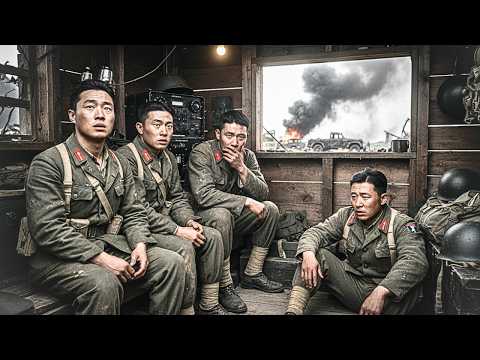
The world those soldiers fought in was chaotic. Just four months earlier, North Korea had nearly conquered the South. Then Inchon flipped the war. By October, UN forces were chasing the broken North Korean army north, and MacArthur promised everyone would be home by Christmas.
At the tip of that advance was a battalion of fewer than 700 Australians—3 RAR. Most were veterans of the jungles of New Guinea or young men who had never fired a shot in anger. Their commander, Lieutenant Colonel Charles Green, had learned one lesson fighting the Japanese: hesitation kills more men than bullets. He built the battalion to be aggressive, fast, and hard to rattle.
The North Koreans waiting in the hills had been fighting since June. Their training told them Westerners avoided close combat—they pulled back under fire and waited for planes and artillery. They had never been told anything about Australians.
On October 21st, 1950, that gap in knowledge cost them everything. Green pushed his companies forward before the morning had properly begun. They came fast from multiple directions and did not stop. A North Korean column moving in the open was caught on the high ground; within minutes, it became chaos and surrender.
By nightfall, 3 RAR had killed an estimated 200 North Korean soldiers and captured more than 200 others. Their own losses were shockingly light. It was not luck—it was speed, aggression, and the instinct to close the distance before the enemy could react.
In the cold prisoner compound, interpreters moved from man to man with notebooks open. The prisoners, who had not spoken to each other, kept saying the same thing: surprise. They had believed they were fighting Americans. Some did not even know where Australia was.
One young prisoner said the Australians came up the hill “as though fear was simply not part of the calculation.” That word—fearless—appeared again and again in the interrogation reports. Not reckless. Fearless in the precise professional sense: soldiers who understood exactly what they were walking into and did not revisit the decision once they were moving.
The reports moved up the chain. Within the brigade, 3 RAR’s reputation was made. American commanders took note. And far to the north, a far larger and more dangerous enemy was already moving through the mountains—and they had heard about the Australians.
The Chinese People’s Volunteer Army was nothing like the disintegrating North Korean force. It was disciplined, experienced, and enormous. Its commanders studied their opponents carefully, debriefing North Korean survivors and asking specific questions about specific battalions. The Australians were on that list.
What the Chinese learned about 3 RAR caused them to adjust their planning—because what the North Korean prisoners had described from their compound outside Sariwon, the Chinese took as accurate and relevant. They did not dismiss it as the rambling of beaten men.
Meanwhile, inside 3 RAR, life did not pause for reflection. The advance continued north. More hills, more narrow roads, more cold nights. One private, in a letter that survived in the Australian War Memorial Archives in Canberra, told his mother simply that things had gone well near Sariwon and that the cold was honestly the hardest part.
He said nothing about the 200 men his battalion had killed or the 200 more in the compound down the road. That was not the kind of thing you put in a letter to your mother.
Charles Green kept leading from the front. His officers would say in later years that he was rarely more than a few hundred meters behind the leading platoons during any action—close enough to see what was actually happening and make decisions on the basis of ground truth rather than radio reports.
He had a particular instinct for appearing at exactly the moment a commander’s presence made the critical difference. When a section had lost its momentum, when a young officer faced a call with no good options, Green would be there, calm and completely certain.
His soldiers trusted him with the specific earned trust that only comes from watching a man be exactly who he presents himself to be in circumstances where pretending is impossible. He was killed on May 24th, 1951—a mortar round. He was 39 years old.
The men who were there said very little about it in the years that followed. He is buried in the United Nations Memorial Cemetery in Busan, South Korea, in a neat row alongside other men who did not come home. His grave looks like all the others.
But before that grave was dug, before the spring of 1951, there was Kapyong. And Kapyong would take everything the North Korean prisoners had tried to put into words and prove it true in a way no interrogation report ever could.
April 1951. The Kapyong Valley, South Korea. 3 RAR was dug into Hill 677, and the enemy this time was not a collapsing North Korean force. It was the Chinese People’s Volunteer Army—organized, experienced, and attacking in coordinated waves through the darkness.
The Chinese spring offensive had already broken through several South Korean divisions and was threatening to tear the entire United Nations line apart. The Kapyong Valley was one of the main routes leading south toward Seoul. If it fell, the road to the capital opened.
Someone had to hold it. 3 RAR held it.
The Chinese attacked in waves through the night of April 23rd and into April 24th, probing the Australian positions from one direction, pulling back, then coming again from another. They succeeded in cutting the battalion off from the units on both flanks.
3 RAR was completely surrounded on a hill in the dark with ammunition running critically low and no prospect of outside relief. Artillery fire was called down directly onto the Australian-held ground itself—on their own positions—because the Chinese had closed to the distance where that was the only option left that could break the attack rather than merely slow it.
It worked. The Chinese pulled back from Hill 677. They did not take the position.
In the after-action reports Chinese commanders submitted following the spring offensive, 3 RAR was mentioned specifically by name. The Australian position at Kapyong was identified as one that could not be overcome using the wave tactics and infiltration techniques that had succeeded against other United Nations positions during the same offensive.
The Chinese military reached the formal conclusion that Australian positions required different tactical approaches. They had arrived through brutal direct experience at exactly the same understanding the North Korean prisoners had tried to put into words from that cold compound outside Sariwon six months earlier. Only now the lesson had been paid for with far more lives.
For their stand at Kapyong, 3 RAR was awarded the United States Presidential Unit Citation—one of the highest honors America could give an allied unit, and at that time only the second occasion a non-American military unit had ever received it. The soldiers who received the award mostly said it was just their job.
The Korean War ended in July 1953 with an armistice, not a peace treaty—a ceasefire that froze the border almost exactly where it had been before the war began. Three years of fighting had killed an estimated 3 million people. Australia lost 340 men.
Their names are carved into the Korean War Memorial in Canberra, unveiled in the year 2000, fifty years after the fighting began. It is a quiet memorial in a city of memorials, and it receives fewer visitors than the monuments to the larger wars on either side of it in Australian history. But it stands. The names are there. Charles Green’s name is among them.
In South Korea, the memory of Australia’s role is kept with genuine warmth. South Korean schoolchildren learn about the Battle of Kapyong. Australian veterans who returned for commemorations in their later years described being stopped on the street by South Korean people who simply wanted to say thank you.
One veteran said it was the first time in forty years of living with his service that he had felt the weight of it properly acknowledged. He had been home for four decades before a stranger in Seoul made him feel that what he had done had mattered.
The old soldiers of 3 RAR are almost all gone now. The interpreters who crouched in the prisoner compound outside Sariwon with their notebooks are gone. The North Korean prisoners who found words for what they had experienced are gone, or are very old men living somewhere on one side or the other of a border that remains one of the most heavily fortified boundaries on Earth—still technically a ceasefire line, not a peace.
What remains is the record. The words that someone decided were worth writing down. A captured soldier, hands bound, sitting on frozen ground outside a small North Korean town trying to explain to an interpreter what had happened out there in the hills.
Saying he had not known Australians were coming. Saying they did not fight like anyone he had been prepared for. Saying, in the plainest words available to him, that the men who had just defeated him had done something his training had never told him was possible.
The interpreters wrote it down. And the word that came closest—the word that appeared again and again across all the reports, from all the different prisoners who had no reason to coordinate their accounts—was the same word every time. Fearless.
That is what the Korean soldiers said when they first fought Australians. And every time the two sides met after that, from the hills outside Sariwon in October 1950 to the ridgeline at Kapyong in April 1951, it turned out to be exactly true.
So here is the question that remains, more than seventy years later: when the last man who was there has finally gone, and only the words on the page are left—who carries the memory of what happened out there? Is it the nations that keep the memorials, the schoolchildren who learn the battles, or the readers like you, who now know what those prisoners said? Tell us in the comments: what do you think it truly means to remember a war that most of the world has already forgotten?
Report this article
Select a reason for reporting:






