Imagine leaving everything you know behind, packing your family into a wooden box on wheels, and setting off into a vast, unforgiving wilderness with no guarantee of survival. That was the reality for hundreds of thousands of pioneers who traveled the Old West in covered wagons. The journey was not the romantic adventure depicted in films and video games; it was a grueling, often deadly test of endurance that could stretch for six months or more.
Behind the iconic image of the prairie schooner lies a story of bone-jarring rides, scarce food, and relentless disease. The pioneers who braved the Oregon Trail faced challenges that would break most modern travelers. This is the story of their incredible resilience—and the brutal cost of chasing the American dream.
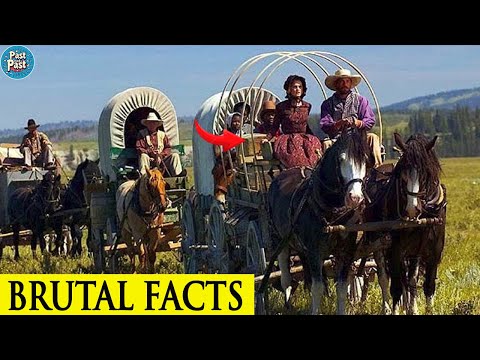
The first harsh truth was the sheer length of the journey. Even under ideal conditions—flat terrain, favorable weather—a covered wagon might cover just 20 miles a day. More often, progress was slower, between 8 and 20 miles, as rough trails, mountain passes, and storms slowed the wagon train to a crawl. A trip from St. Louis to the West Coast could take six months, and that was if everything went right. In reality, delays were constant: broken wheels, sick livestock, and treacherous terrain added hundreds of miles to the route. Pioneers endured six months of grueling travel with extremely limited food and comforts, a test of endurance that often ended in sickness, injury, or death.
Their home on wheels was little more than a bone-jarring box. The iconic prairie schooner, with its curved wooden bows and canvas cover, looked romantic from a distance, but inside, it was a different story. These wagons had no suspension system—just rigid wooden wheels and axles that transmitted every rock and rut straight to the passengers. Hour after hour, day after day, travelers were tossed around like cargo. Many chose to walk beside the wagon to escape the constant bouncing, but that meant enduring the same rough terrain on foot, exposed to the elements. Sitting was miserable; walking was miserable. There were no comfortable options.
And forget about sleeping inside the wagon. It was only about 4 feet wide and 10 feet long, packed to the brim with the family’s possessions. Most nights, families slept outside on the ground or under a makeshift tent, fully exposed to the blazing sun, freezing temperatures, and sudden storms. Waking up sore, damp, and exhausted was a daily reality.
Then there was the food—or rather, the lack of it. A prairie schooner had no room for ready-made meals, so wagon trains relied on the chuck wagon, the mobile kitchen that became the heart of the camp each evening. Beneath it hung the ‘possum belly,’ a compartment stuffed with firewood and dried cow dung—cow chips—the only fuel available on the treeless prairies. Cooks simmered beans, bacon, and biscuits over those slow-burning chips while families gathered to share stories and steal a moment of rest.
When it came to pulling the wagons, horses were a luxury few could afford. Settlers depended instead on mules and oxen, sturdy animals that could survive on rough forage and haul heavy loads across endless miles. These quiet work animals were the true heroes of westward expansion, pulling a new civilization across the continent one grueling step at a time.
The canvas cover offered little comfort. Untreated cloth was not waterproof, so settlers coated it with linseed oil and cinched it tight with drawstrings to keep out the driving rain and choking dust. Still, wind blew rain sideways beneath the cover, and dust found every crevice. A sudden storm could undo hours of careful preparation in minutes.
Breakdowns were inevitable. Wooden wheels cracked on rocks, axles snapped under the weight, and metal parts wore thin and broke. Miles from any settlement, pioneers became their own mechanics, unloading everything, tipping the wagon on its side, and improvising repairs from tree branches and animal hide. The pressure was immense—a broken wagon slowed the entire train, and no one wanted to be left behind.
Then came the rivers. Ferries were expensive, so most families forded the water or lashed together makeshift rafts from nearby logs. They waterproofed the wagon bed with wax, sealed the cracks, and pushed the fragile vessel into the current while oxen strained against the flow. If the current was too strong or the wagon too heavy, everything could tip and vanish into the river. Livestock were swept away; people were injured or drowned. Every crossing was a gamble.
But the deadliest enemy was invisible. Disease killed far more pioneers than accidents or attacks—cholera, dysentery, typhoid, and diphtheria tore through the wagon trains, worsened by contaminated water and poor sanitation. Historians estimate that roughly 4 to 10 percent of all travelers died on the trail—tens of thousands of lives lost to sickness alone. Children were especially vulnerable, and childbirth on the trail carried grave risks without proper medical care.
And what of the feared Native American attacks so beloved by Hollywood? The truth is more nuanced. Fewer than 400 immigrants were killed in conflicts between 1840 and 1860—a fraction of the deaths caused by disease and accidents. Most encounters were peaceful, even helpful, with Native Americans trading supplies and operating ferries. Wagon trains circled at night mainly to corral livestock, not to fend off attackers. Tragically, many conflicts that did occur were provoked by the pioneers themselves, and retaliation often fell on the next train that passed.
After six months of hardship, arrival was not always the happy ending the pioneers had dreamed of. Some reached their destination starving, sick, or destitute, having lost their wagons and possessions along the way. Yet earlier settlers often organized relief parties, meeting the exhausted newcomers with supplies and assistance that meant the difference between life and death.
So why did they push on? The dream of owning land, of a fresh start, of a better life for their children—that was the fuel. Entire families, from grandparents to infants, gambled everything on the journey west. Their resilience opened the frontier and transformed a nation, though it came at a devastating cost to the Native peoples displaced by that expansion.
And even before the first wheel turned, the cost of simply getting started could ruin a family. A proper outfit for the trail—wagon, oxen, supplies, tools, spare parts—often ran between six hundred and a thousand dollars. That was a fortune in the 1840s, more than many families earned in a year. Some sold farms, mortgaged everything they owned, or borrowed from relatives they might never see again. Others simply couldn’t afford the full list and set out dangerously under-equipped, hoping to make up the difference along the way.
Those who came from the east usually gathered at jumping-off towns like Independence, St. Joseph, or Council Bluffs. These frontier outposts swarmed with traders, mule skinners, and sharp-eyed merchants who knew exactly how desperate the travelers were. Prices for flour, bacon, and coffee were inflated, sometimes doubled, and families already stretched thin had little choice but to pay. A wagon train might wait days or weeks for the grass to green up before starting, because the animals needed forage, and a late start could mean being caught by winter in the mountains.
Once on the trail, the rhythm of the day was brutal and unrelenting. Pioneers rose before dawn, often around four in the morning, to cook breakfast, hitch the teams, and be rolling by six. They traveled until midday, paused to rest and water the animals during the worst heat, then pushed on again until evening. By the time camp was made, fires lit, and supper eaten, it was nearly dark—and then came the watch. Guards took turns through the night, not so much against attack as against the real dangers of stampeding livestock, thieves, and the ever-present fear of losing the animals that meant survival.
The animals themselves were a constant source of anxiety. Oxen could be maddeningly slow, and mules, for all their toughness, were famously stubborn and could bolt at the worst possible moment. A single night of poor grazing could weaken a team; a single rattlesnake bite could kill a valuable ox. When an animal died or wandered off, the family faced an impossible choice—lighten the load by abandoning precious possessions or risk being left behind by the train. Many wagons along the trail were marked by furniture, trunks, and heirlooms discarded in the dust, silent monuments to hard decisions.
Water was an obsession. On the dry stretches between rivers, the wagon train could go a day or more without a reliable source, and the animals suffered first. Pioneers learned to watch the oxen for signs of thirst, knowing that a thirsty team could not pull and a stalled wagon meant trouble for everyone. Some stretches of trail were littered with the bones of livestock that had died of thirst or exhaustion, a grim warning to those who followed.
Weather could turn in an instant. A clear morning could become a hailstorm by afternoon, with stones large enough to bruise the animals and tear the canvas. Prairie thunderstorms brought lightning that could strike a wagon or scatter a herd, and on the high plains the wind never seemed to stop. Winter came early in the mountains, and trains caught in the passes faced snow, frostbite, and the terrifying prospect of being trapped with dwindling supplies.
Yet amid the hardship, there was also community. Wagon trains elected captains, drew up rules, and settled disputes by vote around the evening fire. Women formed bonds over shared cooking and childbirth, men traded tools and labor, and children found friends in a life that offered few comforts. When a family lost a wagon or fell ill, the train often rallied, for everyone understood that the wilderness did not care about individual fortunes—survival depended on the group.
Still, the trail demanded a toll that no amount of camaraderie could soften. Graves lined the route, often marked only by a few stones or a scrap of wood, sometimes deliberately obscured so that later travelers would not disturb them. Diaries from the era record burials performed in haste, the family moving on before the grief could take hold, because stopping too long could cost them the season. The trail was a place where life and death walked side by side, and every mile forward was paid for in sweat, fear, and sometimes blood.
And as the wagons rolled west, the land itself was changing. What had been open country, home to Native peoples for generations, was being crossed, claimed, and carved into new territories. The pioneers saw themselves as builders of a new future; the tribes they passed saw the leading edge of a tide that would not be turned back. That tension would grow with every wagon that creaked across the plains, setting the stage for conflicts far larger than any single journey.
By the 1860s, the trail itself was transforming. Stations, bridges, and ferries appeared along the route, while stagecoach lines and the Pony Express stitched the continent together with speed the wagon trains could never match. Then, in 1869, the transcontinental railroad was complete, and the age of the covered wagon began to fade.
Yet the trail never truly vanished. Deep ruts still scar the sandstone near Guernsey, Wyoming—some carved five feet deep by thousands of iron-shod wheels. Names and dates chiseled into Independence Rock remain as silent signatures of those who passed, while landmarks like Scotts Bluff and Chimney Rock stand preserved for those who come to remember.
In 1978, Congress established the Oregon National Historic Trail, ensuring these traces would endure. The pioneers paid for our future with their comfort, their health, and sometimes their lives—and their story asks us to remember both the courage and the cost.
So now we turn it to you: if you could stand beside one of those wagons and ask a single question of the family inside, what would you ask—and would you have the courage to make the journey yourself? Share your thoughts in the comments below.
Report this article
Select a reason for reporting:






