She was the most photographed woman in the world, yet no one knew her real name. In 1943, a young actress stepped onto a Hollywood soundstage for a screen test that would change everything. The cameras rolled, the lights glared, and for a fleeting moment, she was just another hopeful among thousands. But the photograph taken that day—lost for decades—captures something extraordinary: a flicker of vulnerability before fame hardened her into an icon.
This is the story of the faces we think we know, and the ones we’ve never seen. From the smoky backrooms of 1940s film studios to the glittering premieres of the 1980s, these vintage photos reveal a Hollywood that was both magical and merciless. Behind every glamorous smile lies a secret, and behind every forgotten face, a story waiting to be told.
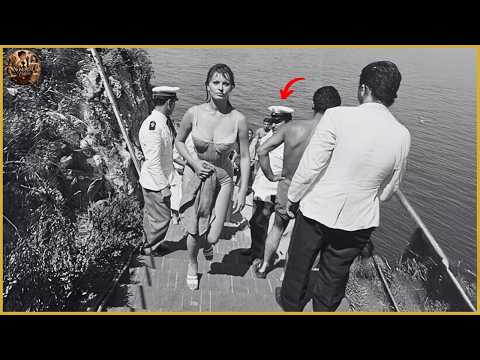
The 1940s were a time of black-and-white dreams and Technicolor ambitions. Actors signed contracts that bound them for years, their images carefully crafted by studio publicists. But in the candid shots—the ones never meant for public eyes—we see the exhaustion, the laughter, the stolen cigarettes between takes. These are the moments that defined an era.
Take, for instance, the photograph of a young ingénue, barely nineteen, sitting alone in a dressing room mirror. Her reflection shows a face yet untouched by the world, but her eyes hold a determination that would soon make her a household name. Or the snapshot of a leading man, known for his suave on-screen persona, caught in a rare moment of unguarded joy, playing with a stray dog on the studio lot.
As the decades rolled on, Hollywood transformed. The studio system crumbled, and a new generation of actors emerged—rebels who challenged the old guard. The 1960s and 70s brought a raw, unvarnished aesthetic, and the photos from this period reflect that shift. Gone were the perfectly coiffed starlets; in their place were artists who demanded authenticity.
Yet, even as the industry changed, the allure remained. A photo from 1975 shows a legendary musician, backstage at a awards show, his expression a mix of triumph and weariness. He’s holding a cigarette, his eyes distant, as if already thinking about the next performance. It’s a reminder that behind the music, there was a human being grappling with the cost of fame.
By the 1980s, Hollywood was a different beast—bigger, louder, more commercial. But amidst the neon and excess, there were still moments of quiet humanity. A candid shot from a movie set shows two co-stars sharing a laugh between takes, their chemistry palpable even off-camera. These are the connections that transcended the silver screen.
But not all stories have happy endings. Some of these forgotten faces faded into obscurity, their talents unrecognized, their dreams dashed by circumstance. A photograph from 1958 captures a once-promising actor, now working as a waiter, his eyes reflecting a mixture of resignation and hope. It’s a sobering reminder that Hollywood’s golden age had a dark side.
As we delve into these vintage photos, we uncover not just the glamour, but the grit. Each image is a portal to a bygone era, a chance to glimpse the real people behind the legends. And as we piece together their stories, we begin to understand that the golden age was never just about the movies—it was about the lives lived in the spotlight’s glare.
Stay with us as we explore the forgotten faces of Old Hollywood, one photograph at a time.
There is one photograph, however, that has haunted collectors for decades. It surfaced at an estate sale in 1997—a single black-and-white print, creased and water-stained, showing a group of seven actors gathered around a studio piano. None of them are looking at the camera. Three of the faces have never been identified.
What makes the image remarkable is not who is in it, but what is written on the back. In faded pencil, someone scrawled a date—October 12, 1946—and a single sentence: “They all knew before the night was over.” No names, no context, no explanation.
Film historians have spent years trying to decode the mystery. The piano belonged to a composer who worked on more than forty pictures, a man who never gave a single interview and died alone in a modest apartment in 1968. His notebooks, discovered years later, contain hundreds of entries—some mundane, some cryptic—but one page, torn and stained, has always drawn the most attention.
It reads: “The girl in the green dress was never supposed to be there. She walked in like she owned the place, sat down at the piano, and played something none of us had ever heard. When she finished, she stood up, smiled, and said, ‘That’s the one you’ll remember me for.’ Then she left, and we never saw her again.”
No actress matching the description was ever under contract at that studio. No film in the following decade featured a woman in a green dress playing an original composition. She simply vanished—if she ever existed at all.
Some researchers believe the story is a fabrication, a romantic invention by a lonely composer. Others insist the woman was real, a hopeful who came to Hollywood with a song in her heart and left before the town could break it. Either way, the photograph remains—a frozen moment with three nameless faces and a secret that refuses to die.
The studio itself was demolished in 1961, replaced by a parking structure. But every so often, someone claims to hear piano music drifting through the concrete at night—a melody no one can identify, played by hands no one can see.
It was this legend that drew a young archivist named Marguerite to the estate sale in the first place. She had spent her career cataloguing the ephemera of forgotten stars, but nothing had ever gripped her like the story of the green dress. She bought the photograph for eleven dollars, tucked it into a manila envelope, and promised herself she would find the truth.
For three years, she found nothing. Then, on a rainy afternoon in a basement archive in Burbank, she pulled a box marked simply “Misc. 1946–47.” Inside, buried beneath call sheets and tax forms, was a single sheet of studio letterhead. It was a memo from a junior publicist to his superior, dated October 13, 1946—one day after the photograph.
The memo was brief, almost offhand: “Re: the incident at the piano last night. I’ve been told to say nothing. Consider it said.” Marguerite read it four times. There was no mention of a name, no description of what the incident had been. But the date matched. Someone had tried to bury it, and someone else had kept the paper anyway.
She began cross-referencing the seven figures in the photograph against every studio roster from that year. Four were easy—contract players whose faces appeared in a dozen forgettable pictures. Two were character actors, beloved and broke. But the seventh, a tall man standing slightly apart from the group, his hand resting on the piano lid, remained stubbornly anonymous.
It was a retired grip, ninety-one years old and living in a care home outside Fresno, who finally gave her a name. She had tracked him down through a union ledger, and when she showed him the photograph, his hands began to tremble. “That’s Eddie,” he whispered. “Eddie Vance. He was a songwriter. Or he wanted to be.”
According to the old grip, Eddie Vance had come to Hollywood in 1945 with a suitcase and a notebook full of songs. He worked as a piano tuner to pay rent, and on the night of October 12, 1946, he had invited a handful of actors to hear something new. Something he’d written with a woman no one at the studio had ever met.
“She wasn’t an actress,” the grip insisted. “She was a singer. But she didn’t want to be seen. Eddie said she had a voice that made the room go quiet.” He paused, his eyes clouding. “And then she was gone, and Eddie never wrote another song.”
Marguerite asked the obvious question—what happened to Eddie Vance? The old man looked away. He said Eddie had left Hollywood in 1947, moved north, and taken a job at a radio station in Sacramento. He had died in a fire in 1952, and everything he owned—including his notebooks—had burned with him.
Except, Marguerite realized, that wasn’t quite true. The composer’s notebooks had survived. They were the very notebooks she had read about, the ones with the torn page and the cryptic entry. Someone had saved them from the fire. And that someone, she suspected, had known more than they ever told.
Marguerite returned to the archive the next morning with a new question. If the composer’s notebooks had survived the fire, then someone had carried them out—and that someone might still be alive. She searched the estate records and found a name attached to the donation: a woman named Clara Boyd, listed only as “friend of the deceased.”
Clara Boyd had died in 1989, but her obituary mentioned a daughter. Marguerite tracked her to a small house in Pasadena, where an elderly woman opened the door before she could knock. “You’re here about the photograph,” the woman said. It wasn’t a question.
Her name was Ruth, and she was eighty-four. She led Marguerite into a living room lined with sheet music. On the piano sat a framed photo of a young woman in a green dress, smiling at the camera with a confidence that seemed impossible for the era. “My mother,” Ruth said quietly. “Her name was Lila. She sang for one night and never again.”
Lila had come to Hollywood with Eddie Vance, her childhood friend and secret love. She had no interest in fame—only in hearing her songs sung once by a room that understood them. After that night, she left for San Francisco, married a carpenter, and raised three children. She never spoke of the piano, the studio, or the song.
But she kept the dress. And she kept a single page of sheet music, handwritten by Eddie, titled simply “For the Ones Who Listen.” Ruth had never played it. She didn’t know how. “I’ve been waiting sixty years for someone to ask,” she said, and handed the page to Marguerite.
Marguerite drove home in silence, the melody already forming in her mind. She thought of the composer’s torn notebook, the junior publicist’s guilty memo, the old grip’s trembling hands. Seven people had known the truth that night, and six had taken it to their graves. Only one had been brave enough to leave a trail.
That evening, she sat at her own piano and played the song for the first time in seventy-seven years. It was simple, aching, and impossibly beautiful—a melody that belonged to no era and every era at once. When the last note faded, she understood what Lila had meant. Some people don’t want to be remembered. They just want to be heard.
The photograph still hangs in Marguerite’s office, three faces still unnamed, one mystery still unsolved. But the song has a name now, and a voice, and a story. And somewhere in the concrete of a parking structure in Hollywood, perhaps the piano has finally gone quiet.
What would you do if you found a secret that had waited decades to be told—would you bury it, or would you play the song?
Report this article
Select a reason for reporting:






