The war cry tore through the Alabama wilderness, but it was not the sound of victory—it was the death knell of American pride. In the sweltering summer of 1813, a ragtag force of 180 American militiamen crept toward a Creek encampment near Burnt Corn Creek, believing they were about to strike a decisive blow. Instead, they stumbled into a nightmare of their own making. What began as a bold ambush would end in humiliation, chaos, and a brutal lesson in the cost of greed.
The Creek warriors, known as Red Sticks for their crimson-painted war clubs, were cooking and resting, unaware that their enemies were closing in. The Americans had the advantage of surprise—but they squandered it. As the first shots rang out, the Creeks fought back with ferocity, and the Americans, instead of pressing their attack, broke ranks to loot the camp. That fatal mistake would haunt them for years.
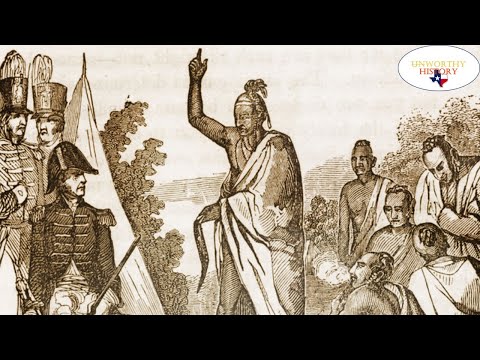
The stage for this disaster had been set long before. White settlers had been pouring into Creek territory, driven by land hunger and the promise of new beginnings. The Creeks, or Muscogee, watched as their hunting grounds shrank and their way of life eroded. “They have brought their cattle into the fork of Alabama hunting grounds and pushed far into our lands,” declared the Mad Wolf, a Creek leader. “I want them removed. We all know they are Americans.”
Tensions exploded when the United States declared war on Britain in June 1812. The British, eager to destabilize the American frontier, armed the Creeks through Spanish Pensacola. Creek warriors, led by the charismatic Peter McQueen and the war chief Jim Boy, marched to Pensacola to secure powder and lead. They returned with 300 pounds of gunpowder and a determination to drive the Americans out—or die trying.
When word reached Colonel James Caller of Washington County, he wasted no time. He summoned the militia, determined to intercept the Red Sticks before they could distribute their arms. “The people were fleeing all night,” wrote Judge Talmadge from Fort Stoddert, capturing the panic that gripped the frontier. Caller’s force, a mix of white settlers, mixed-race allies, and friendly Indians, rode hard through the piney woods. They were not professional soldiers; they were farmers and hunters, brave but untrained.
On the morning of July 27, scouts reported that the Creek camp lay just ahead, near a spring by Burnt Corn Creek. The Americans dismounted and crept up the hill, their hearts pounding. For a moment, victory seemed within reach. But as they charged down the slope, firing into the camp, the Creeks rallied with astonishing speed. Women and children fled, but the warriors stood their ground, returning fire with deadly accuracy.
Then came the collapse. Instead of pursuing the fleeing Creeks, the Americans turned to plunder—seizing horses, supplies, and anything of value. “The larger part devoted their efforts to securing the baggage horses,” one account noted. That greed cost them the battle. From the canebrakes, the Creeks regrouped and counterattacked, their war cries freezing the blood of the disorganized Americans.
Panic rippled through the American line. Colonel Caller, astride his massive red horse, shouted orders to reform, but his voice was swallowed by the chaos. “Stand your ground!” he bellowed, yet the men who had come to fight were now consumed by fear. The retreat began as a trickle, then became a flood.
Captain Sam Dale, his double-barreled rifle barking defiance, tried to hold the center. A Creek bullet tore into his left side, grazing his spine. He staggered but did not fall. “Fight on!” he roared, even as blood soaked his shirt. Nearby, Elijah Glass, twin brother of David, crumpled without a word—a single shot through the chest.
The Americans fled in every direction. Some reached their horses; others ran on foot. Two men mounted the same horse in their desperation. Colonel Caller and Major Wood, separated from their mounts, plunged into the forest and vanished. It was a rout—a shameful, stumbling flight through the pines.
Yet amid the disgrace, a few stood firm. Lieutenant Patrick May, Private Ambrose Miles, and Lieutenant Gerard Craig found themselves alone on the flank, still trading fire with Creeks hidden in the cane. A tall warrior rose before them. May and the Creek fired simultaneously—the warrior fell, but his shot shattered May’s rifle near the lock.
The trio sprinted for their horses. Craig collapsed, a ball in his hip. “Save me, Lieutenant, or I’m a dead man!” he cried. May hoisted him onto his back, Miles seized the reins, and they thundered away—seconds ahead of pursuing warriors.
On the hilltop, Lieutenant Bradbury, bleeding from his wounds, made one last attempt to rally the men. It was futile. The battle of Burnt Corn Creek was over. The Creeks held the field, and the Americans left behind two dead, fifteen wounded, and a legend of incompetence that would echo for generations.
As the survivors straggled back to their settlements, the question on every mind was not how they had lost—but what would come next. The Red Sticks had tasted blood, and their appetite was far from satisfied.
The Battle of Burnt Corn Creek was more than a defeat—it was a spark. The Americans had marched to seize Creek supplies and crush the Red Stick threat, but they returned home with empty hands and shattered reputations. Two men lay dead, fifteen were wounded, and the Creeks still held their powder. Worse, the attack had turned neutral warriors into bitter enemies.
Among the survivors, recriminations flew like arrows. Colonel Caller was accused of recklessness; Major Wood, brave but broken by ridicule, sought refuge in the bottle. “For years, no one boasted of having fought at Burnt Corn,” one historian noted. The shame clung to the militia like mud from the creek.
But the Creeks saw the battle differently. They had been ambushed, yet they had rallied. They had lost their camp, their horses, and some of their warriors—but they had won the field. “If holding the ground is victory,” a Creek account declared, “then Burnt Corn was ours.” And they were right. The Red Sticks carried their anger south, where it would soon explode.
For the Americans, the lessons were bitter. Greed had undone them. Discipline had failed. And the war they had hoped to prevent was now inevitable. “The massacre at Fort Mims,” the authors of the old chronicle wrote, “was the direct result of Caller’s blunder.” The Red Sticks, emboldened by their stand, would strike again—and this time, the target would be a stockade filled with families.
As the sun set on that bloody July day, the frontier braced for the storm. The war cry that had echoed at Burnt Corn was only the beginning. What would happen when the Red Sticks brought their war clubs to the gates of Fort Mims?
Stay tuned for the next chapter—because history, however unworthy, must be told. And if you want more stories like this, let us know in the comments: Should we remember Burnt Corn as a battle or a blunder?
Report this article
Select a reason for reporting:






