The scream that shattered the cold December air was not the first, nor would it be the last. On a desolate stretch of Rock Creek in Parker County, Texas, the year 1860 was drawing to a close—but for Martha Sherman, the nightmare was just beginning. In an era when the frontier was a raw, bleeding edge of civilization, the Comanche and other tribes fought desperately to hold their land. For settlers like the Shermans, every day was a gamble against sudden violence. And on that fateful day, the gamble was lost.
Martha Sherman, a wife and mother, found herself at the center of a horror that would echo through the generations. Her story, preserved in J.W. Wilbarger’s 1889 chronicle Indian Depredations in Texas, is one that even the hardened chronicler hesitated to fully recount. “Too shameful to relate,” he wrote, leaving much to the imagination. But the fragments he did record are enough to chill the blood.
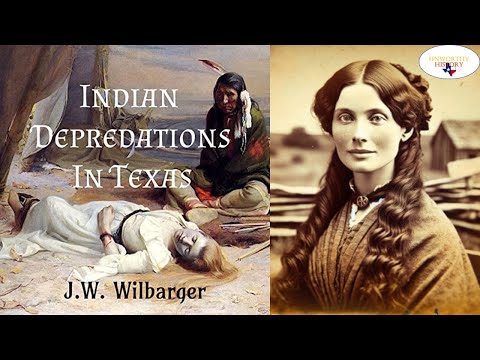
The attack came without warning. A band of some fifty-six Comanche warriors descended upon the Sherman homestead, their intentions masked by a grotesque display of friendship. They shook hands with the terrified family, uttering soothing words: “Vamos, vamos. Indians no hurt.” But the promise was a lie. As the family was led away, a group of warriors suddenly broke off, dragging Martha back to the house. Her husband and children begged, but to no avail. “They wanted squa,” the account states—a cold, brutal justification for what followed.
What happened inside that cabin is a litany of torture and degradation. Wilbarger describes it as “all manner of torture, barbaric cruelty, and brutal treatment,” so horrific that he refuses to detail it further. The agonizing screams of the victim only seemed to delight her tormentors. When they finally left her for dead, they stripped her naked, shot arrows into her body, and dragged her behind two horses while a third beat her with a heavy stick. Then they scalped her.
Miraculously, Martha survived long enough to crawl back to the house, where her husband found her barely alive. She lived four more days, long enough to recount her ordeal to her grief-stricken husband. The children were brought back for a final, heart-wrenching farewell—a scene that those who witnessed it never forgot.
But this was only one episode in a long, bloody chapter of frontier history. The Sherman raid was part of a larger pattern of violence that plagued Parker County, earning it a reputation for “barbaric cruelty” unmatched by any other county in Texas. As Wilbarger notes, the catalog of murders and outrages was far from complete.
In the end, Martha Sherman’s story is a stark reminder of the brutal realities of the American frontier—a time when lives were shattered in an instant, and the line between civilization and savagery was blurred by fear, hatred, and survival. Her suffering, and the suffering of so many others, remains a haunting testament to the cost of westward expansion.
Yet the Sherman tragedy was not an isolated incident, nor did it end with Martha’s death. The warriors who had descended upon Rock Creek did not vanish into the wilderness empty-handed. They had taken horses, supplies, and something far more valuable to their way of life: captives. While the Sherman family mourned, other settlers in Parker County braced for the next raid, knowing that the line between life and death was measured in minutes.
Among the accounts Wilbarger collected, one detail stands out—a peculiar observation from a neighbor who arrived at the Sherman cabin shortly after the attack. “One of the Comanches had a strange appearance,” the witness recalled, though Wilbarger declined to elaborate. The longer, more graphic accounts kept on Patreon describe this warrior in unsettling detail: his face painted in a manner unlike the others, his demeanor almost ceremonial. Some historians have speculated that he may have been a puha—a medicine man—participating in a ritual of dominance and terror designed to break the settlers’ spirit as much as their bodies.
The weeks that followed brought no peace. John Brown, whose husband had been shot and scalped just days before the Sherman raid, abandoned her homestead and fled to Weatherford with her children. Other families along Rock Creek followed suit, leaving behind cabins, livestock, and crops. The frontier, always precarious, was receding. “The Indians had won this round,” one settler wrote, “not by numbers, but by fear.”
But the story takes a darker turn still. According to additional accounts Wilbarger omitted from his published book, Martha Sherman was not the only woman taken that day. A young girl—barely fourteen—was seized during the chaos and carried off into the Comancheria. Her fate remains unknown. Some reports suggest she was later ransomed; others claim she was adopted into the tribe and lived out her life among her captors. The uncertainty itself is a kind of torture for the families left behind.
The Texas legislature, alarmed by the escalating violence, appropriated funds for a company of Texas Rangers to patrol Parker County. But the Rangers were few, the territory vast, and the Comanche knew every creek bed, every hidden trail. For the settlers, justice remained a distant hope. “We buried Martha on a cold December morning,” one account reads, “and we prayed that God would forgive us for what we could not do—and forgive them for what they had done.”
As the sun set on 1860, the Sherman cabin stood empty, its door swinging in the wind. The bloodstains on the floor had been scrubbed away, but the memory would not fade. In the years to come, Parker County would see more raids, more captives, more graves. And each time, the settlers would remember Martha Sherman—and the promise that had been broken: “Vamos, vamos. Indians no hurt.”
The Rangers who rode into Parker County that winter found little to comfort them. The trails had gone cold, the stolen horses scattered across a hundred hidden valleys, and the warriors who had struck Rock Creek were already miles beyond reach, their camps tucked into the breaks of the Palo Pinto country. What the Rangers did find were the families left behind—widows, orphans, and men whose faces had aged a decade in a single season. “They came too late,” one settler remarked bitterly, “and they knew it.”
Yet the raids did not stop. If anything, the violence intensified. The Comanche and their Kiowa allies, sensing the weakness of the scattered settlements, pressed their advantage. Through the winter and into the spring of 1861, reports trickled into Weatherford of isolated cabins burned, of stock driven off, of men found scalped beside their own doorsteps. Each report carried the same grim rhythm: a family at supper, a sudden shout, the thunder of hooves—and then silence.
Among the settlers, a quiet fury began to build. The patience that had sustained them through years of hardship was wearing thin. Men who had once counseled restraint now spoke openly of reprisal. “We have buried our dead and prayed for mercy,” one rancher wrote to the legislature. “Now we ask only for the means to defend what is ours.”
It was in this fevered climate that a new name began to circulate—a name that would come to define the era of frontier warfare in Texas. The settlers spoke of a man who understood the Comanche as no other white man did, who had lived among them, learned their language, and studied their ways. His name was Ranald Mackenzie, and though he would not ride into Parker County for several years yet, the groundwork for his campaigns was already being laid in the desperate pleas of the frontier families.
But Mackenzie was a soldier, bound by orders and logistics and the slow machinery of the army. The settlers could not wait. In the absence of official protection, they turned to a rougher justice. Vigilante bands formed, composed of men who had lost kin to the raids and who no longer trusted the distant government in Austin to act. They rode at night, following trails the Rangers had abandoned, and their methods were not gentle.
One such band, led by a former Confederate scout named Elias Hartley, tracked a small Comanche party to a crossing on the Brazos River in the spring of 1861. What happened there was never officially recorded, but whispers reached Weatherford within days. “Hartley’s men gave no quarter,” a storekeeper noted in his ledger, “and asked for none.” The cycle of violence had begun to feed upon itself.
For the families of Rock Creek, however, vengeance brought no comfort. Martha Sherman’s grave, marked only by a rough wooden cross, became a gathering place for the grieving. Women came to lay wildflowers; men stood in silence, hats in hand. And the children—the Sherman children, now orphaned of their mother—were taken in by relatives in Weatherford, their father a broken man who rarely spoke of that December day.
Yet even as the frontier burned, there were those who remembered the promise that had been broken. “Vamos, vamos. Indians no hurt.” The words had been spoken in mockery, but they had come to mean something else to the settlers—a warning, a curse, a reminder that on the edge of the Comancheria, no promise could be trusted and no life was safe.
Years passed, and the Texas frontier changed. The Comanche were pushed onto reservations, the buffalo slaughtered, the old ways broken. But in Parker County, the name Martha Sherman was never forgotten. Her grave, marked now by a stone rather than a wooden cross, became a quiet shrine for those who understood what the frontier had cost.
In 1889, when J.W. Wilbarger finally published his chronicle, he admitted that even decades later, the memory of that December day still haunted him. “Let the imagination picture it if it can,” he wrote—words that have echoed through generations of readers who have tried, and failed, to comprehend.
The girl taken captive that day was never found. Whether she lived or died, whether she was ransomed or adopted, no record survives. Her fate remains one of the countless silences of the frontier—a silence that speaks louder than any account.
Today, Rock Creek runs quiet through Parker County. The cabins are gone, the trails overgrown, the warriors and Rangers alike reduced to names in old books. But the land remembers. And so do we—not to reopen old wounds, but to honor the courage of those who endured, and to ask ourselves what we would have done in their place.
What do you think—does history like this deserve to be remembered, or should it stay buried with the dead?
Report this article
Select a reason for reporting:






