Step into a time machine and journey back to the golden days of Hollywood, where legends were born and memories were made. The 1940s to the 1980s was an era of unparalleled glamour, when stars shone brighter than the silver screen itself. Now, for the first time, we uncover a treasure trove of rare vintage photos that capture the icons of the past in their most candid and unguarded moments.
These images, many of which have never been seen before, offer a glimpse into the lives of the celebrities who defined generations. From the smoky jazz clubs of the ’40s to the neon-lit discos of the ’80s, each photograph is a portal to a bygone era, evoking memories of youth and the cultural revolutions that shaped our world.
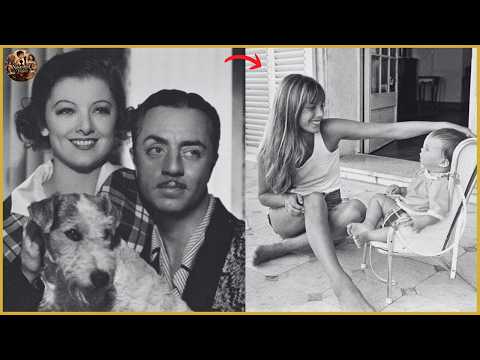
But these are not just pictures—they are stories waiting to be told. Behind every smile, every glance, there’s a tale of triumph, heartbreak, and the relentless pursuit of dreams. As we delve into this collection, you’ll find yourself transported to a time when music was soulful, fashion was bold, and stars were larger than life.
“These photos are like windows to the past,” says archivist and curator, Eleanor Hart, who has spent decades preserving Hollywood’s visual history. “They remind us of the joy, the passion, and the humanity of those we idolized.”
Indeed, the collection spans four decades of seismic cultural shifts. The 1940s bring us the stoic elegance of film noir heroes and the sweet harmonies of big bands. The 1950s burst with the birth of rock ‘n’ roll and the rise of the rebellious teen idol. The 1960s capture the free love and psychedelic revolution, while the 1970s showcase the glitter and grit of punk and disco. Finally, the 1980s explode with neon colors, synth-pop, and the dawn of the MTV generation.
Among the highlights is a never-before-seen photograph of a young Marilyn Monroe, laughing candidly at a studio party in 1953. Her radiant smile and carefree demeanor offer a stark contrast to her tragic later years, reminding us of the vibrant woman behind the legend. Another gem features Elvis Presley in 1968, backstage before his comeback special, his face a mix of nerves and excitement as he prepares to reclaim his throne.
But perhaps the most poignant are the everyday moments: James Dean reading a script in a dingy diner, Audrey Hepburn grocery shopping in a simple dress, and John Lennon and Yoko Ono sharing a quiet moment in their New York apartment. These snapshots humanize the icons, making them feel like old friends we’ve known all along.
As we prepare to share these images with you, we invite you to immerse yourself in the nostalgia. Let the memories wash over you, and perhaps, you’ll find a piece of your own youth reflected in the eyes of these stars. Stay tuned as we unveil the stories behind the photos and the secrets they hold.
The archive itself is a maze of unmarked boxes and dusty film canisters, tucked away in a climate-controlled vault beneath a Pasadena bungalow. Eleanor leads us through it with the practiced ease of a librarian who knows every spine by touch. “People think nostalgia is about the past,” she says, pulling a manila folder from a shelf. “It’s not. It’s about who we were when we first saw these faces.”
She sets the folder down and opens it slowly, almost reverently. Inside are contact sheets from a forgotten 1962 photo shoot—dozens of tiny frames of a woman in a white dress, laughing, turning, caught mid-gesture. Eleanor taps one frame with her finger. “That’s Natalie Wood, three weeks before she filmed Gypsy. The photographer was a nobody. Nobody remembered his name. But look at her.”
The image is startling in its intimacy. Wood isn’t posing. She’s caught in the middle of a joke, one hand pressed to her mouth, eyes crinkled with genuine delight. It’s the kind of moment no publicist would ever approve—and that’s precisely why it matters.
Eleanor explains that the collection came to her in fragments, pieced together from estate sales, forgotten studio vaults, and the attics of aging photographers. “Half of these photos were nearly thrown away,” she admits. “One box was labeled ‘Rejects—Do Not Use.’ That box held the best shots of the entire decade.”
She pulls out another print: a young Frank Sinatra in 1944, slumped in a folding chair backstage at the Paramount Theatre, tie loosened, eyes closed, the screams of bobby-soxers still echoing faintly through the walls. He looks exhausted and impossibly young all at once. “He was twenty-eight there,” Eleanor says. “Already a legend. Already tired of it.”
But the collection isn’t only about the famous. Tucked among the icons are photographs of the people who orbited them—the session musicians, the costume fitters, the stagehands. A 1975 shot captures a unnamed backup singer mid-laugh with a young Stevie Wonder, her hand resting on his shoulder like an old friend’s. Another shows a lighting technician adjusting a spotlight for Judy Garland, his face lit with the same glow that would soon fall on her.
“The stars didn’t exist in a vacuum,” Eleanor says. “They were held up by hundreds of ordinary people. These photos honor them too.”
She pauses at a particular box, one she’s clearly saved for last. It’s smaller than the others, wrapped in twine, and she hesitates before untying it. “I almost didn’t include these,” she says quietly. “They’re… different. More personal. But I think people deserve to see them.”
The lid comes off, and inside is a stack of Polaroids—instant photos, faded at the edges, the kind celebrities took themselves in the ’70s and ’80s. Eleanor fans them out on the table. There’s a young Michael Jackson, barely out of his teens, grinning beside a girl in pigtails who is clearly not famous at all. There’s Dolly Parton in a bathrobe, curlers in her hair, holding a cup of coffee and laughing at whoever’s behind the camera.
And then there’s one that makes Eleanor go quiet. She slides it across the table without a word. It’s a Polaroid of a man’s hand—just a hand, resting on a piano key—and written on the white border in blue ink are the words: “For the ones who listen.” No face. No name. Just a hand, and a message that feels like a secret passed between two people who never met.
Eleanor lets the silence stretch before she speaks again. “That one came from an estate sale in Burbank. The seller had no idea who it belonged to. She found it in a shoebox of old receipts.” She turns the Polaroid over, as if the back might offer something the front refuses to. It doesn’t. Just more faded white, a faint watermark from the film’s manufacturer long since out of business.
“I’ve spent three years trying to identify the hand,” she admits. “I’ve compared it to every pianist I could think of. No luck. But I stopped trying after a while. I decided it was better not to know.”
She sets it down gently, the way you’d set down something that might break. “Because the mystery is the point, isn’t it? Some things are meant to stay half-finished. A message without a sender. A song without a title.”
The vault hums softly around us—the climate control, the fluorescent lights, the distant sound of a fan. Eleanor moves to a filing cabinet and pulls open a drawer labeled simply “1979–1983.” Inside are envelopes, each one marked with a name in her neat, looping handwriting.
“I organize by year, not by name,” she explains. “Because the years tell the story better. You can watch the shoulder pads get bigger, the hair get wilder, the smiles get a little more guarded. The ’80s were when the walls went up. Everyone started protecting themselves.”
She hands me an envelope. Inside is a photograph of a woman in a leotard and leg warmers, mid-stretch in a dance studio, her face flushed with exertion. It takes a moment to recognize her—Jane Fonda, years before the workout empire, back when she was just an actress trying to stay in shape between films.
“That’s from 1980. Before the videos. Before the empire. Just a woman in a studio, trying to feel strong,” Eleanor says. “I love this one because it’s not about fame. It’s about discipline. About showing up.”
She slides the photo back into its envelope and closes the drawer with a soft click. Then she turns to face me fully, and for the first time, she looks tired—not physically, but in the way people do when they’ve been carrying something heavy for too long.
“There’s one more thing I need to show you,” she says. “And I need you to understand something first. This collection—it’s not just about preserving the past. It’s about asking a question.”
She walks to the far end of the vault, where a single framed photograph hangs on the wall, apart from everything else. It’s black and white, grainy, taken from a distance. A group of people stand on a soundstage, clustered around a piano. In the center, unmistakable even in shadow, is a man with a guitar slung across his back.
“That’s 1966,” Eleanor says. “The session for ‘Yesterday.’ Paul McCartney had just written it, and he wasn’t sure it was any good. He played it for the others, and they told him it was fine. Just fine. Can you imagine?”
She pauses, letting the weight of it settle. “The question this collection asks is simple: what do we owe the past? Do we owe it accuracy? Reverence? Or do we owe it honesty—the messy, unflattering, human truth?”
She turns away from the photograph and back toward the boxes. “I’ve decided to include everything. The flattering and the not. The legends and the nobodies. Because that’s what makes it real. That’s what makes it ours.”
The vault feels smaller now, more intimate, as if the walls have drawn closer to listen. Eleanor reaches for another box—this one unmarked, its cardboard soft with age—and sets it on the table between us.
“This is the last box,” she says. “And I haven’t opened it yet. I’ve been waiting for the right moment.”
She looks at me, and there’s something in her expression I can’t quite read—anticipation, maybe, or fear. “Do you want to see what’s inside?”
Eleanor lifts the flaps with steady hands. Inside, there are no photographs at all—just a single reel of 16mm film and a folded note in faded pencil. “If you’re reading this, the pictures are yours now. Show them kindly.” No signature. Only a small drawing of a piano key in the corner.
She laughs softly, almost to herself. “Three years of cataloging, and the last box isn’t even mine to open.” She holds the reel up to the light, and I can see the ghost of a frame inside—a face, maybe, or a stage, impossible to tell.
“We’ll project it tonight,” she decides. “Whatever’s on it, we’ll show it. That’s the whole point, isn’t it? Not to know first. Just to look.”
She places the reel gently beside the Polaroid of the hand, and for a moment the two objects seem to speak to each other across the table—one a message without a sender, the other an image without a name.
Outside, the Pasadena sun is sinking low, casting long shadows through the vault’s single window. Eleanor doesn’t move to close the box. She leaves it open, waiting.
So what do you think—should she run the film tonight, or leave the last mystery sealed a little longer?
Report this article
Select a reason for reporting:






