The jungle was a living, breathing enemy. It swallowed entire battalions whole, and victory was measured in inches. In the dense, suffocating forests of Vietnam’s Central Highlands, a single step could mean death, and the air was thick with the stench of fear and decay. This is the story of the battles that time forgot—from the blood-soaked slopes of Hamburger Hill to the deadly ambush at Long Hai, where Australian soldiers faced a cunning foe in a labyrinth of tunnels and landmines.
But first, we must go back to June 1967, to a place called Dak To, where American paratroopers of the 173rd Airborne Brigade were about to walk into a nightmare. They thought they were hunting the enemy. Instead, they became the prey.
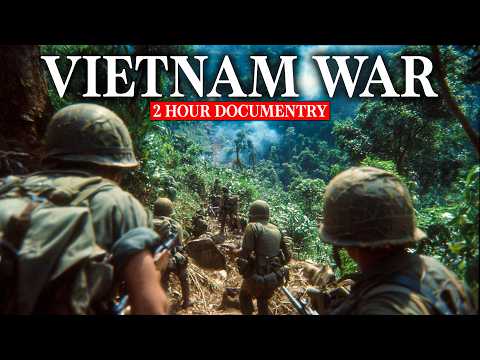
The Central Highlands were a strategic prize. The North Vietnamese Army (NVA) was pouring troops into the region, aiming to cut supply lines and infiltrate South Vietnam from Cambodia and Laos. American commanders, confident in their firepower, launched Operation Francis Marion—a series of search-and-destroy missions to crush the enemy before they could strike. But the jungle had other plans. Thick canopy, steep hills, and torrential rain slowed movement to a crawl. Soldiers carried nearly 100 pounds of gear, earning them the nickname “elephant soldiers.”
Initial skirmishes were small, but by late April, larger NVA units were encountered. One of the first major clashes occurred near Dak To, where American infantry fought a fierce battle against an NVA battalion. Both sides suffered heavy casualties, and it became clear that the enemy was growing stronger. More troops were deployed, including the paratroopers of the 173rd. By June, the situation had escalated. The NVA was launching bigger, more aggressive attacks.
On June 22, 1967, the Battle of the Slopes erupted. The 2nd Battalion of the 53rd Infantry Regiment was sent to patrol Hill 1338, a strategic high point overlooking the surrounding jungle. Alpha Company moved cautiously through the dense brush, visibility near zero. Then the jungle exploded with gunfire. Hundreds of NVA soldiers swarmed from all directions, attacking the paratroopers in a brutal, close-quarters fight. Soldiers fought with bayonets, rifle butts, and even their fists. Despite their courage, Alpha Company was overwhelmed. More than half the company was killed. Survivors fled through the jungle, carrying wounded comrades.
The aftermath was devastating: 76 American soldiers dead, one of the highest single-battle losses for the 173rd. Survivors described the horror of seeing friends slaughtered, bodies left behind, and the enemy’s ruthless efficiency. American commanders were stunned. They had underestimated the NVA’s strength and organization. Dak To was far from over.
In response, more troops and supplies were rushed to the region. The 1st and 3rd Brigades of the 1st Air Cavalry Division and South Vietnamese elite forces were brought in. By late summer, American troop numbers in Dak To had doubled. But the NVA was not deterred. They were preparing for something bigger—a massive offensive that would culminate in the Tet Offensive.
As American forces fortified their positions, the NVA was regrouping, bringing in thousands of fresh troops. By October 1967, they had deployed over 6,000 soldiers, including three full regiments and a reserve regiment, supported by the 40th Artillery Regiment. Their goal was not just to fight, but to lure American forces into the highlands, weakening them for the Tet Offensive. They built miles of tunnels, trenches, and bunkers—a fortified network that would prove deadly.
On October 12, 1967, the U.S. launched Operation MacArthur, aiming to find and destroy the enemy before they could attack. The 4th Infantry Division, the 173rd Airborne Brigade, and South Vietnamese forces participated. The paratroopers were about to face their toughest fight yet. The Battle of Hill 823 was a deadly trap. Bravo Company, 4th Battalion, 503rd Infantry, was ordered to clear Hill 823 of enemy forces. As they advanced, they were met with a hail of machine-gun and mortar fire. The NVA was waiting, entrenched in bunkers and trenches connected by tunnels. The paratroopers were pinned down for hours. Artillery support with beehive rounds finally broke the enemy’s defenses, allowing the Americans to take the hill. But the cost was high, and the survivors knew the real battle was just beginning.
After Hill 823, American commanders believed the NVA was retreating. They ordered Task Force Black and Task Force Blue to pursue and destroy the enemy before they could regroup. On November 10, 1967, Task Force Black followed a wire trail into the jungle, expecting to find the retreating enemy. Instead, they walked into an ambush. The NVA’s 8th and 9th Battalions of the 66th Regiment were waiting. Heavy machine-gun and RPG fire tore through the paratroopers. Task Force Black was surrounded. Private First Class John Barnes sacrificed his life by smothering a grenade to save his comrades. He was posthumously awarded the Medal of Honor. Task Force Blue fought through the jungle for a full day to reach them. The combined forces forced the NVA to retreat, but the losses were devastating. The 173rd was bloodied, and morale was low.
The fighting intensified. On November 12, 1967, the Dak To airfield was besieged. The NVA launched a direct attack, shelling the airfield with artillery and mortars for three days. A mortar round hit a C-4 explosive storage area, creating one of the largest explosions of the war. Two C-130 transport planes were destroyed, and over 1,100 tons of ammunition and fuel went up in flames. Despite the chaos, American soldiers held their ground, using bunkers and counter-battery fire to slow the enemy. But the damage was done. Supplies were critically low.
Realizing the NVA was using nearby hills to launch attacks, American commanders ordered their recapture. The first target was Hill 1338, which overlooked the Dak To valley. The battle lasted two days, with American soldiers encountering a complex system of tunnels and bunkers. Meanwhile, Alpha Company, 1st Battalion, 503rd Infantry, was sent to clear Hill 882. They expected a small enemy force, but instead faced a large NVA unit firing AK-47s and grenades. Airstrikes and artillery were called in, but the dense jungle made targeting difficult. The fight raged for two days. At one point, paratroopers had to rescue a group of journalists trapped in the crossfire. In a controversial decision, the journalists were evacuated before seriously wounded soldiers. The Americans eventually took Hill 882, but the worst was yet to come.
The bloodiest battle was at Hill 875. In mid-November 1967, the NVA had fortified the hill with a network of bunkers, trenches, and machine-gun nests. On November 18, a small U.S. special forces team was sent to reconnoiter the hill. They found a full NVA regiment—the 174th—entrenched in deep, well-camouflaged bunkers. The position was nearly impregnable. The team retreated and called for help. The 2nd Battalion, 503rd Infantry, was ordered to take the hill. But the battalion was understrength, with only 290 men instead of the expected 450. They attacked the next morning after a massive artillery and air bombardment. Delta Company led the assault, with Charlie Company on the right and Alpha Company in reserve. As the paratroopers moved up the slope, the first soldier was shot dead. The jungle erupted with gunfire. The NVA was everywhere, waiting in their kill zones. Within minutes, the Americans were pinned down by machine-gun, mortar, and RPG fire. Delta and Charlie Companies were trapped. At 1 p.m., a second attack was launched. Sergeant Leonard Duran threw a grenade into a bunker, killing its occupants, but the tunnel system allowed the NVA to replace them instantly. Friendly artillery fire accidentally hit American positions, causing more casualties. Alpha Company’s Captain Eugene Kiely ordered a withdrawal. Specialist Carlos Lozada, manning a machine gun, refused to retreat, covering his comrades’ escape until he was mortally wounded. He was posthumously awarded the Medal of Honor. But his sacrifice was not enough. By afternoon, Alpha Company was overrun, and Captain Kiely was killed. The 2nd Battalion was surrounded. Ammunition was running low, and rescue helicopters could not land due to heavy enemy fire.
As night fell on November 20, the paratroopers fought for survival. Without fresh supplies, they held defensive positions. Many wounded soldiers had to bandage their wounds with pieces of clothing from the dead. The 4th Battalion, 503rd Infantry, was sent to rescue the survivors, but the journey through the jungle was slow and dangerous. At 5:30 p.m., Bravo Company finally reached the base of Hill 875 and linked up with the trapped paratroopers and Major William Kelly. The battalion’s executive officer was flown in to take command. Supplies were scarce, and the enemy was everywhere. Kelly knew that if they didn’t take the hill soon, they would all die.
On November 21, the final assault began. The Americans used everything they had—artillery, airstrikes, and a full battalion attack. But the NVA was still waiting. The paratroopers advanced into a hail of gunfire. They reached the first line of trenches but could not push further. The battle had been raging for four days, and both sides were exhausted. By November 22, the smell of death and burned trees filled the air. The 173rd was running out of men, and there were no reinforcements. Many paratroopers were so weak they survived on a few sips of water a day.
Then, on Thanksgiving Day, November 23, the final push came. The 4th Battalion, 503rd Infantry, attacked from one side, while the 1st Battalion, 12th Infantry, climbed from the other. The NVA put up a fight, but their numbers were depleted. The Americans finally reached the summit at 11:22 a.m. The NVA was gone, having fled through tunnels after a week of brutal combat. The battle was over, but the cost was unimaginable. Of the 173rd Airborne Brigade, only 130 soldiers remained unscathed. The final tally: 361 American soldiers killed, 15 missing, and 1,441 wounded. Over 1,000 NVA soldiers were killed. But the battle broke American morale. Soldiers were exhausted, traumatized, and mentally scarred. General William Westmoreland, the U.S. commander in Vietnam, downplayed the losses and claimed a great victory. In reality, the American forces were nearly annihilated, and the NVA had succeeded in diverting them from the upcoming Tet Offensive. For the paratroopers of the 173rd, it was a devastating blow. The memories of that battle would never fade. They had fought as hard as they could, but many would never come home.
In the aftermath, the 173rd Airborne Brigade’s paratroopers continued to fight, earning a reputation for courage and resilience. Two soldiers, PFC John Barnes and Specialist Carlos Lozada, were posthumously awarded the Medal of Honor for their extraordinary bravery. Their stories remain a testament to the courage and sacrifice of American soldiers in Vietnam.
The Battle of Dak To was one of the most brutal and costly engagements of the Vietnam War. The 173rd Airborne Brigade fought with unparalleled valor against insurmountable odds in the dense jungles and steep hills of the Central Highlands. Though the U.S. claimed victory, the battle had weakened American forces just months before the Tet Offensive. A turning point in the war, and the bravery of the soldiers who fought and sacrificed will never be forgotten.
Thank you for watching this video. We hope you enjoyed it. Don’t forget to like, comment, and subscribe for more amazing war history. See you in the next video.
In 1967, deep in the jungles of Vietnam, U.S. Marines faced one of the most brutal and challenging operations of the war: Operation Kingfisher. Conducted near the Demilitarized Zone (DMZ), it was a deadly clash between the U.S. Marine Corps and the North Vietnamese Army (NVA). It was a fight for survival, for territory, and for a place in history.
The Vietnam War is not just a story of battles. It is the story of the men who fought them. The Marines who endured the hell of Con Thien faced not only the enemy but also relentless artillery, deadly ambushes, and the merciless jungle. Many never returned home. To all veterans who served in Vietnam, we honor and thank you for your bravery and sacrifice. Your courage will never be forgotten.
If you love history and honor those who sacrificed for their country, please hit the like button and subscribe to our channel. It helps us bring these incredible battle stories to light and keep their memory alive. Join us as we dive deep into one of the bloodiest and most intense battles of the Vietnam War: Operation Kingfisher. It is a story of courage, sacrifice, and the brutal reality of war.
Let’s begin by understanding the battlefield. The Demilitarized Zone, or DMZ, was a buffer zone separating North and South Vietnam. But in reality, it was one of the most dangerous places of the entire war. The North Vietnamese Army (NVA) used the area to infiltrate south. The U.S. forces, especially the U.S. Marine Corps, tried to stop them. At the heart of this deadly battlefield was a small but powerful U.S. Marine outpost called Con Thien.
Con Thien was an early warning base, established to block NVA infiltration south. But in reality, it became a living nightmare for the Marines stationed there. The outpost was constantly hit by artillery, mortars, and rocket fire. The Marines called it “the Meat Grinder” because that’s exactly what it was.
The U.S. strategy was simple: find the enemy, engage them, and destroy them. Marines conducted search and destroy missions deep into enemy territory. But it was extremely risky. The NVA knew the area well, using booby traps, ambushes, and hidden bunkers to trap the Marines.
In mid-1967, U.S. commanders noticed the NVA massing troops near the DMZ. In response, they launched Operation Kingfisher. A large-scale assault aimed at hitting the enemy hard and pushing them back before they could launch a counterattack. What followed was one of the most savage battles of the Vietnam War.
The Marines were ordered in, and the NVA had their own plans. And in the jungles of Vietnam, a deadly battle was about to begin.
By mid-1967, the U.S. military realized something big was coming. North Vietnamese forces were massing near the DMZ, bringing in thousands of troops, heavy weapons, and artillery. Intelligence reports indicated the NVA was preparing a major offensive. One that could threaten U.S. bases and penetrate deep into South Vietnam.
The Marines couldn’t wait for the enemy to strike first. They had to take the fight to the NVA. That’s when U.S. commanders launched Operation Kingfisher. The goal was to engage and destroy the enemy before they could attack. The operation involved a large-scale assault on enemy positions in Con Thien and the surrounding jungle. The 2nd Battalion, 4th Marines (2/4), and other Marine units would enter the NVA area, find their forces, and annihilate them.
But this was no ordinary mission. The NVA had been preparing for months, building bunkers, digging tunnels, and setting deadly traps. The Marines knew the risks. The jungle and brush provided perfect cover for enemy ambushes. Enemy artillery hidden across the DMZ could rain down fire at any moment. And worst of all, the NVA was prepared to fight to the last man.
Yet, the Marines pushed forward. They were warriors, trained for combat and ready for anything. What they didn’t know was that the enemy was waiting for them with a plan that would lead to one of the most savage and bloody battles of the Vietnam War.
The trap was set, and the first shots of Operation Kingfisher were fired before sunrise on September 13, 1967. In the darkness, battle descended on Con Thien. A company of North Vietnamese troops silently approached the northeastern perimeter of the Marine base at Con Thien. Their mission was simple: breach the barricades, overrun the base, and annihilate the Marines inside.
But the Marines had been preparing for weeks. Knowing the enemy was close, they were on high alert. When the first wave of NVA soldiers reached the perimeter, they were met with a hail of gunfire. Machine guns roared, rifles crackled, and mortars thumped. The battle descended into chaos as the Marines fought off wave after wave of enemy soldiers.
Then, artillery from nearby gun positions unleashed a devastating barrage on the attacking enemy. The jungle shook with explosions, and dirt, splinters, and bodies flew everywhere. The enemy had no choice but to retreat into the darkness. The attack had failed.
The NVA withdrew, leaving behind their dead and wounded, but the battle was far from over. It was only the beginning. This attack on Con Thien was a warning: a sign that a bigger fight was coming. The Marines had survived the night, but Operation Kingfisher was about to become one of the bloodiest battles of the Vietnam War.
Just one week after the failed attack on Con Thien, the Marines launched a counteroffensive. On September 21, 1967, the 2nd Battalion, 4th Marines began an operation south of the DMZ and east of Con Thien. The goal was to find and destroy the enemy forces hiding in the dense jungle.
Three Marine companies—E, F, and G—advanced through thick, difficult terrain, perfect for an ambush. And that’s exactly what awaited them. Suddenly, machine guns erupted from multiple directions. Mortars and RPGs exploded around them. The NVA had set a perfect trap. A deadly ambush encircled the Marines and caught them in a crossfire.
The battle turned into a desperate fight for survival. Marines took cover in the mud and returned fire as best they could. But the enemy was everywhere. Snipers targeted squad leaders. Explosions tore through the vegetation, sending deadly splinters into the air.
Despite the chaos, the Marines fought with everything they had. Air support was called in. Jet aircraft roared overhead, dropping bombs dangerously close to the Marine positions, while helicopter gunships raked the enemy with rockets and machine-gun fire. By evening, the battlefield was a cauldron of fire. The Marines managed to break contact and withdraw, but at a heavy cost.
16 Marines were killed. 18 were wounded. The NVA, who had orchestrated the ambush perfectly, had 39 confirmed killed, but their actual losses were unknown. Worst of all, 15 Marines were left behind. A heartbreaking reality of war. The survivors had no choice but to retreat, leaving their comrades in enemy-controlled territory. It would take weeks to recover them.
This battle was a harsh lesson in the dangers of fighting in the DMZ. The NVA used the terrain to their advantage. They didn’t just hide. They waited, planned, and struck with deadly precision. And the worst days were yet to come.
The night of October 14, 1967, started like any other for the Marines of the 2nd Battalion, 4th Marines. They were deployed near Washout Bridge, a vital position between Con Thien and Strongpoint C-2. But as they prepared to rest for the night, the North Vietnamese Army (NVA) had different plans.
At exactly 1:25 a.m., the silence was shattered. A massive artillery barrage pounded the Marine positions. The night sky lit up with explosions, and dirt, debris, and shrapnel flew everywhere. The NVA’s heavy guns, positioned just across the DMZ, pounded the Marines for nearly an hour, softening them up for the assault to come.
Under the cover of darkness, hundreds of NVA soldiers advanced. At 2:30 a.m., they launched a full-scale assault on the flank of Company G. RPGs destroyed machine-gun nests, and enemy soldiers breached the perimeter. In the chaos, Company G’s command post was overrun. Their company commander, platoon leaders, and forward observer were all killed, leaving the unit leaderless.
With no leadership, the Marines and NVA engaged in hand-to-hand combat with bayonets, knives, and rifle butts. But the Marines refused to break. Company F rushed forward to reinforce the shattered perimeter. At the same time, AC-47 Spooky gunships arrived overhead, raining thousands of rounds down on the enemy positions.
By 4:30 a.m., the tide began to turn, and the NVA was forced to withdraw. The battlefield was littered with the bodies of American and enemy soldiers. The Marines had held their ground, but at a heavy cost. 21 Marines were killed. 23 were wounded, and the NVA left behind 24 confirmed dead, though their actual losses were likely much higher.
This attack proved how far the NVA was willing to go. They attacked in waves, suffered massive casualties, and still didn’t stop. But it also proved the resilience and courage of the U.S. Marines, who, though outnumbered, held their position against near-overwhelming odds. Yet Operation Kingfisher was not over. The final battle was yet to come.
By late October 1967, Operation Kingfisher was nearing its final phase. The Marines had repelled attack after attack, but the enemy was still out there, waiting, and ready to strike. On October 25, the 2nd Battalion, 4th Marines launched a final push north from Con Thien along Route 561 toward the DMZ.
The area was thick with brush, limiting visibility. It was perfect ambush country, but for most of the day, no enemy was seen. Then, as night fell, the sky lit up with fire. NVA artillery and rockets rained down on the Marine positions. The barrage lasted for hours, killing the battalion executive officer and wounding the commanding officer, Lieutenant Colonel James Hammond.
Despite the chaos, the Marines held their ground. By October 26, the Marines continued their advance, pushing deeper into enemy territory. As they moved forward, they were suddenly hit by NVA mortar and small arms fire. Helicopters arrived to evacuate the wounded. But the enemy was ready. An NVA machine-gun team shot down a CH-34 transport helicopter, killing the pilot and door gunner. A second helicopter was also hit. It crash-landed nearby, and the crew realized a major attack was coming.
Lieutenant Colonel John Stutt, who had taken command, called for reinforcements. Company F was ordered to link up with two companies of the 3rd Battalion, 3rd Marines. The night of October 26–27 was a continuous battle. NVA forces launched wave after wave of ground attacks, probing the Marine defenses. The Marines fought back with machine guns, grenades, and air support, repelling each assault.
By 2 a.m. on October 27, the enemy withdrew, and by first light, they were gone. The Marines found 19 dead NVA soldiers around their perimeter, though the actual number was likely higher. The two-day battle cost the Marines 8 killed and 45 wounded, but they had held their ground once again. It was the last major battle of Operation Kingfisher.
The fighting had been savage, costly, and relentless. But the Marines had held their ground, and just a few days later, on October 31, 1967, Operation Kingfisher officially ended. But after three months of brutal combat, the war was still not over.
Operation Kingfisher officially ended on October 31, 1967. The Marines had faced deadly ambushes, relentless artillery, and constant NVA assaults. But what had they achieved? Strategically, the operation had prevented the NVA from launching major attacks south of the DMZ. The Marines had confirmed over 1,100 enemy killed and likely many more. The NVA had been forced to retreat, but not destroyed.
On the human side, the cost was devastating. 340 U.S. Marines were killed and 1,461 were wounded. Some died in firefights, some in artillery strikes, and some were left behind on the battlefield, their bodies recovered later. For the survivors, the scars of Kingfisher would last a lifetime.
Even before Kingfisher ended, the fighting continued. The Marines immediately joined Operation Kentucky, another search-and-destroy mission in the same area. The NVA still controlled the jungle to the north, and the Marines who fought at Kingfisher would have to fight for every inch of ground. It was a test of courage, endurance, and determination. They had fought against impossible odds, never wavered under ambush or artillery, even in the toughest jungle terrain.
Today, we remember their bravery, their sacrifice, and their legacy. The war may be over, but the story of Operation Kingfisher will never be forgotten.
Operation Kingfisher was led by the 3rd Marine Amphibious Force (III MAF), with most units from the 3rd Marine Division. Key battalions included the 2nd Battalion, 4th Marines (2/4), which participated in multiple battles including the Trace Ambush and the night attack at Washout Bridge. The 3rd Battalion, 3rd Marines (3/3) reinforced 2/4 in the final phases. The 2nd Battalion, 9th Marines (2/9) conducted search-and-destroy missions near the DMZ. The 3rd Battalion, 9th Marines (3/9) helped secure the Con Thien area and engage enemy forces. The 3rd Battalion, 26th Marines (3/26) took part in defensive operations and counterattacks.
The Marines relied heavily on armor and air support, including M48 tanks from the 3rd Tank Battalion, LVTP amphibious vehicles, M50 Ontos tank destroyers armed with recoilless rifles, artillery support from the 12th Marines, and helicopter squadrons for troop transport and medical evacuation.
The main enemy force was the PAVN 324B Division, one of the NVA’s most experienced and battle-hardened units. This division included the 812th Regiment, responsible for several major attacks including the Con Thien assault, as well as artillery and sapper units for shelling and close infiltration of Marine positions. The NVA had the advantage of terrain and artillery support from across the DMZ, making them a deadly and cohesive force that inflicted heavy casualties on the U.S. Marines.
Kingfisher was one of the most costly battles for U.S. Marines in the Vietnam War, lasting three months. 340 Marines were killed. 1,461 were wounded. Dozens were missing or left in enemy territory, later recovered. Many Marines died in ambushes, night attacks, and relentless artillery. On September 21, the Battle of the Trace alone wounded 118 Marines in one day, and the October 14 attack at Washout Bridge nearly wiped out an entire company’s leadership.
The U.S. forces reported 1,117 confirmed NVA killed and an estimated 1,942 additional enemy killed by airstrikes and artillery. Only five enemy soldiers were captured. Though the U.S. inflicted massive casualties, the NVA fought aggressively, showing no fear of high casualty rates, equipment, or battlefield losses.
U.S. losses included at least one UH-34 helicopter shot down, with its crew killed. Several M48 Patton tanks and armored vehicles were damaged or destroyed by RPG fire. Con Thien and nearby bases were shelled daily, requiring constant repairs. NVA losses included hundreds of weapons captured from dead enemy soldiers. Numerous bunkers, tunnels, and artillery positions were destroyed. The battlefield around Con Thien was scarred and cratered, a haunting reminder of the savage fighting.
The Marines relied on search-and-destroy operations to find and eliminate the enemy before they could launch large-scale attacks. Their key tactics included mobile patrols and large-unit sweeps to locate NVA positions. Combined arms coordination with infantry units working alongside M48 Patton tanks, tank destroyers, and amphibious armored vehicles, plus additional firepower, artillery, and air support. The Marines used howitzers, airstrikes, and helicopter gunships to soften enemy positions, especially before assaults on fortified defenses like Con Thien. They built trenches, bunkers, and barbed-wire barriers to slow enemy attacks and prevent ambushes. Quick-reaction forces were always ready to assist units caught in enemy traps.
These tactics helped the Marines hold their ground, but the enemy was equally formidable. The NVA’s tactics included guerrilla warfare, hit-and-run attacks, and sheer volume of fire to wear down the Marines. Their key tactics were ambushes, luring Marines into kill zones with hidden snipers, machine guns, and RPGs, and daily shelling from across the DMZ with hundreds of rounds. They used close-quarters attacks, infiltrating Marine positions at night and engaging in hand-to-hand combat to prevent airstrikes. They employed tunnel warfare, hiding troops and supplies in bunkers and tunnels, making them hard to find. Small enemy teams infiltrated bases with explosives to destroy bunkers and ammo dumps.
Challenges for the Marines included difficult terrain, dense jungle, and deep mud that slowed movement and made it dangerous. Constant shelling: by the final phase, over 1,200 enemy shells hit Con Thien and nearby bases daily. Difficult medevac: helicopters were often shot down while trying to evacuate wounded Marines. The NVA could escape across the DMZ where U.S. forces could not follow. Mental and physical exhaustion: Marines fought in extreme heat and heavy rain.
Despite these challenges, the Marines held their ground and fought back with everything they had. Their resilience prevented the NVA from taking Con Thien, but at a heavy cost. On October 31, 1967, Operation Kingfisher officially ended, but the war in the DMZ was far from over. The Marines had prevented the NVA from achieving a major victory. But the cost was high. 340 Marines were killed, 1,461 were wounded, and many more carried the physical and mental scars of the battle. The NVA suffered over 1,100 confirmed killed, plus likely thousands more from artillery, airstrikes, and infantry battles. Yet, despite these heavy losses, they were not defeated. Soon after Kingfisher ended, U.S. forces launched Operation Kentucky, another mission to push the NVA back in the same area.
Operation Kingfisher was a brutal example of the changing strategy in the Vietnam War. The battle proved that the NVA could absorb massive casualties and keep fighting. They refused to retreat, even when cornered. U.S. forces’ reliance on firepower was not always enough. Despite tanks, artillery, and airstrikes, the Marines suffered heavy casualties. The war was becoming a war of attrition. Both sides were locked in a struggle where victory was measured in body counts, not territory. The siege of Con Thien became a symbol of the Marines’ resilience, but it also exposed the limits of American strategy in Vietnam. Some historians believe the battle was part of Hanoi’s plan to divert U.S. forces before the Tet Offensive, which would come just months later for the Marines who fought there.
Kingfisher was a test of courage, endurance, and survival. Their sacrifice is worth remembering. Over three months of brutal combat, U.S. Marines fought against insurmountable odds, including relentless ambushes, artillery barrages, and close-quarters combat. The enemy was highly aggressive. The terrain was hostile, and the cost in lives was staggering. When the battle ended on October 31, 1967, over 340 Marines were killed and nearly 1,500 wounded. The North Vietnamese Army (NVA) suffered over 1,100 confirmed deaths and heavy losses, but they kept fighting. The war was far from over.
Kingfisher highlighted the courage, sacrifice, and resilience of the Marines who held their ground at Con Thien. Their determination prevented the NVA from making major gains. But at a devastating cost, it was a battle of survival and endurance that proved that victory in Vietnam was not just about firepower. It was about the soldiers on the ground, fighting for each other. Today, the battle remains a powerful reminder of the sacrifice of Operation Kingfisher and all veterans of the Vietnam War.
America’s forgotten war, the Vietnam War dragged on for years. By 1969, American soldiers had been fighting for four years, facing brutal jungle and a relentless enemy in a war with no end in sight. The American public was growing tired of the conflict. Horrific images of young men dying in the jungles of Vietnam flooded newspapers and television screens. People were angry. Protests erupted across the country. One battle in particular stunned the nation: the Battle of Hamburger Hill. It was a bloody fight for a hill with no real strategic value. 72 American soldiers died, and many more were wounded. The battle became a symbol of the brutality and futility of the war.
But what if I told you that at the same time, just 100 miles south of Hamburger Hill, another battle was raging? A battle just as fierce, if not more so, lasting four weeks and testing American soldiers to their limits. Against an enemy whose troops, bullets, or bombs seemed endless. Like Hamburger Hill, this battle was kept secret. The government didn’t want to face more public outrage. The soldiers who fought there were forgotten, their sacrifice unknown to the world. This is the story of the Battle of Tam Ky, one of the most brutal and overlooked battles of the Vietnam War.
Before we begin, please like the video and subscribe to the channel. Your support helps us bring more forgotten stories like this to light. Let’s dive into the battle that history tried to erase.
By 1969, the Vietnam War was at a critical juncture. The North Vietnamese Army (NVA) had become stronger, more organized, and more determined than ever. The Americans were struggling to achieve victory. And public support for the war was collapsing at home. One of the most dangerous areas in Vietnam was Quang Tin Province, located just 40 miles south of Da Nang. This region was vital because it connected North and South Vietnam. Whoever controlled the province could control the movement of troops and supplies. The U.S. division tasked with defending this area was already under pressure. But in early May 1969, something worse happened. The NVA secretly moved two full regiments into the province. These were battle-hardened troops, highly trained and ready to engage the American division. They didn’t know what was about to happen.
On May 12, 1969, the NVA launched a massive surprise attack. Within just two days, they seized control of 80 percent of the province. American bases, fire support zones, and landing zones were surrounded. The American division was completely unprepared. The attacks were ferocious, and the Americans fought desperately to hold their positions. One of the hardest-hit areas was Landing Zone Professional, a vital fire support base defended by the 1st Battalion, 46th Infantry Regiment. But they were outnumbered and struggling to survive.
Realizing the American division couldn’t hold the province alone, the U.S. military called for help. The Military Assistance Command, Vietnam (MACV) recognized the urgency and acted quickly. They ordered two battalions of the legendary 101st Airborne Division to deploy to the province. The operation was named Operation Lamar Plain, and it would push the 101st Airborne into one of the toughest battles of the Vietnam War.
But the soldiers of the 101st Airborne Division didn’t know what they were stepping into. They were about to face some of the most intense jungle warfare of the entire war, a battle that history would later forget.
The battle began on May 12, 1969, when the North Vietnamese Army (NVA) launched a powerful surprise attack in Quang Tin Province. They struck with overwhelming force, targeting key American bases, fire support locations, and landing zones. The attack was swift, brutal, and well-coordinated. Within just two days, the NVA had taken control of 80 percent of the province. The American forces, completely unprepared, struggled to fight back. The American division tasked with defending the area was rapidly losing ground. The situation was becoming desperate.
One of the hardest-hit locations was Landing Zone (LZ) Professional. Defended by the 1st Battalion, 46th Infantry Regiment, this vital fire support base was pounded by the NVA, who knew that if they could take it, they could isolate American forces in the region. The U.S. soldiers at LZ Professional were trapped, running low on ammunition, and under constant mortar and machine-gun fire.
Realizing the province was on the verge of being lost, American commanders knew they needed help fast. The Military Assistance Command, Vietnam (MACV) immediately called for reinforcements. Their answer: the 101st Airborne Division, one of the most elite and battle-hardened units in Vietnam, received the call on May 14, 1969. Under Operation Lamar Plain, two battalions of the 101st Airborne were ordered to deploy to Quang Tin Province. Their mission was clear: stop the NVA, rescue their comrades, and retake control of the province.
The units chosen for this dangerous task were the 1st Battalion, 501st Infantry Regiment, and the 1st Battalion, 502nd Infantry Regiment. In addition, the 1st Battalion, 46th Infantry Regiment, already fighting in the area, was attached to the task force. The soldiers of the 101st Airborne Division were tough and experienced, having fought in some of the most intense battles of the war. But as they landed in Quang Tin Province, they didn’t know they were about to step into the most harrowing fight of their entire deployment. Ahead of them were weeks of relentless combat, brutal heat, and an enemy that refused to retreat.
The battle of Tam Ky began as soon as the 101st Airborne Division arrived. May 15, 1969. The 101st Airborne Division was one of the most skilled and combat-experienced units in the U.S. Army. By 1969, they had proven themselves in some of the toughest battles of the Vietnam War. But what awaited them in Quang Tin Province was something they were not prepared for.
On May 15, 1969, the first group of 100 airborne soldiers arrived in the province. They landed in large CH-47 Chinook helicopters, carrying only essential supplies, ammunition, weapons, and a little food. Due to the urgency of the situation, their heavy equipment, food, and vehicles were to arrive later by truck and jeep. Once on the ground, they had no time to rest. The paratroopers were thrown directly into combat. Their first task was to conduct surveillance and locate and directly attack enemy positions. The 1st Battalion, 501st Infantry Regiment, was assigned to patrol near Landing Zone Professional, where the fiercest fighting was taking place. They were ordered to advance, destroy enemy bunkers, and rescue the trapped American division soldiers.
The soldiers quickly realized this was not like their previous battles. The terrain was harsh, hot, and unforgiving. Dense jungle, extreme humidity, and intense sun made every step exhausting. The soldiers were already suffering from dehydration and extreme fatigue. But they had no choice but to push forward. Adding to the danger was the enemy’s unpredictable tactics. The NVA had spent years building an extensive network of bunkers, tunnels, and hidden pits throughout the area. This underground network allowed them to move unseen, ambush American patrols, and disappear before airstrikes could hit them.
In the following days, the 101st Airborne pushed deeper into enemy territory. They encountered abandoned NVA huts, hidden weapons caches, and occasional sniper fire. But the enemy’s main force was still nowhere to be found. However, the soldiers knew one thing: the enemy was out there, waiting. And very soon, they would make their presence known in the most brutal way possible.
May 21, 1969, the Battle of Hill 937. For days, the 101st Airborne Division had been patrolling the dense jungles of Quang Tin Province, searching for the enemy. The heat was unbearable, supplies were running low, and the soldiers were exhausted. But on May 21, 1969, they finally found what they were looking for. Or rather, the enemy found them.
Intelligence reports warned of a large enemy presence near Hill 187, a densely wooded ridge overlooking key American positions. Three companies of the 1st Battalion, 501st Infantry Regiment—Bravo, Charlie, and Delta—were sent to investigate. They were accompanied by a recon platoon, tasked with scouting the area and identifying enemy positions as they advanced toward the hill. As they approached Hill 187, the recon platoon and Bravo Company were suddenly hit by intense fire. The NVA had been waiting for them. Enemy soldiers, concealed in hidden bunkers, spider holes, and trees, unleashed a torrent of AK-47, mortar, and heavy 12.7mm machine-gun fire, pinning the Americans down. The Americans were in the open with no cover, making them easy targets for 30 minutes. They couldn’t move, and any soldier who tried to raise his head was met with relentless enemy fire. Bullets flew past them, and mortar shells exploded all around.
The situation was critical. Charlie and Delta Companies arrived just in time, forcing the NVA to temporarily retreat. But the battle was just beginning, and the enemy’s positions were now known. The battalion received new orders: take the hill. The advance toward Hill 187 was a nightmare. The NVA had reinforced their bunkers with stone walls, giving them a significant advantage. Every American advance was met with machine-gun fire, grenades, and mortar shells. Worse, the enemy used underground tunnels to move between bunkers, allowing them to reoccupy positions even after they had been cleared. American soldiers would destroy one bunker, only to be ambushed by enemy soldiers emerging from hidden tunnels. The fighting turned into a brutal, close-quarters battle. Soldiers had to rely on grenades, fire support, and bayonets to clear enemy positions. The 101st Airborne was determined to push forward, but casualties were mounting, and the battle was far from over.
Amid the chaos and bloodshed of the hill, the bravery of Sergeant Santiago Aravo stood out. Sergeant Santiago Aravo, a radio telephone operator with Charlie Company, had already shown courage under fire. His actions would not only save the lives of his comrades but also earn him the Medal of Honor, though it would take 45 years for the recognition to come. As his platoon fought its way up the hill, Aravo was ordered to stay behind to provide first aid to wounded soldiers. But as he moved among the wounded, he realized the enemy had set up four machine-gun bunkers to destroy his entire unit. His comrades were pinned down, unable to move under the relentless fire, with no way to escape. Aravo had two choices: stay in cover or risk his life to save his comrades. He chose to fight. Taking two M16 rifles, he prepared himself with several hand grenades and extra ammunition. Under heavy fire, Aravo crawled through the mud and jungle toward the first bunker. He threw a grenade inside, killing the enemy soldiers within. Without hesitation, he ran to the next bunker, firing his two rifles to suppress the enemy. He repeated this process four times, destroying each machine-gun post on the hill. His fearless assault saved his platoon from annihilation and, despite his bravery, allowed the 101st Airborne to continue their attack. Aravo’s actions remained largely unknown for decades. 45 years later, in 2014, he was finally awarded the Medal of Honor for his courage.
His story is just one example of the extraordinary bravery displayed by the soldiers of the 101st Airborne during the Battle of Tam Ky. But the fight for Hill 187 was not over. The enemy was still not defeated.
From late May to early June 1969, the fighting continued at Hill 187 and Hill 376. Despite Sergeant Santiago Aravo’s incredible bravery, the battle for Hill 187 was not over. The 101st Airborne Division managed to capture some ground. But the NVA was not retreating. The fighting continued with relentless attacks, brutal ambushes, and heavy casualties.
As the sun set on May 21, 1969, American forces finally managed to capture part of Hill 187, but the cost was high. 12 killed and 49 wounded. Yet, the enemy was still there. The NVA soldiers had not fully retreated. Instead, they had moved into a large bunker complex at the top of the hill, waiting for another opportunity to attack.
The next day, American commanders made a difficult decision. Rather than risk more men in a direct assault, they called in an airstrike. Three 250-pound bombs were dropped directly on the enemy bunkers. The powerful explosions sent shockwaves through the jungle, collapsing the tunnels and forcing the remaining NVA soldiers to flee the hill. Hill 187 was finally in American hands. But the battle was not over.
The NVA was not just defending a single hill. They were controlling the entire region. As the 101st Airborne pushed forward, they encountered more and more fortified enemy positions. The next major battle was at Hill 376, where another NVA stronghold awaited them on June 2, 1969. The 1st Battalion, 506th Infantry Regiment, advanced toward Hill 376. Just like before, the NVA was ready. This time, an 18-man platoon from the 2nd Squadron, 17th Cavalry Regiment, was pinned down by a much larger enemy force. For seven straight days, the Americans fought to take Hill 376. The battle was as intense as Hill 187, with soldiers facing relentless machine-gun, mortar, and grenade fire. The enemy again used tunnels and spider holes to launch surprise attacks behind American positions, then vanish underground.
By dawn on June 9, the fighting reached its climax when Delta Company woke to the sound of enemy mortars raining down on their positions. Fortunately, the barrage was inaccurate and caused no casualties, but it was only the beginning. Intelligence reports indicated that a major enemy attack was coming. Hundreds of NVA soldiers advanced up the hill, firing everything they had at the Americans. Delta Company was on the verge of being overrun. Air cavalry arrived just in time. American helicopters and gunships swooped in, unleashing devastating firepower, stopping the enemy advance with air support and heavy artillery. The soldiers of the 101st Airborne managed to hold their ground. But as the battle was winding down, disaster struck: a friendly fire incident. An American airstrike accidentally hit Bravo Company, causing more casualties. Despite this tragedy, the soldiers continued their mission, determined to defeat the NVA by June 12, 1969.
The exhausted soldiers of the 101st Airborne finally secured Hill 376. Another brutal battle had come to an end, but the war was still far from over.
The final phase and end of Operation Lamar Plain, June–August 1969. After weeks of brutal fighting at Hill 187 and Hill 376, the 101st Airborne Division was exhausted. Soldiers had fought through extreme heat, with little rest, low supplies, and constant enemy ambushes. But it was still not over. The North Vietnamese Army (NVA) had suffered heavy casualties, but they were not completely defeated. Instead of fighting large-scale battles, they began to split into small groups and retreat into the dense jungles of Quang Tin Province. They avoided direct combat and instead relied on hit-and-run attacks, booby traps, and sniper fire.
American commanders realized the same tactics wouldn’t work. Instead of launching more attacks on enemy-held hills, they changed their strategy. The mission’s main objective was now to locate the scattered NVA forces and destroy their supply lines for the next two months. The 101st Airborne conducted regular patrols and search operations. The jungle was dangerous, filled not only with enemy snipers but also with hidden bunkers, traps, and underground tunnels. The enemy had built an entire network of hospitals, warehouses, and living quarters beneath the jungle floor. One of the largest discoveries was made near Fire Support Base Boxer, where soldiers found a massive system of enemy bunkers and tunnels. They found weapons, medical supplies, and even makeshift classrooms where the NVA trained new recruits. These findings proved how well-prepared the enemy was and why the battle had been so difficult.
By August 11, 1969, the U.S. military decided to end Operation Lamar Plain. The 101st Airborne had driven the NVA out of Quang Tin Province, and the remaining enemy forces retreated into the hills. U.S. units were returning to their bases at LZ Sally by helicopter, truck, and transport aircraft. Finally, at 8 a.m. on August 14, 1969, Operation Lamar Plain was officially declared over. A total of 126 U.S. soldiers were killed and 444 were wounded, higher than the famous Battle of Hamburger Hill. Yet, despite their sacrifice, very few people knew about this battle. It was overshadowed by other events, and many families of the fallen were even told their loved ones died at Hamburger Hill instead of Tam Ky.
The battle may have been lost to history, but the soldiers of the 101st Airborne never forgot. The aftermath and historical neglect. The Battle of Tam Ky was one of the deadliest and most exhausting battles of the Vietnam War. 126 U.S. soldiers were killed and 444 were wounded, more than the infamous Battle of Hamburger Hill. But while Hamburger Hill became a symbol of the war’s brutality, Tam Ky was largely forgotten, and the reason lies in the timing and secrecy of the war. At the same time as Tam Ky, the media was focused on Hamburger Hill. The American public was outraged by the heavy casualties for a hill of little strategic value. Anti-war protests intensified, and politicians came under fire for why American soldiers were still dying in Vietnam. The U.S. military realized that revealing another brutal, costly battle just 100 miles south of Hamburger Hill would add fuel to the fire. So, the battle was kept out of the headlines. Many families of the fallen were told for decades that their loved ones died at Hamburger Hill instead of Tam Ky. Operation Lamar Plain and the sacrifice of the 101st Airborne remained unknown to the public, and veterans who survived the battle felt neglected and forgotten. Unlike other famous battles, there was no movie, book, or documentary to tell their story.
Much later, historians began to uncover the truth of what happened at Tam Ky. Veterans began to share their experiences, and the records of the battle were finally examined. In 2014, one of Tam Ky’s heroes, Sergeant Santiago Aravo, received the Medal of Honor for his bravery on the battlefield, nearly 45 years after his actions. But despite these efforts, the Battle of Tam Ky remains unknown to most Americans.
The soldiers of the 101st Airborne Division fought with unparalleled courage and determination. They fought for weeks, enduring relentless combat against impossible odds. Their sacrifice should be remembered not only by historians but by all who value the bravery of those who serve.
Their story should never be forgotten. The Battle of Tam Ky was one of the most brutal and overlooked battles of the Vietnam War. The soldiers of the 101st Airborne Division faced relentless jungle warfare for weeks, against an enemy that was well-prepared, entrenched, and willing to fight to the death. They fought at Hill 187, Hill 376, and countless ambushes, suffered through extreme heat, and took heavy casualties from enemy attacks. Tunnels, ambushes, and brutal close-quarters combat made every day a fight for survival.
Yet, through it all, the 101st Airborne never gave up. They pushed forward, adapted their tactics, and eventually drove the North Vietnamese Army out of Quang Tin Province. But their sacrifice was never truly recognized. While the world remembered Hamburger Hill, Tam Ky remained in the shadows of history, and those who fought and died there were denied the honor they deserved. Many of their families were misled, never knowing the true story of their loved ones’ final battle.
Even decades later, the battle remains largely unknown. Few books or documentaries have covered the story, and the veterans who survived carry the memories of their fallen brothers. But the world has moved on. Now it’s time to change that. The soldiers of the 101st Airborne Division displayed extraordinary bravery, resilience, and sacrifice. Their fight was not for recognition but for their comrades and their sense of duty. Now it’s our turn to honor their memory. The Battle of Tam Ky should be remembered not just as another battle of the Vietnam War but as a testament to the courage and resilience of American soldiers. Their story should be told, their sacrifice honored, and their legacy preserved.
In May 1969, American and South Vietnamese forces fought one of the toughest and most controversial battles of the Vietnam War: the Battle of Hamburger Hill. For 10 days, U.S. soldiers fought their way up the steep, jungle-covered hill 937 near the A Shau Valley, close to the Laos border. The North Vietnamese Army had turned the hill into a fortress, with hidden bunkers and machine-gun nests, waiting to annihilate anyone who came to take it. The battle became infamous for its sheer brutality and high casualties, with soldiers comparing it to being ground into hamburger meat. When U.S. forces finally took the hill on May 20, it seemed like a victory, but just weeks later, they abandoned it. The decision caused widespread outrage among the soldiers and the American public.
Why was Hamburger Hill so controversial? The battle was part of Operation Apache Snow, a U.S. mission to clear the North Vietnamese Army from the A Shau Valley. But Hill 937 had little strategic value. Commanders insisted it was a necessary fight, but soldiers questioned why they were being ordered to assault the same blood-soaked hill again and again, unlike any other battle. The U.S. soldiers, expecting little resistance, faced a nightmare. Dense jungle, steep terrain, and an enemy force dug in deep. Day after day, airstrikes and artillery pounded the hill, but the North Vietnamese held firm. When the hill was finally taken, it came at a horrific cost. And when U.S. forces abandoned it, many wondered: was it all for nothing?
The battle before Hamburger Hill. The A Shau Valley had already seen years of war. This valley was one of the most important battlefields in Vietnam, serving as a major supply route for the North Vietnamese Army. It was part of the Ho Chi Minh Trail, a network of jungle paths used to transport troops, weapons, and supplies from North Vietnam to the south. For years, U.S. forces tried to disrupt this supply line. The valley was bombed, patrolled, and assaulted in various operations. But the North Vietnamese always returned. They had deep tunnels, hidden bunkers, and a fighting spirit that made them nearly impossible to wipe out. In 1966, the PAVN had overrun a U.S. Special Forces camp in the valley, forcing American troops to retreat. Since then, the valley had been under enemy control, and U.S. commanders wanted to strike back. They knew the North Vietnamese were using the area to regroup and plan future attacks. That’s where Operation Apache Snow came in, a three-phase operation to drive the enemy out of the A Shau Valley. It involved thousands of American and South Vietnamese troops, airstrikes, and artillery, designed to weaken the PAVN before any major assault.
Why was Hamburger Hill attacked? Hill 937, later known as Hamburger Hill, was a ridge in the mountainous valley. It was a massive, jungle-covered peak, about 3,000 feet or 937 meters high. At first glance, it didn’t seem like a major objective. There was no town, no major road, no base. But as U.S. soldiers advanced deeper into the valley, they realized something important: the enemy was there. Intelligence indicated a large North Vietnamese force hiding in the hill’s dense jungle. The U.S. commander in charge, Major General Melvin Zais, ordered his troops to take the hill. Initially, it seemed like a routine mission. The North Vietnamese usually avoided large-scale battles with U.S. forces, preferring to hit and run. But this time, they didn’t run. They were waiting for a fight. The North Vietnamese Army’s 29th Regiment, known as the “Pride of Ho Chi Minh,” had fortified the hill. They had built a maze of bunkers, trenches, and tunnels, all hidden by thick jungle. Machine-gun nests were positioned at key points, and snipers were perched in trees, ready for a long and bloody fight. The U.S. forces didn’t know how many enemy troops were on the hill. Intelligence was vague, and aerial surveillance was almost impossible due to the thick jungle. That meant when U.S. soldiers launched their attack, they had no idea what they were up against.
The troops sent to take the hill. The task of taking Hamburger Hill fell to the 101st Airborne Division. Three battalions were assigned to the mission, supported by ARVN troops, artillery, and air support. The main units included the 3rd Battalion, 187th Infantry Regiment, led by Lieutenant Colonel Weldon Honeycutt. This unit would play the biggest role in the battle. The 2nd Battalion, 501st Infantry Regiment, was sent in to provide support and reinforcement as needed. The 1st Battalion, 506th Infantry Regiment, was ordered to attack from the south. These were some of the most experienced and battle-hardened soldiers in Vietnam. But even they were not prepared for what awaited them on Hamburger Hill.
Major General Zais and his officers planned an assault they believed would quickly crush the enemy. It was based on “search and destroy” tactics: send in small units to find the enemy, then hit them with overwhelming force. If a battle broke out, U.S. troops would use airstrikes, artillery, and helicopter gunships to finish the job. The problem was that Hamburger Hill was a nightmare for combat. The jungle was so thick that soldiers couldn’t see more than a few feet ahead. The steep terrain was covered in sharp rocks, mud, and vines. The weather was brutal—hot, humid, and rainy—making every step a struggle.
On May 10, 1969, the first troops landed at the base of the hill. They expected light resistance. Instead, they walked into one of the most brutal battles of the war. What went wrong? From the start, the U.S. underestimated the enemy. They thought the North Vietnamese would retreat after a few days of fighting. Instead, the PAVN had prepared a deadly trap for the Americans. They were hit by machine-gun, mortar, and sniper fire. The enemy was invisible, hidden in deep bunkers and tunnels. Even airstrikes and artillery didn’t do much damage, and in fact, they added to the chaos. The jungle made communication nearly impossible. U.S. forces became fragmented, with some units getting lost in the thick jungle. The hill was so steep that helicopters couldn’t land, making it difficult to send in reinforcements or evacuate the wounded.
The beginning of a bloody chapter. By May 12, the battle had turned into a prolonged and bloody assault. Soldiers would climb the hill, only to be driven back by intense gunfire. Some companies lost nearly half their men in a single day. The operation’s commander, Colonel Honeycutt, was known for his aggressive attitude. He repeatedly ordered attacks, even as casualties mounted. Survivors later said it was one of the worst experiences of their lives. One soldier compared it to fighting a ghost. The enemy was everywhere, but no one could see them. As the days went on, U.S. commanders realized they had underestimated the battle. The North Vietnamese were not just defending the hill. They were prepared to die there.
What happened next? Hamburger Hill was not a typical battle of the Vietnam War. It became a symbol of the war itself. A battle where courage and sacrifice met questionable tactics and unclear objectives. There was no time to debate strategy. Their only goal was survival and taking the hill. In the next part, we’ll cover the brutality of the battle, the human cost, and the moment U.S. forces finally took the hill.
The first clash occurred from May 13 to May 17, 1969. On May 10, 1969, the first American troops landed at the base of Hill 937, expecting little resistance. They had no idea they were stepping into one of the most savage battles of the Vietnam War.
By May 13, American patrols moving up the hill began encountering enemy forces. The North Vietnamese Army’s 29th Regiment had turned the hill into a fortress. Their troops were hidden in bunkers, trenches, and tunnels, and they knew the terrain well. The 101st Airborne Division, led by Lieutenant Colonel Weldon Honeycutt, launched its first direct assault on the enemy positions. But they were immediately met with a devastating barrage of machine-gun, mortar, and sniper fire. The jungle was so thick that visibility was almost zero. Soldiers could hear enemy fire all around them but couldn’t see where it was coming from. The North Vietnamese had the high ground, and every time U.S. troops tried to advance, they were cut down.
The American forces relied on airstrikes and artillery to clear the hill. But the thick jungle absorbed much of the damage, and the enemy bunkers were so well-built that they survived repeated bombings. By May 14, American forces had suffered heavy casualties. Soldiers were exhausted, wounded, and running low on supplies. The steep terrain made it nearly impossible to send in reinforcements. Helicopters could only land in small clearings, and even then, they were easy targets for enemy gunners. As the battle dragged on, morale began to drop. Many soldiers felt they had been sent into a death trap, fighting for the same ground day after day. With no progress being made, the battle turned into a bloody stalemate.
By May 17, the battle had become a brutal, grinding affair. Every advance was met with fierce enemy resistance. Every victory seemed temporary. The 101st Airborne Division was now fighting on multiple fronts. All over the hill, attacks were being launched from both the north and the south. But the North Vietnamese had prepared for this. They had created deep defensive positions, with trenches and bunkers hidden beneath the jungle. Machine-gunners and snipers would wait for U.S. troops to get close, then open fire, wiping out entire squads in seconds. The terrain made everything worse. The jungle was so thick that soldiers had to cut their way through vines and tall grass to move forward. The hill was steep, making every step a struggle. The rain turned the ground into mud, making it difficult to keep weapons and equipment clean.
Despite the enemy’s fierce resistance, Colonel Honeycutt refused to call off the assault. He believed that if they kept up the pressure, they could break the enemy. But some of his own men began to question his leadership. Soldiers couldn’t understand why they were being ordered up the same hill, only to be cut down by enemy fire, while the enemy’s positions never seemed to weaken. At one point, U.S. aircraft accidentally bombed their own troops, killing and wounding many soldiers. The chaos of the battle made it nearly impossible to coordinate attacks, and friendly fire incidents became common.
By the evening of May 19, the hill was still in enemy hands, and American casualties had climbed into the hundreds.
The final assault, May 20, 1969. After nine days of brutal fighting, commanders knew they had only one option left. On the morning of May 20, a full-scale assault was launched on the hill. After hours of airstrikes, artillery, and napalm, American and South Vietnamese troops began their final push. Four battalions attacked the hill simultaneously, charging through the jungle, trenches, and bunkers. By then, the thick jungle had been burned away by napalm and explosives, exposing the enemy’s last strongholds. Soldiers engaged in brutal hand-to-hand combat, using grenades, bayonets, and rifles to destroy one enemy bunker after another. Finally, after 10 days of relentless fighting, American forces reached the top of the hill. 937, the North Vietnamese were forced to retreat. But the victory came at a heavy cost, and the price of taking Hamburger Hill was immense.
56 American soldiers were killed and over 370 were wounded. Hundreds of North Vietnamese soldiers were killed, and many more were missing. The jungle was completely destroyed, littered with bomb craters, burned trees, and bodies. The U.S. soldiers were exhausted, traumatized, and bitter. They had fought for 10 days for a hill that they later learned would be abandoned just weeks later.
When news of the battle reached the United States, controversy and outrage erupted. It sparked widespread debate. People were stunned by the high number of casualties and the lack of any real strategic value in the hill. Politicians, including Senator Edward Kennedy, criticized the decision to send young American soldiers to die for a hill that was quickly abandoned. The battle became a symbol of the Vietnam War, where soldiers were sent into brutal combat without a clear objective. The battle also shattered morale in the military. Many soldiers were angry at their commanders for ordering repeated attacks. They knew the enemy was well-prepared and in strong positions. Some soldiers were so furious at Colonel Honeycutt that they even considered killing him.
What was achieved? Despite the heavy losses, U.S. commanders claimed the battle was necessary. They argued that taking Hamburger Hill had weakened the North Vietnamese Army and disrupted their operations in the valley. But critics argued that the battle had no long-term impact. The North Vietnamese simply moved to other hills and continued their fight. Meanwhile, U.S. soldiers began to question their mission and their leaders.
Impact on the Vietnam War, Hamburger Hill marked a turning point in U.S. military strategy. After the battle, American commanders stopped launching large-scale direct assaults. Instead, they focused on protecting their own troops and reducing casualties. At the same time, President Richard Nixon announced the first major withdrawal of troops from Vietnam, marking the beginning of Vietnamization. The process of gradually shifting the burden of the war to South Vietnamese forces, a battle that defined a war.
The Battle of Hamburger Hill was not just another battle of the Vietnam War. It was a symbol of the war itself. It showcased the bravery and sacrifice of American soldiers, who fought against unimaginable odds. It exposed the flaws in U.S. strategy, where battles were fought at great cost. With no clear long-term objective, it fueled anger over the war and forced many Americans to question why their country was still fighting in Vietnam.
Hamburger Hill was more than just a battle. It was a nightmare they could never forget. The immediate aftermath. The casualties of Hamburger Hill on May 20, 1969. After 10 days of continuous fighting, Hill 937, later known as Hamburger Hill, was finally in American hands. But the cost of victory was terrible. Look at the casualties and the devastation. It was one of the bloodiest battles of the Vietnam War. The losses on both sides were staggering. 56 American soldiers were killed and over 370 were wounded. The North Vietnamese Army lost nearly 630 men, though many escaped or were buried under the rubble of their own bunkers. The thick jungle on the hill was completely destroyed, burned by napalm, shredded by artillery, and cratered by bombs. To those who fought there, the hill itself became a graveyard. The bodies of American and Vietnamese soldiers were scattered across the battlefield, and the jungle was reduced to a wasteland of mud, broken trees, and craters.
The mental impact on U.S. soldiers. The soldiers who survived Hamburger Hill were exhausted, traumatized, and bitter. They had been sent up the same hill day after day, only to be cut down by machine-gun, mortar, and sniper fire. Some companies lost more than half their men in a single day. Many soldiers began to question their commanders and the purpose of the battle. Why were they asked to fight so hard for a hill that was later abandoned? What had they actually achieved? Some soldiers were so furious that they even considered killing their own officers. There were reports of fragging, or the attempted assassination of officers with grenades, targeting those they blamed for reckless decisions. Colonel Weldon Honeycutt, who led the 3rd Battalion, 187th Infantry, was particularly hated. Some soldiers reportedly put a $1,000 bounty on his head, but despite multiple attempts, he survived.
Why was Hamburger Hill abandoned less than three weeks after it was captured? The U.S. military pulled out. The 101st Airborne Division was withdrawn from the area as part of a broader strategy to reduce American forces in remote regions. The decision infuriated many soldiers and sparked protests across the country. Families back home had watched their sons sent into one of the worst battles of the war, only to see the hill abandoned without a fight. Shortly after, Major General John M. Wright, who replaced the commander of the 101st Airborne, General Melvin Zais, explained the decision, saying, “It was not a battle for the hill.” The hill had no strategic value. But this statement added fuel to the fire. If the hill had no real value, why did so many men die for it? This question sparked political and public outrage. The news of the battle made headlines across the country, and the public reaction was one of anger and disbelief. The Vietnam War was already unpopular, and Hamburger Hill became a symbol of a war that seemed pointless and costly.
The controversy spread within the U.S. government. Senator Edward Kennedy stood up in the Senate and demanded accountability, calling the battle senseless and irresponsible. He criticized military leaders, saying they were sending soldiers into a battle with no purpose. Other politicians, including Senator George McGovern and Stephen Young, echoed Kennedy’s concerns. They questioned whether the U.S. military was wasting lives in a battle with no long-term importance.
The media’s role in changing public opinion. Public opinion turned when Life magazine published a shocking issue on June 27, 1969. The magazine featured photos of 242 American soldiers killed in Vietnam in a single week. Although only a few of them died on Hamburger Hill, the public associated the battle with the massive loss of life. The images of hundreds of young men, many of whom had just finished high school, made the tragedy of the war more personal and heartbreaking. The media’s portrayal of the battle further fueled anti-war sentiment. Hamburger Hill became a symbol of the flaws in U.S. strategy in Vietnam. The high casualties, the unclear objectives, and the willingness to sacrifice soldiers’ lives for little gain.
Impact on U.S. military strategy. The intense backlash from Hamburger Hill forced a change in U.S. military strategy. Before the battle, the U.S. strategy was based on maximum pressure, meaning attacking and destroying enemy forces whenever possible. But after Hamburger Hill, General Creighton Abrams, the commander of U.S. forces in Vietnam, ordered a shift in strategy. The new approach, “protective reaction,” focused on reducing American casualties rather than launching large-scale assaults. The goal was no longer to engage the enemy at every opportunity but to avoid contact and limit direct combat whenever possible.
At the same time, President Richard Nixon announced the first major withdrawal of troops from Vietnam. His administration was working on a policy called “Vietnamization,” which aimed to reduce American involvement by transferring the burden of the war to South Vietnamese forces. Although Hamburger Hill was not the sole cause of this change, it played a major role in accelerating the process.
How the soldiers viewed the battle. Not all soldiers saw the battle as meaningless. Some veterans of the 101st Airborne Division believed they had struck a major blow against the North Vietnamese Army. They argued that their efforts had weakened the enemy and disrupted their plans in the A Shau Valley. But to many, the battle was much darker. A failure of leadership, a lack of trust, and a deep sense of betrayal. The soldiers on the ground had risked everything to take the hill, only to see it abandoned. Weeks later, one soldier said, “We fought hard for the hill, but in the end, it didn’t mean anything. We lost good men for nothing.” Another veteran described it as just a meat grinder and a senseless waste of life.
The bitterness did not fade after the war. Many veterans carried the trauma of Hamburger Hill for the rest of their lives. Some refused to talk about it. Others suffered from PTSD, haunted by the memories of friends who never made it home.
The legacy of Hamburger Hill. Today, the Battle of Hamburger Hill is remembered as one of the defining moments of the Vietnam War. It exposed the flaws in U.S. combat strategy and helped shift military thinking away from costly frontal assaults. It turned public opinion further against the war and strengthened the call for U.S. withdrawal from Vietnam, for the soldiers who fought there, Hamburger Hill was not just a battle. It was a turning point, a moment when many realized the war was lost long before the last shot was fired. The hill is now covered in jungle, a silent witness to the brutality of war. The bodies are gone, but the scars of the battle remain on the land and in the memories of those who were there.
Final words. The Battle of Hamburger Hill was a tragic episode of the war. A costly fight for a hill with no real importance. It was a lesson in leadership, strategy, and sacrifice. A moment when soldiers fought bravely despite the failures of those who commanded them. But above all, it was a reminder of the human cost of war for every soldier who fought there. Whether they lived or died, Hamburger Hill was a battle they would never forget.
The Battle of Hamburger Hill was more than just another battle of the Vietnam War. It was a reflection of the entire conflict. It showcased the bravery and sacrifice of American soldiers, but it also exposed the flaws in leadership, strategy, and decision-making that had plagued the war from the start. For 10 days, the elite soldiers of the 101st Airborne Division fought in unimaginable conditions. They faced steep terrain, dense jungle, relentless enemy fire, and brutal weather. Yet they pushed forward and eventually took the hill on May 20, 1969. It was supposed to be a victory. But instead, it became one of the most controversial battles of the war.
What did Hamburger Hill prove? The battle revealed three important truths about the Vietnam War. A tactical victory does not always mean strategic success. The U.S. won the battle, but within weeks, the hill was abandoned. The enemy regrouped and continued the fight elsewhere. The heavy loss of life seemed pointless, and public support for the war plummeted. The American public was already questioning the war, but Hamburger Hill intensified that anger. The idea of sending young soldiers to die for a hill with no real value fueled anti-war sentiment and further eroded support for U.S. involvement in Vietnam. The U.S. military had to change its approach. The backlash from the battle forced a shift in strategy, moving away from large-scale assaults and toward Vietnamization, gradually handing over the war to South Vietnamese forces.
The lasting impact on the soldiers who fought there. Hamburger Hill was not just another mission. It was a defining moment in their lives. Some saw it as a necessary fight. Others felt betrayed by their own leadership. Many veterans carried the trauma and memories of the battle for the rest of their lives.
Today, Hamburger Hill remains one of the most controversial battles of the Vietnam War. It is remembered not just for its brutality but for the questions it raised about the justification of the war. When is a battle worth fighting, and at what cost?
And that brings us to the end of the story of Hamburger Hill. But there are many more battles and untold stories in history that deserve to be remembered.
The jungle does not forgive mistakes. In early 1970, in the rugged terrain of Phuoc Tuy Province, South Vietnam, a unit of Australian soldiers embarked into the unknown. Their objective: to find and eliminate the enemy hidden in the infamous Long Hai hills—a labyrinth of caves, tunnels, and landmines controlled by one of the most cunning Viet Cong battalions of the war. What they faced was more than guerrilla warfare. It was a brutal test of survival in a landscape designed to kill. This was Operation Hammersley, a high-risk mission led by the 7th Battalion, Royal Australian Regiment, supported by tanks, artillery, and armored vehicles. But when the enemy hides underground and the hills themselves become death traps, even overwhelming firepower isn’t enough.
Australia’s contribution to the Vietnam War is often overshadowed by the larger American effort. But this battle is a unique chapter of courage, endurance, and intense jungle warfare. It was not just a fight of bullets, but a struggle against heat, fatigue, and the fear of the unseen. This is the story of the unknown battle of Long Hai Hills. This is Operation Hammersley.
By 1970, the Vietnam War had become a prolonged and brutal conflict. Guerrilla tactics, ambushes, and mines were the order of the day. For the Australian forces deployed to Phuoc Tuy Province, finding the enemy was never easy. They hid in underground sanctuaries, emerging only to strike and then vanishing without a trace. Australia’s presence in Vietnam had been growing since 1962. But it wasn’t until 1966 that they took full control of operations in Phuoc Tuy. Their mission was to pacify the province, but the presence of the D445 Viet Cong Battalion made that task incredibly difficult. The D445 was no ordinary guerrilla unit; these fighters knew the area intimately. They had built an extensive network of underground tunnels, bunkers, supply caches, and command centers. Their secret base was inside the strategically important Long Hai hills near the coast. This area had become a stronghold for the Viet Cong, from which they could launch attacks, store weapons, and disrupt Australian patrols. Mines, sniper attacks, and sudden ambushes were a daily occurrence in this region. Repeated attempts by the Australians to clear the hills had only temporary success. The enemy would always return. The most terrifying aspect was that the hills were riddled with booby traps and anti-personnel mines—some homemade, some supplied by the Soviet Union or China. Every step was a gamble.
By late 1969, intelligence indicated that the D445 had once again occupied the Long Hai hills. Their presence was a threat to Australian fire bases, patrol routes, and local villages. Commanders knew that if the hills were not cleared for good, the Viet Cong would maintain their dominance in the area. So a bold operation was planned: to enter enemy territory, destroy their bases, and disrupt their operations in the south. It would require infantry, armor, artillery, air support, engineers, and steel-hard courage. It was named Operation Hammersley, a name that would soon become synonymous with bravery in the face of fire.
Operation Hammersley officially began on February 10, 1970, but preparations had started weeks earlier. Australian intelligence confirmed that the D445 Viet Cong Battalion had returned to the Long Hai hills. Their presence was not just symbolic. It was a direct threat to Australian fire bases and local pacification efforts in the region. The plan was simple in theory but extremely dangerous in execution: search the hills, locate and destroy enemy bunkers, supply dumps, tunnels, and mine caches. The operation aimed to cut off the Viet Cong from nearby villages and coastal supply routes. In short, it was a deep strike into the heart of enemy-held territory.
The main assault force was the 7th Battalion, Royal Australian Regiment (7RAR), a battle-hardened unit known for its discipline and determination. Supporting them were Centurion tanks from the 1st Armoured Regiment and M113 armored personnel carriers from the 3rd Cavalry Regiment. Artillery support was ready from the 1st Field Regiment, providing heavy firepower when needed. Engineers from the 1st Field Squadron were essential for clearing mines and destroying bunkers. Coordinating with American and South Vietnamese forces, the Australians prepared for a prolonged operation. Supply routes were established, medical evacuation protocols were reviewed, and intelligence officers analyzed aerial surveillance to pinpoint enemy positions. This was not a quick raid. Movement was slow and dangerous, due to the terrain alone. The Viet Cong had the advantage of their home turf. Hidden bunkers, traps, and sniper nests were everywhere. But the Australian commanders knew this operation had to succeed. The Long Hai hills could not remain a safe haven for the enemy. It was time to face the jungle and whatever dangers lurked within.
The early days of Operation Hammersley were a brutal introduction to the kind of fighting the Australians would face in the Long Hai hills. On February 10, 7RAR began its advance, entering cautiously just west of the hills. Almost immediately, the jungle reminded them that nothing here was easy. Dense vegetation limited visibility, and the heat was suffocating. Every step was taken with caution. Around every tree could be a sniper, and beneath every inch of soil could be a deadly trap. It didn’t take long for the first contact. A forward patrol triggered a Claymore-style trap, wounding two soldiers. Within moments, the unit came under small-arms fire from hidden VC positions. The Australians returned fire in a disciplined manner and quickly called in artillery support, forcing the attackers to withdraw. It was a textbook response, but it showed how quickly things could go wrong.
Over the following weeks, 7RAR patrolled deeper into the area. They began to find a network of abandoned bunkers and destroyed supply caches. Some positions had been recently used, still stocked with ammunition and food. Others were eerily empty, the Viet Cong having slipped away just before the Australians arrived. Mines and improvised explosive devices were a constant threat. Soldiers walked in file, eyes on the ground, ears listening for any unnatural sound. Engineers worked tirelessly ahead of patrols, using metal detectors and bare hands to disarm deadly traps. An M113 armored personnel carrier was hit by a mine hidden under a tree, blowing off its front left track and wounding the crew. The vehicle was later recovered, but it highlighted the risk to armored units. Despite all the hazards, the Australians were making progress. Dozens of bunkers were found and destroyed. Hidden ammunition stores were blown up. Maps were updated with new tunnel locations. Yet they had still not drawn out the full strength of the D445. The Viet Cong had kept themselves hidden, watching, waiting for the right moment. The Australians knew an attack was coming. They could feel it in the jungle. The heavy silence before the storm.
Before we move into the full-scale battle of Operation Hammersley, ask yourself, have you ever heard this story before? If you enjoy detailed, thrilling, and forgotten history like this, please give the video a like. It may seem small, but it helps us reach others who want to know the real battles behind the headlines. And if you haven’t subscribed yet, please consider subscribing. We bring you stories that are raw, unknown, and real. Now, let’s enter the depths of the Long Hai hills, where the real fight was just beginning.
The turning point of Operation Hammersley came in the final days of February. After more than a week of skirmishes, booby traps, and cautious patrolling, the Australian force began to push deeper into the Long Hai hills. Intelligence indicated a major Viet Cong base deep within the dense jungle, fortified with tunnels and camouflaged bunkers. This was no longer a routine search operation. It was a hunt for the enemy’s main headquarters.
On February 22, a company of 7RAR moved in to investigate a suspected bunker system. As they approached the site, the forward elements were suddenly hit by intense small-arms and machine-gun fire. The Viet Cong had sprung their trap. The Australians dropped to the ground and returned fire, the jungle erupting with the sound of gunfire. The enemy was well entrenched, using elevated firing positions and pre-designated kill zones. It was a carefully orchestrated ambush.
Within minutes, a radio call went out for support. Artillery batteries from the 1st Field Regiment fired accurately, dropping high-explosive rounds onto the slopes of the hill. Centurion tanks and M113s were pushed forward, their armor shrugging off small-arms fire as they advanced toward the kill zone. The Centurions opened up with their 20-pounder main guns and coaxial machine guns, tearing through the jungle and bunker walls. Airstrikes arrived, bombing suspected withdrawal routes. The ground shook, and the jungle lit up with fire and smoke.
For hours, the battle raged. The Viet Cong, despite their fortified positions, began to break. Some tried to escape through tunnels. Others stayed to fight, determined to hold off the Australians for as long as possible. By evening, the area was secured, but at a cost. Several Australians were wounded and one was killed during the assault. The engineers moved in to exploit the site. They uncovered a massive tunnel complex, complete with command bunkers, sleeping quarters, medical stations, and a large weapons cache. Some tunnels were booby-trapped, others abandoned in haste. It became clear that the Australians had found a major operational center of the D445 Battalion.
Report this article
Select a reason for reporting:






